
Reading readiness Normal Alphabet Worksheets for Ages 5-6
5 filtered results
Difficulty Level
Grade
Age
-
From - To
Subject
Activity
Standards
Unlock your child’s potential with our Reading Readiness Normal Alphabet Worksheets tailored for ages 5-6! Designed by experts, these engaging and educational worksheets focus on foundational skills, preparing young learners for a lifetime of reading success. Children will practice identifying and writing uppercase and lowercase letters, improving phonemic awareness, and developing fine motor skills. Fun activities and colorful illustrations ensure that learning is enjoyable and effective. Encourage independent learning and boost confidence in early readers with these well-structured, playful Worksheets. Download now to give your child a head start on their reading journey!
Favorites
With answer key
Interactive
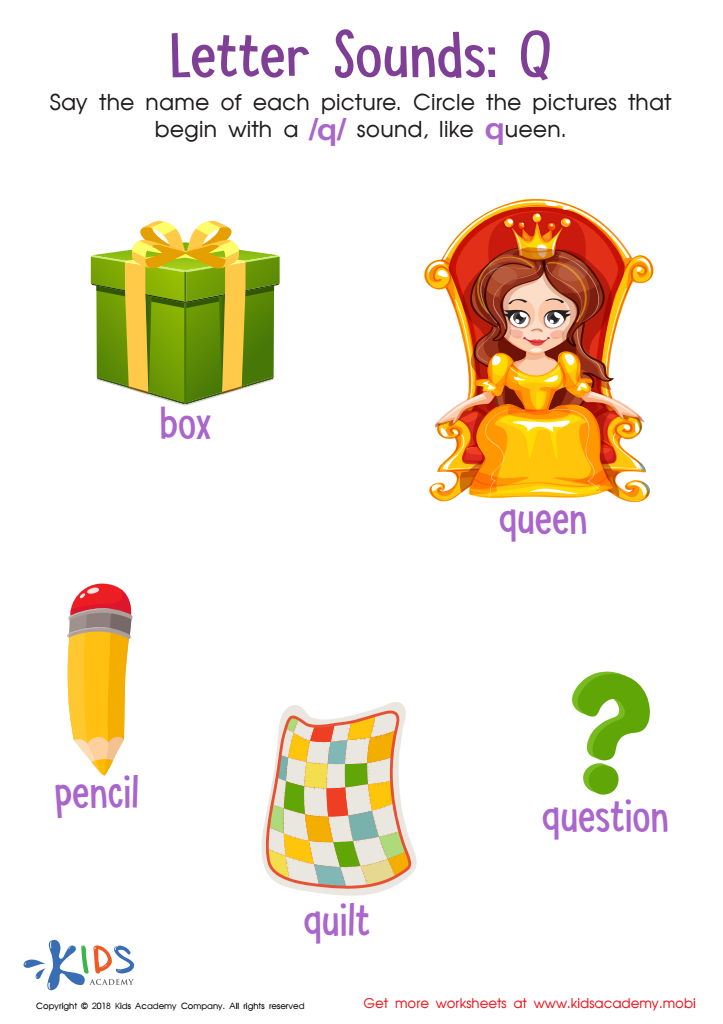
Letter Q Sounds Worksheet
Kids can get confused between "K" and "Q" sounds. Help them learn with this phonics worksheet. They'll name each image and read the word underneath. Point out that words with "Q" also have a "U" which affects how it sounds. Have them circle the matching pictures and watch as they learn this unique letter sound.
 Assign to My Students
Letter Q Sounds Worksheet
Worksheet
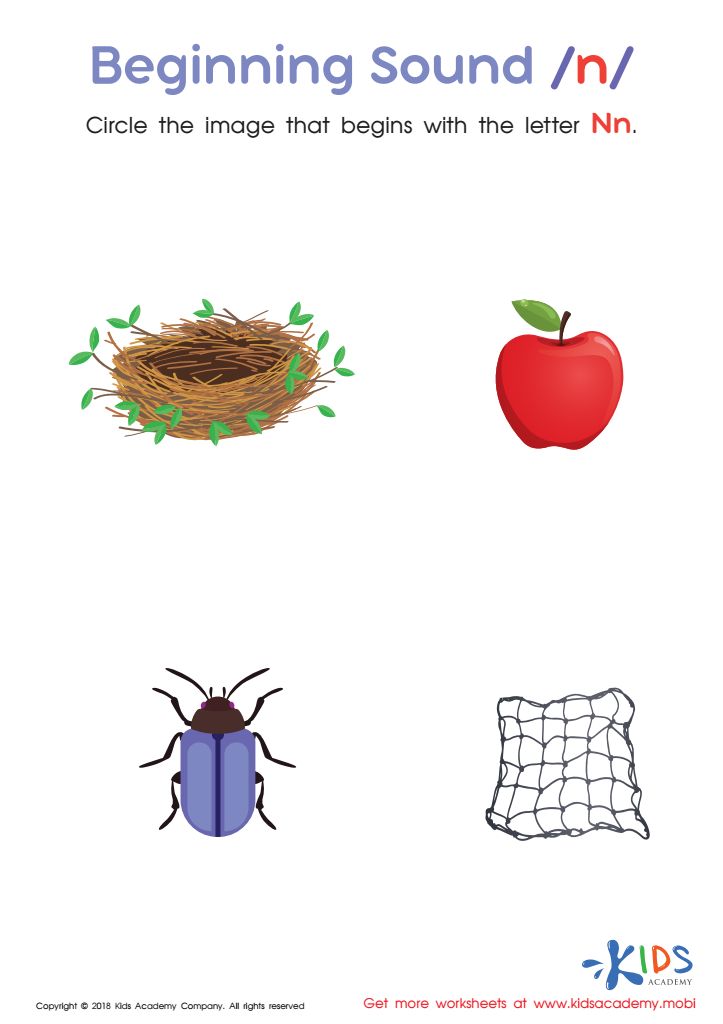
Beginning Sound «n» Worksheet
Help your emerging reader learn the initial «n» sound with this free PDF worksheet! Strengthen fine motor skills by tracing circles around words beginning with «n». Pictures are clear and engaging, giving beginning Phonics learners the right amount of practice and the confidence to succeed.
Beginning Sound «n» Worksheet
Worksheet
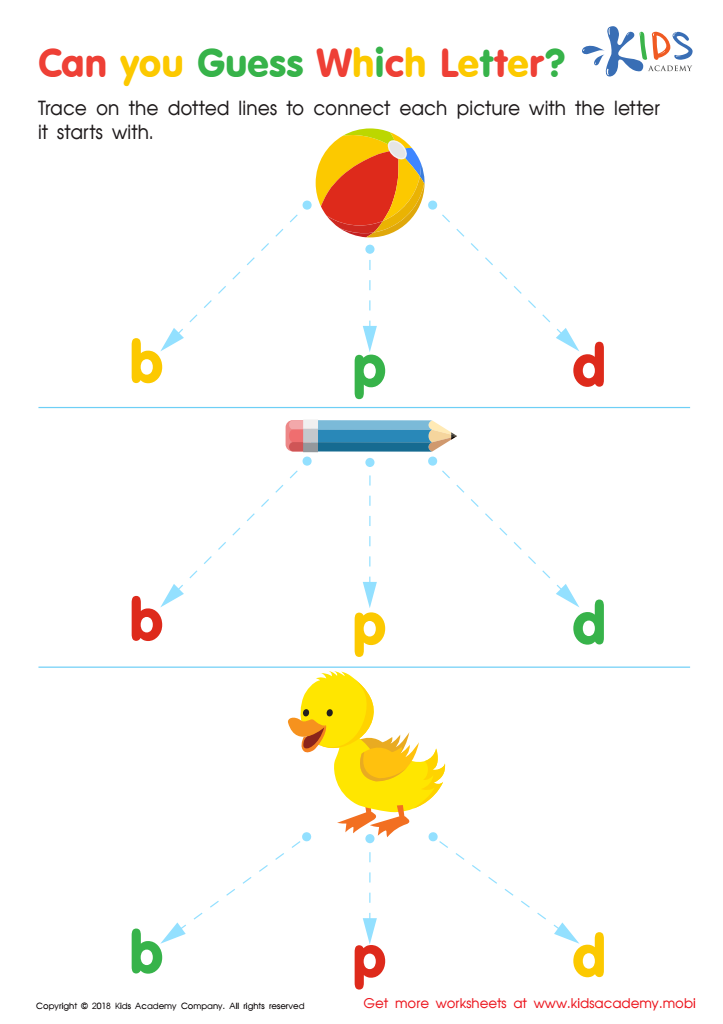
Can you Guess Which Letter? Worksheet
Connect the pictures with their corresponding letters with this fun worksheet! Ask your child what each picture is, then what letter it begins with. Download the PDF for colorful images and engaging texts to hold their attention, making learning an enjoyable activity.
Can you Guess Which Letter? Worksheet
Worksheet
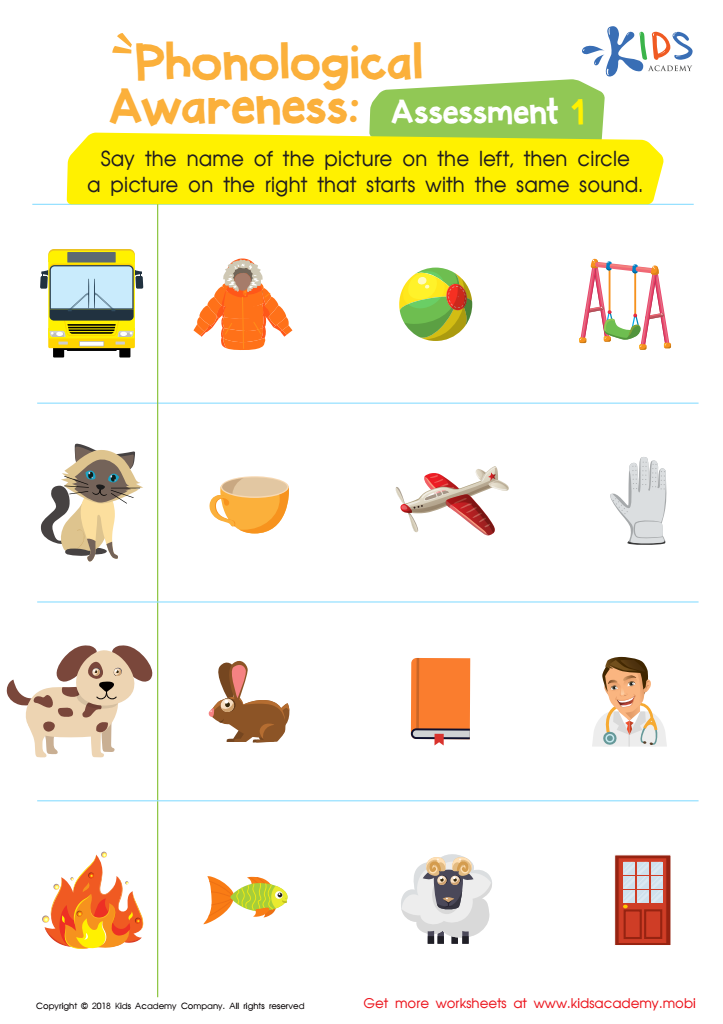
Phonological Awareness: Assessment 1 Worksheet
This worksheet helps kids build key phonics skills for pre-reading. They say each picture name aloud, focusing on the starting sound. Then, they match the sound with an image in the same row. Use as a checkpoint for kindergarten or grade 1 phonics readiness.
Phonological Awareness: Assessment 1 Worksheet
Worksheet
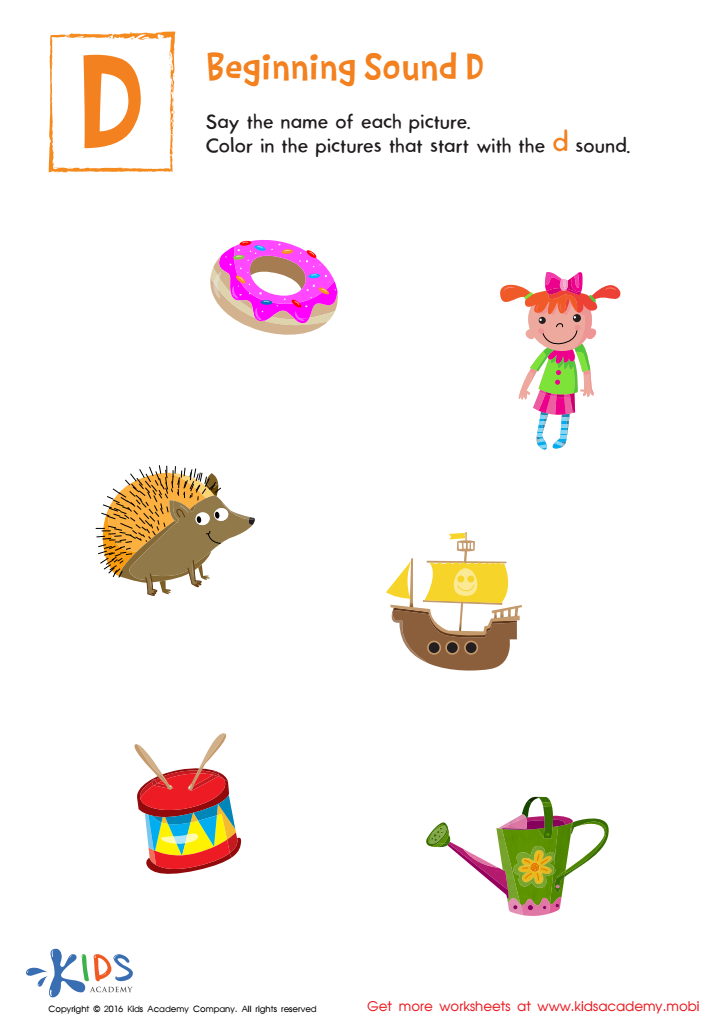
Beginning Sound D Worksheet
Reinforce phonics with this vibrant beginning sound d worksheet! Pictures help kids identify words beginning with 'd' and develop early reading skills. Sounding out each word increases literacy!
Beginning Sound D Worksheet
Worksheet
Join Kids Academy for Free
Who is primarily going to use this learning content?





.jpg)

Reading readiness is crucial for children aged 5-6 because it sets the foundation for their academic success and lifelong learning skills. At this developmental stage, children are naturally curious and are beginning to understand the relationship between letters, sounds, and words. Integrating a Normal Alphabet framework boosts their cognitive development and decoding skills, essential for learning to read.
For parents and teachers, investing time in promoting reading readiness enhances the child's language acquisition, vocabulary, comprehension, and communication skills. When children enter school with strong reading readiness, they are more confident and motivated learners, which can lead to a more positive and less frustrating educational experience.
Moreover, fostering early reading skills is directly linked to better performance in other subjects such as mathematics, science, and social studies, as these disciplines require strong literacy and comprehension abilities. Recognizing the alphabet and understanding that letters represent sounds forms the basis for fluency and proficient reading later on.
Promoting this readiness involves a combination of story time, alphabet games, engaging discussions, and providing rich literacy environments both at home and in the classroom. Therefore, by prioritizing reading readiness, parents and teachers can significantly impact a child's academic trajectory and instill a lifelong love for learning and reading.







