Sound-letter association Normal Alphabet Worksheets for Ages 5-6
3 filtered results
-
From - To
Boost your child's literacy skills with our Sound-Letter Association Normal Alphabet Worksheets for Ages 5-6! Designed to enhance phonetic awareness, these worksheets help young learners connect sounds with their corresponding letters through engaging activities. With colorful illustrations and age-appropriate exercises, children will enjoy practicing letter recognition and sound identification. Each worksheet targets key areas of early reading development, making learning both fun and effective. Perfect for teachers, parents, and homeschoolers, these printable resources are an ideal way to prepare your child for reading success. Explore our collection and watch your child flourish in their journey toward literacy!
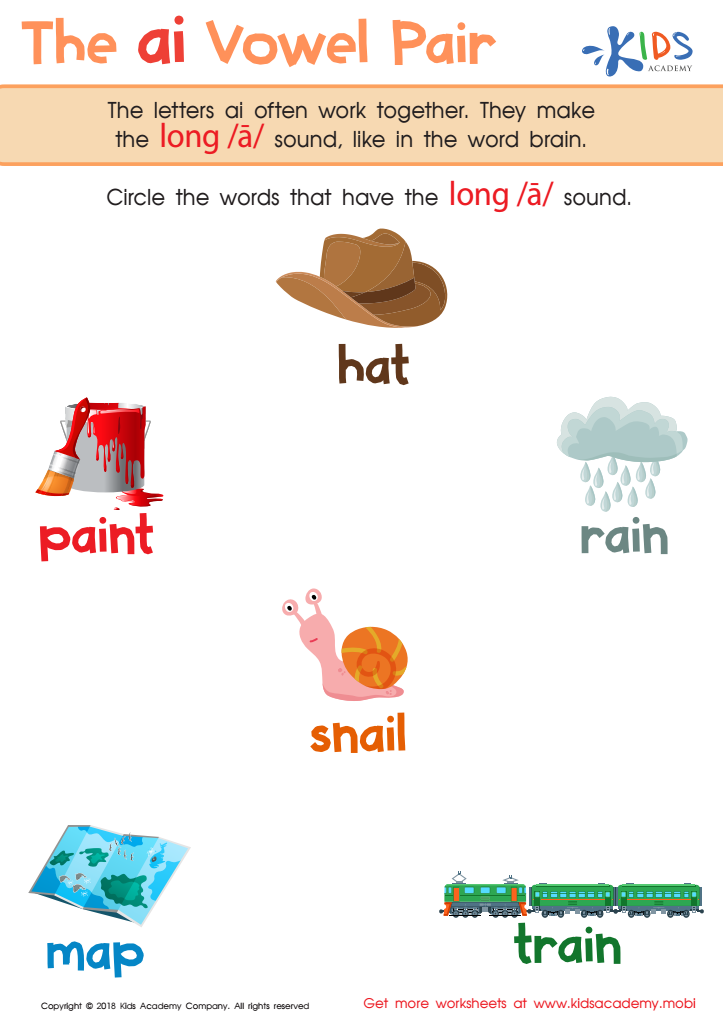
The AI Vowel Pair Worksheet
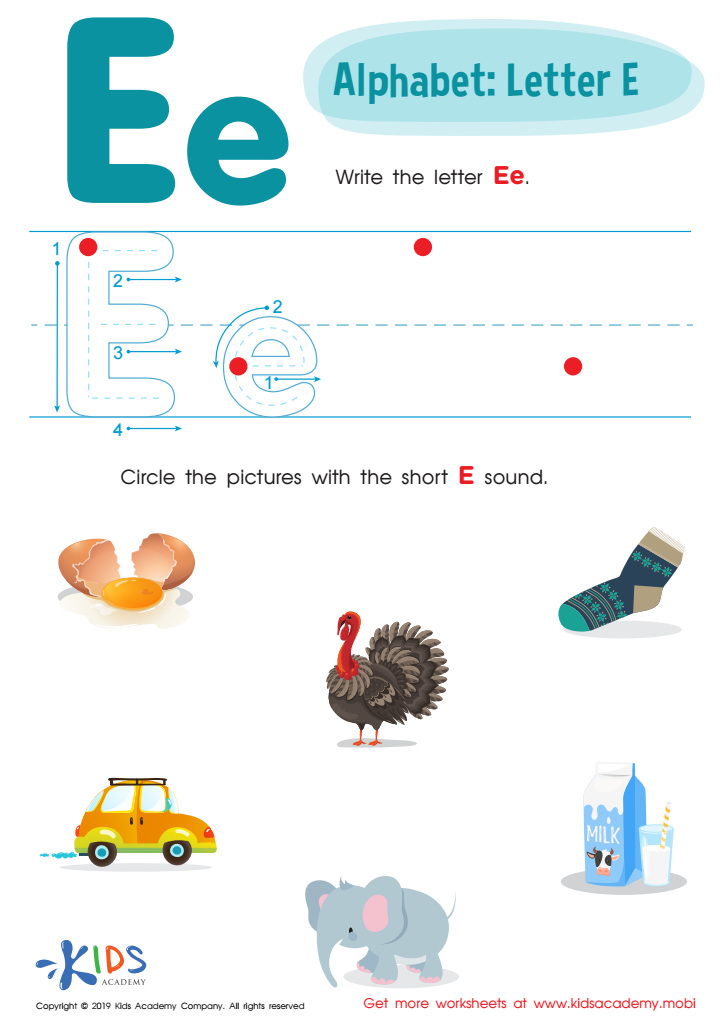
Letter E Tracing Worksheet
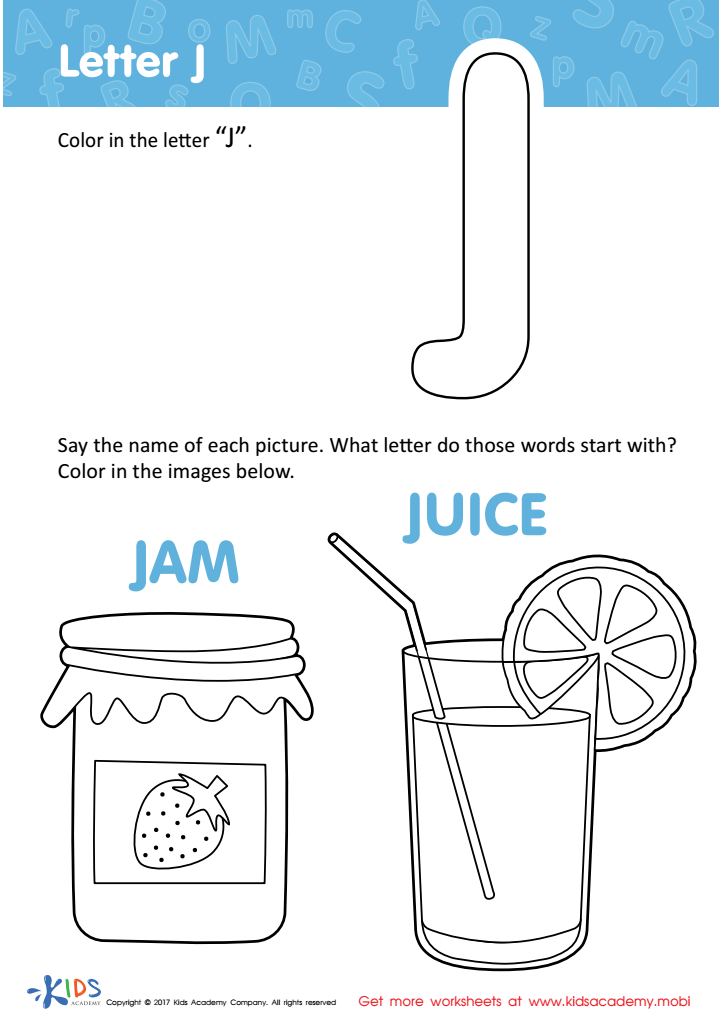
Letter J Coloring Sheet
 Assign to My Students




.jpg)

Understanding sound-letter association is crucial for children aged 5-6 as it forms the foundation for literacy skills. This skill allows young learners to connect the sounds they hear with the written letters, which is essential for reading and writing. When parents and teachers emphasize sound-letter associations, they empower children to decode words, making reading less intimidating and more accessible.
Additionally, this early phonemic awareness supports vocabulary development. Children who can relate sounds to letters are more likely to experiment with writing, encouraging creativity and self-expression. This not only enhances their literacy but also boosts their confidence in using language.
Moreover, building sound-letter associations fosters a love for reading. Engaging children in activities such as phonics games, read-alouds, and interactive storytelling ignites their curiosity and enthusiasm for books. As they recognize patterns in language, they become more independent learners.
Finally, this foundational skill is directly linked to academic success in later grades. Children proficient in sound-letter associations are better equipped to tackle more complex reading and writing challenges. By prioritizing this essential skill, parents and teachers set the stage for lifelong learning, ensuring that children become confident and capable readers and writers.







