Uppercase identification Normal Alphabet Worksheets for Ages 5-6
5 filtered results
-
From - To
Enhance your child's literacy skills with our Uppercase Identification Normal Alphabet Worksheets for ages 5-6! Designed to promote letter recognition and foundational reading skills, these engaging worksheets provide children with fun, interactive exercises. Each activity encourages young learners to identify and practice uppercase letters through tracing, matching, and sorting tasks, fostering confidence and enthusiasm for reading. Perfect for parents and teachers alike, these resources support early education with colorful designs, making learning enjoyable. Give your child the tools they need to succeed in reading and writing with our structured and entertaining alphabet worksheets. Start their literacy journey today!
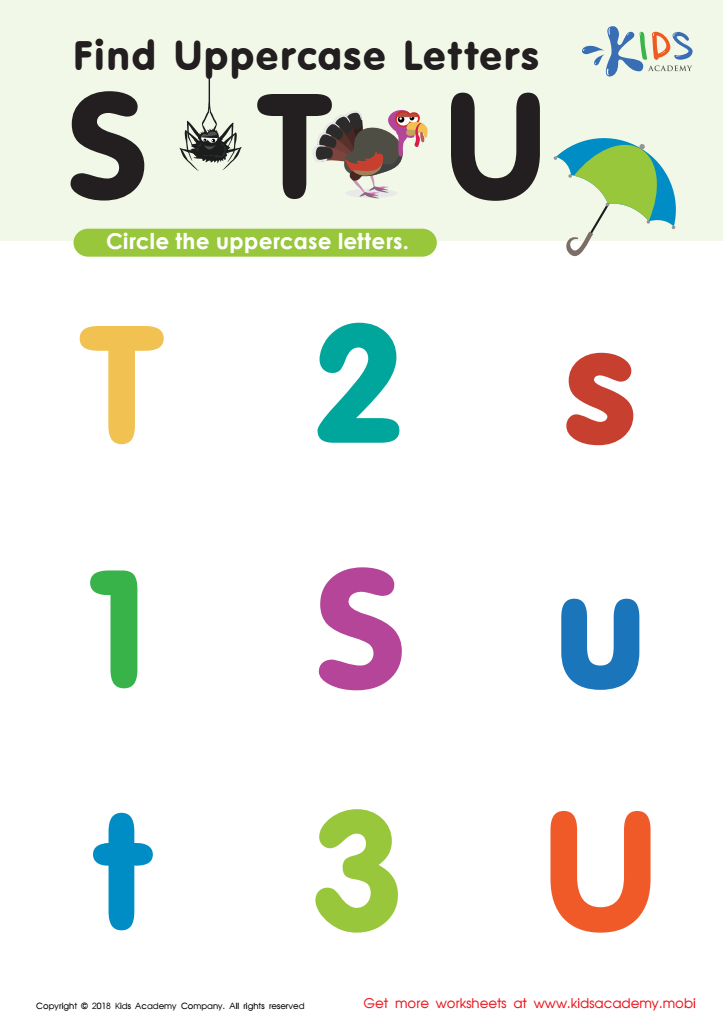
Find Uppercase Letters Worksheet
 Assign to My Students
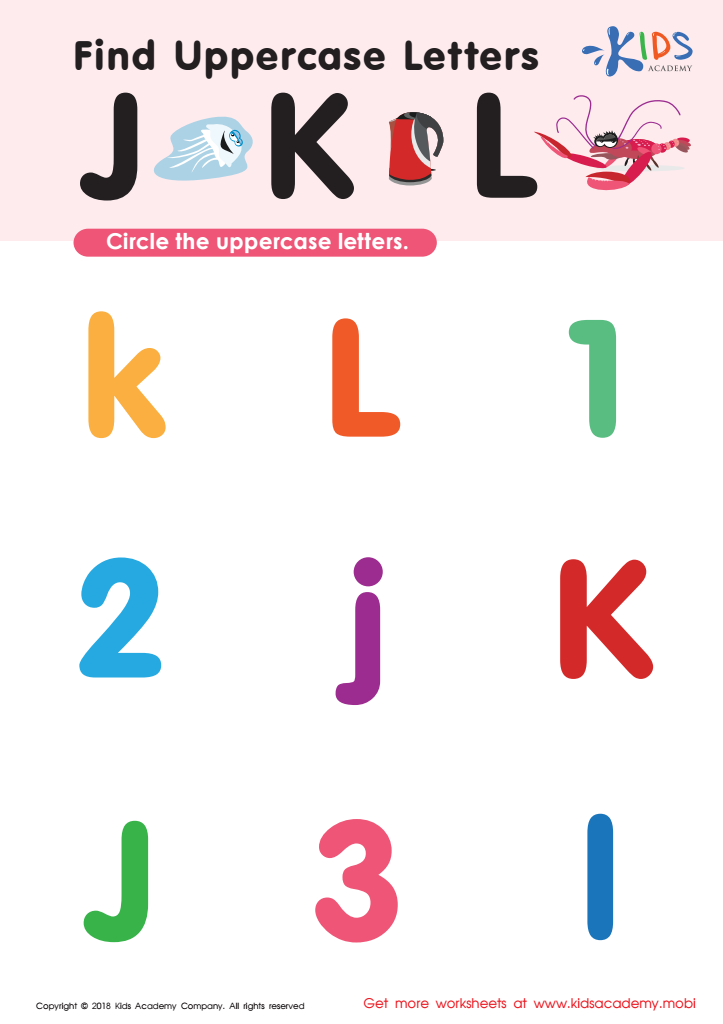
Find Uppercase Letters J, K, and L Worksheet

Find Uppercase Letters A, B, and C Worksheet
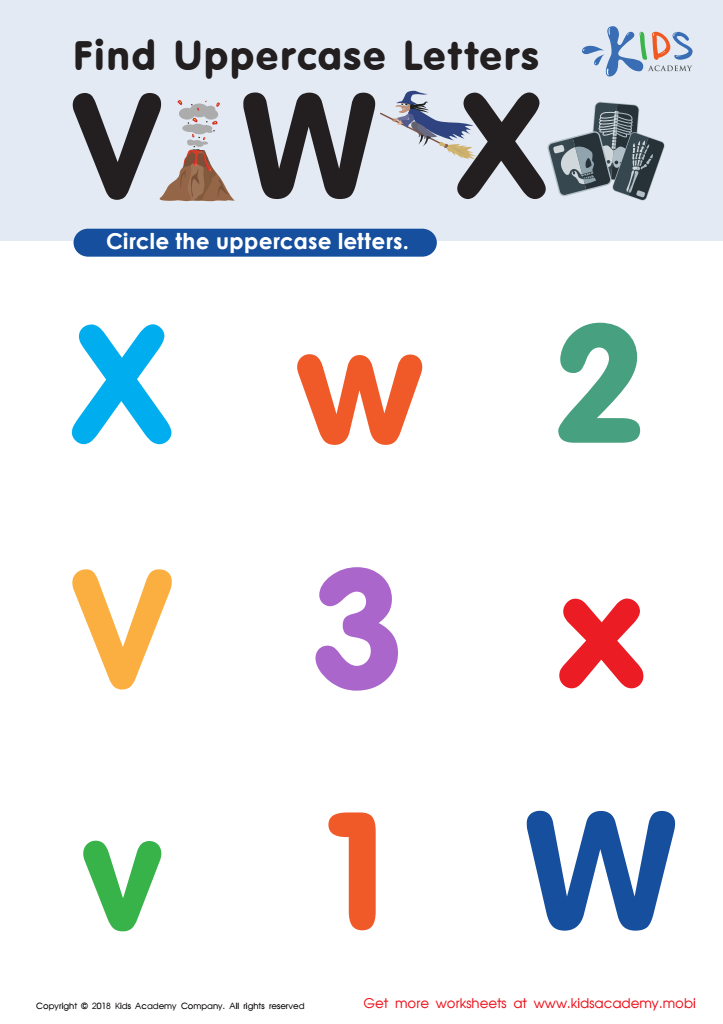
Find Uppercase Letters V, W, X Worksheet
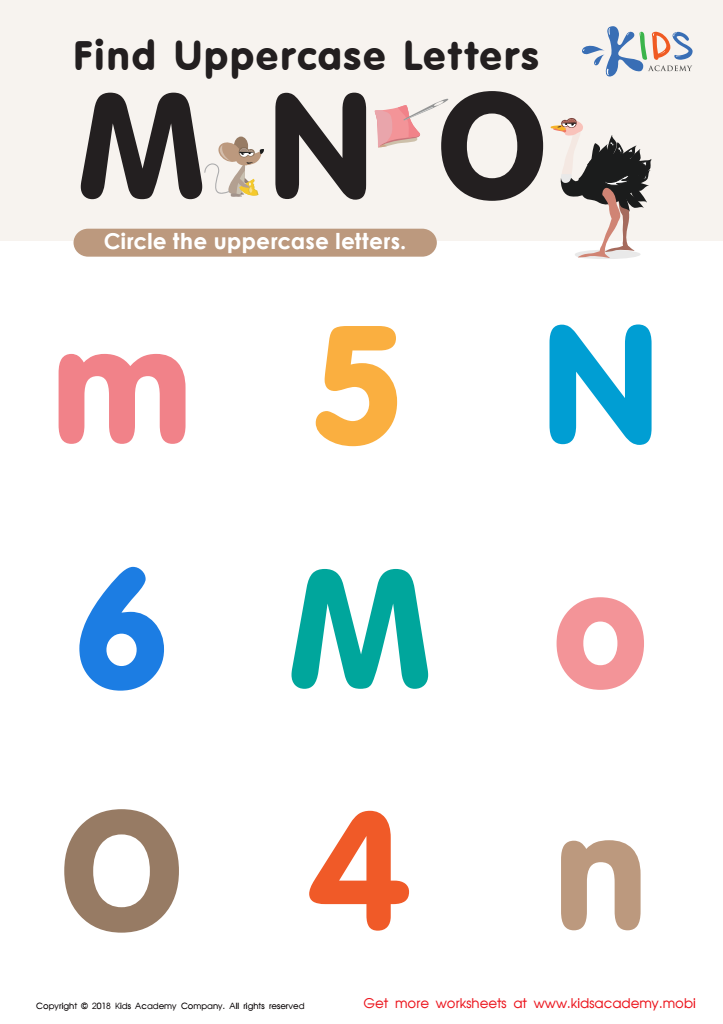
Find Uppercase Letters M, N, and O Worksheet







Understanding uppercase letters is critical for children aged 5-6, as it lays the foundation for their reading and writing skills. For parents and teachers, focusing on uppercase letter identification is essential for several reasons.
Firstly, uppercase letters are prominent in print and are often the first letters children will encounter in their reading journey. Recognizing these letters aids in developing phonemic awareness, which is a cornerstone of literacy. When children can easily identify uppercase letters, they are more equipped to tackle new words.
Additionally, learning uppercase letters helps children understand basic writing conventions, such as proper formatting in sentences and capitalization at the beginning of names and sentences. This forms the basis for good writing habits.
Socially, recognizing uppercase letters can boost a child's confidence, encouraging them to participate in reading activities or recognize names in their surroundings. This enhances their engagement with literacy.
Furthermore, supporting children in mastering uppercase letters allows for a smooth transition into learning lowercase letters and comprehending more complex language structures later on. Therefore, parents and teachers play a vital role in this critical phase of literacy development by providing encouragement and resources for uppercase letter identification.







