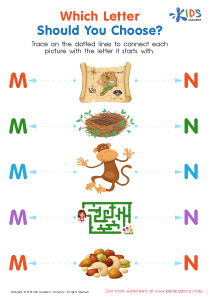
Lowercase identification Normal Lowercase/Small Letters Worksheets for Ages 5-6
4 filtered results
-
From - To
Introduce your child to the captivating world of letters with our "Lowercase Identification Normal Lowercase/Small Letters Worksheets" specially designed for ages 5-6. These engaging and colorful worksheets help young learners master lowercase letter recognition through fun activities. Each worksheet focuses on identifying, tracing, and distinguishing between different letters, reinforcing essential literacy skills. Ideal for preschoolers and kindergarteners, our resources blend education with play, making learning enjoyable. Whether at home or in the classroom, these worksheets provide a solid foundation for early reading. Explore our diverse inventory and watch your child flourish as they confidently identify lowercase letters! Perfect for little learners!
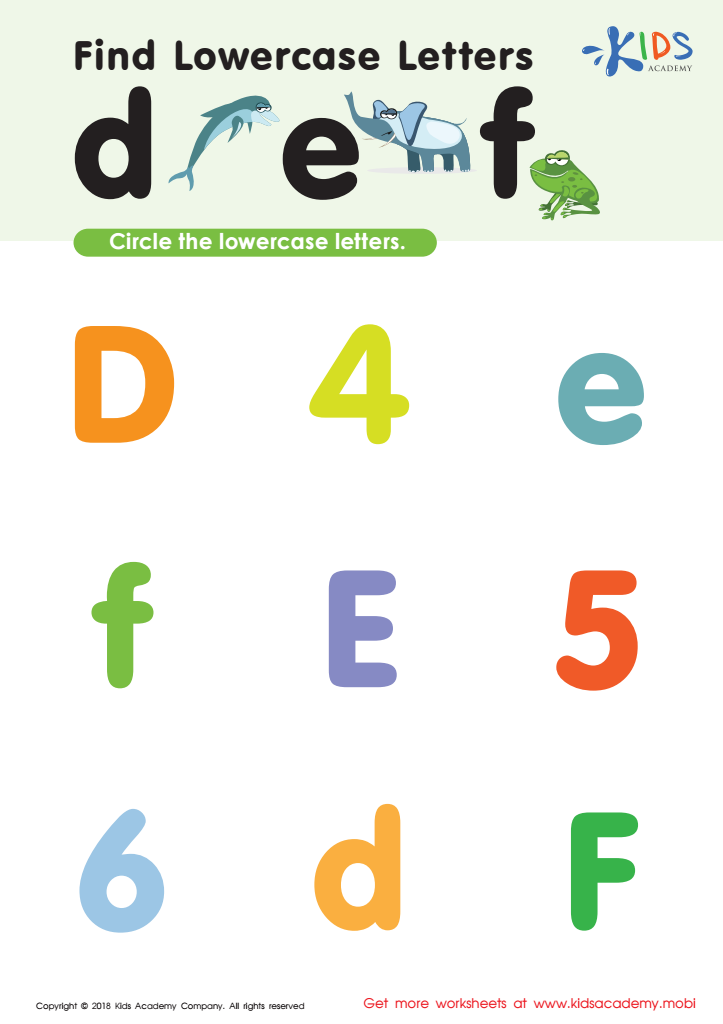
Find Lowercase Letters d e f Worksheet
 Assign to My Students
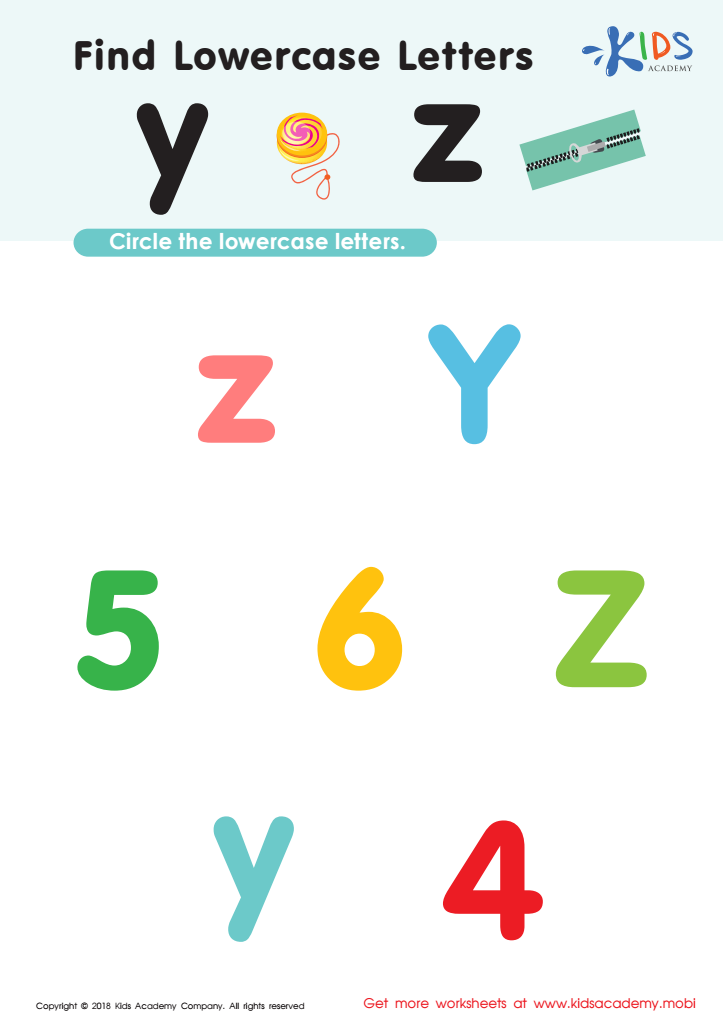
Find Lowercase Letters y z Worksheet

Find lowercase letters a b c Worksheet
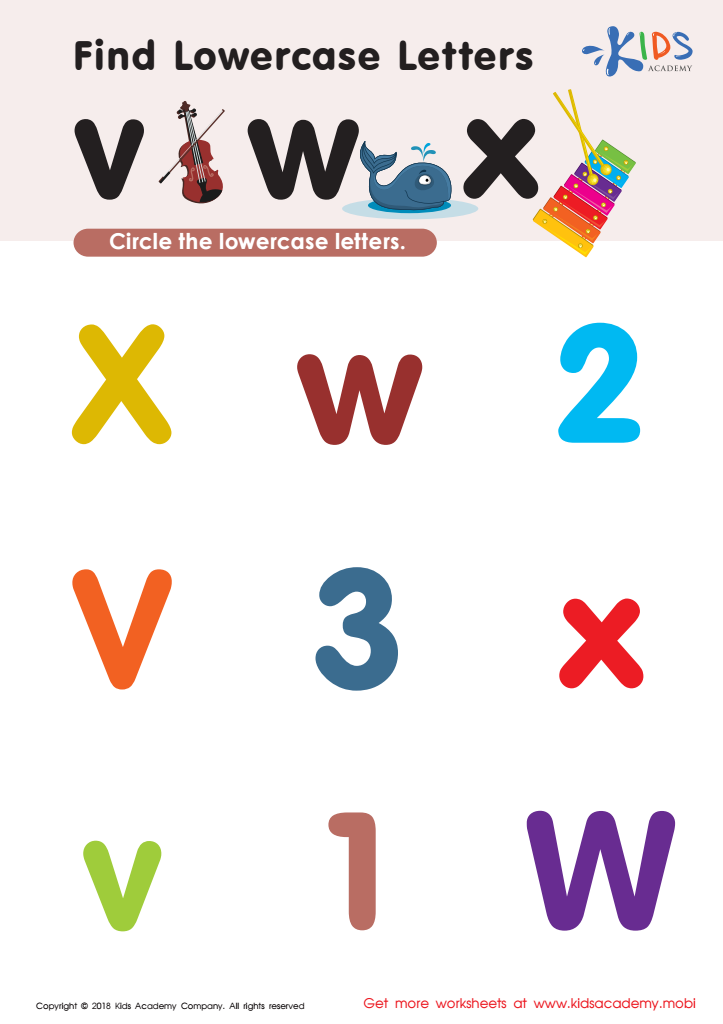
Find Lowercase Letters v w x Worksheet


Lowercase identification of letters is a crucial developmental milestone for young children, particularly those aged 5-6 years old. At this stage, children are beginning to read and write, and understanding lowercase letters is essential for their literacy progression. Unlike uppercase letters, lowercase letters are more commonly used in everyday writing, enabling children to recognize and engage with texts they encounter.
Parents and teachers should prioritize lowercase identification because it lays the foundation for phonemic awareness and spelling skills. Recognizing lowercase letters helps children decode words, associate sounds with their corresponding letters, and ultimately enhances reading fluency.
Moreover, mastering lowercase letters fosters confidence in writing. Children need to practice both forming and identifying these letters to ensure they can express their thoughts effectively on paper. Regular engagement with lowercase letters, through activities like reading aloud, writing exercises, and playful educational games, can make learning enjoyable and reinforce these skills.
By focusing on lowercase identification, parents and teachers play a pivotal role in nurturing confident readers and writers who are prepared to tackle more complex literacy skills as they progress through their education. Investing time and resources into this essential aspect of learning is vital for their academic success.