
Reading proficiency Normal Phonics Worksheets for Ages 5-6
6 filtered results
Difficulty Level
Grade
Age
-
From - To
Subject
Activity
Standards
Enhance your child's reading abilities with our Reading Proficiency Normal Phonics Worksheets for Ages 5-6. Designed specifically for young learners, these engaging and educational worksheets focus on phonics skills that build the foundation for fluent reading. Your child will systematically practice letter recognition, sound identification, and word formation through fun and interactive activities. Our colorful and child-friendly design keeps kids motivated and excited about learning. Help your child achieve reading proficiency early on with our expertly crafted resources that provide the perfect blend of education and enjoyment. Start your reading journey today!
Favorites
With answer key
Interactive
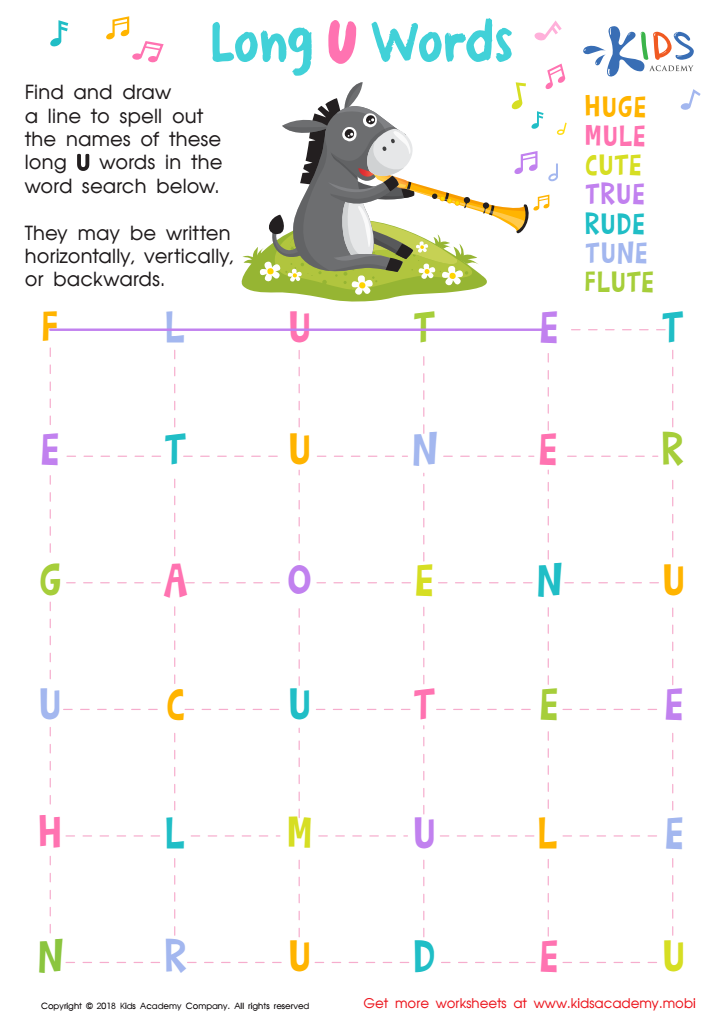
Long /u/ Words Worksheet
Your child needs to learn phonetics to enunciate and differentiate words. This fun worksheet encourages them to find and draw lines connecting the long 'U' words in the word search. Help them read the words on the right side of the picture, then look for them in the word search (horizontally, backwards or vertically).
Long /u/ Words Worksheet
Worksheet
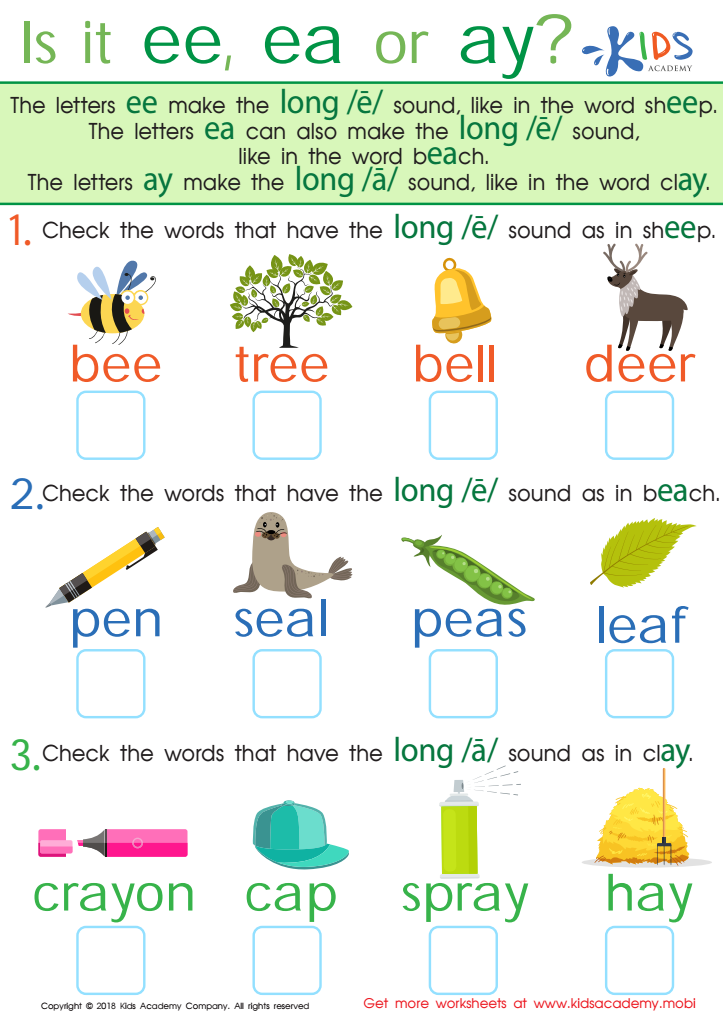
Is It EE, EA, or AY? Worksheet
When 'ee', 'ea' and 'ay' are in words, they usually make the long /e/ and /a/ sounds. Examples of words with 'ee' are "sheep", 'beach' and 'seat' with 'ea', and 'clay' and 'play' with 'ay'. Check this colourful worksheet with your kids; help them find the words that make the long /e/ sound like 'sheep'.
Is It EE, EA, or AY? Worksheet
Worksheet
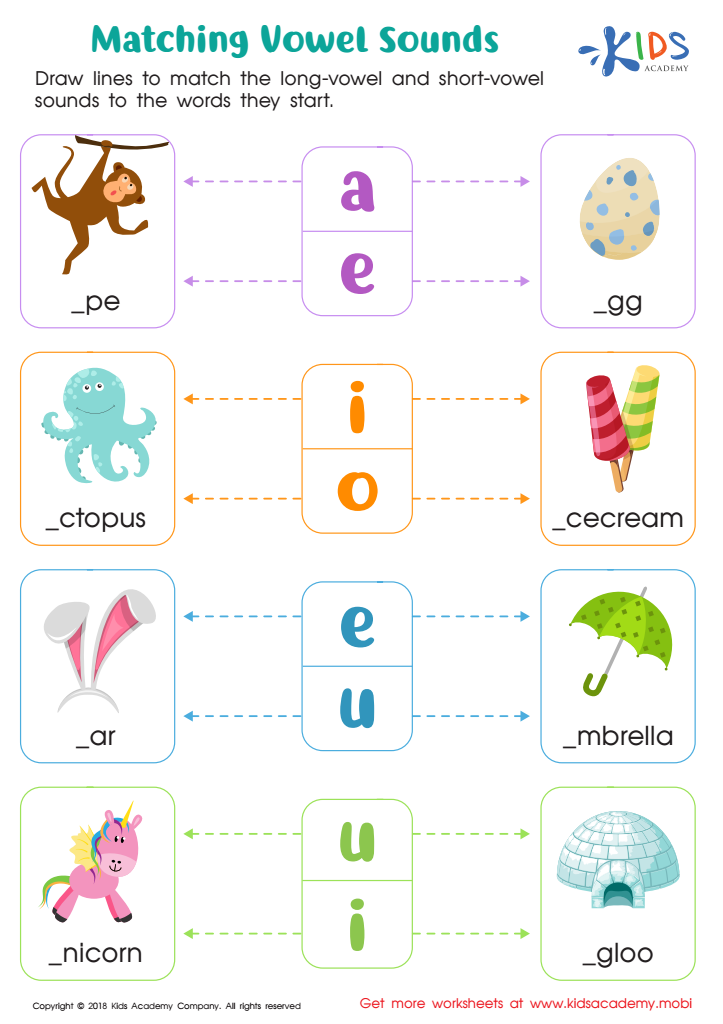
Matching Vowel Sounds Worksheet
Teach your child phonics with a fun worksheet! Ask your child to name a vowel sound and listen if it's long or short. Differentiating between long and short vowel sounds can be tricky, but this matching worksheet makes it easy for kids to understand. Have fun and master phonics - the worksheet will help them understand the difference between long and short vowel sounds!
Matching Vowel Sounds Worksheet
Worksheet

Long and Short U Worksheet
Revised: Spice up your lesson on long and short vowels with this fun printout! Kids read the words "tube" and "tub," then reinforce the sound by coloring in the words and pictures. It's a great way to make phonics class enjoyable!
Download (PDF)
 Assign to My Students
Assign to My Students
Long and Short U Worksheet
Worksheet
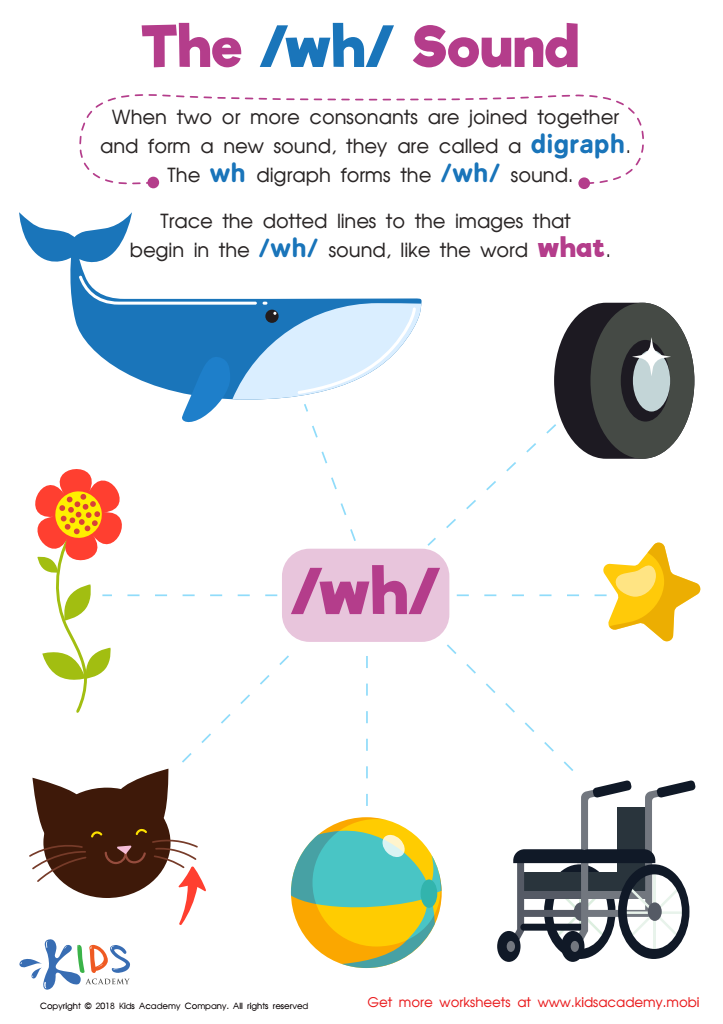
The /wh/ Sound Worksheet
Digraphs join two consonants to make a new sound, like /wh/. Give examples, like "whale", "when" and "why". Ask kids to name pictures in a worksheet and trace dotted lines to images beginning with the /wh/ sound; "what" is one example.
The /wh/ Sound Worksheet
Worksheet
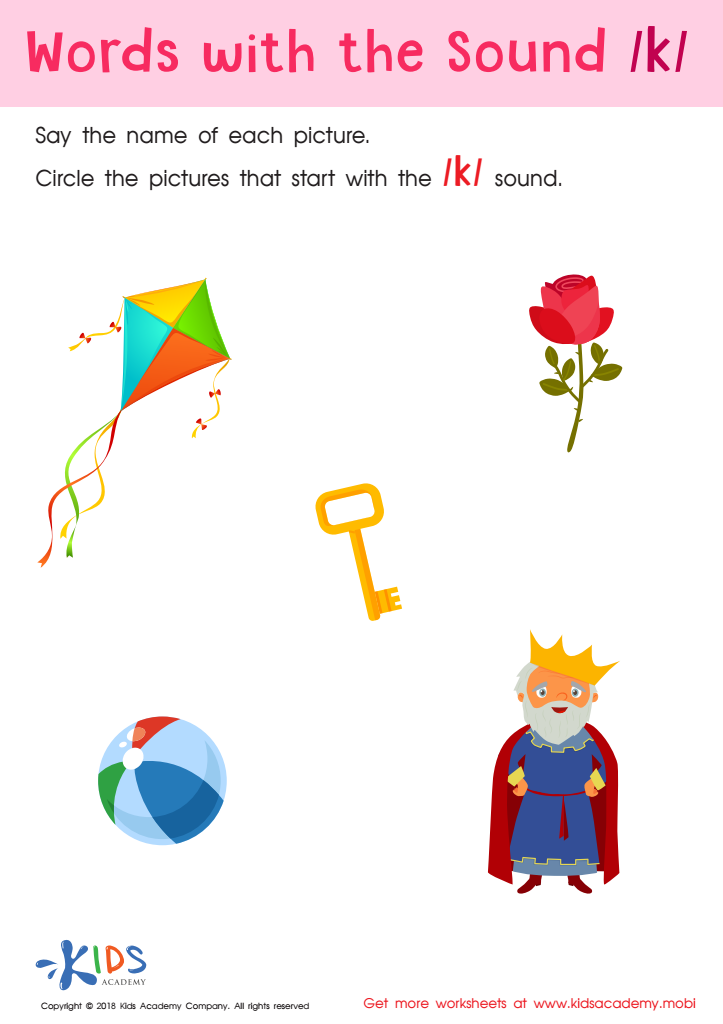
Words with sound k Reading Worksheet
Help your preschooler master the hard "k" sound with this fun worksheet from Kids Academy! Ask your child to say each picture aloud and circle only the pictures that start with "k". This early reading exercise will boost phonics skills and is sure to be loved by your little learner!
Words with sound k Reading Worksheet
Worksheet
Join Kids Academy for Free
Who is primarily going to use this learning content?








Reading proficiency and phonics skills are foundational elements in a child's education, especially for children aged 5-6. At this age, children are at a critical stage for developing their language and cognitive abilities.
Phonics, which involves understanding the relationship between letters and sounds, serves as a building block for decoding words and sentence structures. Mastery in phonics supports children in learning to read fluently and comprehend texts clearly. Just as we lay brick upon brick to build a house, phonics lays down the cognitive bricks of reading literacy.
Parents and teachers should care deeply about reading proficiency at this stage because it directly impacts a child's future academic success and self-esteem. Strong reading skills are not confined to language classes but extend to other subjects such as science, history, and even mathematics. Poor reading skills make accessing syllabi a struggle, leading to frustration and a potential dislike for school.
Additionally, proficient reading skills enhance children's ability to communicate, both verbally and in writing. This facilitates effective interaction with peers and teachers, promoting social and emotional development.
Involvement from parents and teachers ensures that children receive the support and encouragement needed to build these essential skills, setting the stage for lifelong learning, curiosity, and achievement. Investing time and resources into phonics education and reading proficiency quite literally opens the door to an informed, empowered, and imaginative future.







