Normal Silent Vowels Worksheets for Ages 5-6
3 filtered results
-
From - To
Discover engaging "Normal Silent Vowels Worksheets" designed specifically for 5-6 year olds! These printable activities offer fun and interactive ways to grasp the concept of silent vowels, enhancing early reading and spelling skills. Tailored for young learners, each worksheet combines colorful illustrations, simple exercises, and hands-on practice to make learning effective and enjoyable. Perfect for use at home or in the classroom, these resources help children recognize and become familiar with silent vowels in common words. Stimulate your child’s literacy development with our comprehensive and easy-to-follow silent vowels worksheets today!
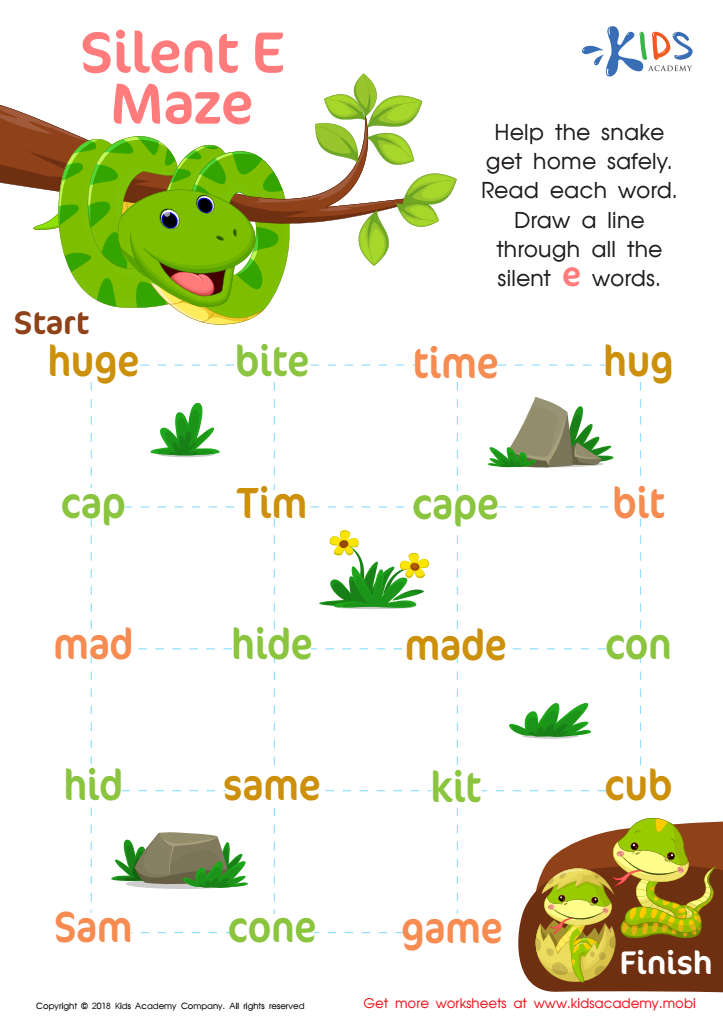
Silent E Maze Worksheet
 Assign to My Students
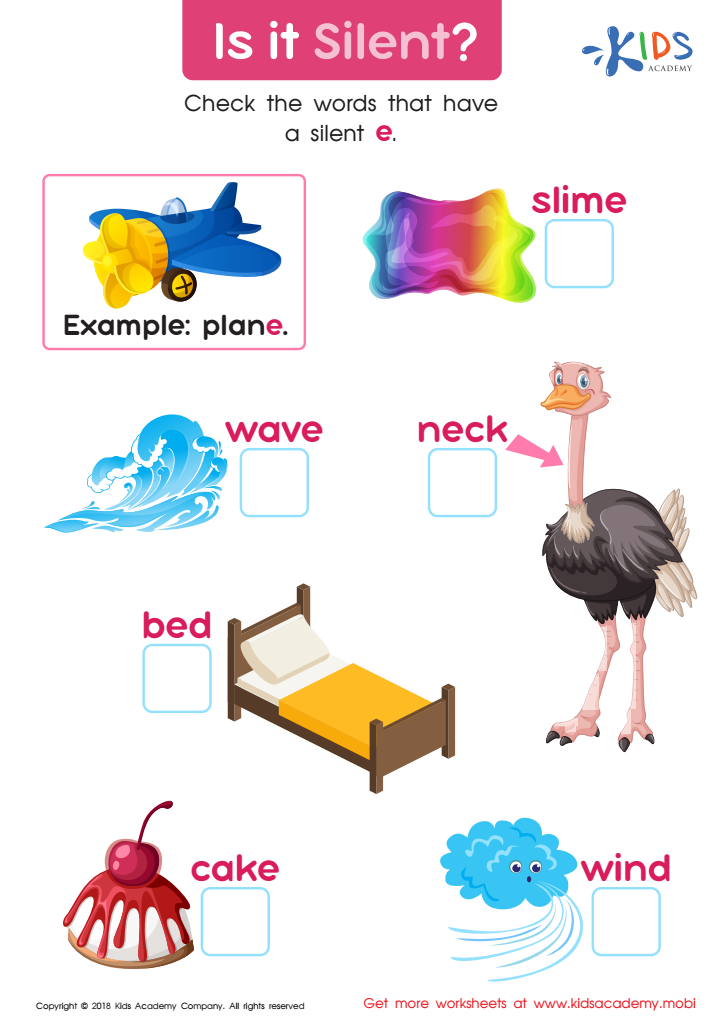
Is It Silent? Worksheet
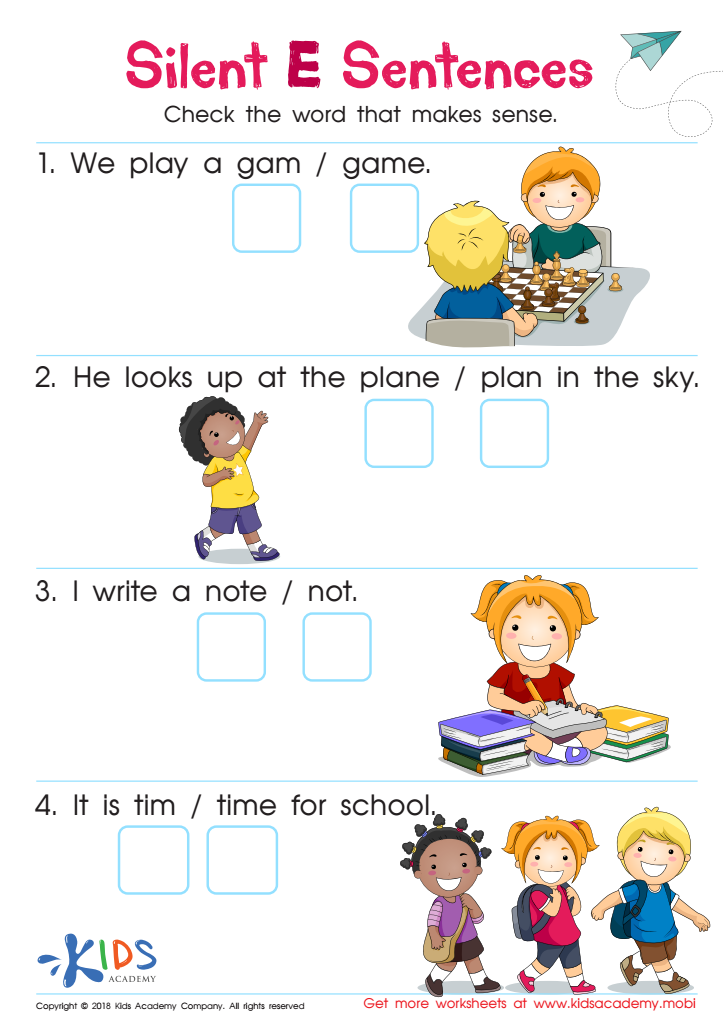
Silent E Sentences Worksheet


Understanding and teaching Normal Silent Vowels (like the 'e' in "cake" or "lite") to children aged 5-6 is fundamental for several reasons. Firstly, early comprehension of these silent vowels enhances reading fluency. When kids recognize silent letters, they can read more smoothly and better predict word structures, making reading more intuitive. Secondly, silent vowels play a crucial role in spelling. Words with silent vowels often follow specific patterns or rules. Familiarizing young learners with these patterns reduces confusion and helps them spell accurately as they encounter new words.
Moreover, silent vowels are a key component of phonics, which is the foundation of learning to decode words. Knowledge of phonics, including silent vowel rules, fosters a love for reading by making it less frustrating and more enjoyable for kids. This is aligned with language development theories suggesting children who enjoy reading tend to become lifelong readers.
Lastly, understanding silent vowels aids pronunciation and phonemic awareness. When children understand why certain vowels are silent, they better grasp how English sounds and words are constructed. For teachers and parents, focusing on silent vowels sets a strong, clear groundwork for progressing from simple to more complex reading and writing tasks, ensuring balanced literacy development.