Letter tracing skills Normal Tracing Letters Worksheets for Ages 5-6
3 filtered results
-
From - To
Enhance your child's writing foundation with our Letter Tracing Skills: Normal Tracing Letters Worksheets for Ages 5-6. Designed specifically for young learners, these worksheets provide a fun and engaging way to master the alphabet. Each sheet guides children to trace both uppercase and lowercase letters, helping to develop fine motor skills, hand-eye coordination, and letter recognition. Perfect for kindergarten students, these exercises lay a strong literacy foundation, building confidence in early writing. Give your child a head start on their educational journey with our expertly crafted tracing worksheets, created to make learning both enjoyable and effective.
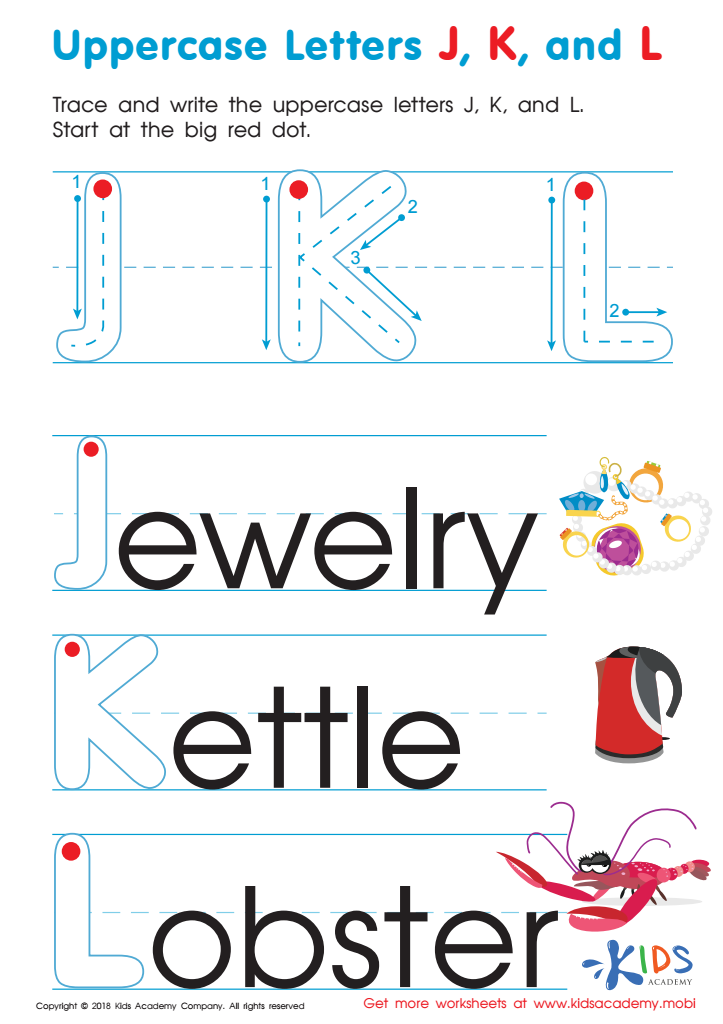
Uppercase Letters J, K, and L Worksheet
 Assign to My Students
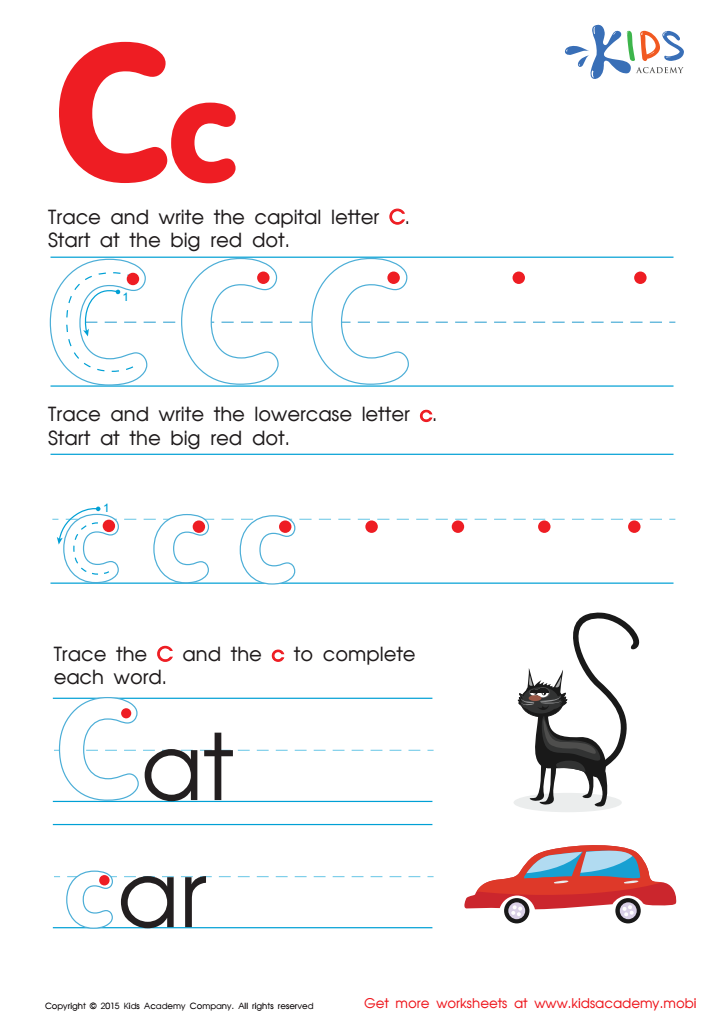
Letter C Tracing Page
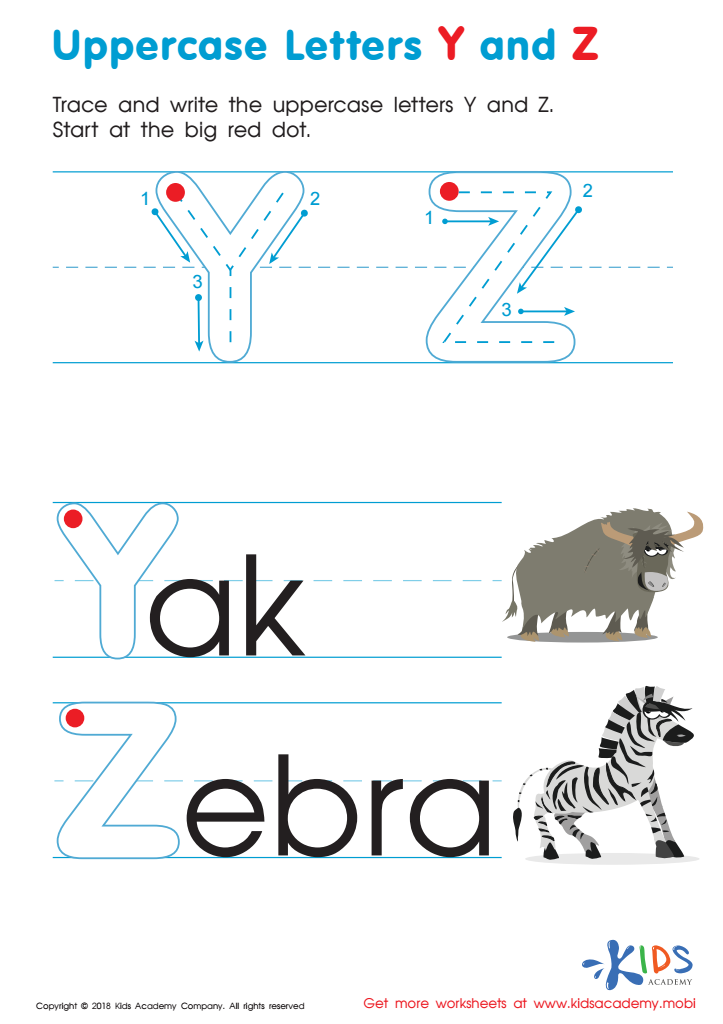
Uppercase Letters Y Z Worksheet







Letter tracing is a critical activity for young children, especially those aged 5-6, as it lays the foundational skills essential for both reading and writing. When parents and teachers emphasize letter tracing, they help children develop fine motor skills, hand-eye coordination, and muscle memory, crucial for writing proficiency. Tracing letters enables children to understand the shapes and forms of letters, making it easier for them to recognize and write them independently.
At this formative age, mastering letter formation can boost a child's confidence and foster a positive attitude towards learning. It allows children to develop a critical understanding of the alphabet, an essential literacy skill that will influence their academic success across all subjects. With regular practice, children become more comfortable with transitions from printing individual letters to writing words and sentences.
Additionally, letter tracing activities support cognitive development by requiring children to focus and follow specific patterns and directions. This kind of structured drawing helps them appreciate the left-to-right progression needed for writing in English, along with the discrimination of shapes crucial for reading.
By caring about letter tracing, parents and teachers also instill patience and persistence in children. These skills, once learned, will support a lifetime of effective communication and academic achievement, making letter tracing invaluable in early education.








