Color recognition Normal English for Beginners Worksheets for Ages 5-6
9 filtered results
-
From - To
Introduce your young learners to the vibrant world of colors with our Color Recognition Worksheets for Beginners, designed specifically for ages 5-6. These engaging activities help children identify, name, and differentiate between various colors, boosting their English language skills in a fun and interactive way. Perfect for early grade students and ESL learners, our carefully crafted worksheets combine visual cues with simple exercises, making color learning enjoyable and effective. Foster your child's creativity and language development as they explore the basic yet essential concept of color recognition with these printable, easy-to-use resources.
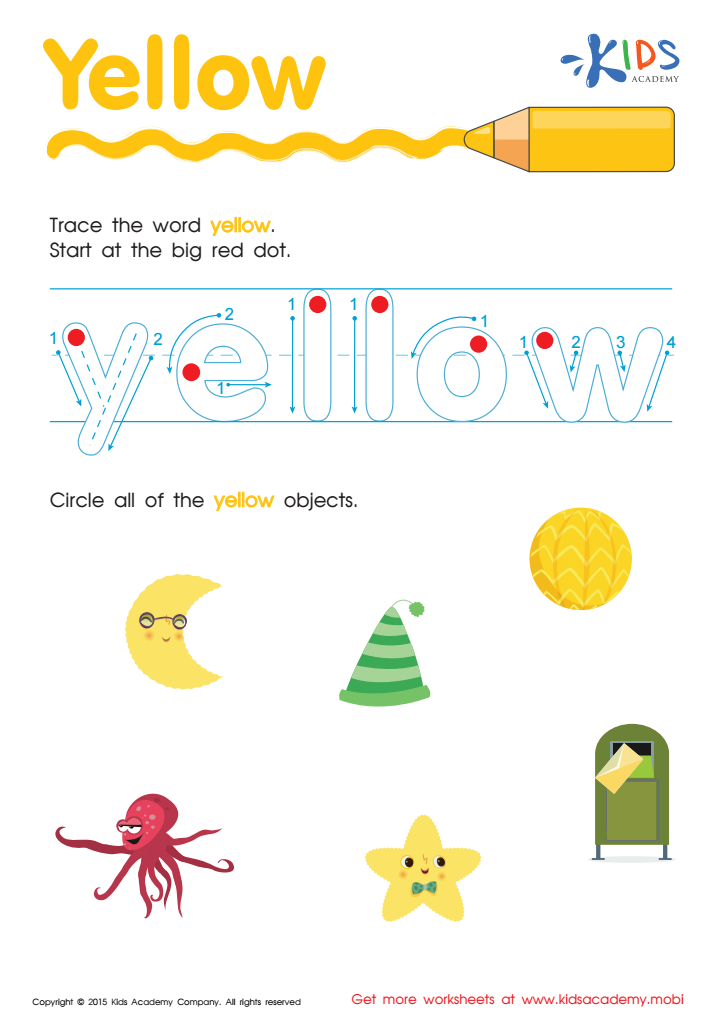
Yellow Tracing Color Words Worksheet
 Assign to My Students
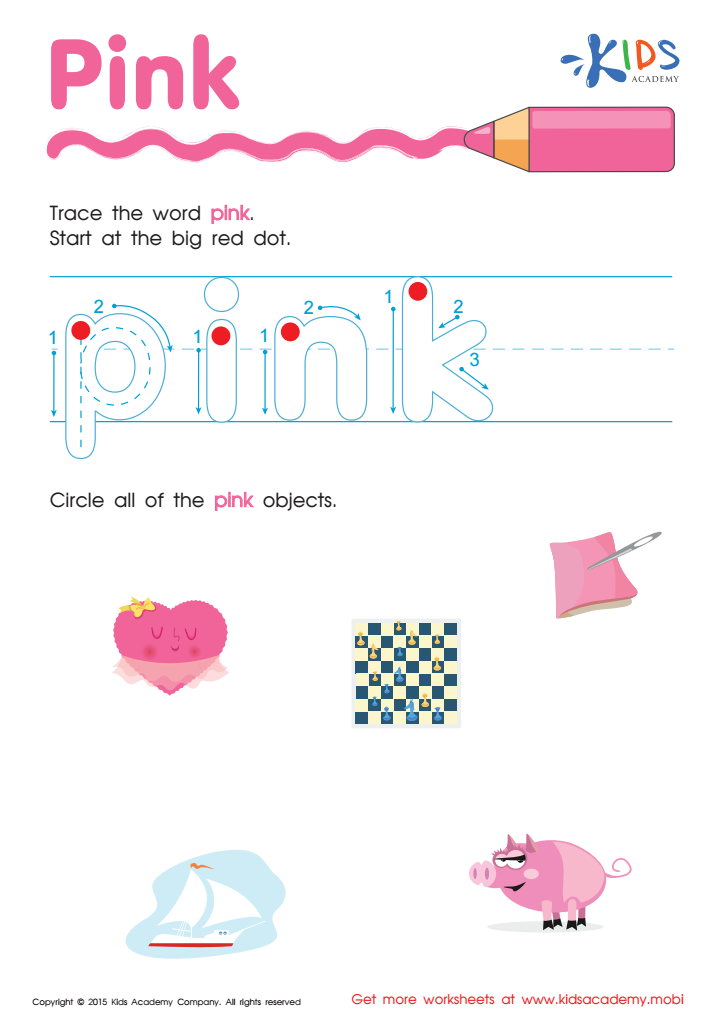
Pink Tracing Color Words Worksheet
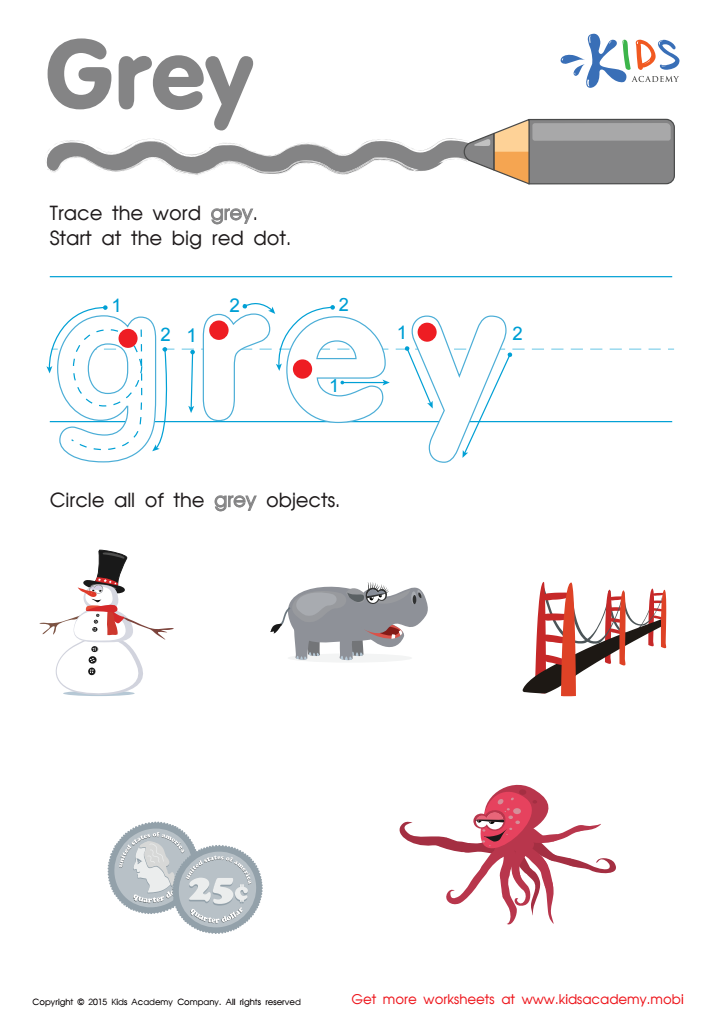
Grey Tracing Color Words Worksheet
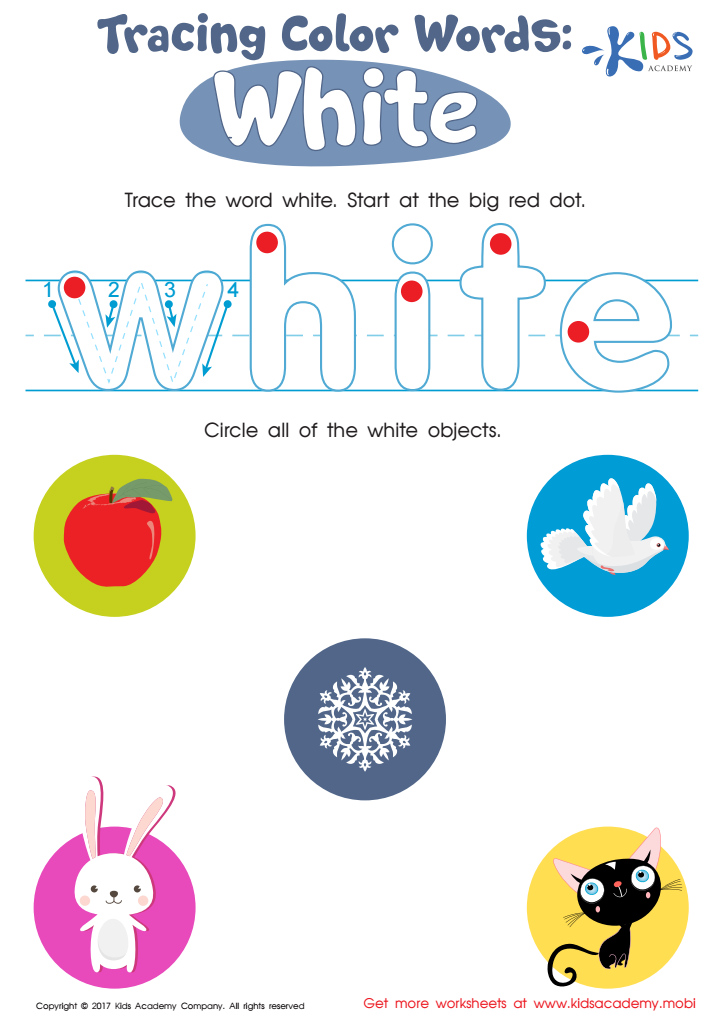
White Tracing Color Words Worksheet
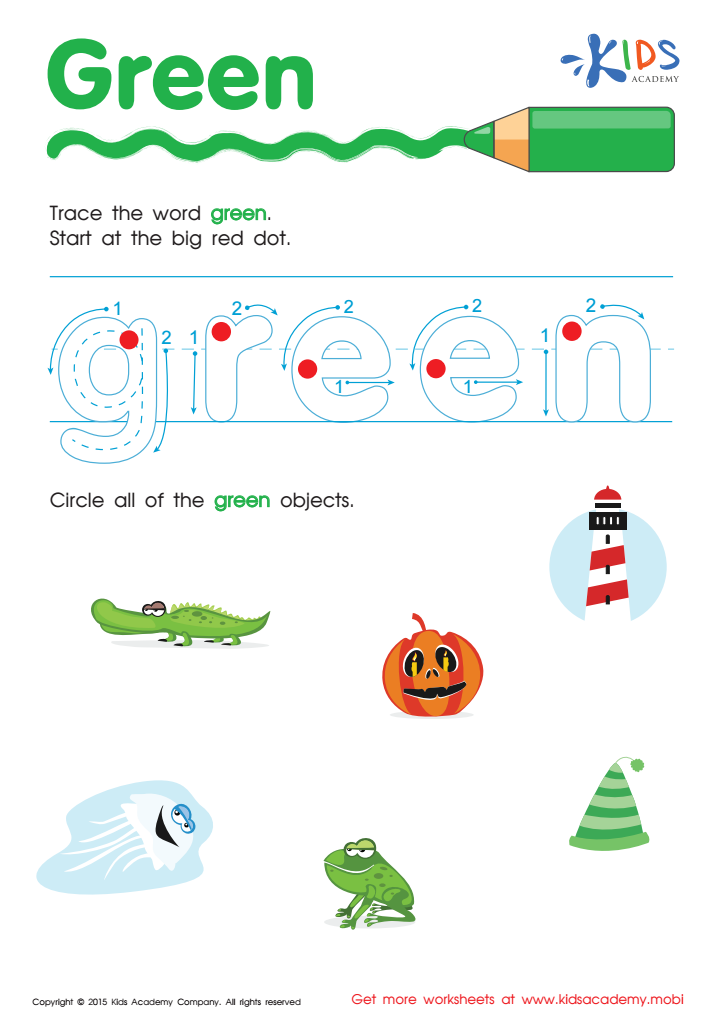
Green Tracing Color Words Worksheet
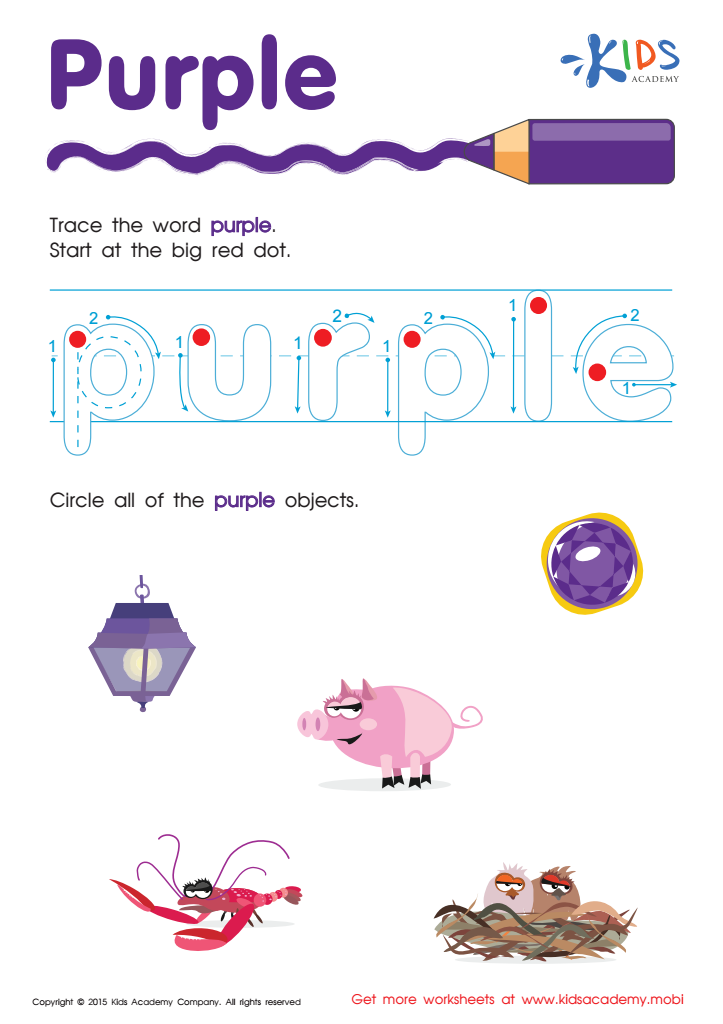
Purple Tracing Color Words Worksheet
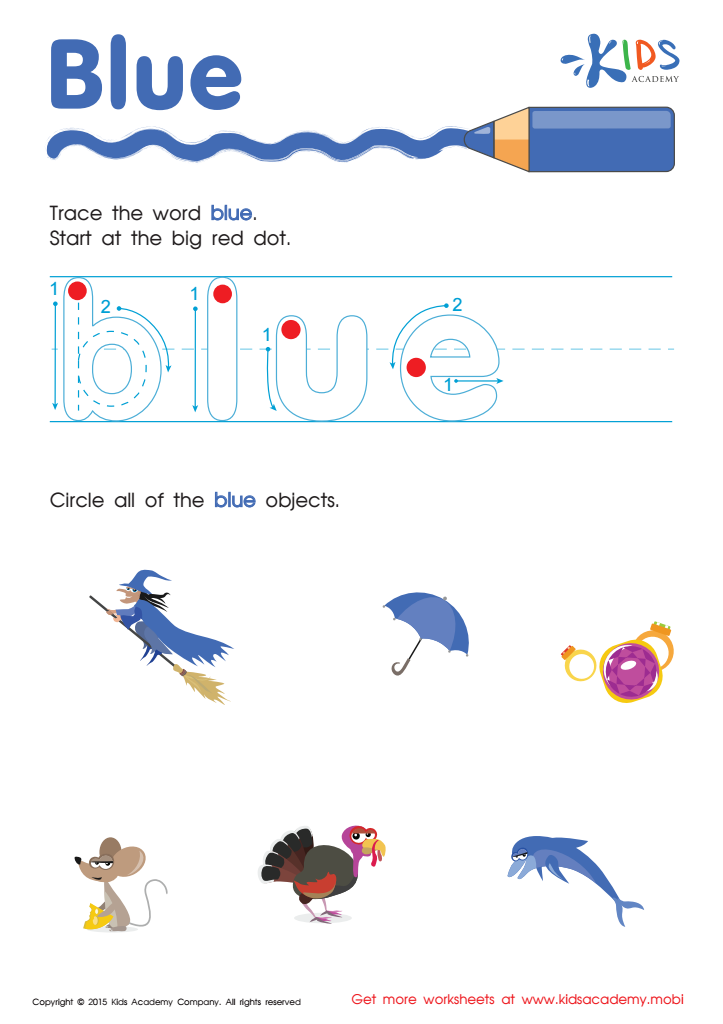
Blue Tracing Color Words Printable
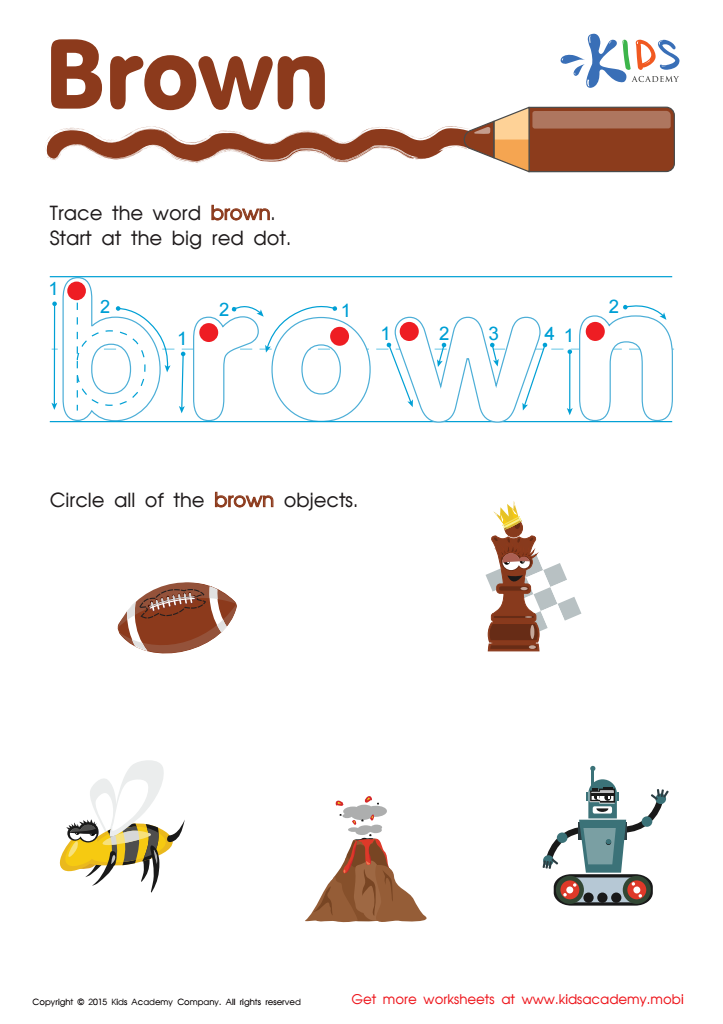
Brown Tracing Color Words Worksheet
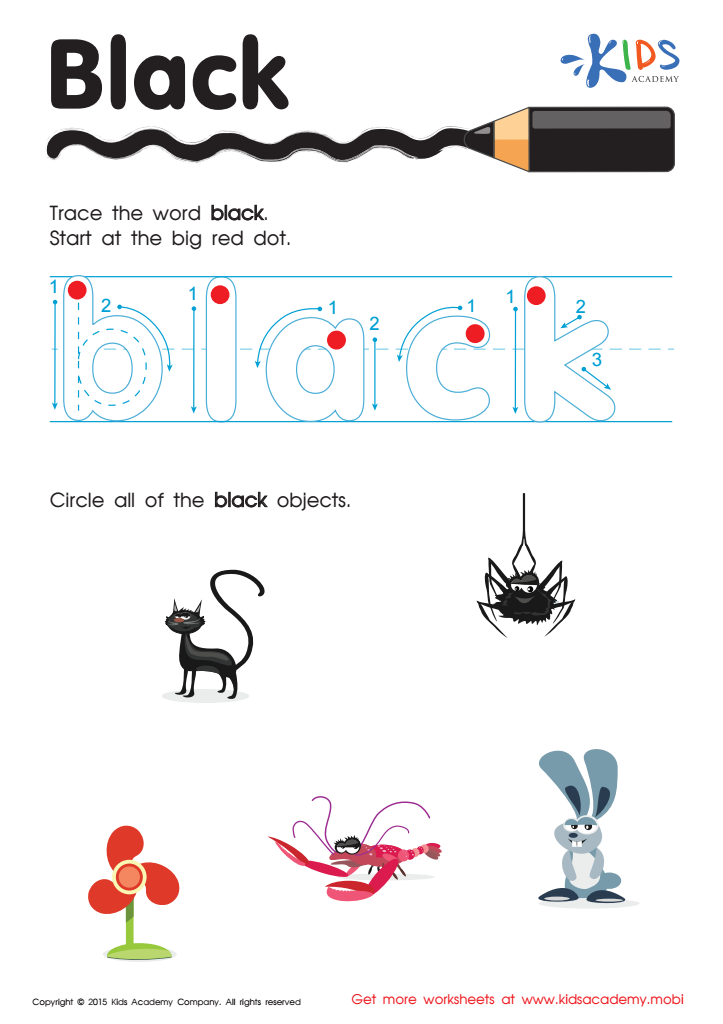
Black Tracing Color Words Printable





Helping children ages 5-6 recognize colors is important for several reasons. At this age, kids are naturally curious and eager to learn about the world around them. Recognizing colors is a key part of their development and plays a big role in their everyday lives.
Firstly, color recognition helps children describe and categorize objects. This is an essential skill for learning and understanding their environment. For example, sorting toys by color or identifying fruits and vegetables can make these activities more engaging and educational.
Secondly, learning colors can improve a child's language skills. When kids learn the names of different colors, they also expand their vocabulary. They begin to use more descriptive words, which helps in developing their communication skills.
Furthermore, color recognition is linked to cognitive development. It enhances memory and helps kids make connections between visual clues and words. This, in turn, supports their reading readiness and overall academic success.
For young children, learning colors also encourages creative expression. Whether through drawing, painting, or playing with colored blocks, they start to express their feelings and ideas.
In conclusion, color recognition isn’t just about knowing the names of colors. It's a foundational skill that supports language development, cognitive growth, and creativity. That's why parents and teachers should make it a priority for young learners.