Basic arithmetic practice Normal Worksheets for Ages 5-6
4 filtered results
-
From - To
Help your 5 to 6-year-old master the fundamentals of math with our Basic Arithmetic Practice Normal Worksheets. Our expertly crafted exercises cover essential addition and subtraction skills in a fun and engaging way. Designed to build confidence and proficiency, these worksheets feature colorful visuals, simple problems, and a friendly layout perfect for young learners. These practice sheets are an ideal resource for both classroom and at-home practice, ensuring children develop a strong numerical foundation. Bring joy to learning arithmetic and watch your child's math abilities flourish with our easy-to-follow worksheets!
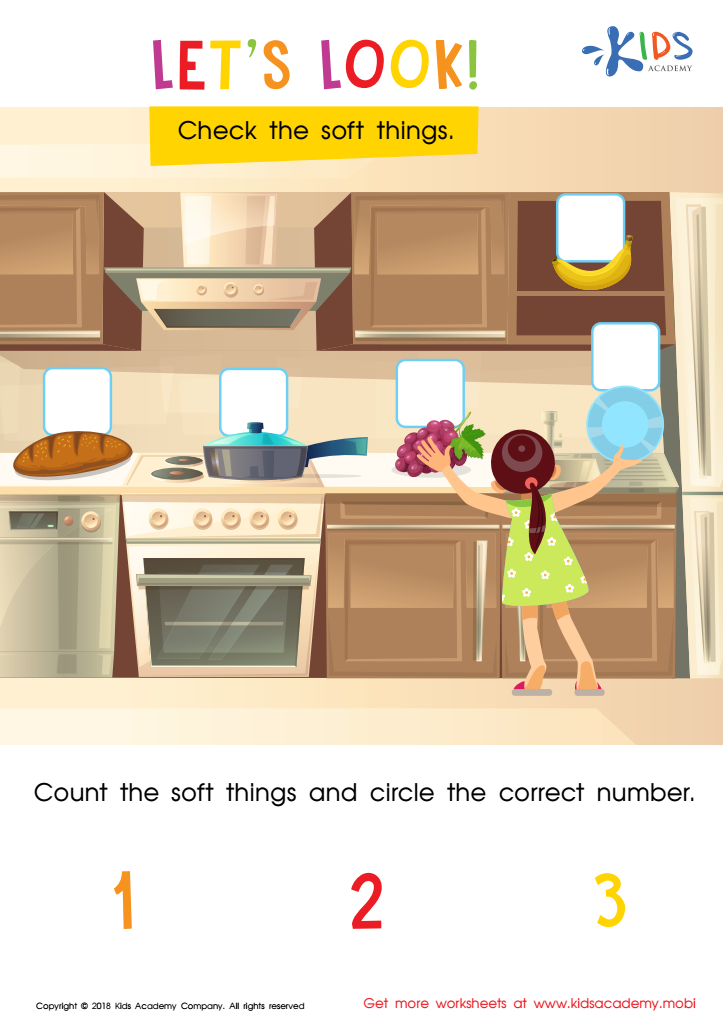
Let's Look! Assessment Worksheet
 Assign to My Students
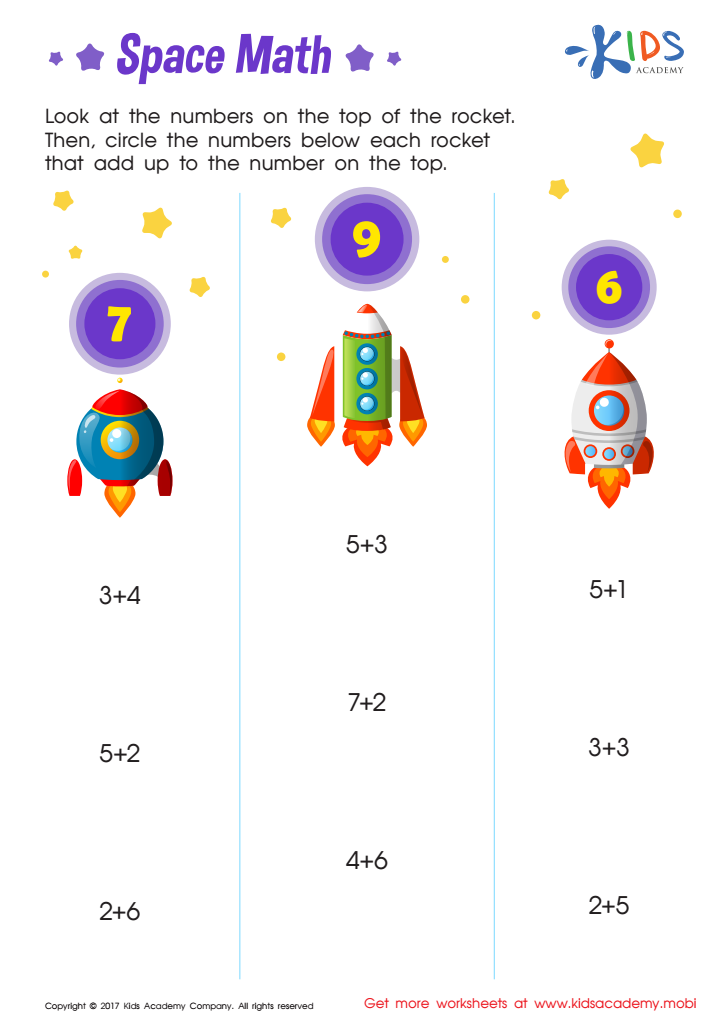
Addition: Space Math Worksheet
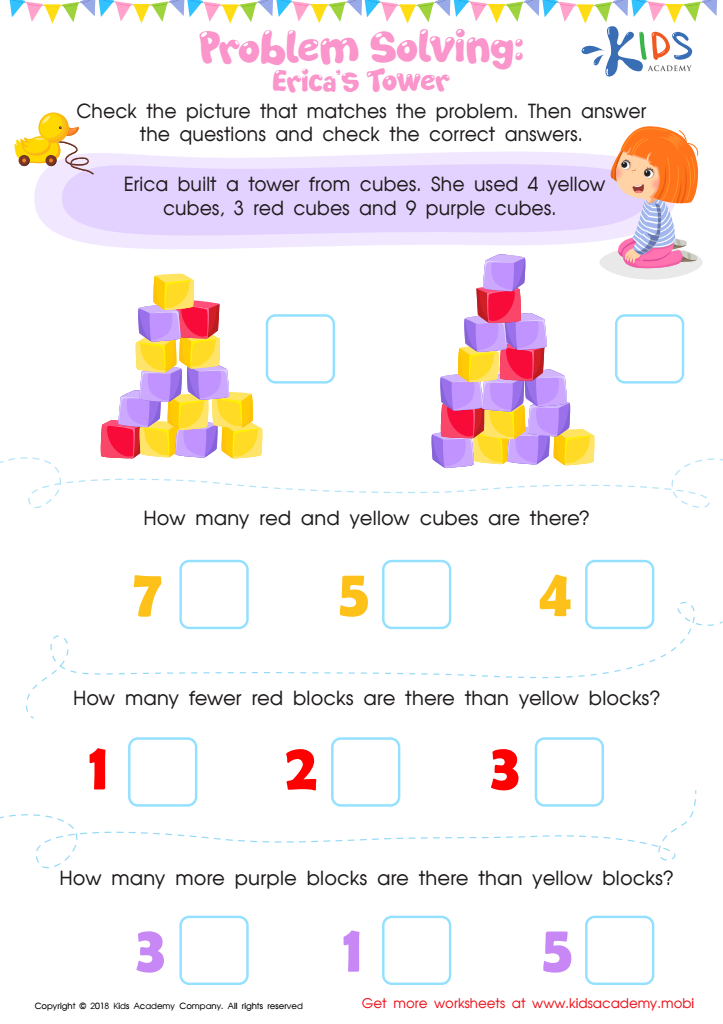
Problem Solving: Erica's Tower Worksheet
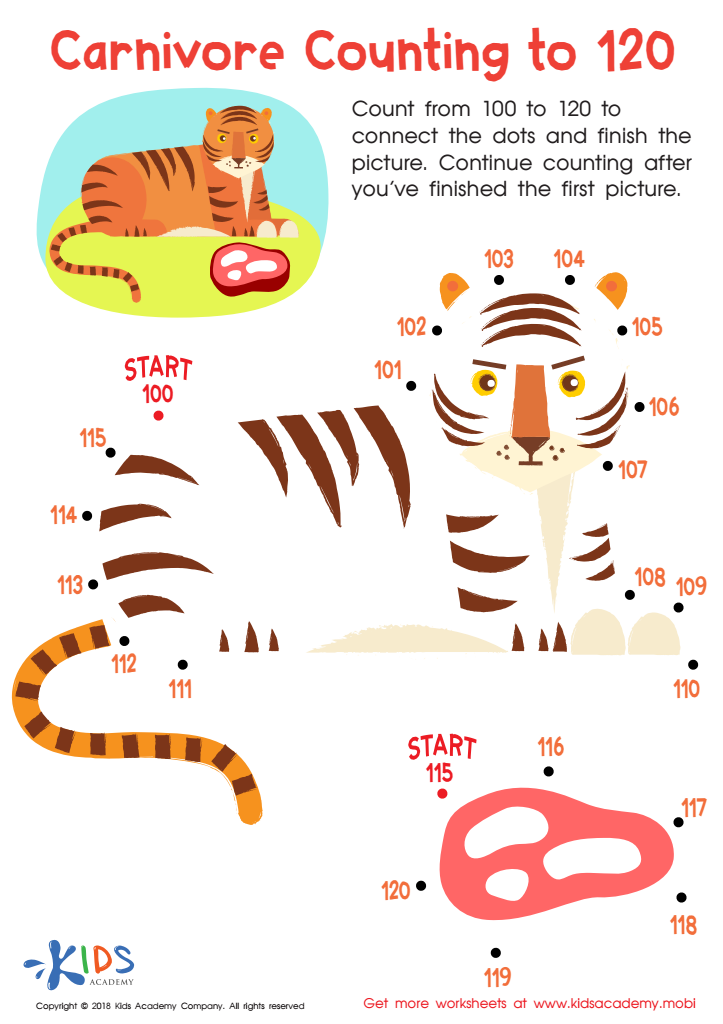
Carnivore Counting to 120 Worksheet







For children ages 5-6, developing basic arithmetic skills is crucial because it forms the foundation for all future mathematical learning. At this stage, children are incredibly receptive and can absorb new concepts quickly. By introducing basic arithmetic, such as addition and subtraction, early in their education, parents and teachers can foster cognitive development and enhance problem-solving abilities. Engaging with arithmetic also helps to instill a positive attitude toward math, reducing anxiety and building confidence.
Additionally, arithmetic skills are not confined to the classroom; they are essential for everyday activities. Simple tasks like counting items, telling time, and understanding money require a basic grasp of arithmetic concepts. Early practice helps children integrate these skills into their daily lives, promoting independence.
Early arithmetic practice also supports other areas of learning. For instance, it improves logical thinking and pattern recognition, which are vital skills for reading and writing. Furthermore, activities that involve counting, sorting, or measuring help fine-tune motor skills and foster attention to detail.
In summary, parents and teachers should prioritize basic arithmetic practice for 5-6 year olds to build a strong mathematical foundation, support practical life skills, and promote overall cognitive development. Early exposure can lead to better academic achievement and a lifelong appreciation for learning.








