Basic counting skills Normal Worksheets for Ages 5-6
5 filtered results
-
From - To
Enhance your child's number skills with our Basic Counting Skills Normal Worksheets for ages 5-6. Specially crafted to support early learners, these engaging worksheets foster fundamental math abilities such as counting, number recognition, and sequencing. Each colorful and interactive sheet aims to transform learning into a fun and educational adventure. Perfect for home or classroom use, these resources provide a solid foundation for future math success. Give your child a boost in confidence and competence with our expertly designed counting worksheets. Dive into a world of numbers and help your little one thrive!
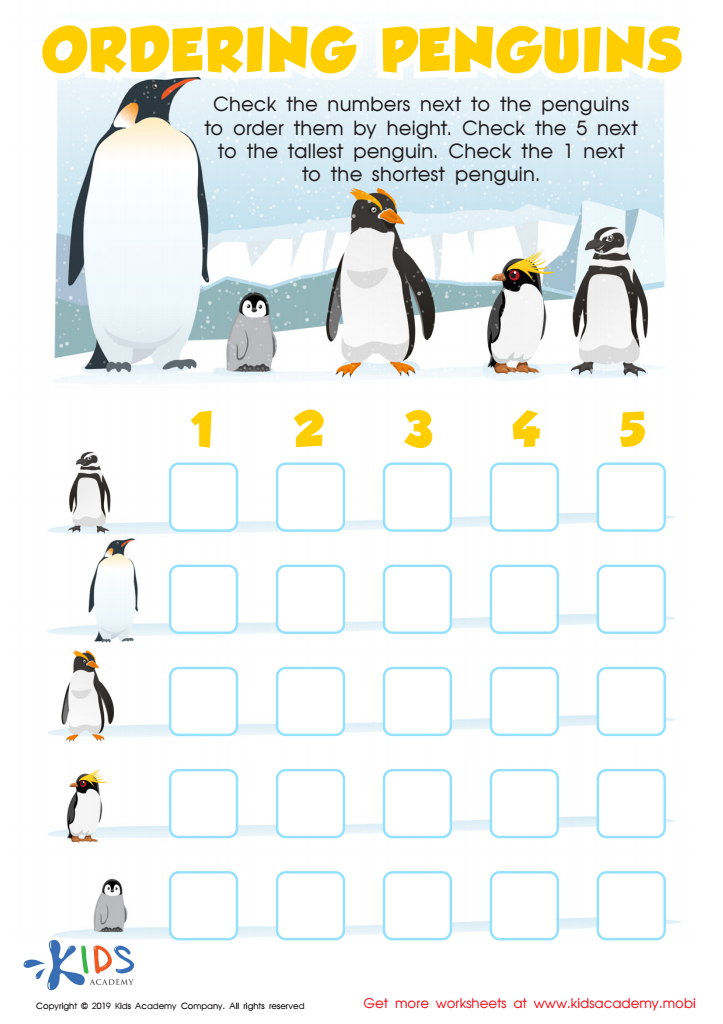
Ordering Penguins Worksheet
 Assign to My Students
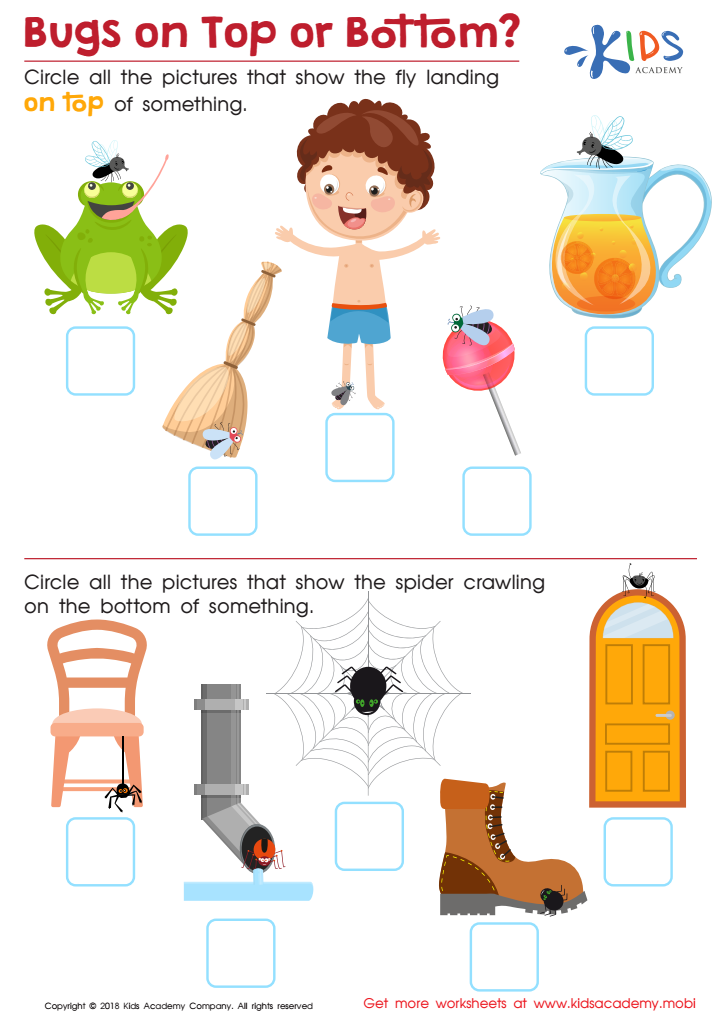
Bugs on Top or Bottom? Worksheet
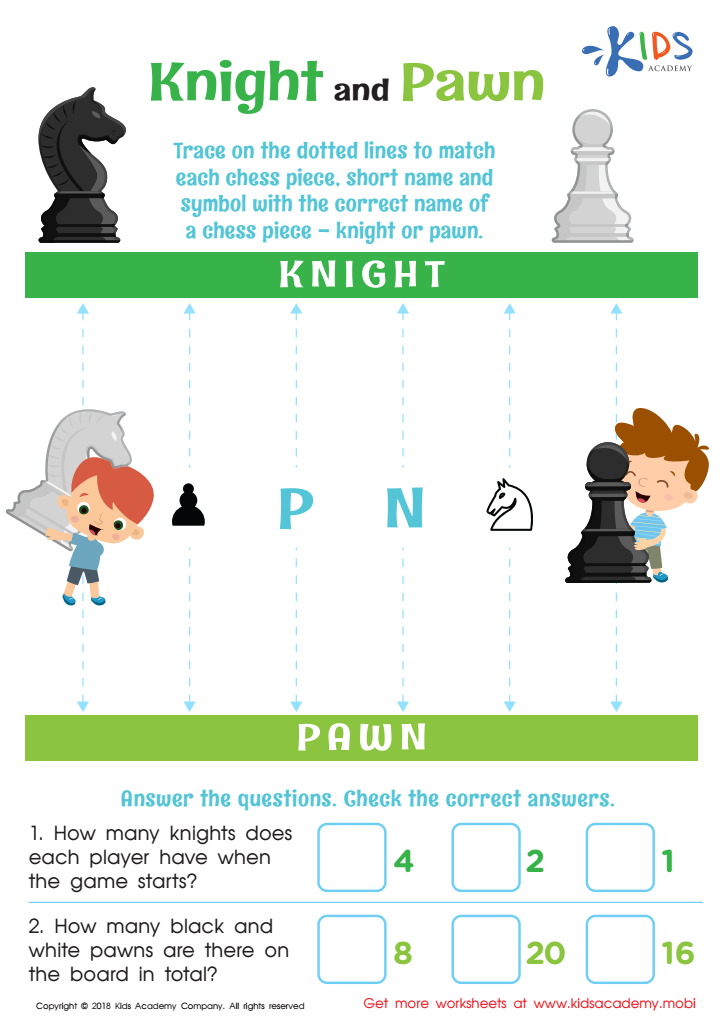
Knight and Pawn Worksheet
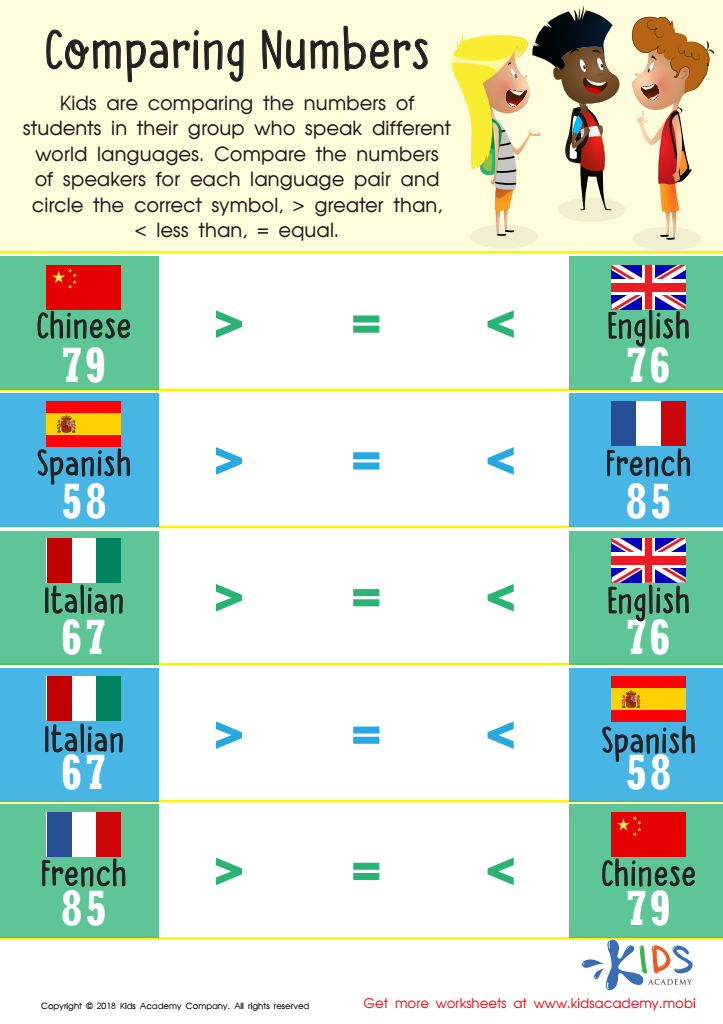
Comparing Numbers Worksheet for 1st Grade
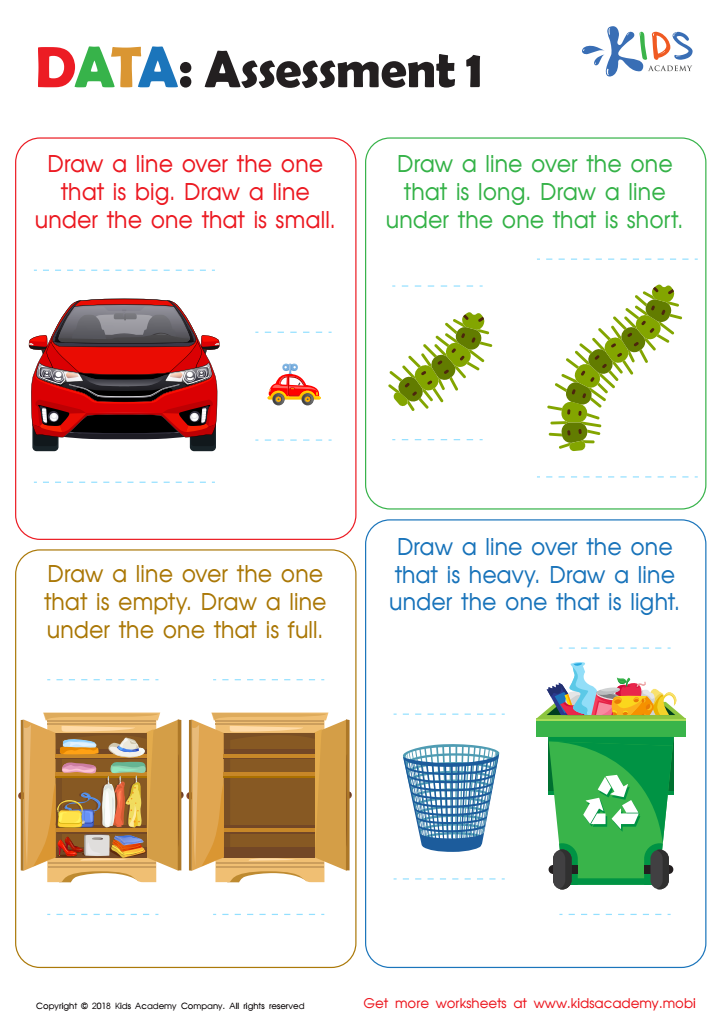
Data: Assessment 1 Worksheet








Basic counting skills are foundational to a child's mathematical development and overall cognitive growth. For ages 5-6, children are often beginning kindergarten or first grade, which marks their initial formal encounters with structured learning environments. Mastering basic counting equips children with the ability to understand more complex mathematical concepts such as addition, subtraction, and number patterns as they progress in their education.
For parents and teachers, focusing on basic counting skills is essential because it builds a child's confidence and enthusiasm towards mathematics. Early positive experiences with counting nurture a growth mindset, making children more willing to tackle challenges and explore further learning opportunities. Moreover, counting enhances a child's ability to follow sequences and improve memory, both of which are crucial for broader academic success.
Helping children develop these skills early also fosters their logical reasoning and problem-solving abilities, which are valuable beyond mathematics. By the age of 5-6, children are forming the cognitive abilities that will support their future education, and early intervention ensures they remain on track. Ultimately, caring about basic counting skills means laying down a robust educational foundation that will benefit children academically, socially, and mentally throughout their lives.








