Capitalization rules Normal Worksheets for Ages 5-6
3 filtered results
-
From - To
Discover our engaging "Capitalization Rules Normal Worksheets" designed specifically for children ages 5-6. These fun and interactive worksheets help young learners grasp essential capitalization rules in an enjoyable way. With colorful illustrations and age-appropriate exercises, children will practice identifying capital letters in sentences, mastering the use of proper nouns, and understanding when to capitalize the first word of a sentence. Perfect for both classroom settings and at-home learning, our resources support early literacy development and boost confidence in writing skills. Get your little ones excited about learning with our creative worksheets that make mastering capitalization simple and enjoyable!
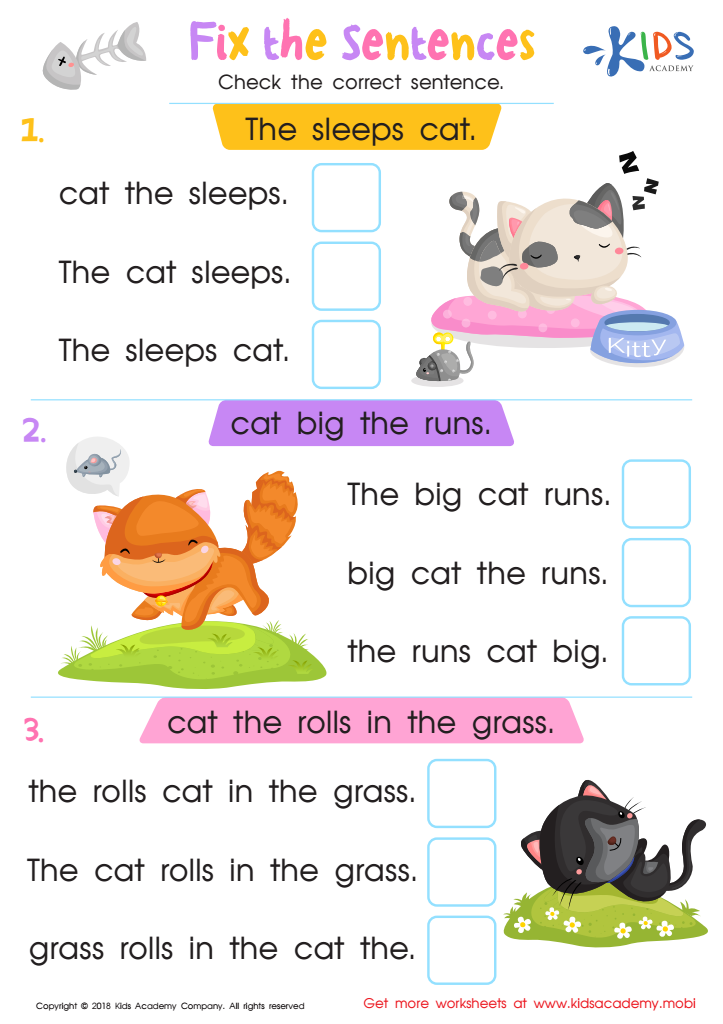
Fix the Sentences Worksheet
 Assign to My Students
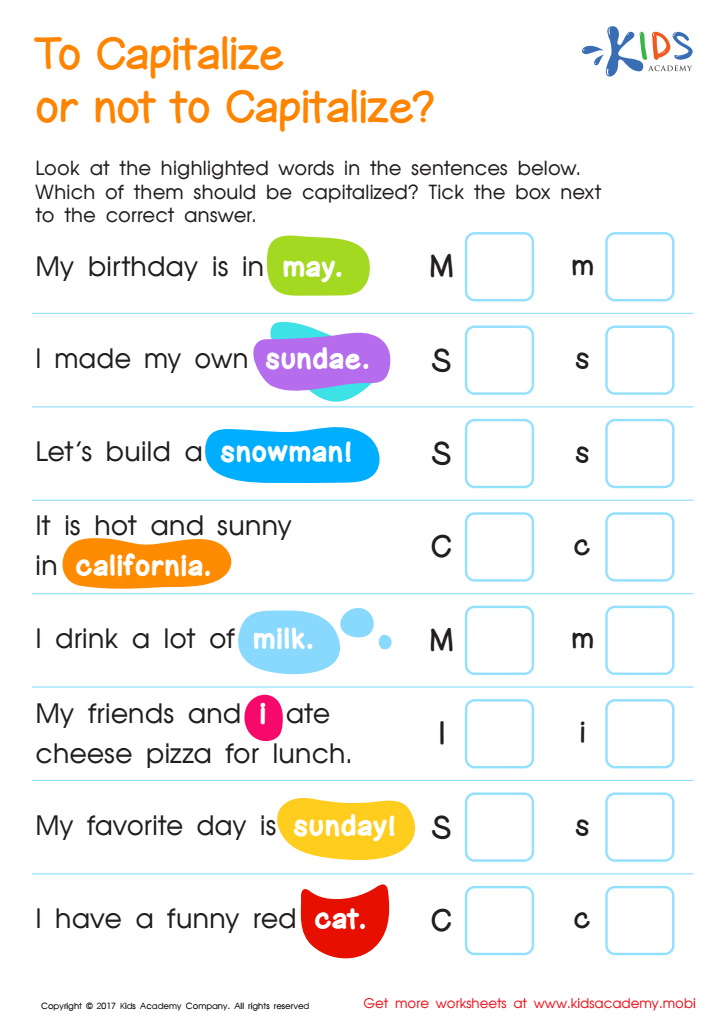
Capitalization: To Capitalize or Not? Printable
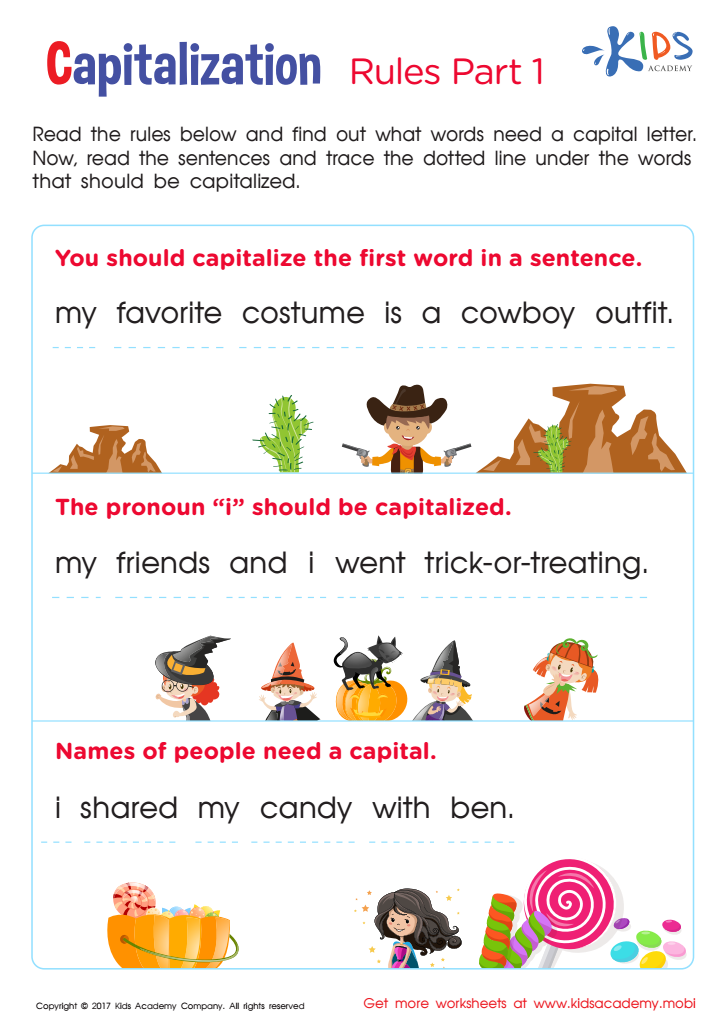
Capitalization Rules: Part 1 Worksheet








Capitalization rules are essential for young learners aged 5-6, as they form the foundation for effective communication and literacy skills. At this age, children are beginning to express their thoughts in writing, and understanding when to use capital letters helps them to convey their messages clearly and correctly. For parents and teachers, teaching capitalization opens the door to grammar discussions, enhancing children's overall writing abilities.
Understanding capitalization fosters a sense of professionalism in children's writing. When youngsters know to capitalize the first letters of names, places, and the beginning of sentences, their work appears more polished and organized. This not only boosts their confidence but also encourages them to take pride in their written expressions.
Moreover, familiarizing children with capitalization rules lays the groundwork for understanding complex grammar concepts in the future. This early exposure helps them develop critical reading skills, as recognizing capital letters assists in identifying the beginning of sentences and important nouns.
Ultimately, caring about capitalization rules has a ripple effect; it supports children's ongoing learning, builds essential skills, and prepares them for future academic success. Being intentional about teaching these rules now sets the tone for long-term literacy development.








