Comparing objects Normal Worksheets for Ages 5-6
3 filtered results
-
From - To
Help your child master fundamental math skills with our "Comparing Objects Normal Worksheets" designed for ages 5-6. These engaging worksheets allow young learners to practice comparing sizes, lengths, weights, and quantities, fostering critical thinking and problem-solving abilities. Each worksheet is crafted to be fun and interactive, encouraging children to develop a strong foundation in early mathematics. Perfect for classroom use or at-home practice, these worksheets provide ample opportunities for kids to learn about measurement and comparison in a playful yet educational manner. Set your child on the path to math success with our high-quality printable resources.
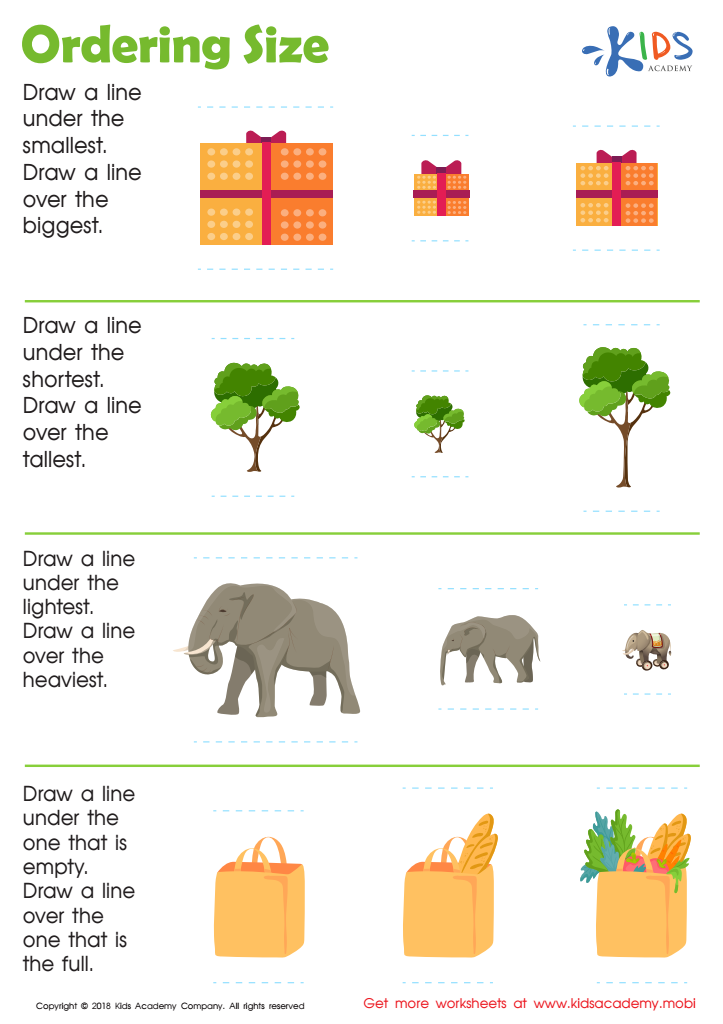
Ordering Size Worksheet
 Assign to My Students
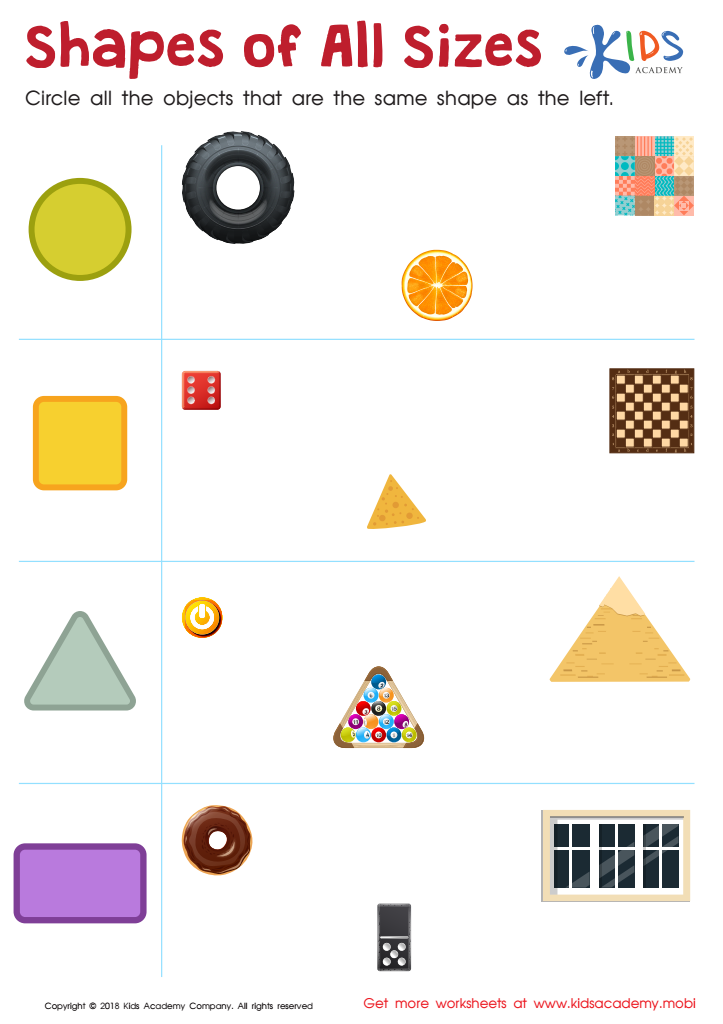
Shapes of All Sizes Worksheet
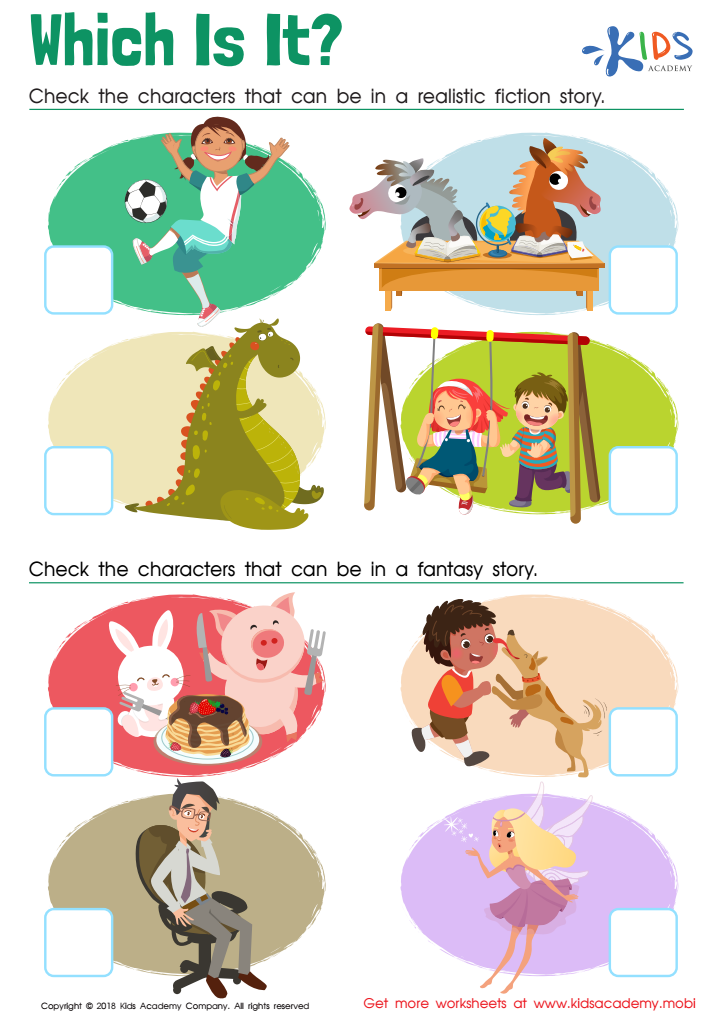
Which Is It? Worksheet






.jpg)
Comparing objects is a fundamental skill that lays the groundwork for critical thinking and problem-solving abilities in children ages 5-6. At this developmental stage, young learners must explore and understand their environment through interactions with tangible objects. When they compare items based on size, length, weight, or other attributes, they engage in careful observation and analytical thinking, which sharpen their perception and cognitive skills.
For parents and teachers, fostering comparison skills can significantly aid in children's academic journey, especially in math and science. Children who can sort and compare items with ease develop a better grasp of concepts like measurement, categorization, and pattern recognition. These skills are crucial for higher-level math, including addition, subtraction, and geometry.
Moreover, these activities enhance children's vocabulary and language skills as they learn and use descriptive words such as "bigger," "smaller," "heavier," and "lighter." Effective communication about their findings boosts their confidence and influences their social interactions positively.
Overall, engaging in object comparison nurtures curiosity and encourages a systematic approach to problem-solving. Understanding and practicing these fundamental skills at an early age sets a solid foundation for complex thinking and learning processes in later academic and everyday life contexts. This is why parents and teachers should prioritize and encourage activities that involve comparing objects for young children.








