
Comparison Skills Normal Worksheets for Ages 5-6
4 filtered results
Difficulty Level
Grade
Age
-
From - To
Subject
Activity
Standards
Our "Comparison Skills Normal Worksheets for Ages 5-6" are designed to foster critical thinking and foundational math abilities in young learners. Through engaging activities, children practice comparing sizes, lengths, weights, and more. These worksheets build confidence and promote cognitive development, setting the stage for future academic success. Ideal for homeschool or classroom settings, the exercises are visually appealing and age-appropriate, ensuring that kids remain interested and motivated. Enhance your child's learning experience with our expertly crafted comparison worksheets, designed specifically to reinforce and enrich essential early comparison skills. Try them today and watch your child thrive!
Favorites
With answer key
Interactive
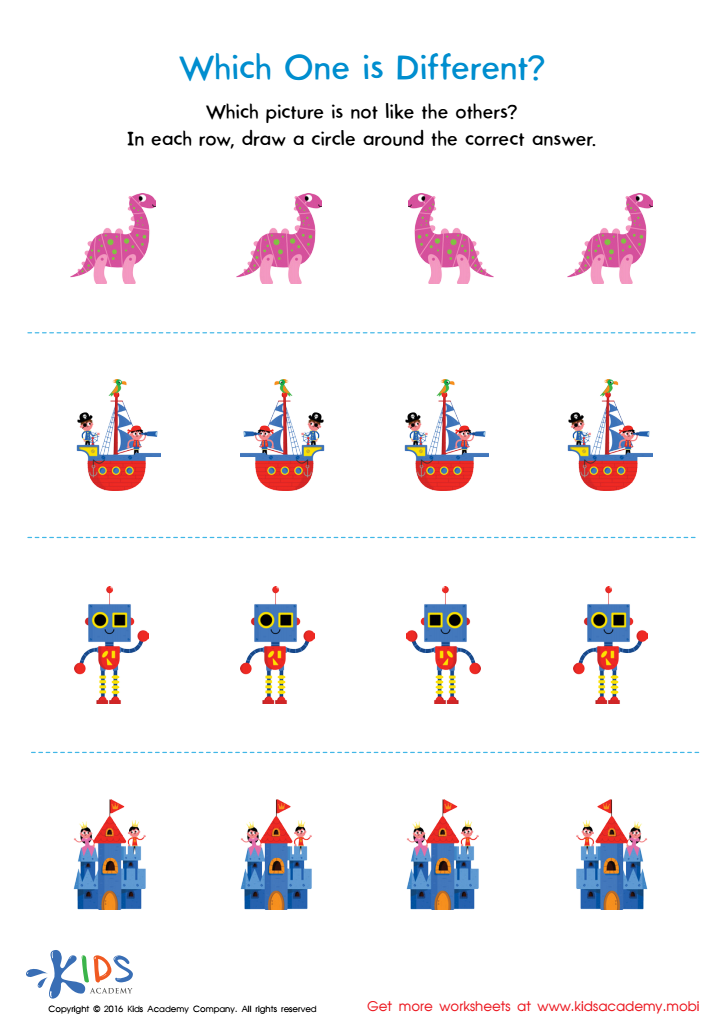
Which One Is Different Worksheet
Preschoolers can hone logical reasoning and critical analysis skills with this "Which one is Different?" worksheet. Kids must look closely and pick out unique attributes of objects and images. It's a skill that can serve them throughout their lifetime.
 Assign to My Students
Which One Is Different Worksheet
Worksheet
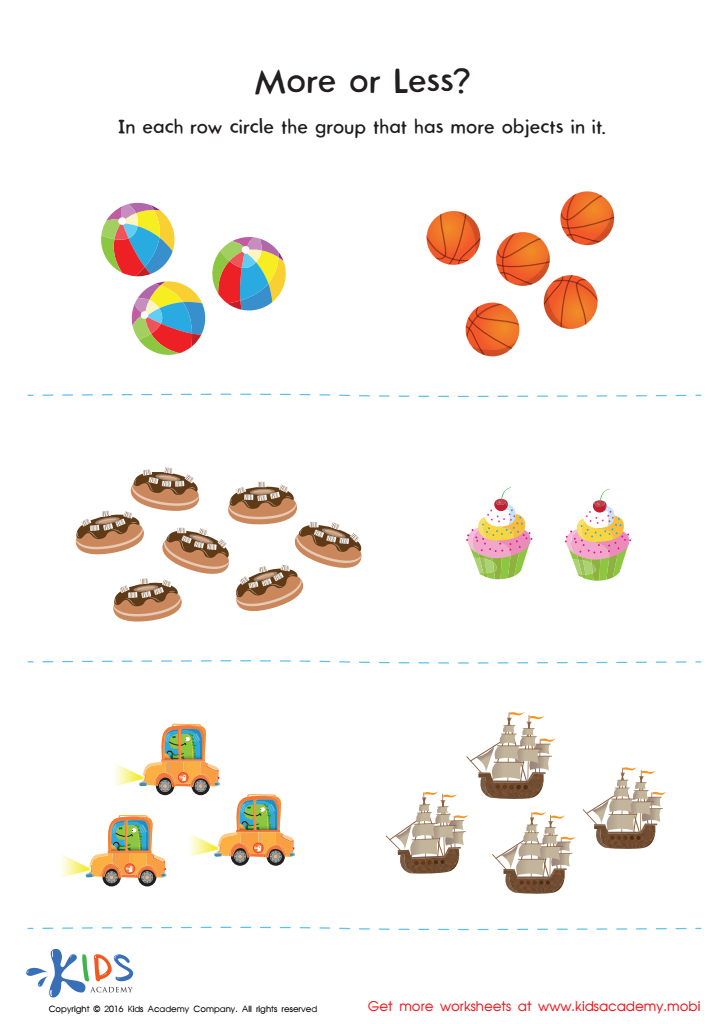
More or Less Size Worksheet
Worksheet
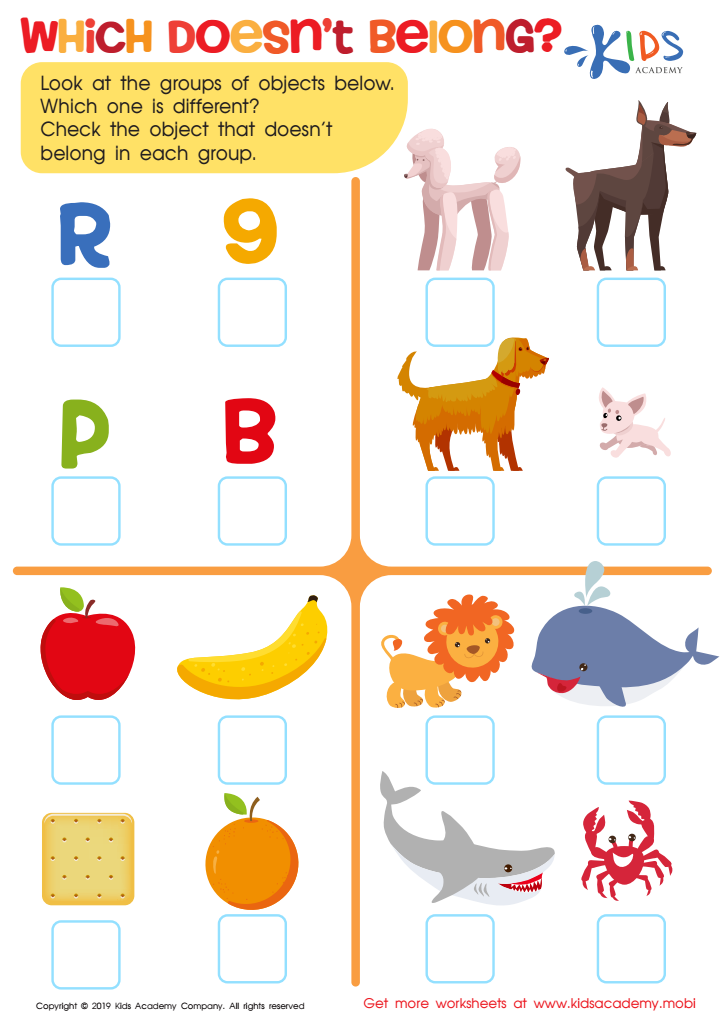
Which Doesn't Belong? Worksheet
This engaging worksheet helps preschoolers recognize similar and different attributes of common words, using brightly-colored pictures. They analyze the items in each category and check off what is different. For extra practice, have them explain their reasoning verbally! Sorting and classifying are important skills to learn.
Which Doesn't Belong? Worksheet
Worksheet
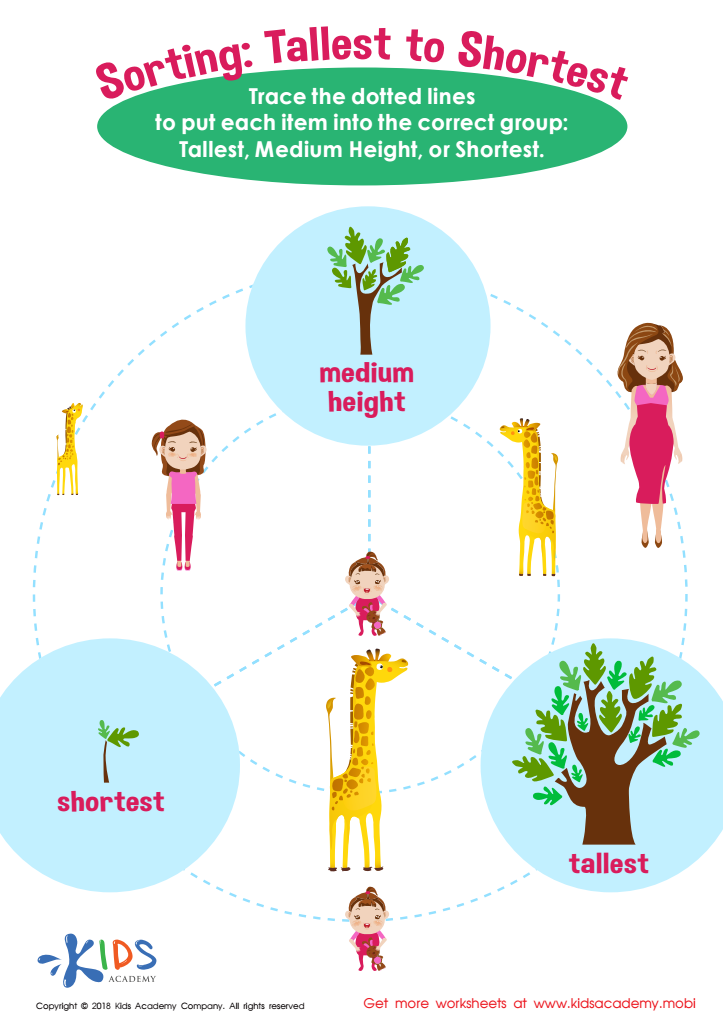
Sorting: Tallest to Shortest Worksheet
This worksheet is great for preschoolers to practice foundational measurement skills. Traceable lines help them sort pictures into Tallest, Shortest and Medium categories, giving them concrete examples to compare. Fine motor skills and understanding of relationships between sizes are also developed - perfect for preparing them for larger measurement concepts.
Sorting: Tallest to Shortest Worksheet
Worksheet
Join Kids Academy for Free
Who is primarily going to use this learning content?








Comparison skills are crucial for young children aged 5-6 because they form the basis for critical thinking and reasoning. At this age, children are beginning to explore the world around them in more detail, and being able to compare objects, sizes, shapes, quantities, and other attributes helps them understand and categorize their environment effectively. When parents and teachers engage children in simple comparison activities—like identifying which object is bigger, smaller, heavier, or lighter—they stimulate cognitive development and enhance observational skills.
Additionally, comparison skills are foundational for mathematical understanding. These skills set the stage for more advanced mathematical concepts such as sorting, ordering, measuring, and understanding numerical relationships. For example, understanding that five is more than three helps children grasp basic addition and subtraction.
Early development of comparison skills also encourages language development. Children learn comparative adjectives (e.g., big vs. small, tall vs. short) and develop better communication abilities as they describe and reflect on their observations. This dual growth in mathematics and language prepares children for academic success.
Overall, paying attention to and nurturing comparison skills in early childhood fosters a well-rounded cognitive development, setting the groundwork for both academic learning and everyday problem-solving skills. Thus, it’s imperative for parents and teachers to prioritize and incorporate comparison activities into a child’s daily routine.








