Counting skills Normal Worksheets for Ages 5-6 - Page 5
100 filtered results
-
From - To
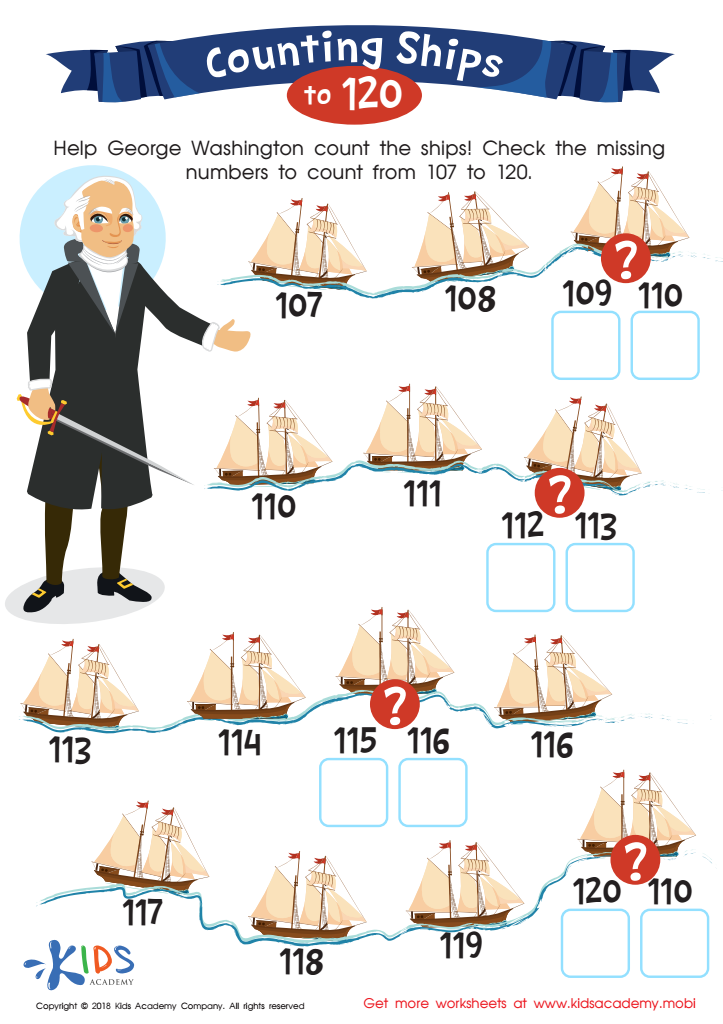
Counting Ships to 120 Worksheet
 Assign to My Students
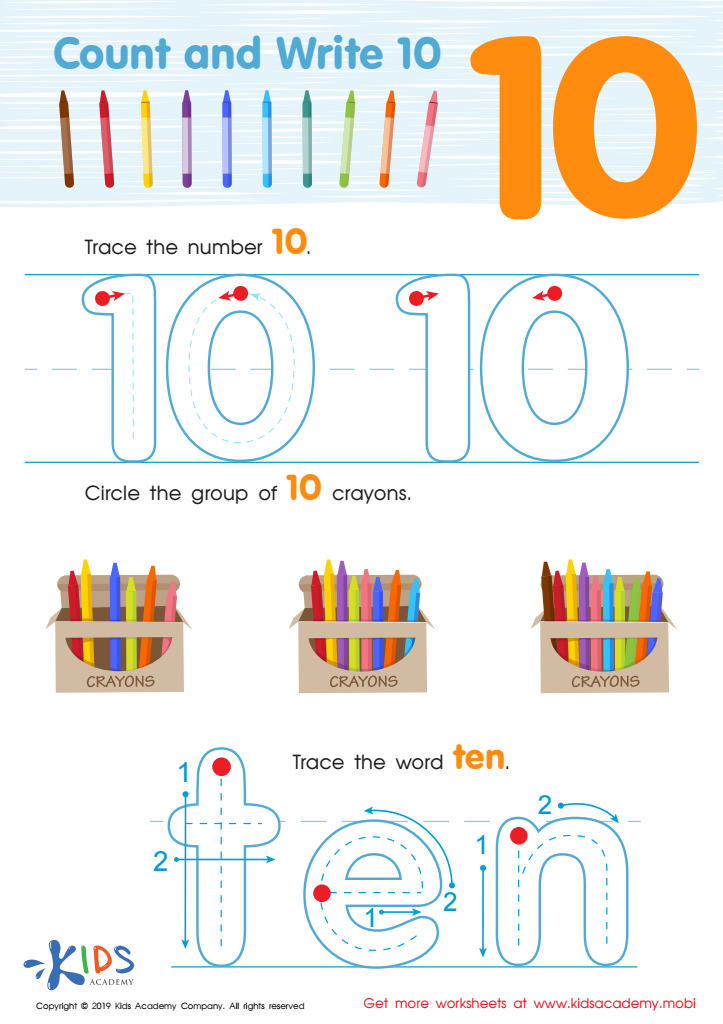
Count and Write 10 Worksheet
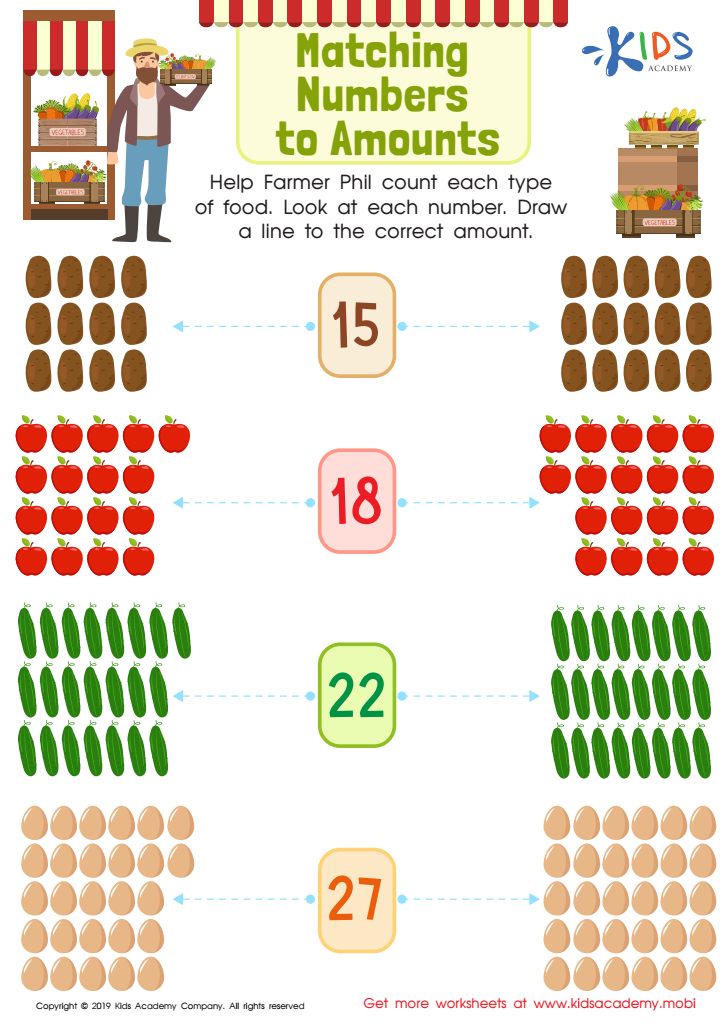
Matching Numbers to Amounts Worksheet
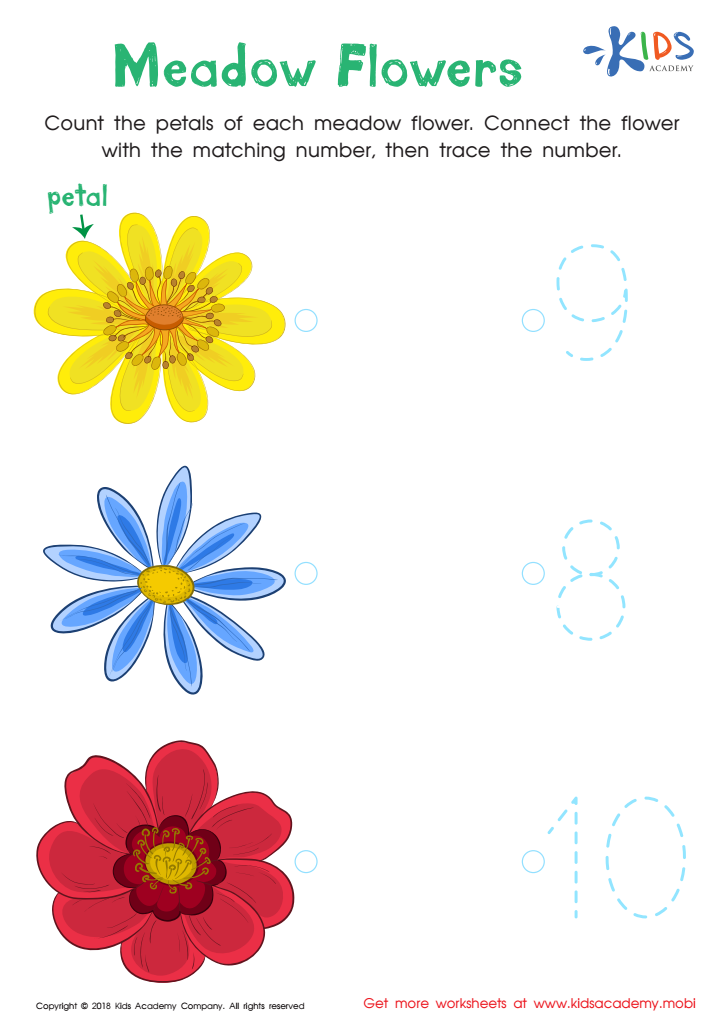
Kindergarten Number Tracing: Medow Flowers Worksheet






Counting skills are fundamental for children aged 5 to 6, laying the groundwork for mathematical understanding and cognitive development. At this age, children transition from recognizing numbers to mastering one-to-one correspondence, which is crucial for developing arithmetic abilities. Early counting experiences foster not only mathematical fluency but also critical thinking and problem-solving skills.
Teachers and parents should care about honing these skills because they are directly linked to future academic success. Proficiency in counting allows children to grasp more complex mathematical concepts like addition and subtraction, ensuring a smoother transition into elementary education. Moreover, counting activities can boost a child's confidence and self-esteem when they see their own progress, encouraging a positive attitude towards learning.
Integrating counting into daily routines—such as counting objects during play or incorporating numbers in cooking—makes learning engaging and meaningful. These skills also enhance cognitive development, improving memory and focus which are critical for overall learning. By nurturing counting skills early on, parents and teachers can lay a solid foundation for a child’s future education and lifelong numerical competency. Encouraging these skills ensures that children approach mathematics with enthusiasm and curiosity, vital attributes for success in an increasingly numerical world.








