Directional understanding Normal Worksheets for Ages 5-6
3 filtered results
-
From - To
Enhance your child’s spatial awareness with our Directional Understanding Normal Worksheets for ages 5-6. These expertly crafted printable worksheets from Kids Academy are designed to help young learners grasp key concepts like up, down, left, and right. Through engaging activities and age-appropriate challenges, children build essential skills in following directions while having fun. Perfect for honing cognitive abilities, our worksheets support interactive learning and foster confidence in navigating their environment. Ideal for both classroom educators and parents, these resources ensure children develop a strong foundation in directional understanding. Explore now at [Kids Academy website link]!
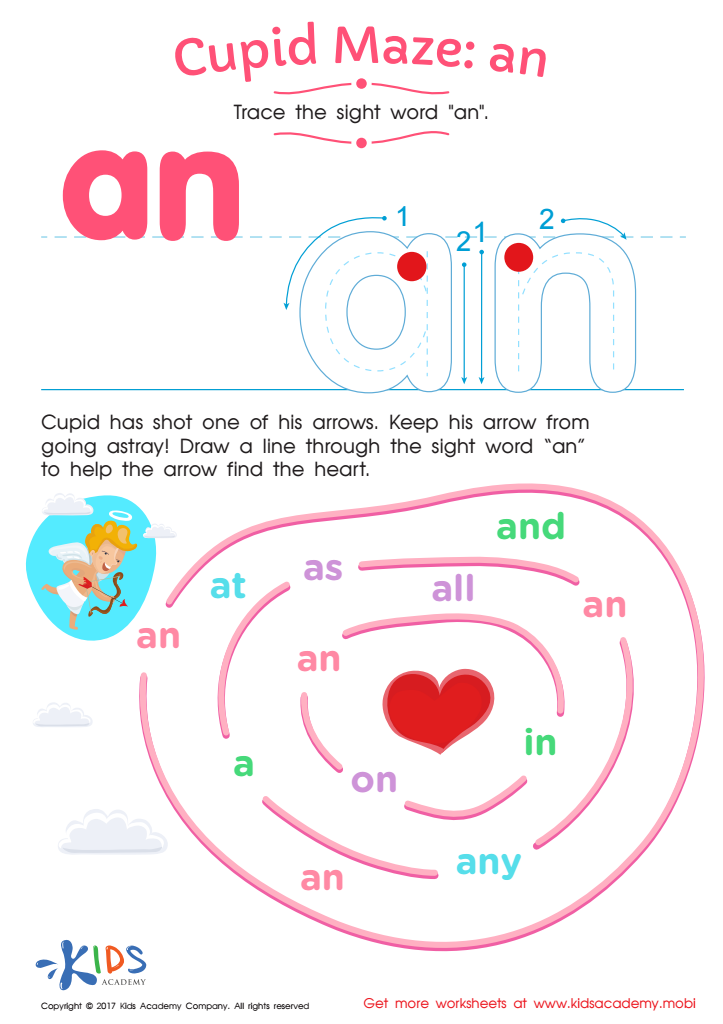
Cupid Maze: An Printable
 Assign to My Students
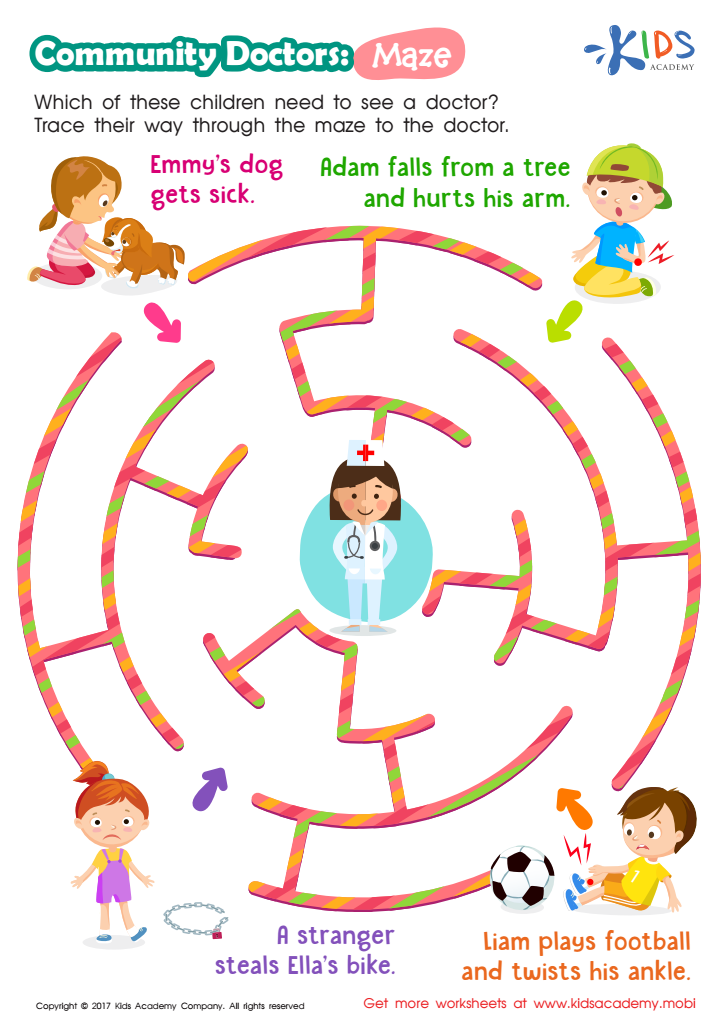
Community Doctors: Maze Printable
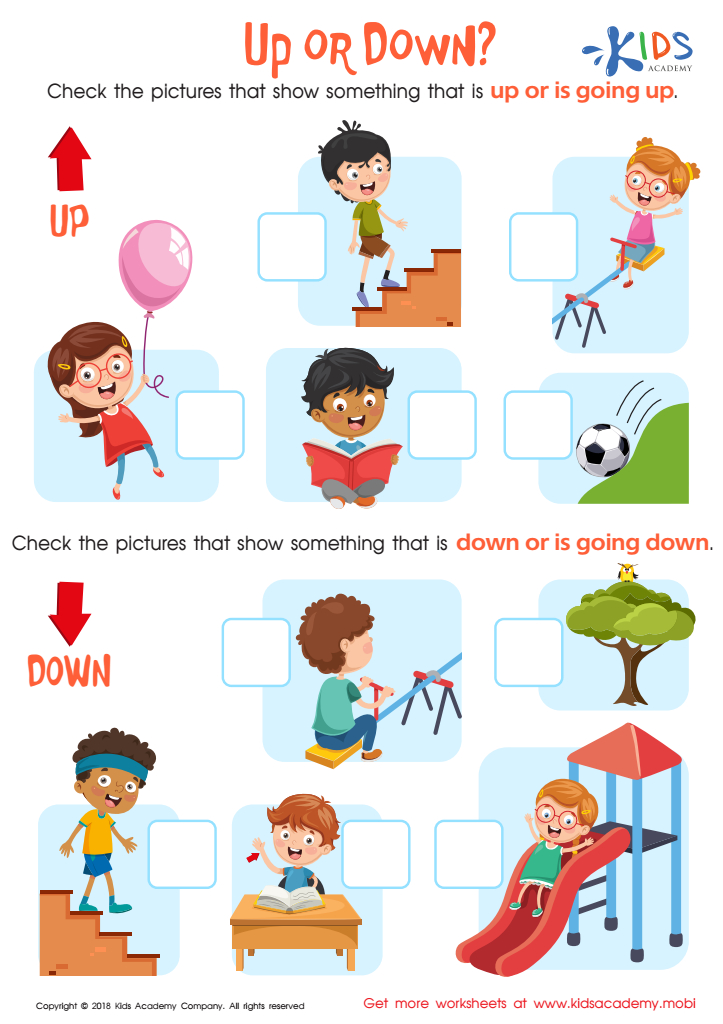
Up or Down Worksheet







Directional understanding is a fundamental skill that significantly impacts a child's cognitive and physical development. For children aged 5-6, mastering concepts of direction such as left, right, up, and down is crucial for several reasons.
Firstly, it enhances their spatial awareness, enabling them to navigate their environment more safely and confidently. This is essential for everyday activities like crossing the street, participating in sports, or simply moving around the classroom.
Secondly, directional skills lay the groundwork for more advanced academic concepts. For example, understanding direction is a precursor to learning about geometry and maps, which are integral parts of the math and social studies curriculums. Reading skills are also linked to directional understanding, as children need to follow text from left to right and top to bottom.
Thirdly, directional competence boosts a child's independence and self-esteem. When children can understand and follow directions, they feel more capable and are more likely to take initiative, which is crucial for personal growth.
Lastly, adequately developed directional skills are tied to other cognitive functions like problem-solving and sequencing, which are fundamental for overall learning. Hence, parents and teachers should prioritize activities that support developing this essential skill, ensuring a strong foundation for future learning and daily life.








