Unlock your child's potential with our "Enhancing Problem-Solving Skills" worksheets designed for ages 5-6. These engaging, age-appropriate activities stimulate critical thinking and creativity, helping young learners develop essential skills for academic success. Through interactive puzzles, logical games, and real-life scenarios, children will discover the joy of tackling challenges while boosting their confidence. Each worksheet aligns with developmental milestones, ensuring that your child has the support they need to thrive. Perfect for both home and classroom settings, our worksheets provide a fun and effective way to foster problem-solving abilities that will benefit children throughout their educational journey. Start exploring today!

Check out this FREE "Enhancing problem-solving skills" Trial Lesson for age 5-6!

King

Favorites
With answer key
Interactive
  • 5-6
  • Enhancing problem-solving skills
  • Normal
How King Moves Worksheet

How King Moves Worksheet

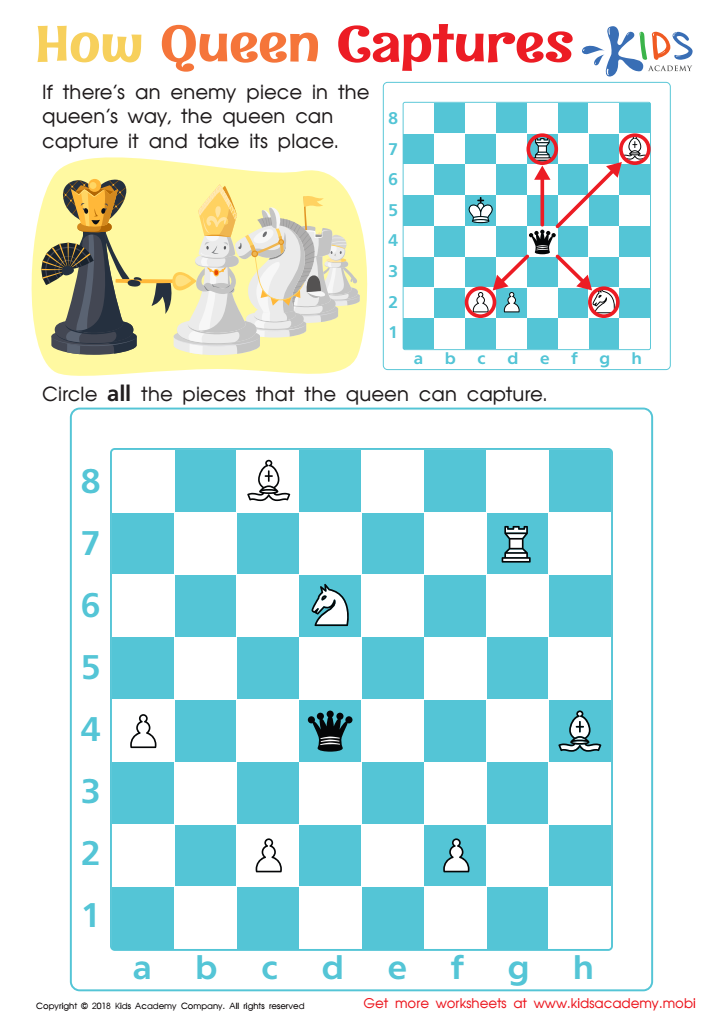
Teach your kids the fundamentals of chess with this worksheet! The goal is to checkmate the opponent's king, so it must be protected at all times. The king moves along files, ranks, and diagonals (except one square at a time), and cannot move to a square next to the enemy king. Your kids will soon master the art of checkmate!
How King Moves Worksheet
Worksheet
Place Value Quest Worksheet

Place Value Quest Worksheet

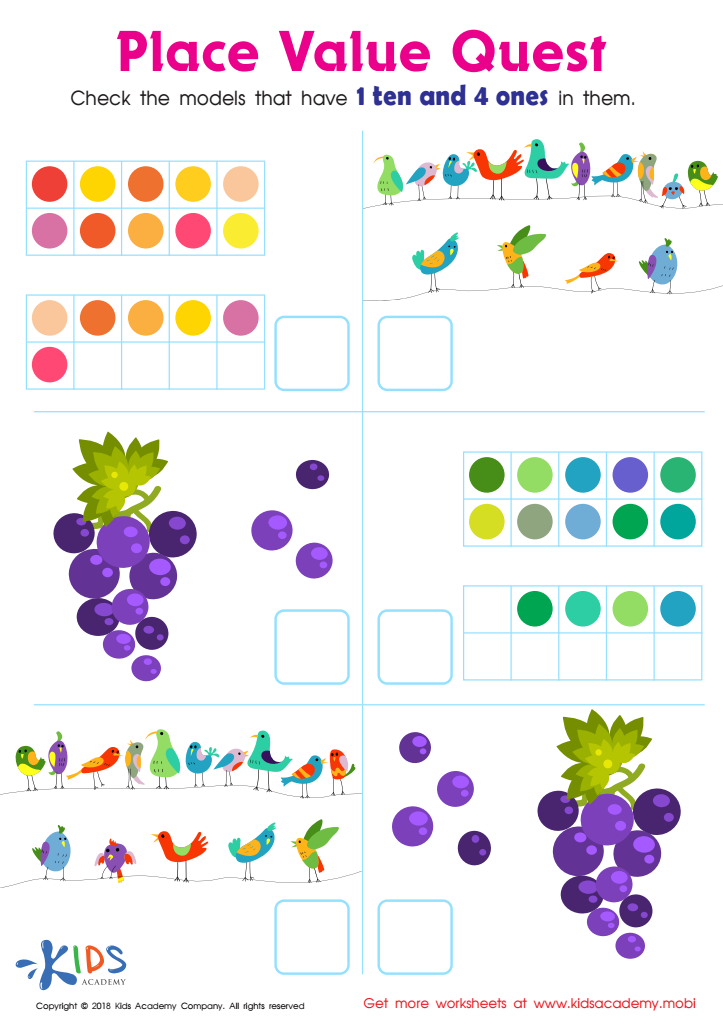
Help your child explore place value with this fun worksheet! They'll pick the set of images that have 1 ten and 4 ones from a selection of birds, grapes, and dots. Checking the boxes that contain the answer, your child will learn to count and identify tens and ones. A quick math practice page that's sure to be a hit!
Place Value Quest Worksheet
Worksheet
How Queen Captures Worksheet

How Queen Captures Worksheet

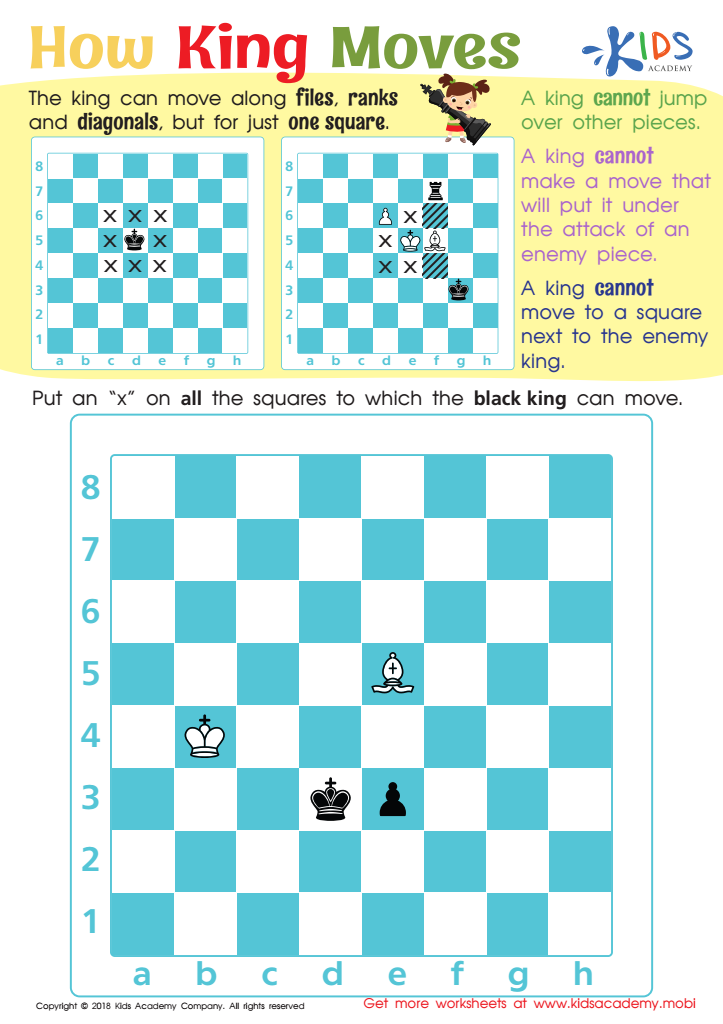
Chess is a great game for sharpening math skills, strategic thinking, and knowledge of how each piece moves. If your child is interested, introduce them with this worksheet. It demonstrates how the queen can capture opposing pieces, such as another queen, and take their place.
How Queen Captures Worksheet
Worksheet
Daisy Subtraction Quest Worksheet

Daisy Subtraction Quest Worksheet

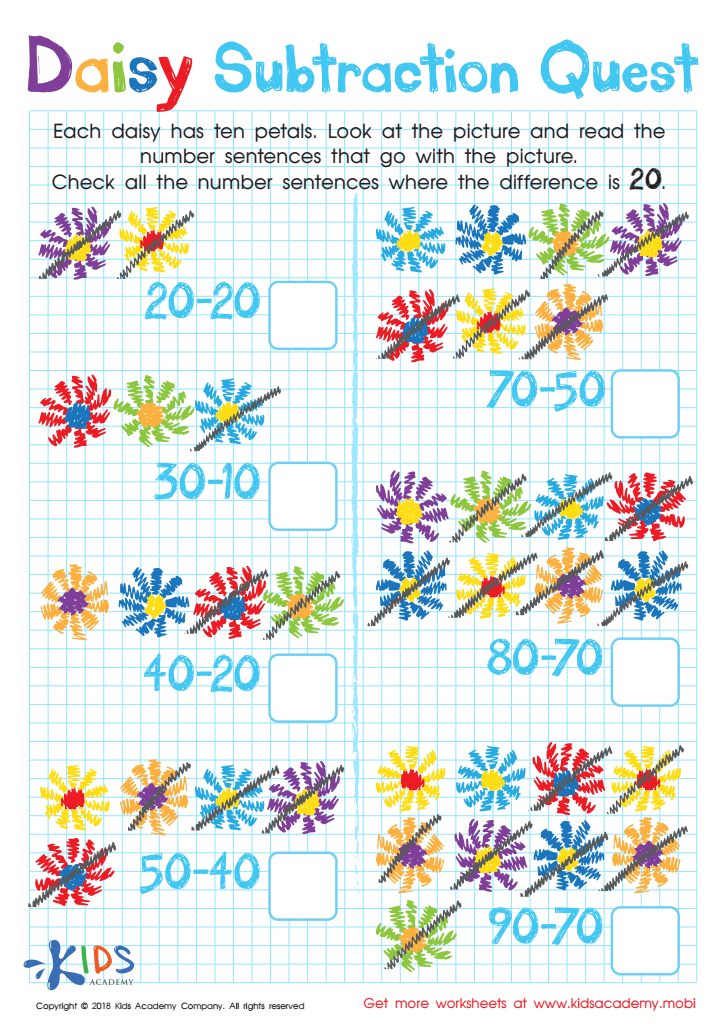
Ohh-la-la! These daisies are something special! With ten petals each, they're perfect for helping little math learners use tens to find number sentences that differ by 20. Our free worksheet is full of bright colors to engage and easy questions to strengthen math automaticity and confidence.
Daisy Subtraction Quest Worksheet
Worksheet
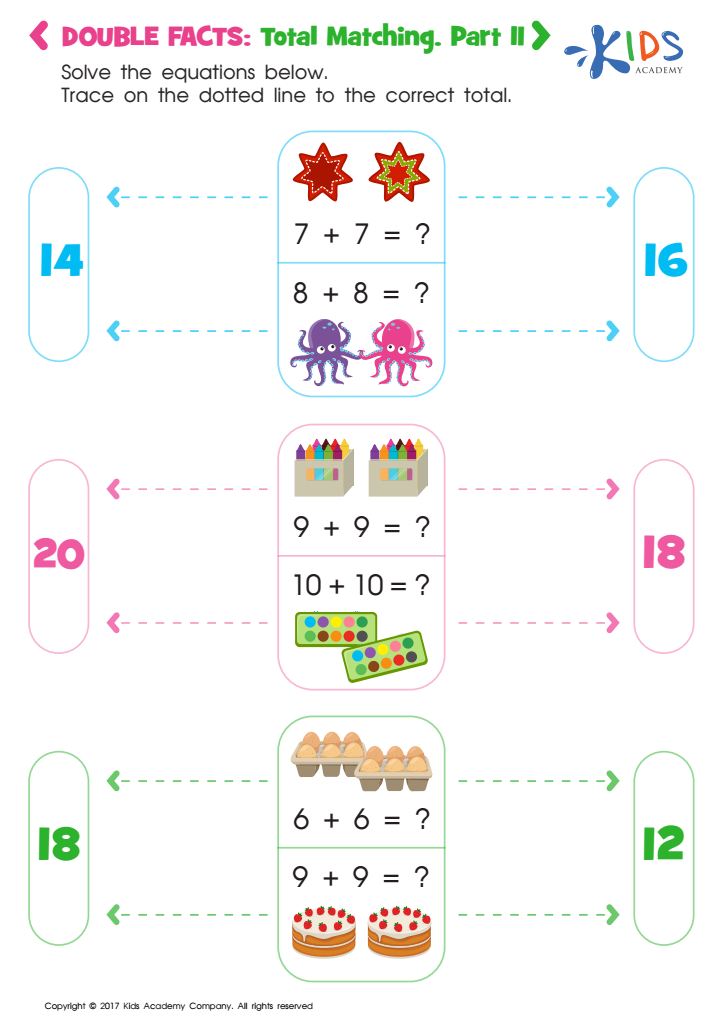
Double Facts: Total Matching 2 Worksheet

Double Facts: Total Matching 2 Worksheet

Having trouble with math? This printable worksheet is perfect for your child or student. It features simple addition problems that can be solved with your help. Trace the dotted line to the right answer and make counting numbers stress-free! Your young one will be solving math equations in no time.
Double Facts: Total Matching 2 Worksheet
Worksheet
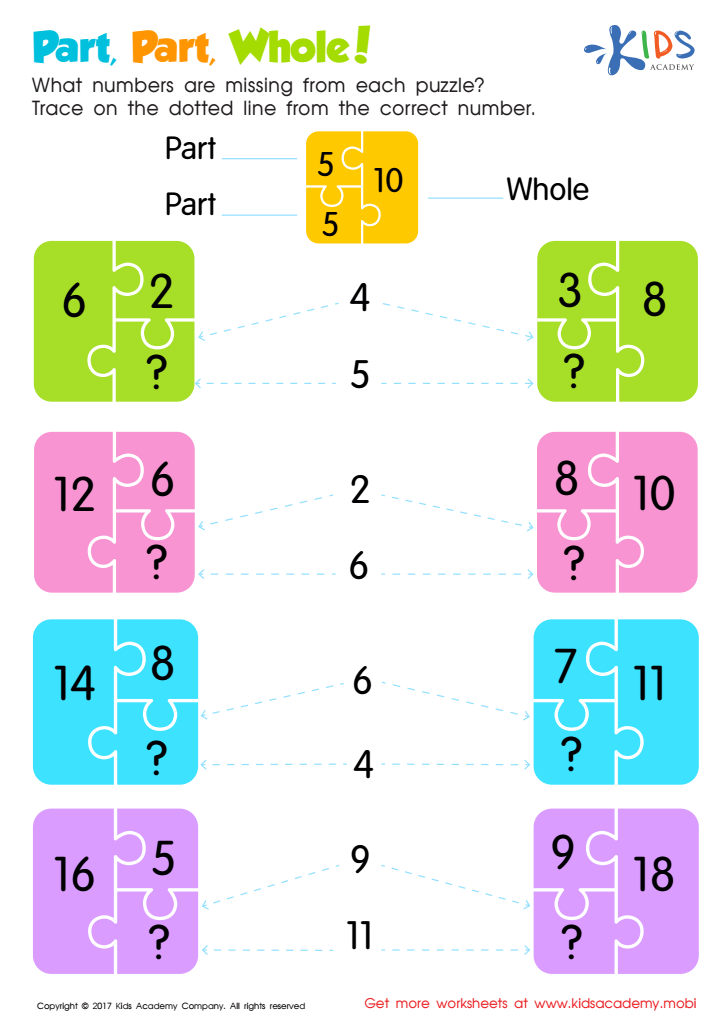
Part, Part, Whole Worksheet


Part, Part, Whole Worksheet

Help your child find the missing numbers in the puzzles. The worksheet combines fun and maths - stimulating the brain while keeping them engaged. Colourful pages will keep the learning enjoyable. Simple addition and subtraction will ensure they stay entertained.
Part, Part, Whole Worksheet
Worksheet


Enhancing problem-solving skills in children aged 5-6 is crucial for their overall development and future success. At this age, children are naturally curious and inquisitive, making it an ideal time to nurture their ability to think critically and analytically. When parents and teachers prioritize problem-solving, they help children develop resilience, adaptability, and confidence in their abilities.

Early exposure to problem-solving enables children to approach challenges with a growth mindset, encouraging them to view failures as learning opportunities rather than setbacks. As they learn to think creatively and systematically, they become better equipped to tackle everyday problems, both in school and at home. This skill set not only prepares them for academic success but also fosters social skills, as collaborative problem-solving helps them work effectively with peers.

Additionally, strong problem-solving skills are foundational for lifelong learning. In an increasingly complex world, the ability to analyze situations, reason logically, and make informed decisions is vital. By focusing on enhancing these skills now, parents and teachers empower children to become independent thinkers and effective decision-makers, setting the stage for a bright future filled with opportunities.