Knowledge application Normal Worksheets for Ages 5-6
3 filtered results
-
From - To
Discover engaging "Knowledge Application Normal Worksheets for Ages 5-6" at Kids Academy! Our expertly designed printables support young learners in applying fundamental skills through various subjects, enhancing their understanding and creativity. From basic math and reading exercises to fun science experiments and critical thinking activities, these worksheets cater to every child's learning needs. Help your child reinforce their knowledge, boost their confidence, and develop key competencies with our age-appropriate practice materials. Our resources foster a love for learning while ensuring educational growth. Explore and download now to bring interactive, knowledge-building activities to your little one's fingertips!
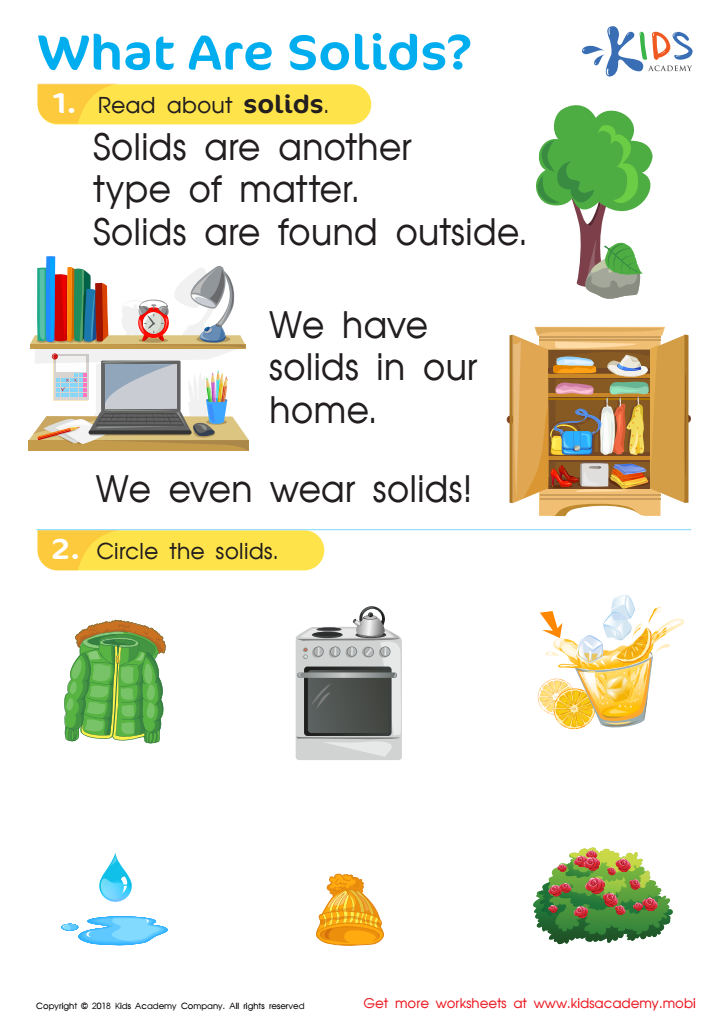
What Are Solids? Worksheet
 Assign to My Students
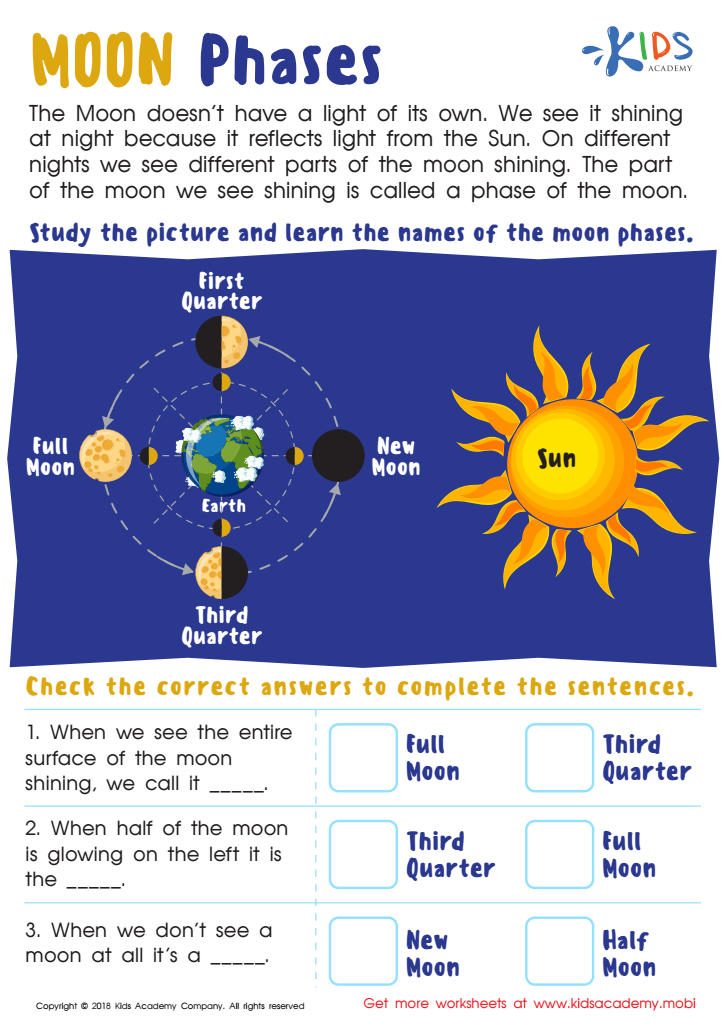
Moon Phases Worksheet
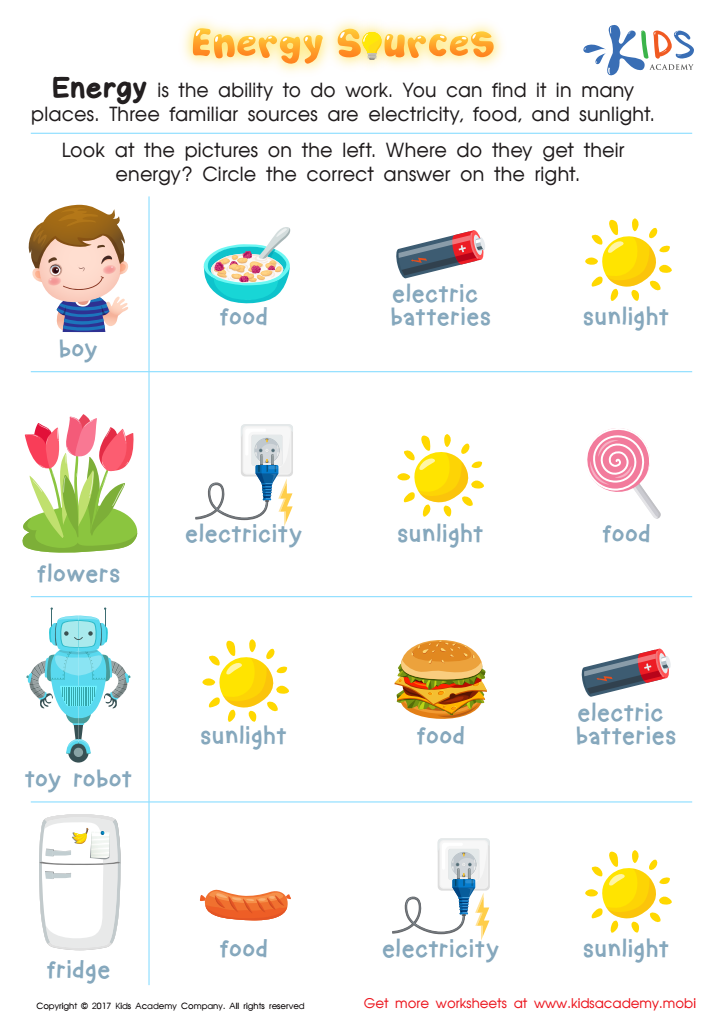
Energy Sources Printable







Parents and teachers play a crucial role in the developmental stages of children, particularly those aged 5-6. Understanding and fostering knowledge application—helping kids to use what they learn in practical ways—is vital for several reasons. First, it bridges the gap between theoretical learning and real-world practice, making education relevant and meaningful. For instance, when children learn basic math, applying it to count objects or handle simple transactions imbues the lessons with practicality, aiding retention and comprehension.
Second, knowledge application nurtures critical thinking and problem-solving skills. Young children learn to adapt concepts to different situations, instilling a mindset flexible enough to tackle new challenges. Activities like storytelling based on daily events or simple science experiments with household items serve as excellent examples of promoting knowledge use.
Moreover, this approach bolsters self-confidence. Successfully applying what they've learned builds a child’s sense of competence and autonomy. Acknowledgment and encouragement from parents or teachers during these exercises further reinforce this confidence, creating a positive feedback loop that enhances future learning experiences.
Lastly, early application establishes foundational skills that form the bedrock of more sophisticated learning. Encouraging children aged 5-6 to see and use their knowledge in varied contexts ensures a well-rounded, robust early education imperative for lifelong learning and success.








