Phonics comprehension Normal Worksheets for Ages 5-6
3 filtered results
-
From - To
Discover our Phonics Comprehension Normal Worksheets designed specifically for children ages 5-6! These engaging worksheets will help young learners develop essential phonics skills by focusing on vowel sounds, consonant blends, and simple text comprehension. Each worksheet encourages fun, interactive learning, allowing children to decode words and understand their meanings. With a variety of activities, such as matching words to pictures and completing sentences, these resources will reinforce literacy foundations in a playful way. Perfect for classroom settings or at-home learning, our worksheets inspire a love for reading while building confidence in young readers. Start your phonics adventure today!
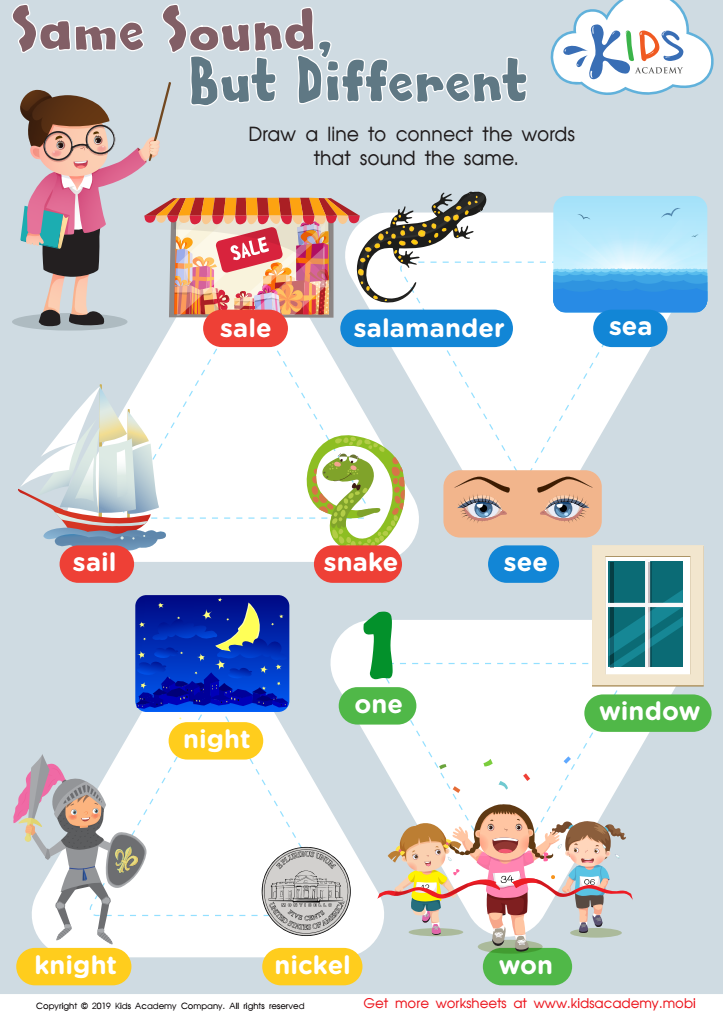
Sound Different Worksheet
 Assign to My Students
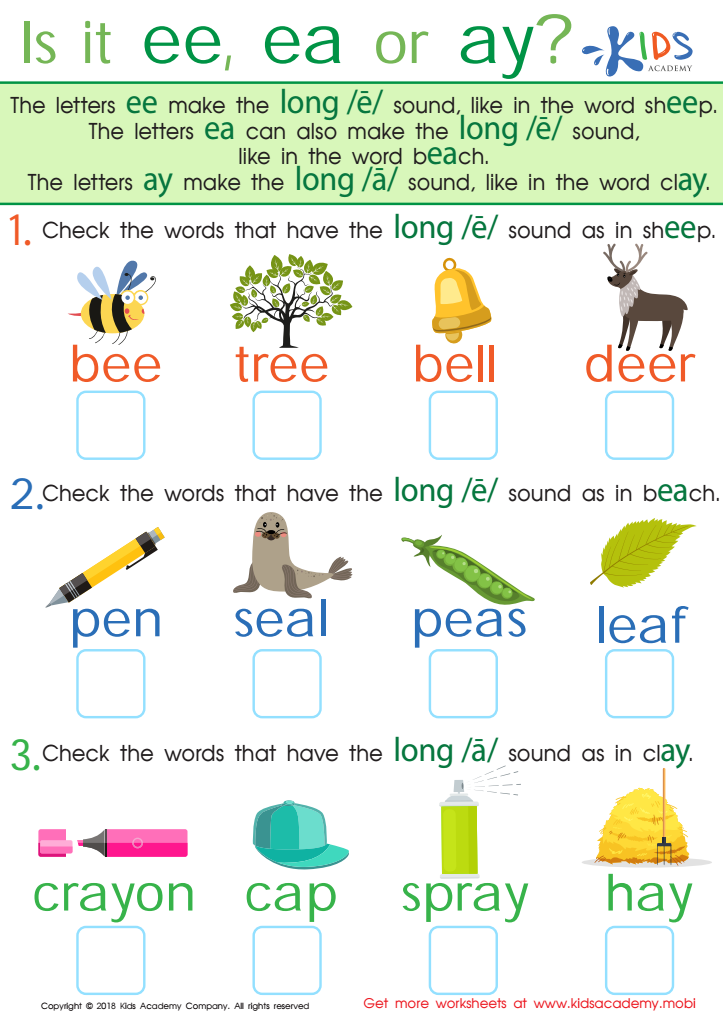
Is It EE, EA, or AY? Worksheet
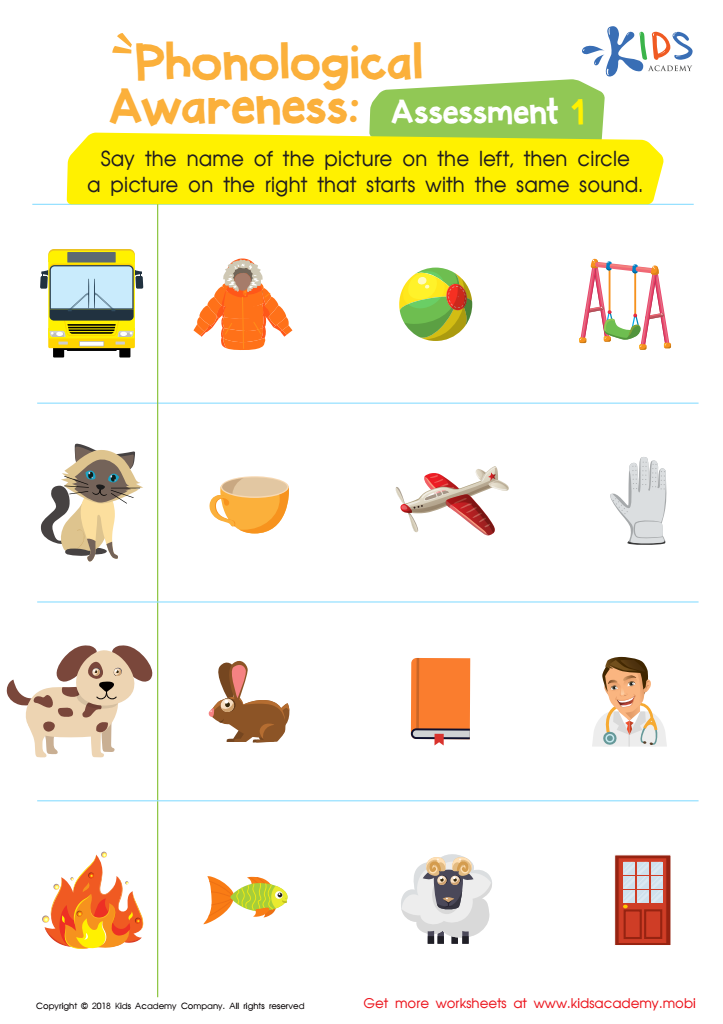
Phonological Awareness: Assessment 1 Worksheet








Phonics comprehension is critical for children aged 5-6 as it lays the foundation for effective reading and writing skills. During this developmental stage, children's brains are exceptionally receptive to language acquisition, making it the ideal time for them to learn the relationship between sounds and letters. By mastering phonics, children can decode words independently, boosting their confidence and encouraging a love for reading.
Parents and teachers should care about phonics comprehension for several reasons. First, it enhances vocabulary development and comprehension skills, as children who grasp phonics can read more fluently and access a wider range of texts. This fluency is essential for understanding and engaging with content across subjects in later grades.
Moreover, strong phonics skills can help bridge achievement gaps among students. Early intervention in phonics education can prevent future reading difficulties that might lead to academic struggles. Finally, fostering phonics comprehension encourages critical thinking and problem-solving, which are vital skills in today’s world. Ultimately, investing in phonics comprehension means giving children the tools they need to succeed, promoting literacy as a lifelong skill, and enhancing their overall educational experience. Parents and teachers play a pivotal role in this important developmental milestone.








