
Phonics development Normal Worksheets for Ages 5-6
3 filtered results
Difficulty Level
Grade
Age
-
From - To
Subject
Activity
Standards
Discover the perfect Phonics Development Normal Worksheets for children ages 5-6, designed to enhance early reading skills with engaging, educational activities. At Kids Academy, our expertly crafted worksheets focus on essential phonics concepts, such as letter sounds, blending, and decoding, to foster a strong foundation in reading. These fun, interactive printables make learning enjoyable and effective, allowing young learners to build confidence in their abilities. Perfect for both classroom and at-home practice, our worksheets support parents and teachers in nurturing children’s phonemic awareness and literacy development. Prepare your child for a bright reading future with Kids Academy’s trusted and innovative resources.
Favorites
With answer key
Interactive
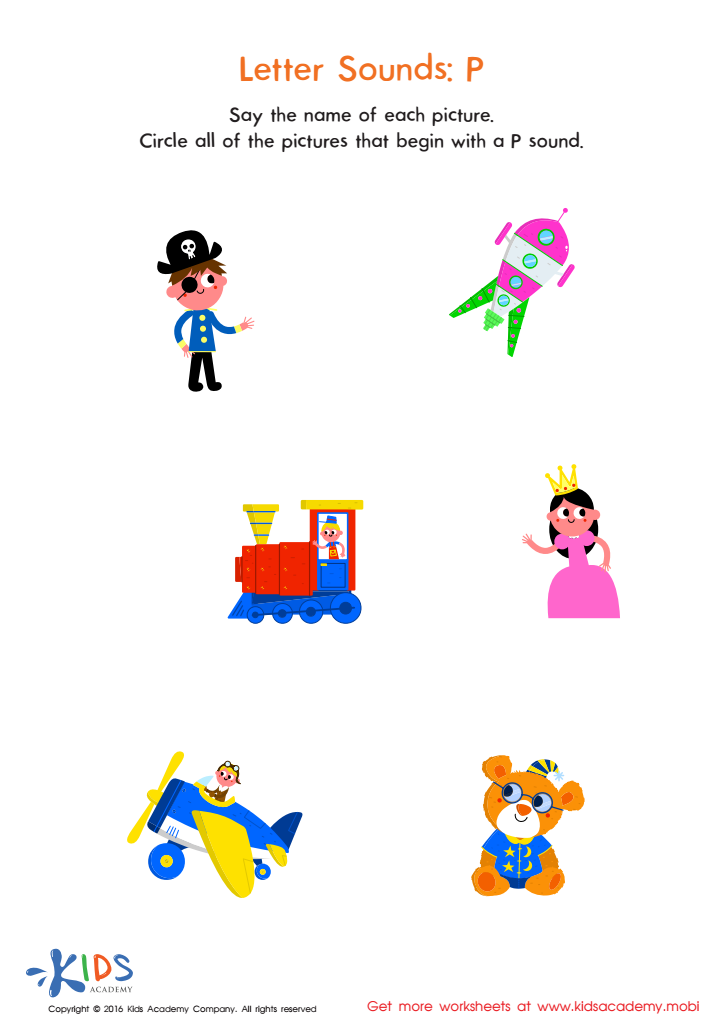
Letter P Sound Worksheet
Think P! Kids practice phonics with this fun letter P worksheet. With delightful illustrations, they'll sound out simple words and get closer to reading.
 Assign to My Students
Letter P Sound Worksheet
Worksheet
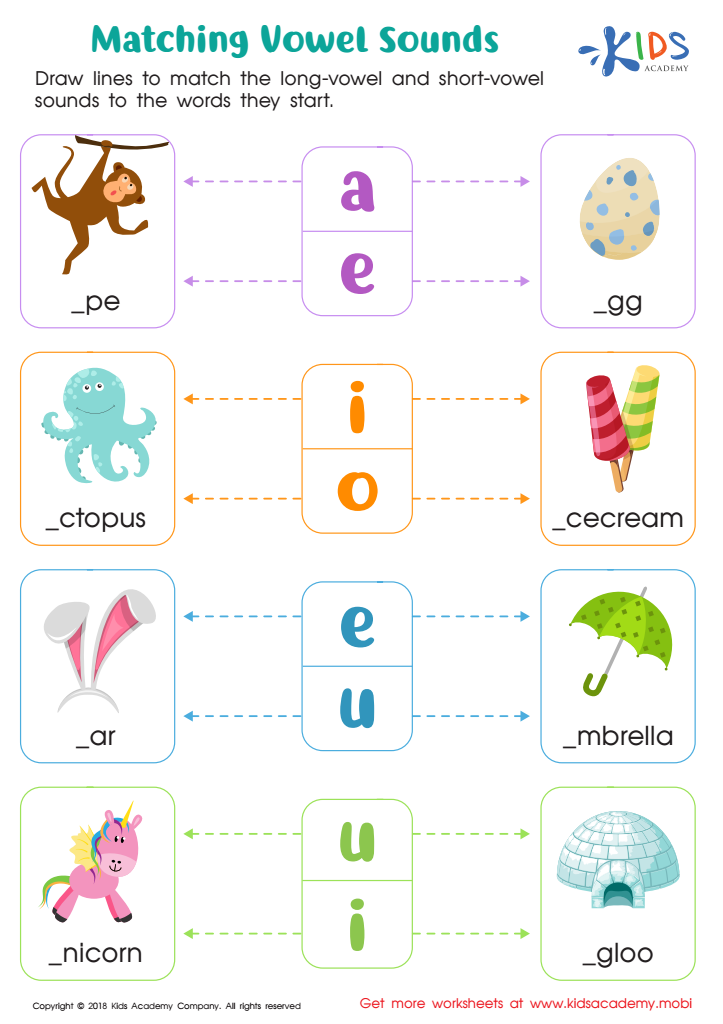
Matching Vowel Sounds Worksheet
Teach your child phonics with a fun worksheet! Ask your child to name a vowel sound and listen if it's long or short. Differentiating between long and short vowel sounds can be tricky, but this matching worksheet makes it easy for kids to understand. Have fun and master phonics - the worksheet will help them understand the difference between long and short vowel sounds!
Matching Vowel Sounds Worksheet
Worksheet
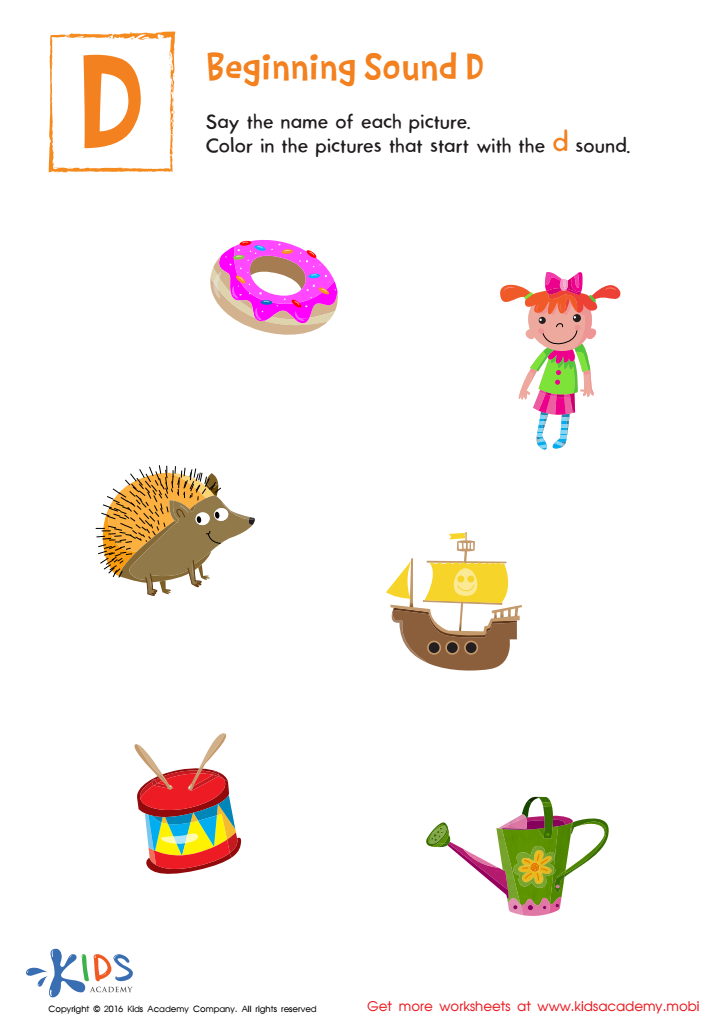
Beginning Sound D Worksheet
Reinforce phonics with this vibrant beginning sound d worksheet! Pictures help kids identify words beginning with 'd' and develop early reading skills. Sounding out each word increases literacy!
Beginning Sound D Worksheet
Worksheet
Join Kids Academy for Free
Who is primarily going to use this learning content?








Phonics development in children aged 5-6 is crucial for laying a robust foundation for their reading and writing skills. At this age, children's brains are highly receptive to learning letter-sound relationships, which is a core aspect of reading. Phonics instruction helps them decode words, turning written symbols into sounds and then blending those sounds to read full words. This is essential for fluent reading, which, in turn, improves comprehension skills.
Parents and teachers should prioritize phonics because it builds autonomous learners. When children confidently decode words, their reading becomes fluid and they experience fewer frustrations, fostering a positive outlook toward reading. This foundational skill is linked to academic success across subjects since reading is integral to understanding new content, whether it’s math problems or science concepts.
Furthermore, phonics practices come with the added benefit of enhancing spelling skills. Understanding the basics of language structure through phonics empowers kids to spell words more accurately. Early competence in phonics reduces the likelihood of future reading difficulties, such as dyslexia or reading comprehension issues, thus enabling a smoother educational journey. Investing in phonics for young learners equips them not just for academic success but also fosters a lifelong love for reading and learning.








