Real-life application Normal Worksheets for Ages 5-6
3 filtered results
-
From - To
Discover engaging and educational worksheets designed specifically for children aged 5-6. Our real-life application worksheets help young learners connect classroom skills to everyday scenarios. Children will explore concepts such as math, reading, and critical thinking through fun, relatable activities. Enhance your child’s learning experience with tasks that boost their confidence and encourage practical problem-solving skills. Ideal for parents and teachers looking to support early education, our worksheets are crafted to make learning meaningful and enjoyable. Equip your child with the tools they need to succeed in real-world situations while making learning a delightful adventure!
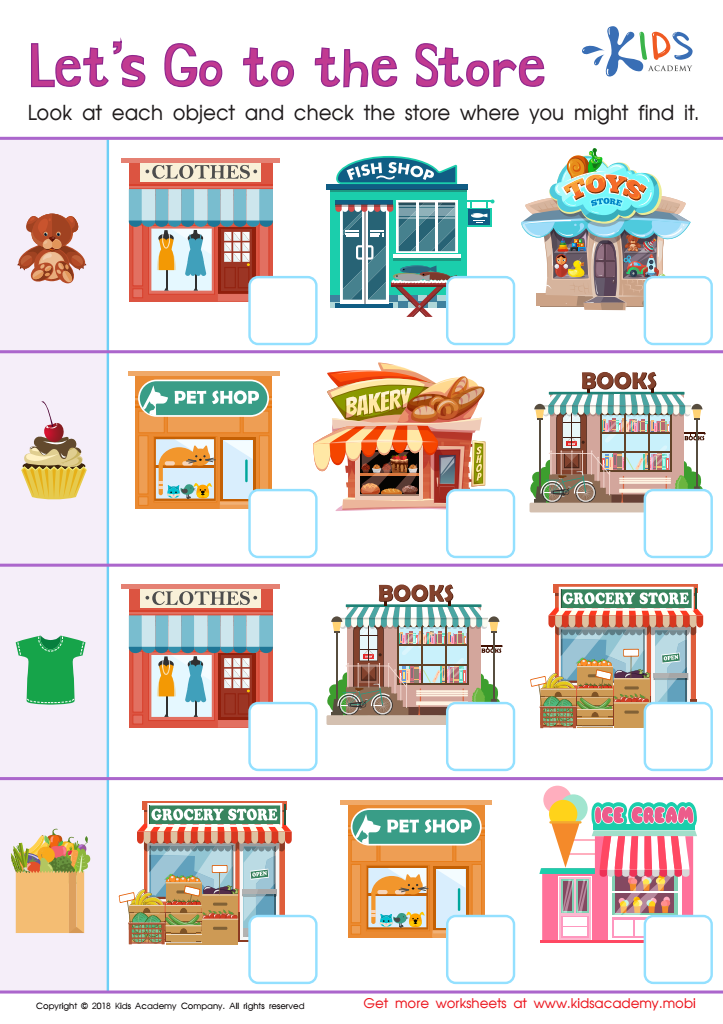
Let's Go to the Store! Worksheet
 Assign to My Students
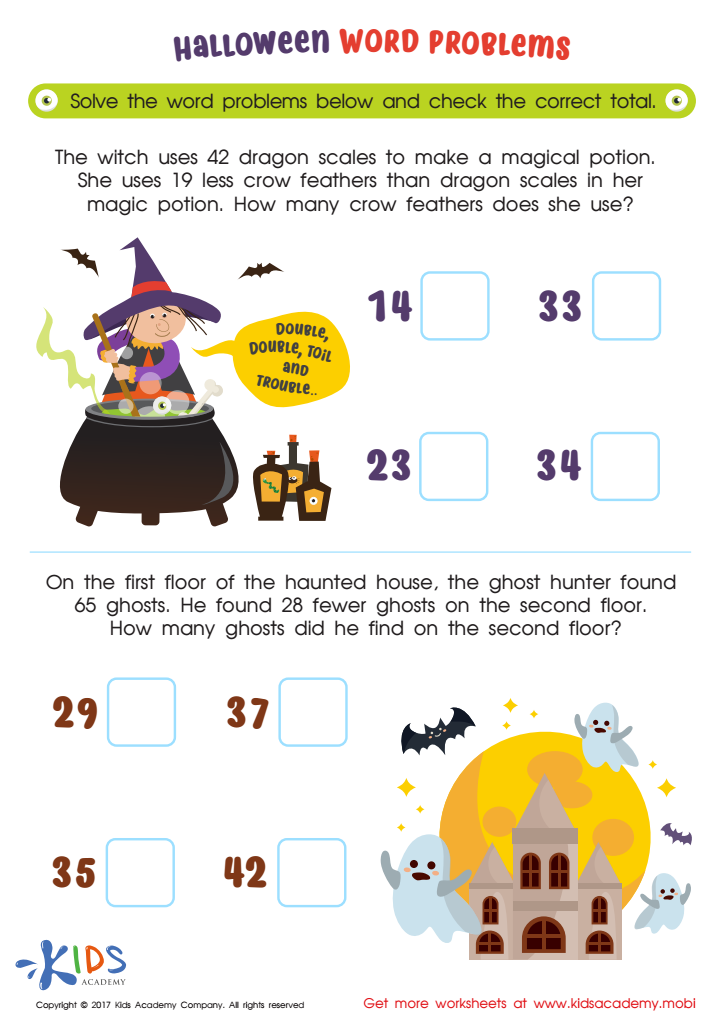
Halloween Word Problems Printable
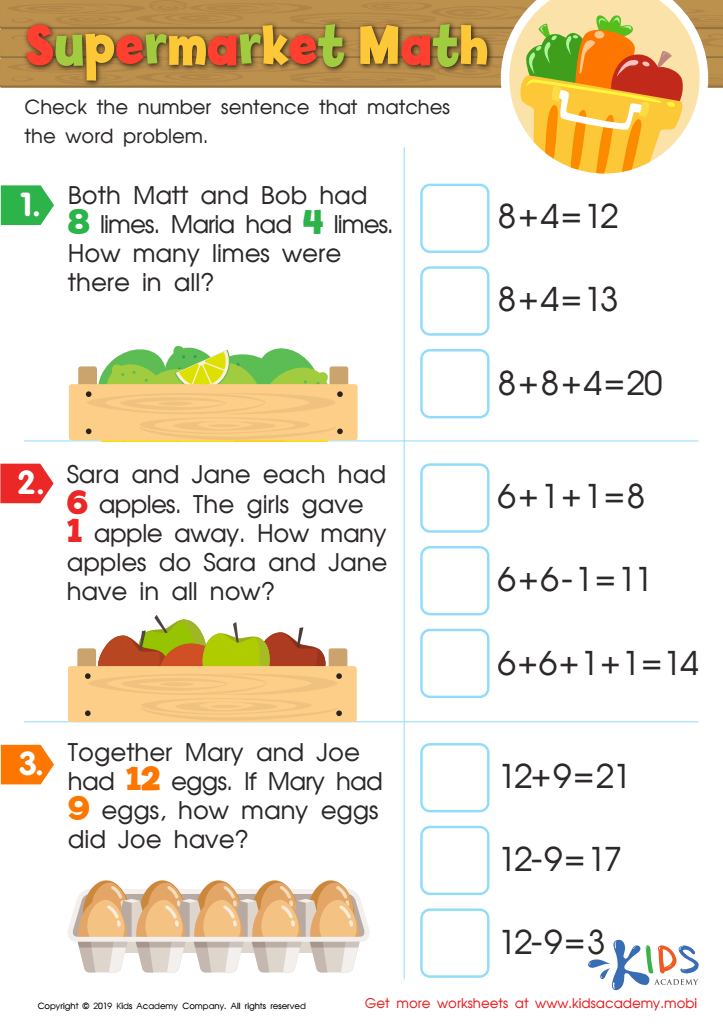
Supermarket Math Worksheet







Understanding real-life applications of skills, particularly in subjects like mathematics, science, and language arts, is crucial for children aged 5-6. At this early developmental stage, kids are incredibly curious and learn best when education feels relevant to their everyday lives. When parents and teachers focus on real-life applications, they help children see the direct connection between what they learn in school and the world around them.
For example, understanding basic math skills helps children grasp the concept of counting money, recognizing shapes, or even sharing snacks equally among friends. Reading and storytelling support not only language development but also foster imagination and emotional intelligence, essential for social interactions. Science experiments related to the natural environment can spark an interest in the world and pave the way for future learning.
Integrating real-life examples makes learning more engaging and interactive, which can significantly improve a child’s attention span and retention. Additionally, applying these concepts in everyday settings can build crucial problem-solving skills and boost a child’s confidence. Essentially, teaching the relevance of academic skills fosters a love for learning, equips children with practical tools for daily life, and sets a strong foundation for lifelong educational enthusiasm.








