Understanding chess rules Normal Worksheets for Ages 5-6
5 filtered results
-
From - To
Discover the captivating world of chess tailored for young minds with our “Understanding Chess Rules” worksheets, perfect for ages 5-6! These engaging activities introduce kids to the fundamentals of chess in a fun and simplified manner, fostering essential learning skills like critical thinking, problem-solving, and strategic planning. Each worksheet breaks down basic rules, guiding children step-by-step through understanding piece movement, board setup, and key gameplay tactics. By integrating playful illustrations and interactive tasks, our worksheets make learning chess enjoyable and approachable, ensuring an enriching experience that sparks curiosity and builds confidence in young learners.
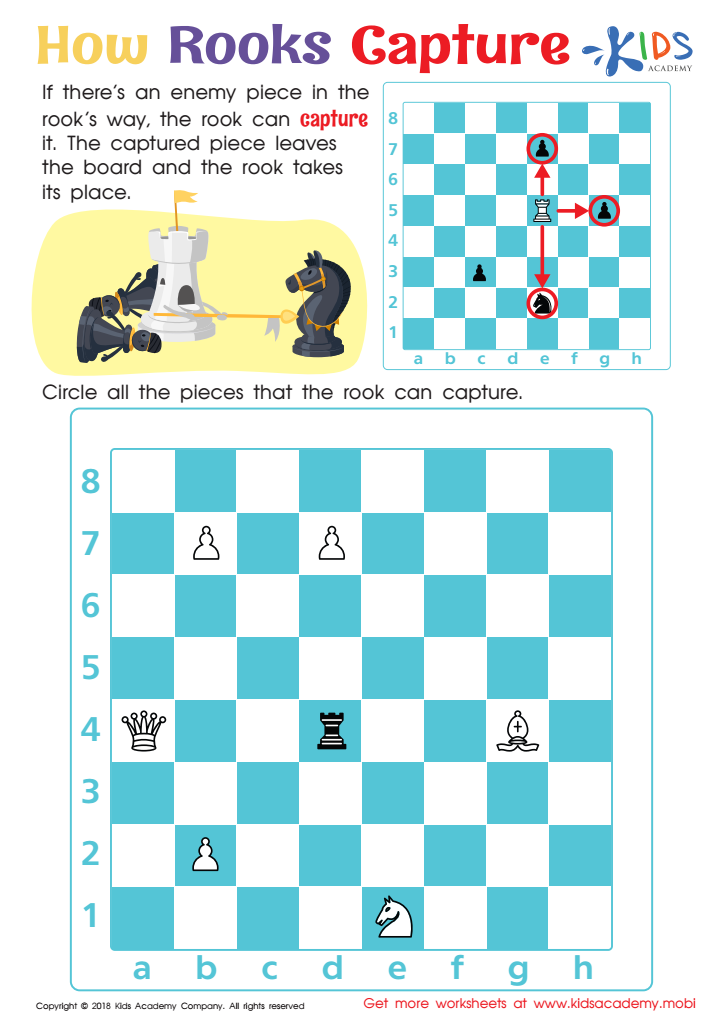
How Rooks Capture Worksheet
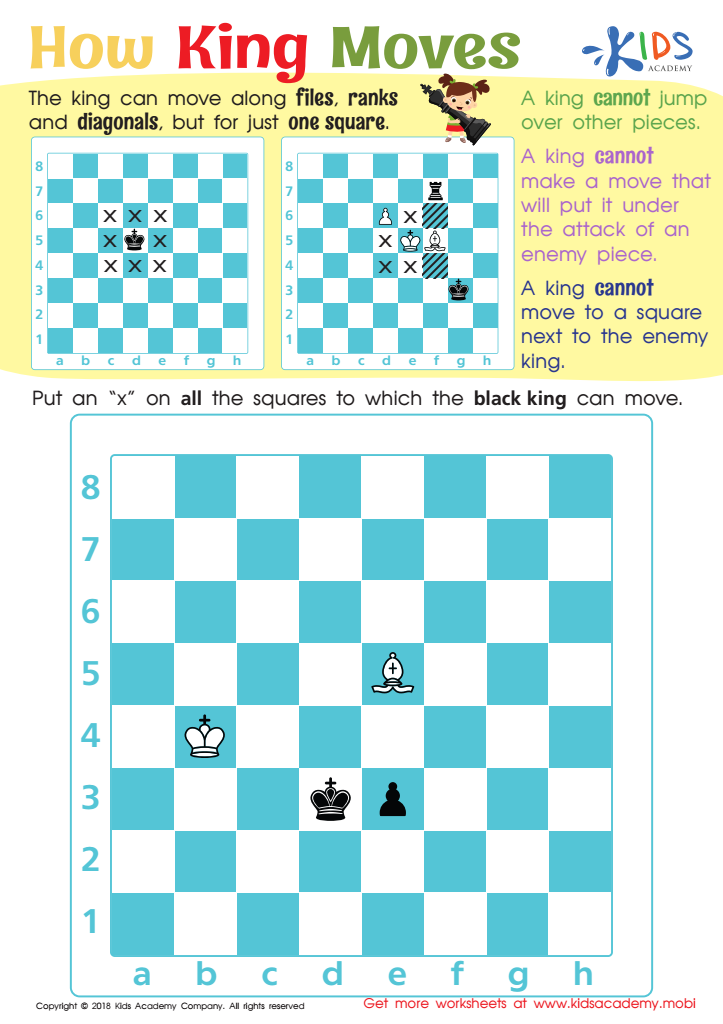
How King Moves Worksheet
 Assign to My Students
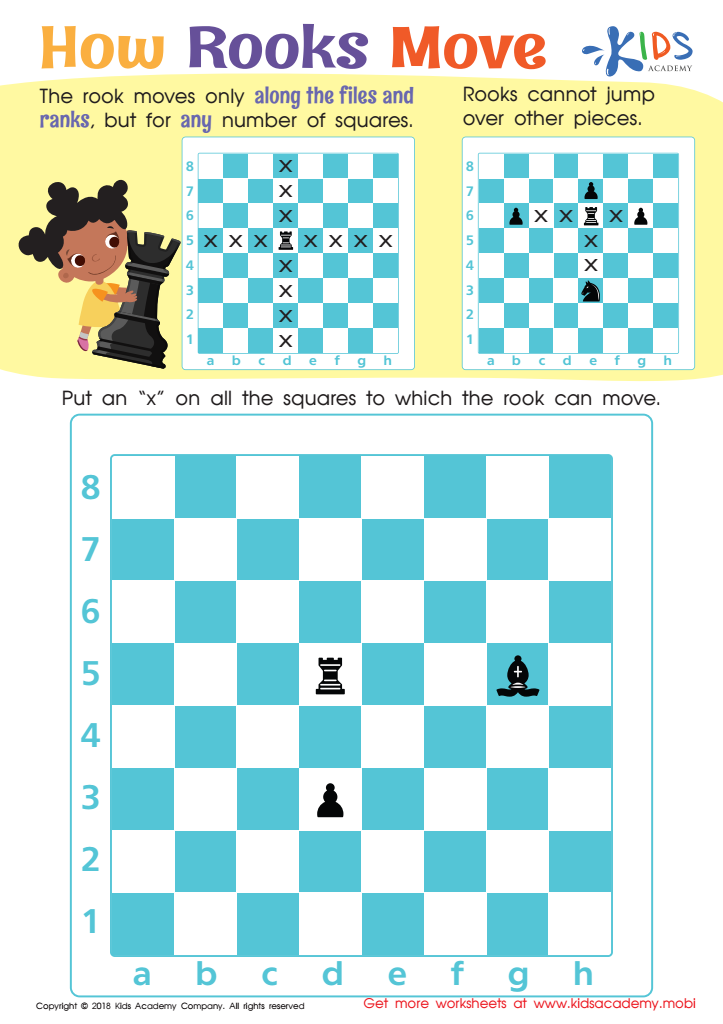
How Rooks Move Worksheet
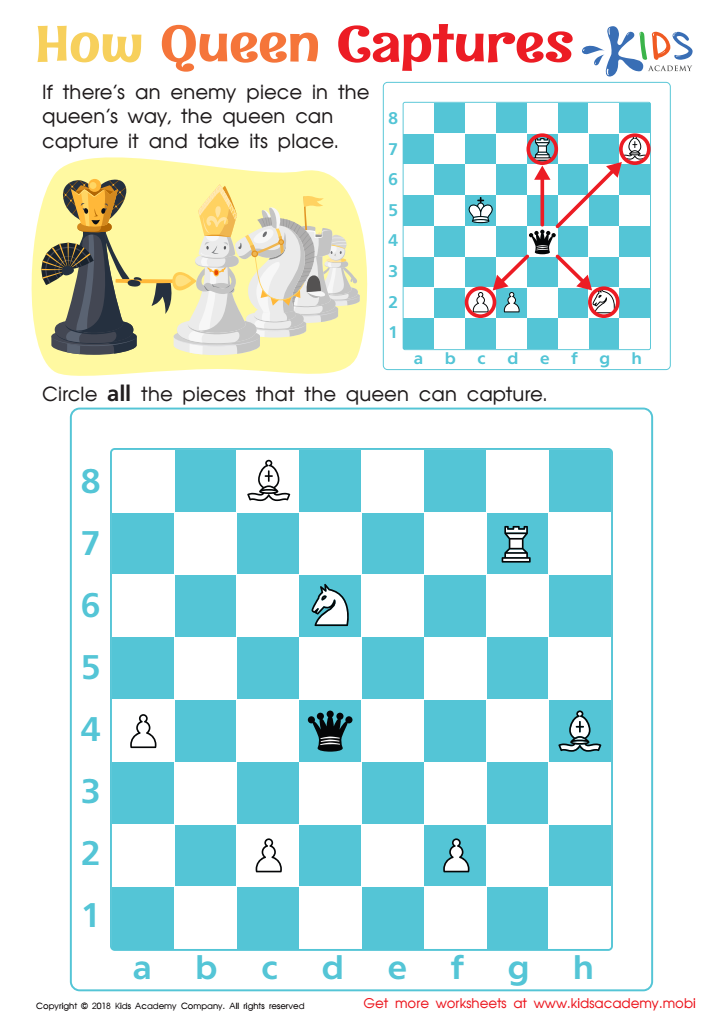
How Queen Captures Worksheet
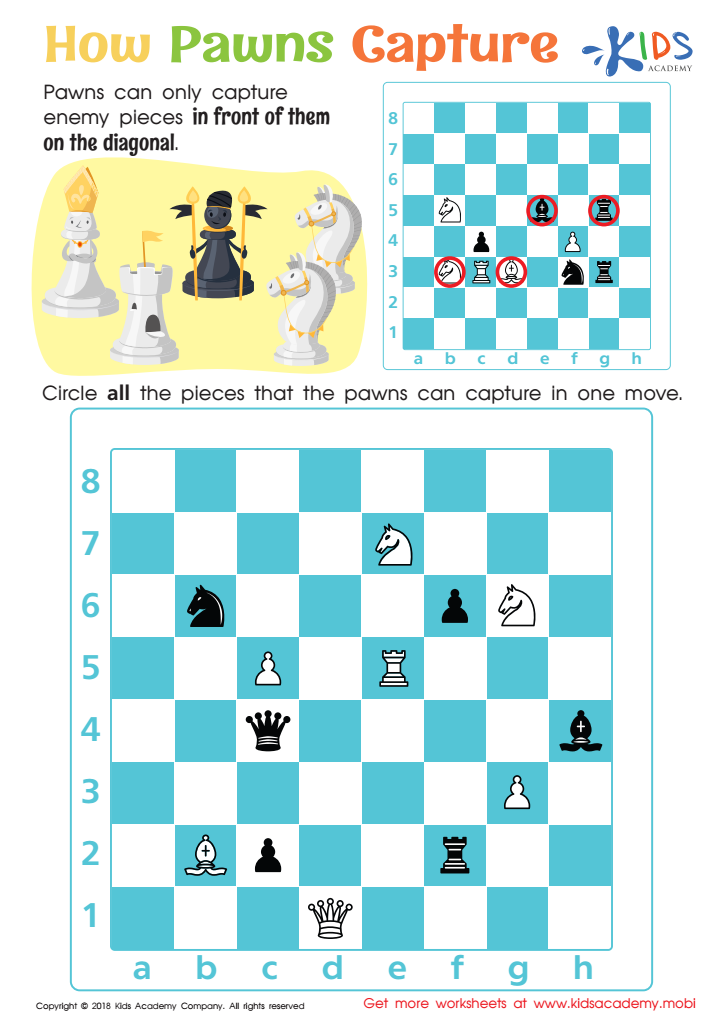
How Pawns Capture Worksheet



.jpg)



Understanding chess rules at an early age can provide substantial cognitive and social benefits for children aged 5-6, making it a worthwhile investment for both parents and teachers. Introducing chess to young children fosters critical thinking and problem-solving skills. As children learn to navigate the board and strategize their moves, they inherently develop their ability to think ahead and weigh potential outcomes. These skills are not only applicable to chess but also transfer to real-life situations, such as planning tasks and making informed decisions.
Chess also enhances memory and concentration. Remembering the rules, the positions of pieces, and potential strategies requires focused attention and sharpens memory retention. These cognitive skills are foundational for academic success and can lead to improved performance in school.
Moreover, chess encourages patience and discipline. Young children learn the value of taking their time to think through decisions and the importance of following rules. These lessons in self-regulation are crucial for emotional development and social interactions.
Finally, playing chess can enhance social bonds. Whether playing with peers, teachers, or family members, chess requires communication and fosters a sense of community. Therefore, early exposure to chess offers a fun, engaging, and educational tool that supports various aspects of a child's development.








