Understanding place value Normal Worksheets for Ages 5-6
6 filtered results
-
From - To
Explore our "Understanding Place Value" normal worksheets designed specifically for children aged 5-6. These engaging printable resources help young learners grasp the concept of place value, a foundational skill in early math education. With a variety of activities, including identifying tens and units, students will build confidence in their numerical understanding. Our colorful, interactive worksheets promote hands-on learning, making it easier for kids to connect with numbers. Perfect for home or classroom use, these worksheets encourage independent practice and support teachers in delivering effective lessons. Discover the joy of learning place value with our thoughtfully crafted resources today!
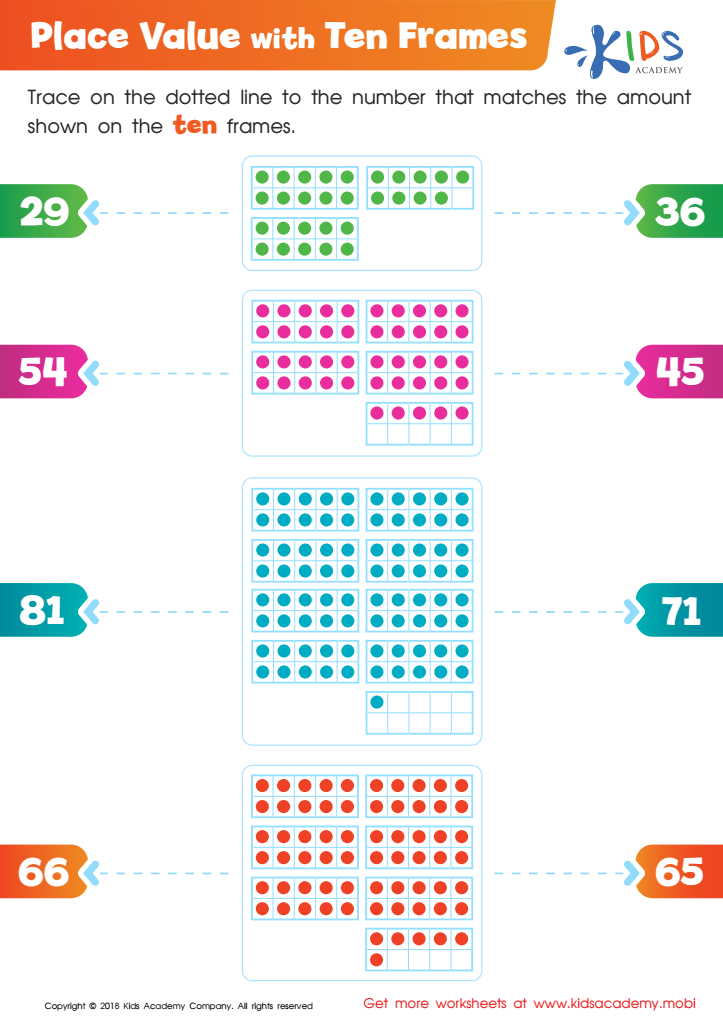
Place Values with Ten Frames Worksheet
 Assign to My Students
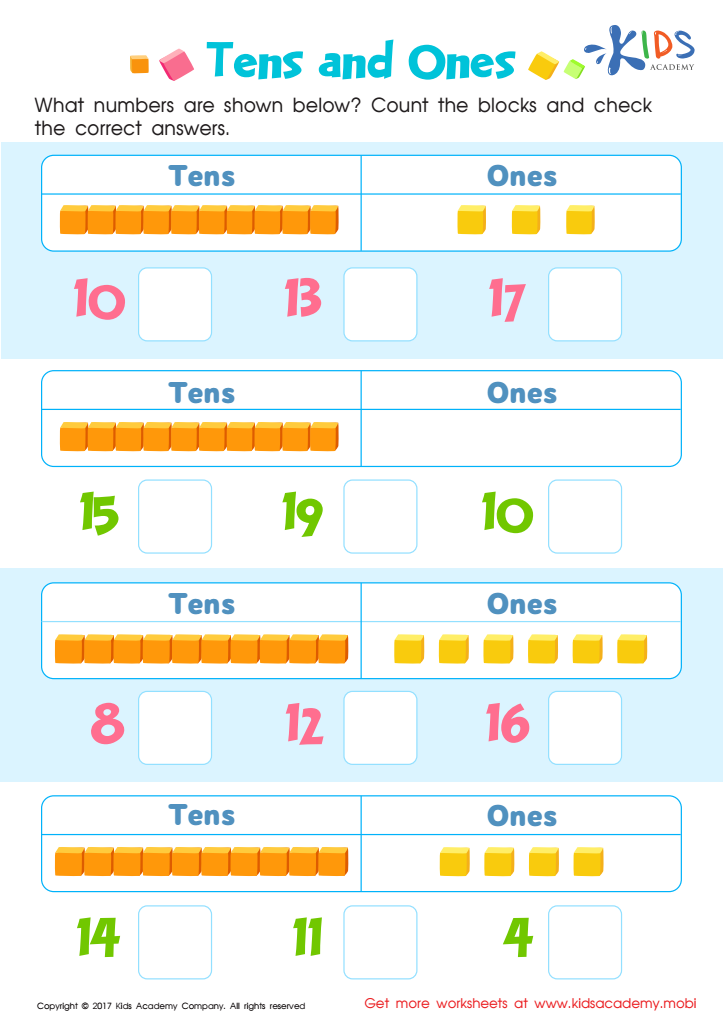
Tens and Ones Worksheet
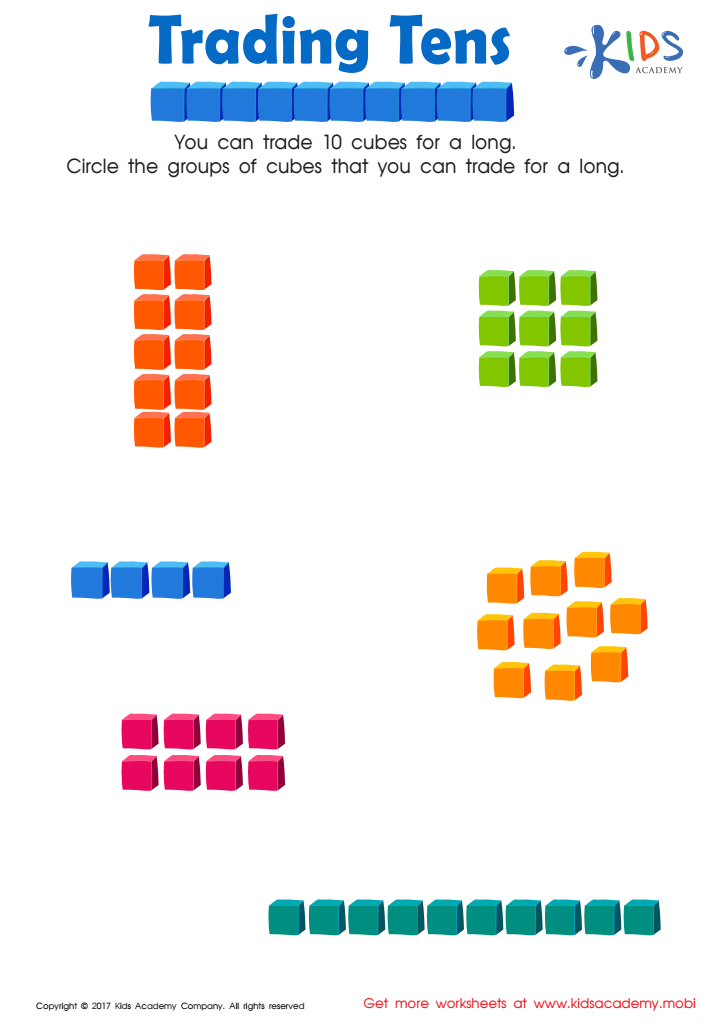
Trading Tens Worksheet
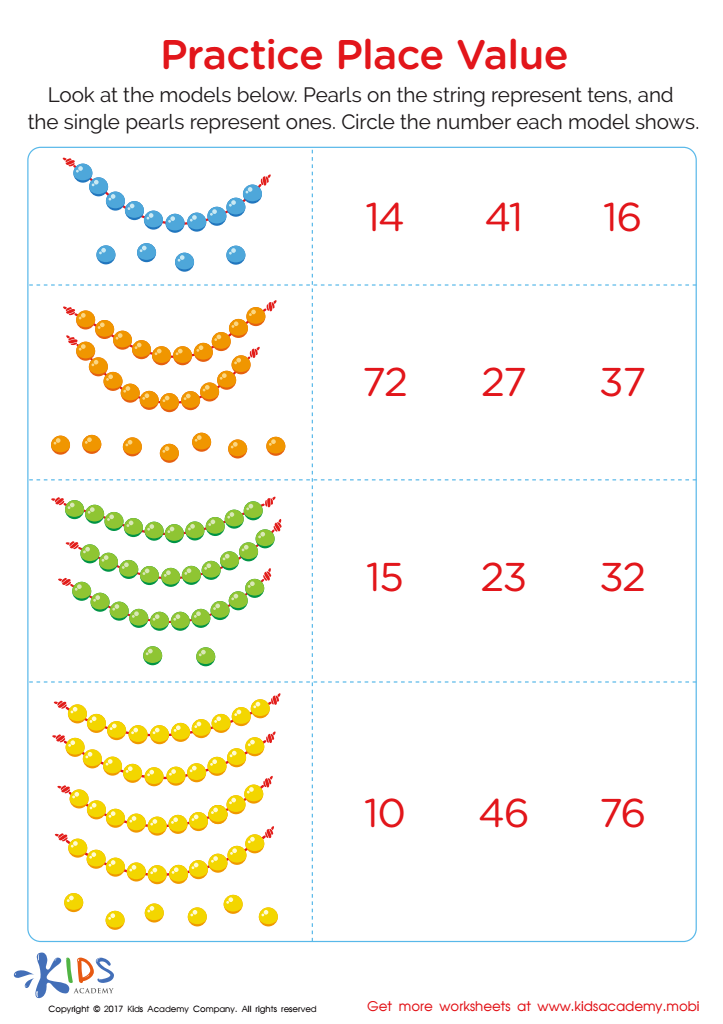
Practice Place Value Printable
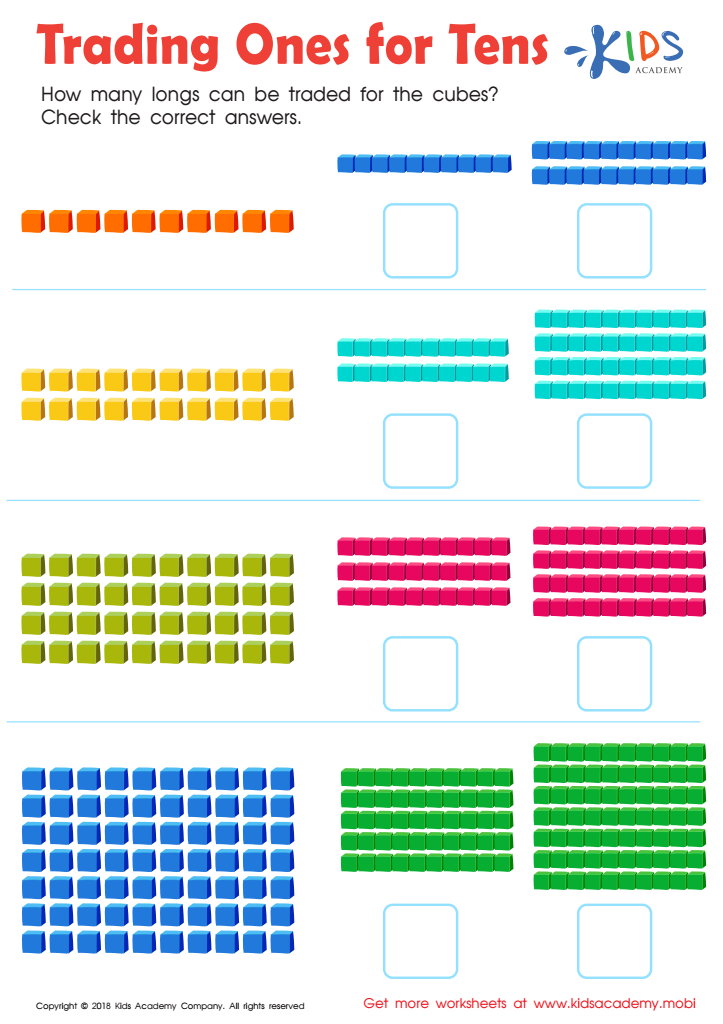
Trading Ones for Tens Worksheet: Part 2
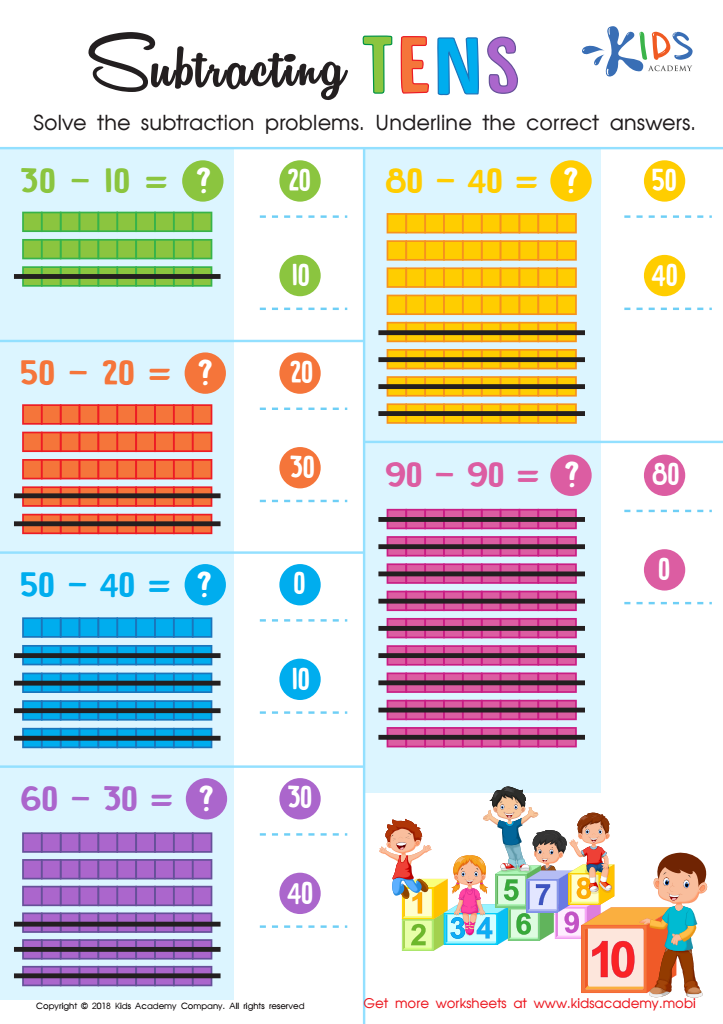
Subtracting Tens Worksheet








Understanding place value is crucial for young learners, especially those aged 5-6, as it forms the foundation for more advanced arithmetic concepts. At this developmental stage, children are introduced to the idea that numbers have different values based on their position. For instance, the digit "6" in "26" is not the same as "6" in "6." Recognizing this concept nurtures their ability to count, compare, and manipulate numbers confidently.
Parents and teachers should prioritize place value education because it enhances children's overall mathematical fluency. Once children grasp this foundational concept, they can easily progress to addition and subtraction, as well as more complex concepts like multi-digit arithmetic and basic fractions later on. Furthermore, understanding place value equips students to recognize patterns and develop problem-solving skills.
In addition to cognitive development, mastering place value boosts children's confidence in math. As they understand how numbers work, they are less likely to feel overwhelmed when encountering new mathematical challenges. Engaging parents in this learning process—through games and everyday math applications—can reinforce these concepts at home, creating a supportive environment for children to thrive mathematically. Thus, investing time in teaching place value early pays significant dividends in students' future success in mathematics.








