Uppercase identification Normal Worksheets for Ages 5-6
5 filtered results
-
From - To
Introduce your child to the world of uppercase letter identification with our specially designed worksheets for ages 5-6. These engaging and educational worksheets from Kids Academy help young learners recognize and practice writing uppercase letters through fun activities. Crafted to build confidence and reinforce early learning skills, each worksheet is tailored to keep children motivated while developing vital literacy foundations. Perfect for both classroom and at-home learning, these resources ensure kids master the alphabet with ease. Support your child's journey to literacy success with Kids Academy's uppercase identification worksheets today!
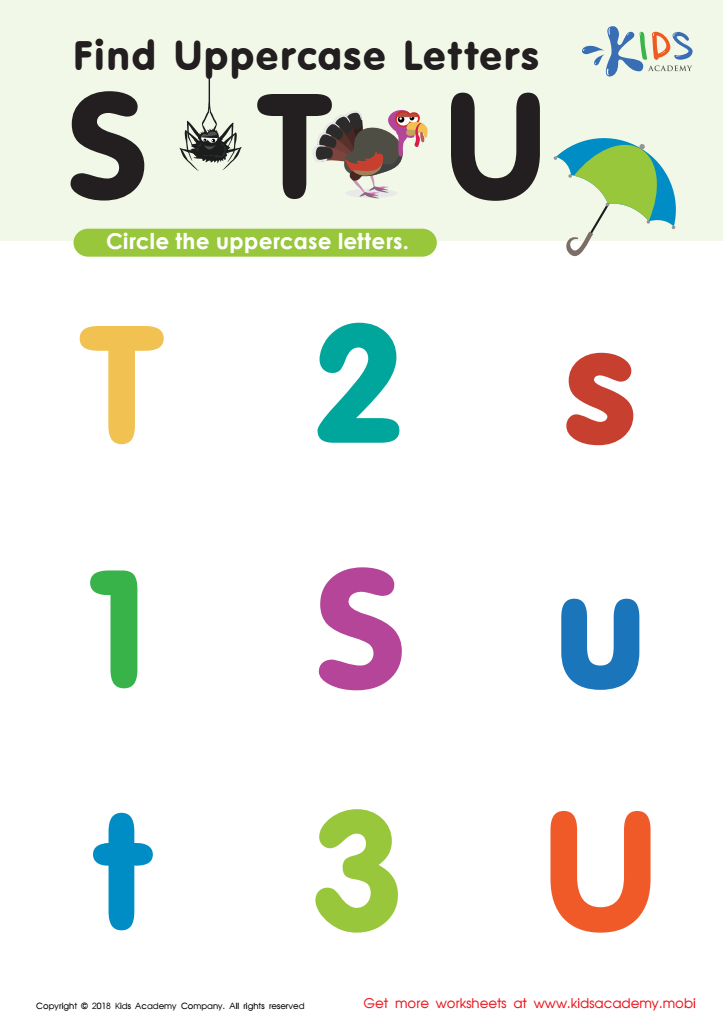
Find Uppercase Letters Worksheet
 Assign to My Students
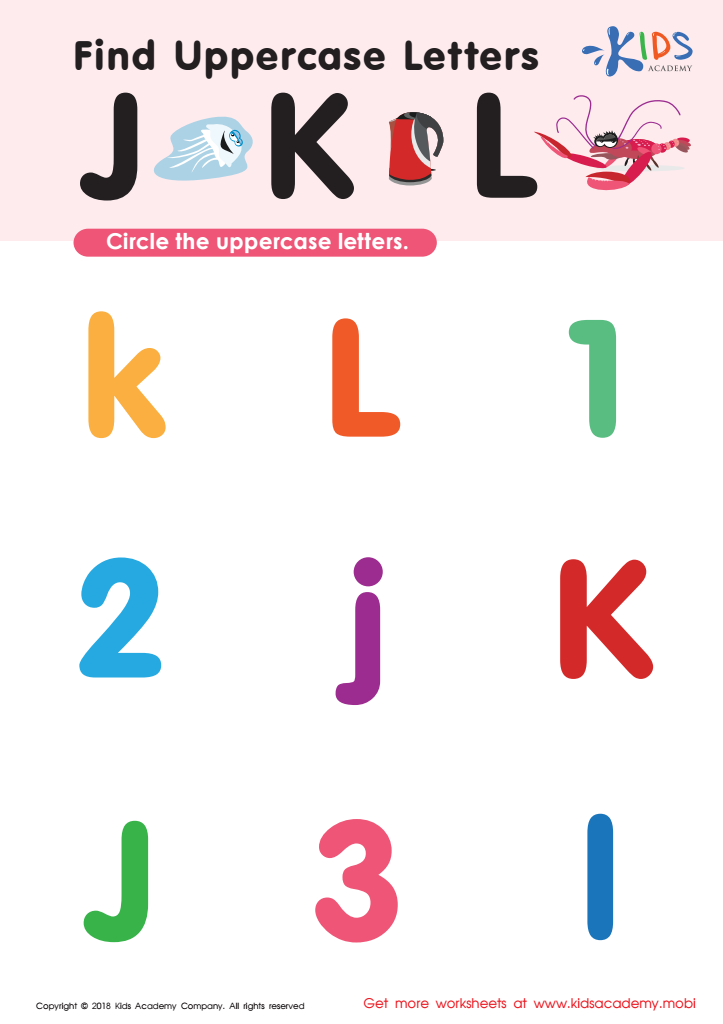
Find Uppercase Letters J, K, and L Worksheet
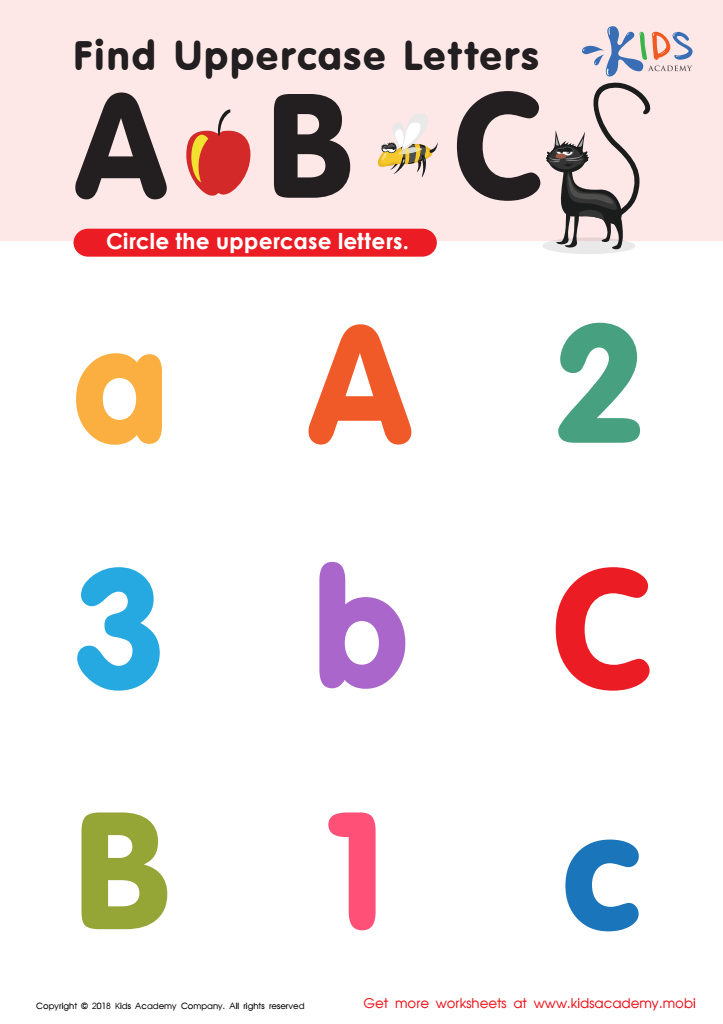
Find Uppercase Letters A, B, and C Worksheet
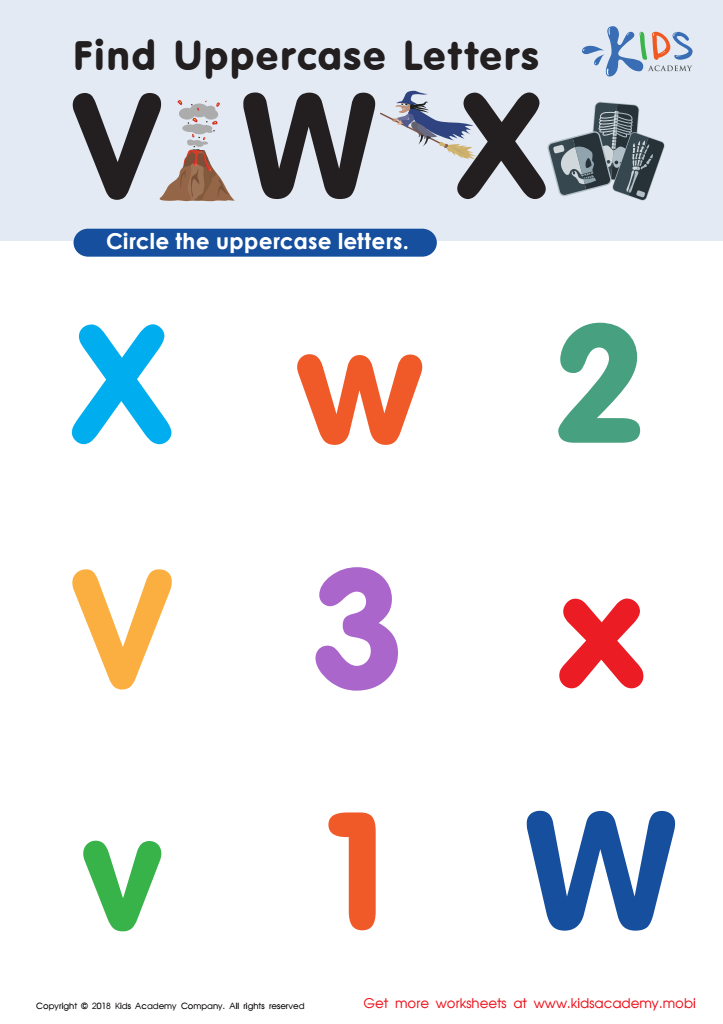
Find Uppercase Letters V, W, X Worksheet
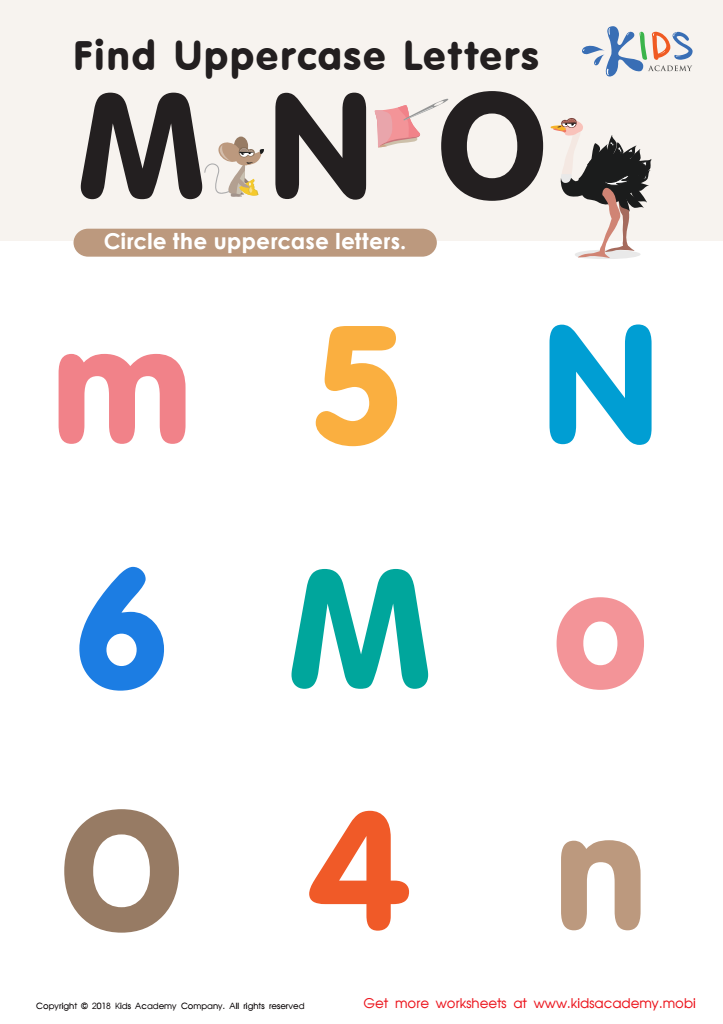
Find Uppercase Letters M, N, and O Worksheet








Uppercase identification at ages 5-6 is a crucial developmental milestone, vital for young children’s literacy and overall cognitive growth. At this stage, most children are beginning their formal education journey. Recognizing uppercase letters lays a strong foundation for reading and writing skills, as these letters are often the first that children learn to identify and write. Mastery in identifying uppercase letters accelerates their ability to decode words, enhancing both their reading fluency and comprehension.
Additionally, uppercase letter recognition fosters cognitive development. It enhances visual discrimination, attention to detail, and memory skills—essential components for academic readiness. Furthermore, early literacy achievement is linked to future academic success. When children start school with a robust grasp of uppercase letters, they're more likely to experience a smoother transition into more complex literacy tasks.
Cultivating strong uppercase identification skills also fosters a child's self-confidence. Successfully recognizing and using letters enables them to feel competent in tackling new challenges, creating a positive learning experience.
For these reasons, parents and teachers must actively nurture uppercase letter recognition through engaging and supportive activities, ensuring children are well-prepared for the next stages of their educational journey. Early interventions and consistent practice in identifying uppercase letters can have enduring, positive impacts on a child's academic and personal development.








