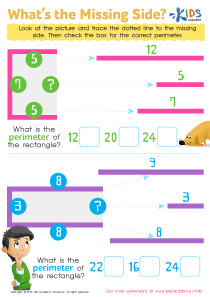
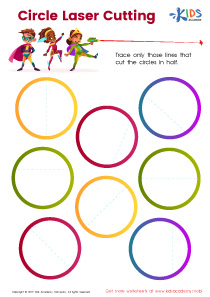
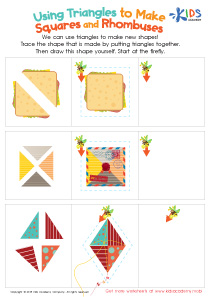
Pattern recognition Normal 2D Shapes Worksheets for Ages 5-6
3 filtered results
-
From - To
Introducing our "Pattern Recognition Normal 2D Shapes Worksheets for Ages 5-6," designed to support early childhood education. These engaging and colorful worksheets help young learners identify, compare, and create patterns using various 2D shapes. Perfect for developing critical thinking and problem-solving skills, our activities are designed specifically to build a strong foundation in math. By working with familiar shapes like circles, squares, and triangles, children can improve their shape recognition, sequencing abilities, and hand-eye coordination. Download these printable worksheets now to enhance your child's learning experience in a fun and interactive way!
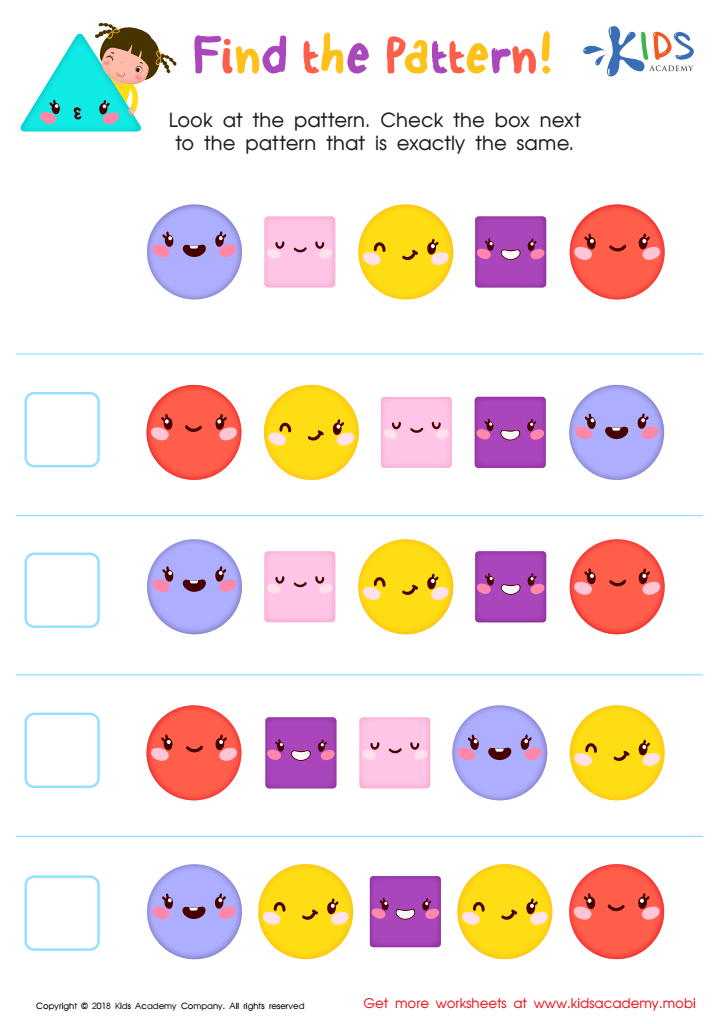
Find the Pattern Worksheet
 Assign to My Students











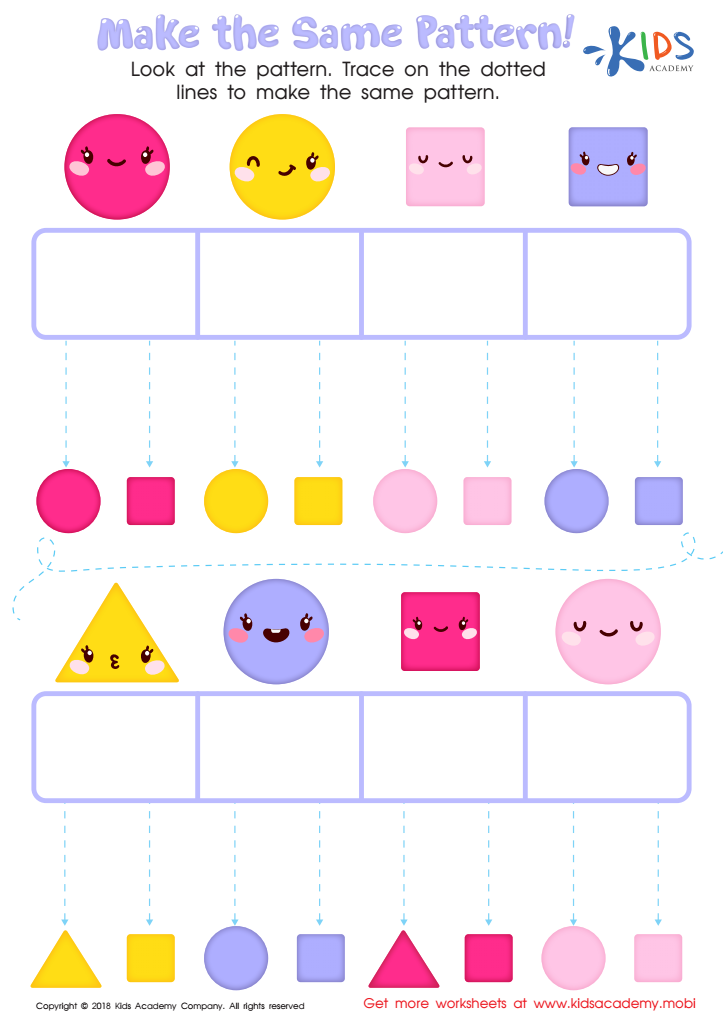
Make the Same Pattern Worksheet
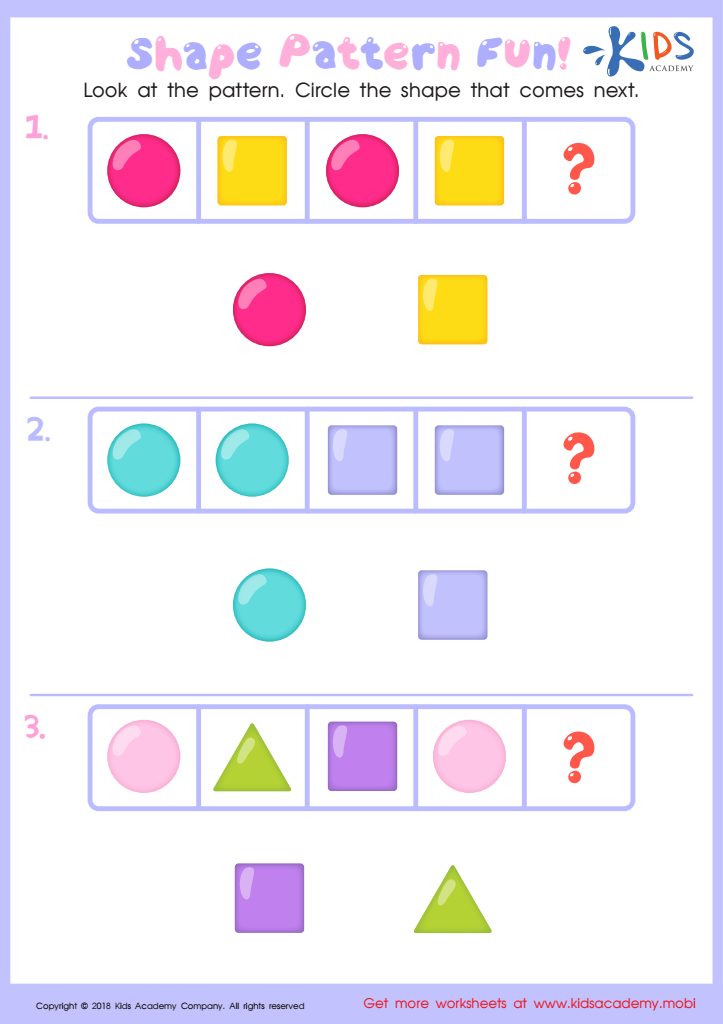
Shape Pattern Fun Worksheet








Pattern recognition and familiarity with normal 2D shapes are foundational skills for young children, and caregivers such as parents and teachers should prioritize them. Firstly, these skills enhance a child's cognitive development by training the brain to observe, interpret, and predict sequences and structures, essential for problem-solving and logical reasoning. For example, recognizing a triangle when it's oriented differently helps develop spatial awareness.
Moreover, early exposure to 2D shapes is closely tied to math readiness. Recognizing and naming shapes such as circles, squares, and triangles lays the groundwork for future geometric concepts in mathematics. Shapes are essentially everywhere in our environment, and recognizing them helps build a child's ability to perceive and categorize their world logically.
Language development also benefits, as shape vocabulary encourages descriptive and comparative communication. Terms like "bigger," "smaller," and "different" are more easily understood through tangible examples.
Social and emotional growth can also be enhanced. Successfully identifying patterns and shapes boosts confidence and motivation, aiding in a positive learning experience. Activities like playing shape-related games or completing puzzles can foster teamwork and listening skills when done in group settings.
In essence, recognizing patterns and normal 2D shapes equips children with essential tools for academic success and everyday life navigation, making it a key early learning objective for caregivers.