Basic Addition Skills Normal Addition & Subtraction Worksheets for Ages 5-6
4 filtered results
-
From - To
Help your child master foundational math skills with our "Basic Addition Skills Normal Addition & Subtraction Worksheets for Ages 5-6." Perfectly designed for young learners, these engaging worksheets offer a fun and interactive way to practice simple addition and subtraction. Children will build confidence as they solve colorful, age-appropriate problems, enhancing their numeracy and preparing them for future success in mathematics. Suitable for classroom and home use, our worksheets support parents and teachers in providing essential practice that makes learning enjoyable. Set the stage for a strong mathematical foundation with these expertly crafted resources.
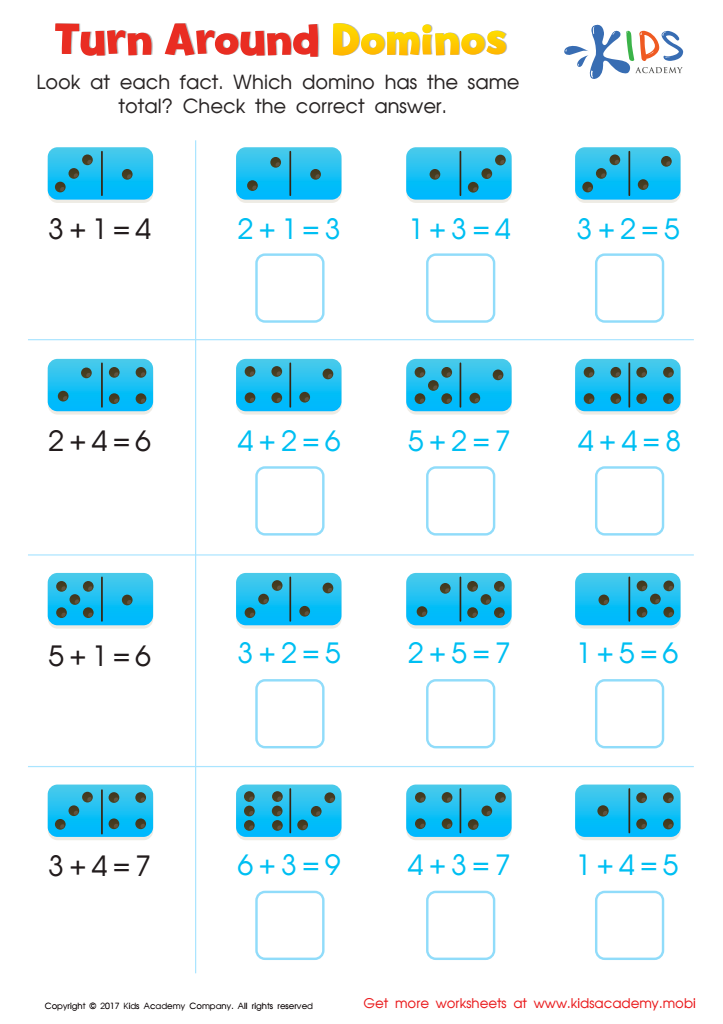
Turn Around Dominos Worksheet
 Assign to My Students
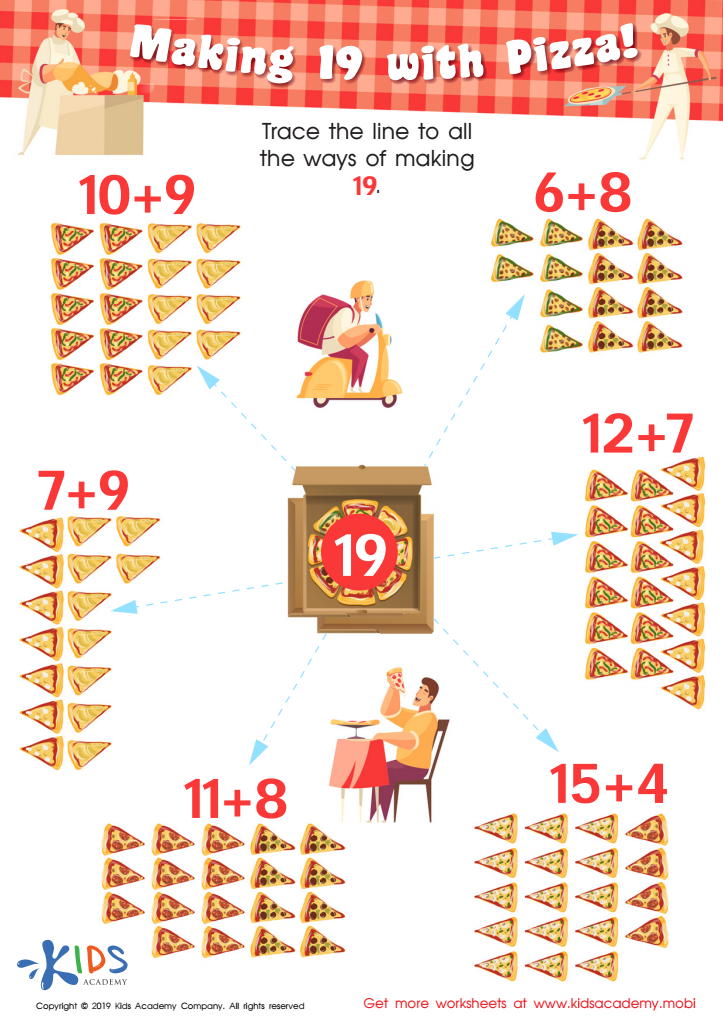
Making 19 with Pizza! Worksheet
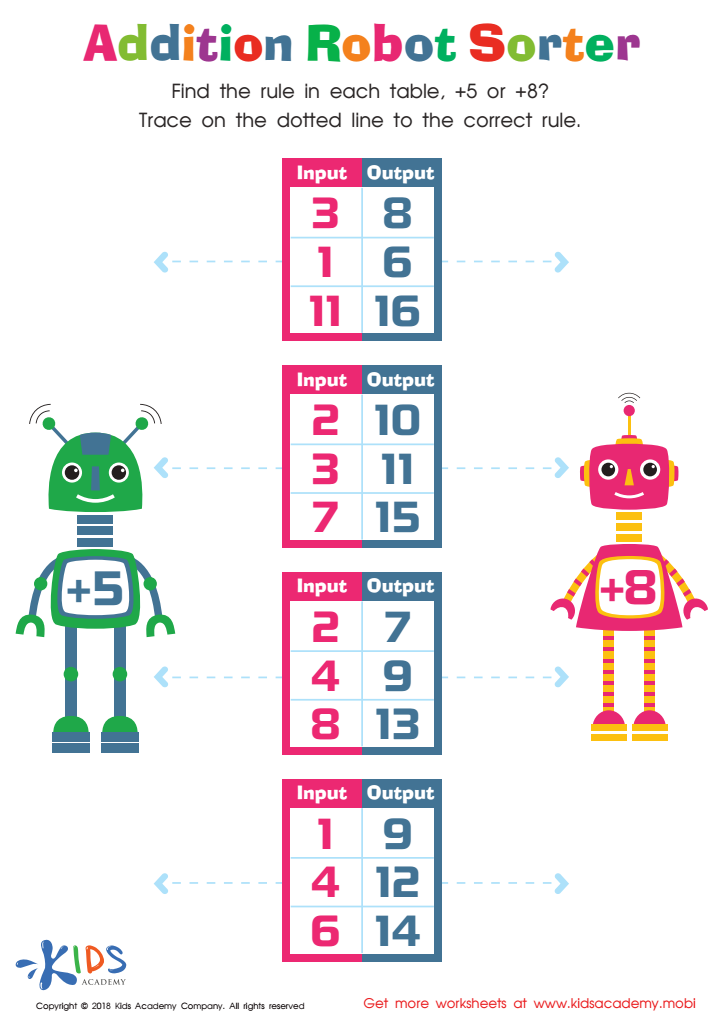
Addition Robot Sorter Worksheet
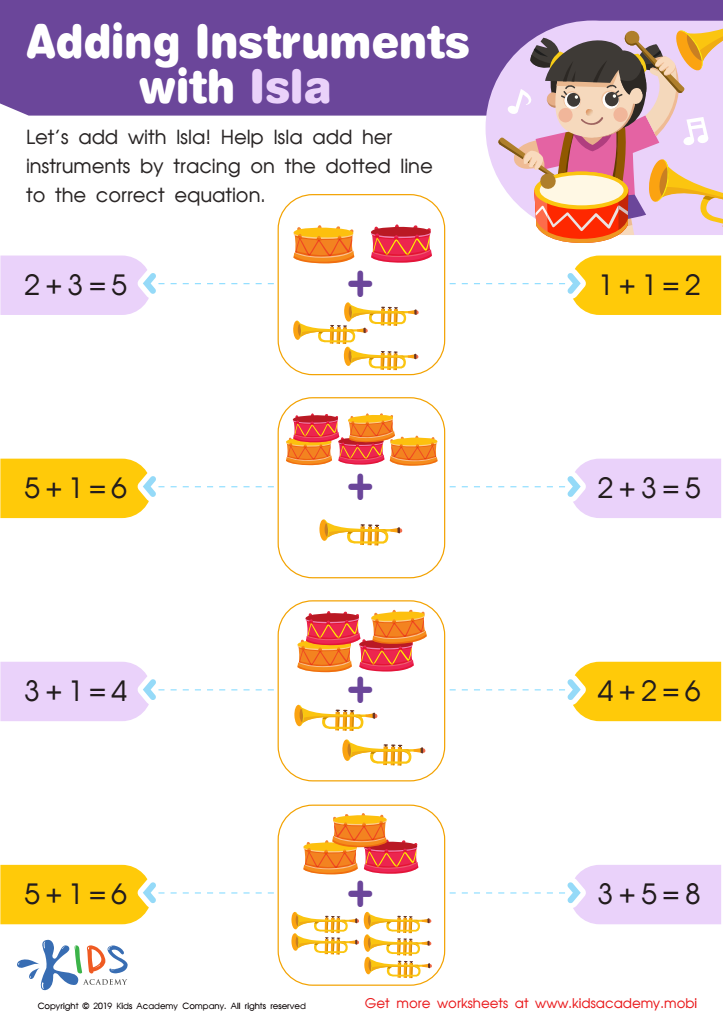
Adding Instruments with Isla Worksheet








Basic addition and subtraction skills for ages 5-6 are crucial building blocks for children's overall mathematical development. At this age, children are in a pivotal stage of cognitive development, where they start to make sense of numbers and how they relate to everyday life. Mastering these basic skills lays the foundation for more complex mathematical concepts that they will encounter later in school, such as multiplication, division, and problem-solving.
First, understanding basic addition and subtraction helps children develop logical thinking and reasoning. They learn to recognize patterns, make predictions, and figure out how numbers interact, which are essential skills for future success in math and science.
Second, basic arithmetic equips children with practical life skills. Simple tasks such as telling time, managing money, and measuring ingredients for cooking all rely on an understanding of addition and subtraction. These daily applications show children the relevance of math in the real world, fostering a positive attitude towards the subject.
Moreover, developing strong early math skills boosts self-confidence. When children can successfully add and subtract, they feel accomplished and are more likely to tackle new challenges without fear. This sense of achievement in early years can set the tone for a lifelong love and curiosity for learning.
Therefore, parents and teachers must actively nurture these basic skills to ensure children have a solid mathematical foundation, practical life skills, and a confident, positive approach to learning.








