Fine Motor Skills Normal Addition & Subtraction Worksheets for Ages 5-6
7 filtered results
-
From - To
Boost your child's fine motor skills while reinforcing important addition and subtraction concepts with our engaging worksheets designed for ages 5-6. These fun, printable activities help young learners practice math problems through easy-to-follow exercises that encourage dexterity and hand-eye coordination. Each worksheet blends essential math practice with creative tasks, such as tracing, coloring, and cutting, making learning enjoyable. Perfect for home or classroom use, these resources promote cognitive development alongside physical skills. Watch your little ones thrive as they gain confidence in their math abilities while honing their fine motor skills. Start exploring our collection today!
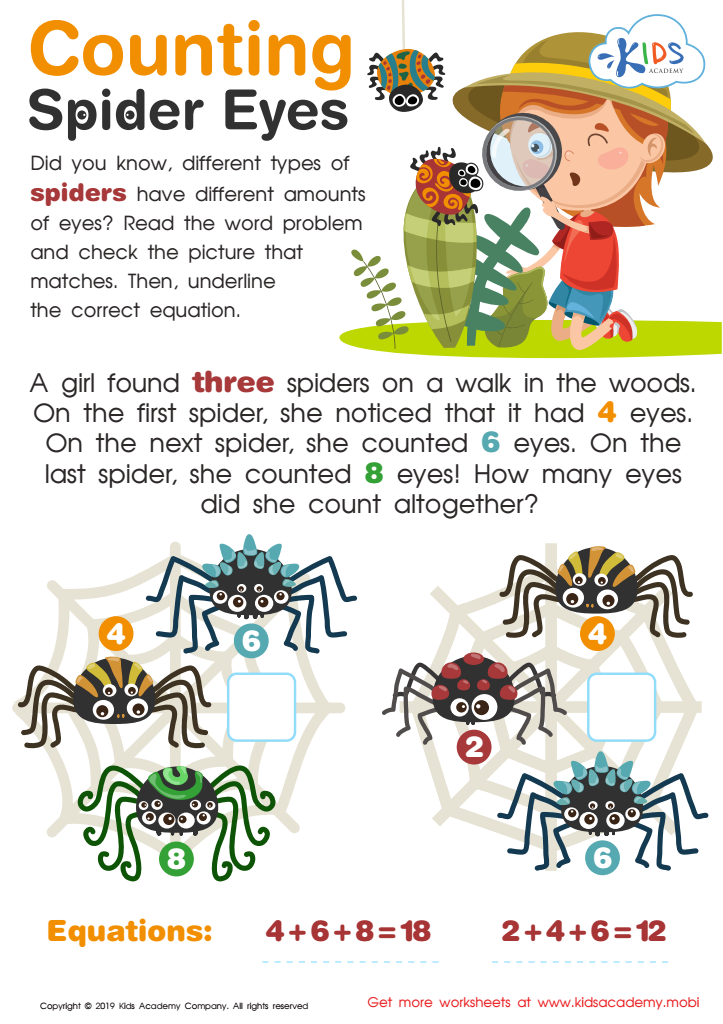
Counting Spider Eyes Worksheet
 Assign to My Students
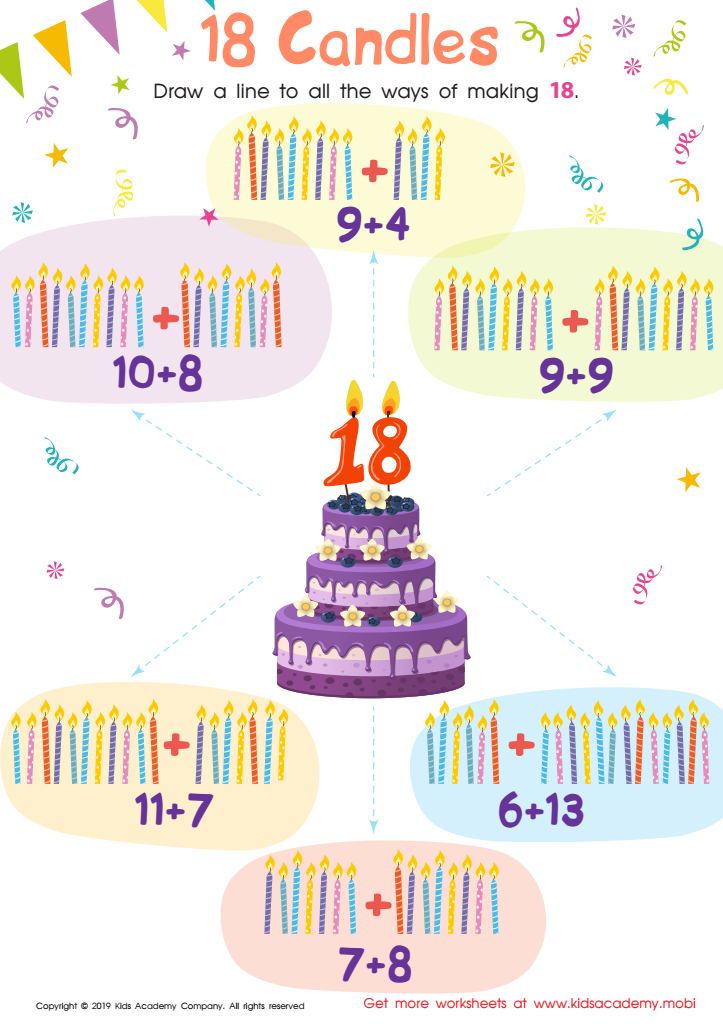
18 Candles Worksheet
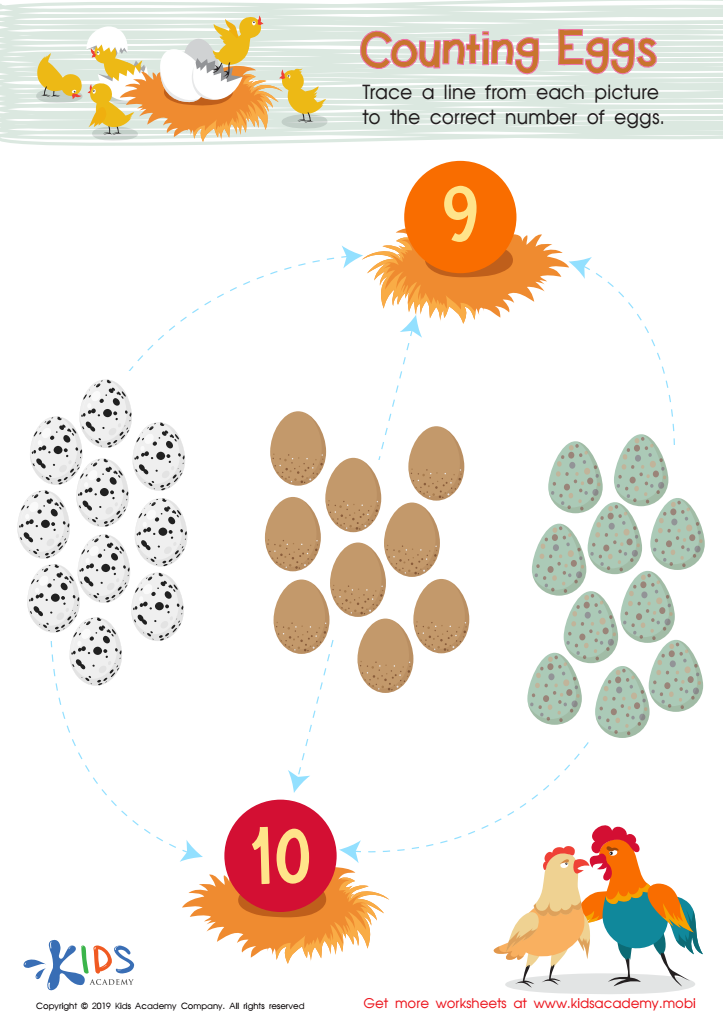
Counting Eggs Worksheet
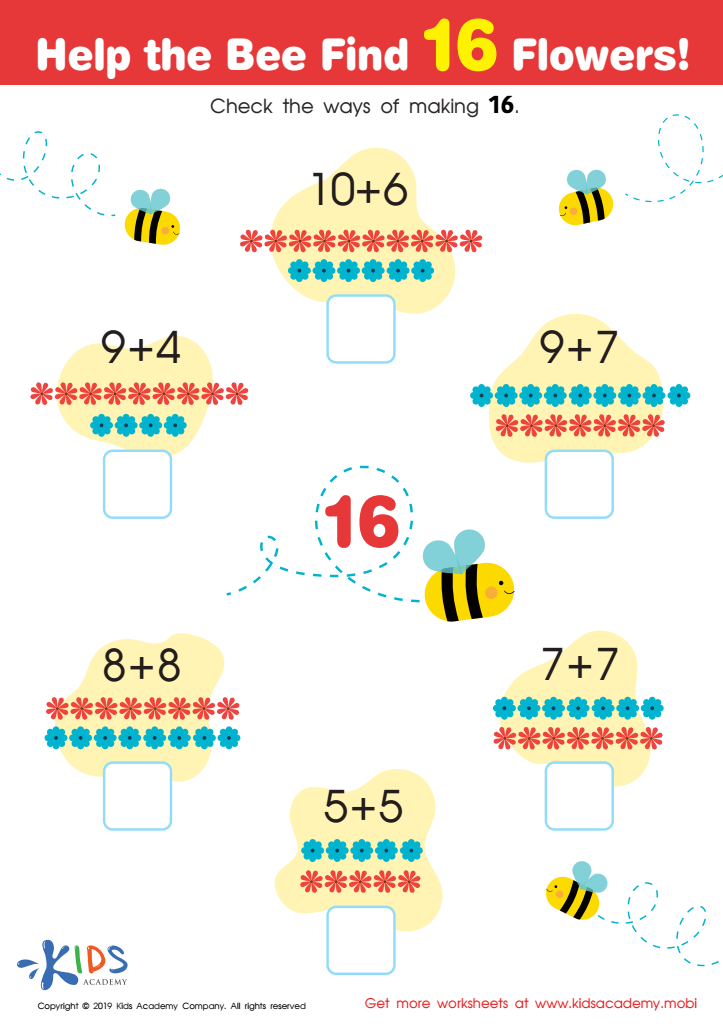
Help the Bee Find 16 Flowers Worksheet
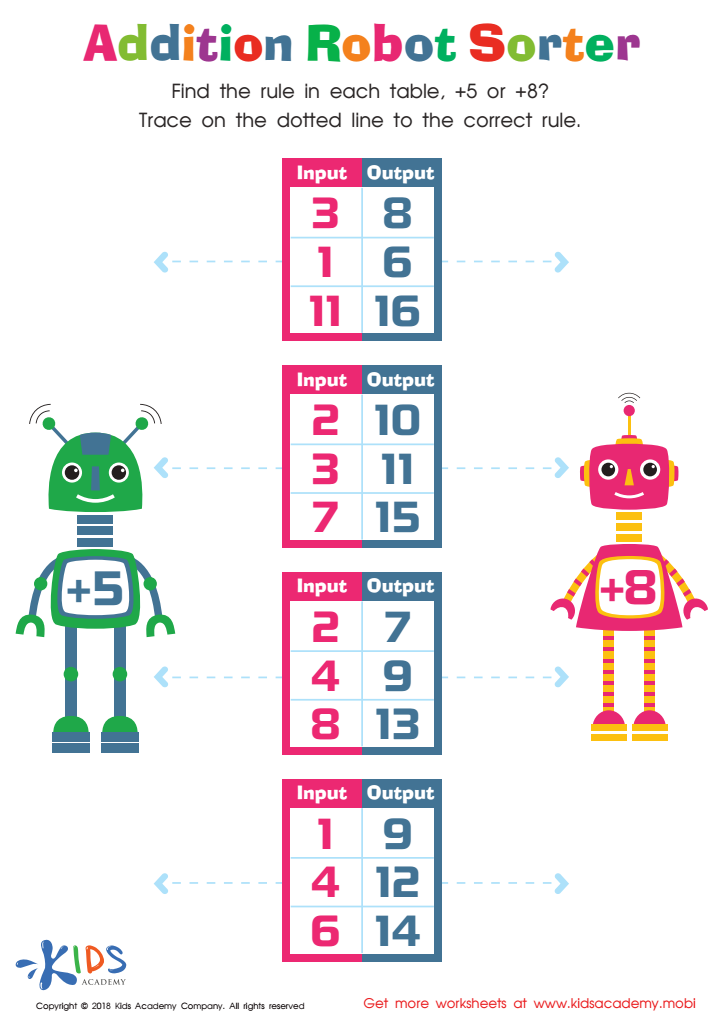
Addition Robot Sorter Worksheet








Fine motor skills are essential for the development of kindergarteners and first graders, particularly as they relate to normal addition and subtraction. Parents and teachers should care about these skills because they lay the foundation for a child's academic and everyday tasks. Fine motor skills involve the coordination of small muscles in the hands and fingers, enabling children to hold pencils effectively, manipulate objects, and perform precise actions necessary for writing and arithmetic.
As children engage in addition and subtraction activities, they often use manipulatives or write their answers. Improved fine motor skills allow them to grasp these tools better, resulting in more accurate calculations and more success in math-related tasks. Proficiency in these skills boosts confidence and promotes a positive attitude toward learning.
Furthermore, these skills foster cognitive development. The act of physically counting objects or drawing number lines enhances understanding of mathematical concepts, bridging tactile experiences with abstract reasoning. Teachers and parents can support this growth through playful teaching methods, such as games and arts and crafts that refine these skills.
In summary, nurturing fine motor skills is not just about facilitating academic tasks; it equips children with confidence, promotes engagement in learning, and serves as a precursor to their future educational paths.








