Logical Reasoning Normal Addition & Subtraction Worksheets for Ages 5-6
5 filtered results
-
From - To
Explore our engaging “Logical Reasoning Normal Addition & Subtraction Worksheets” designed specifically for children aged 5-6. These fun and interactive worksheets incorporate essential math skills while enhancing logical reasoning abilities. Perfect for early learners, they feature a variety of activities that promote problem-solving and critical thinking through relatable scenarios. With colorful illustrations and age-appropriate challenges, children will enjoy developing their addition and subtraction skills in a meaningful way. Our carefully crafted exercises not only support math comprehension but also foster a love for learning. Equip your young learners with the tools they need to succeed in math and beyond!
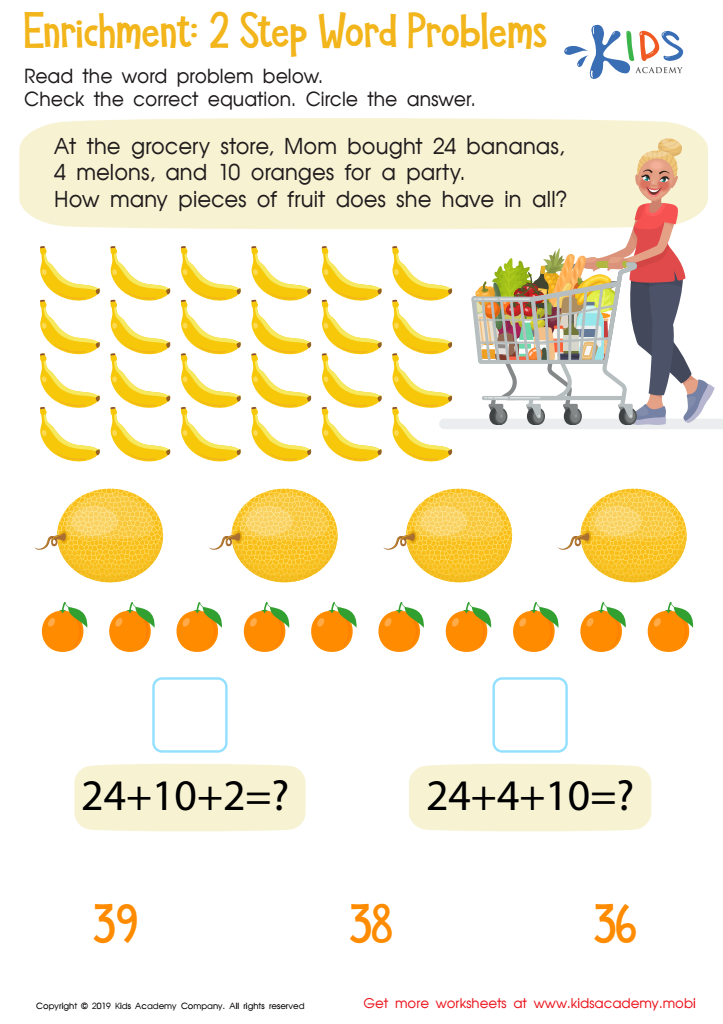
Enrichment -2 Step Word Problems Worksheet
 Assign to My Students
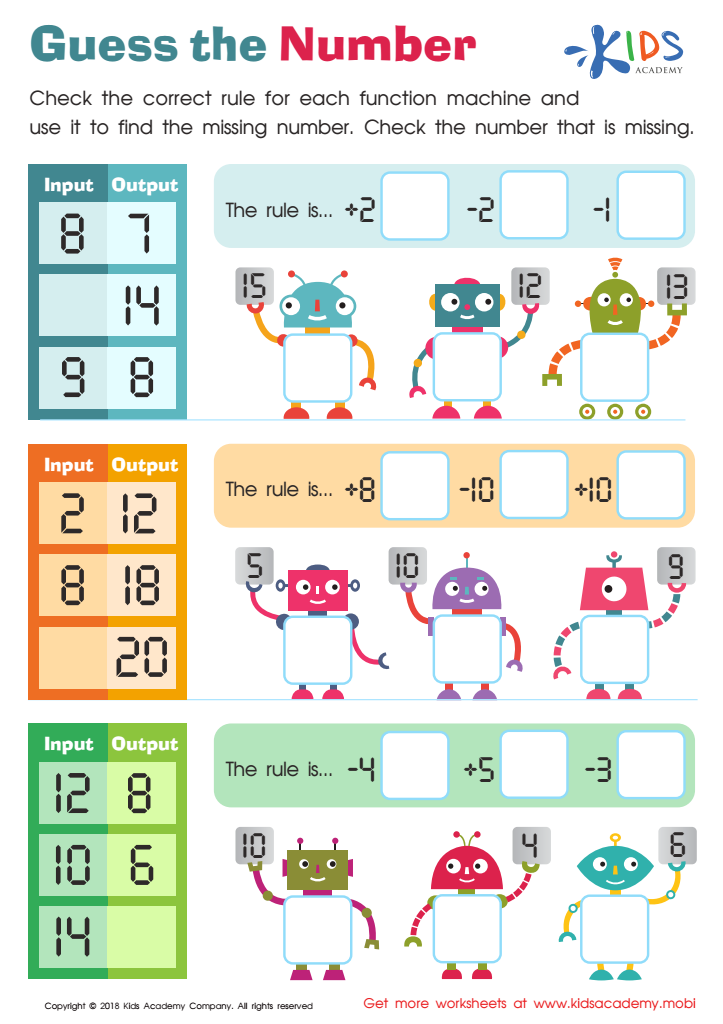
Guess the Number Worksheet
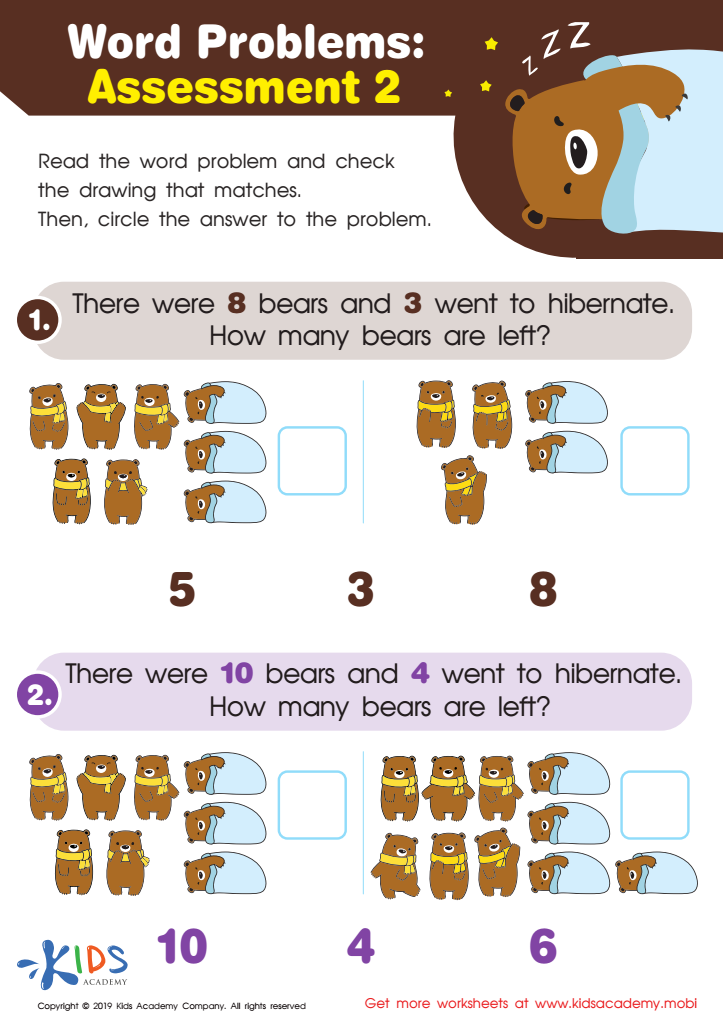
Word Problems: Assessment 2 Worksheet
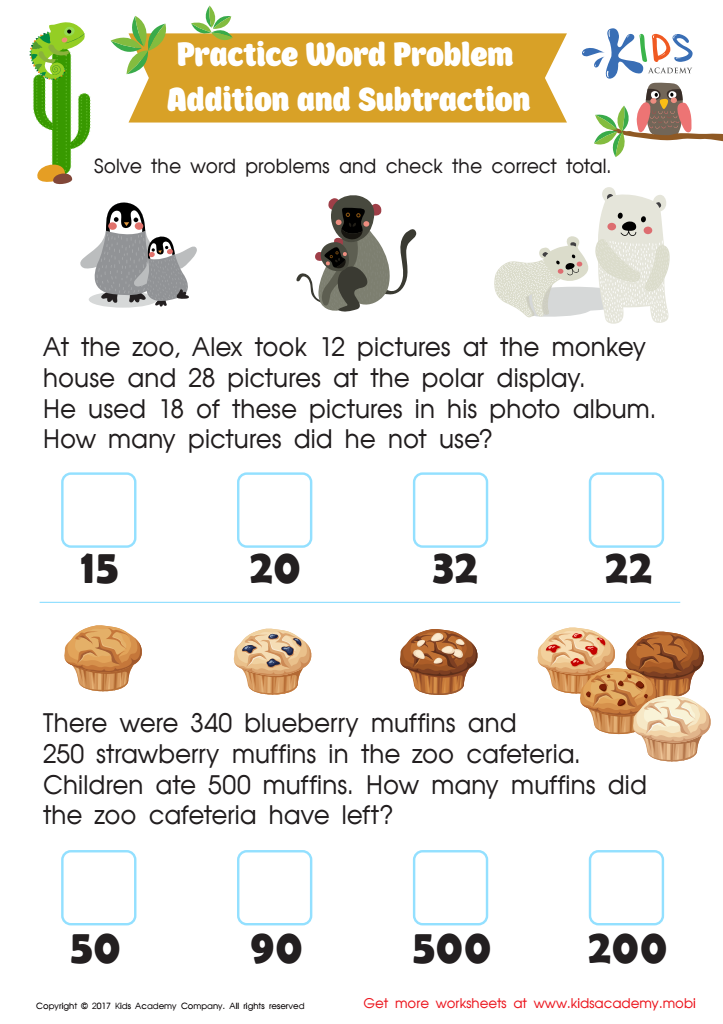
Addition and Subtraction: Word Problems Worksheet
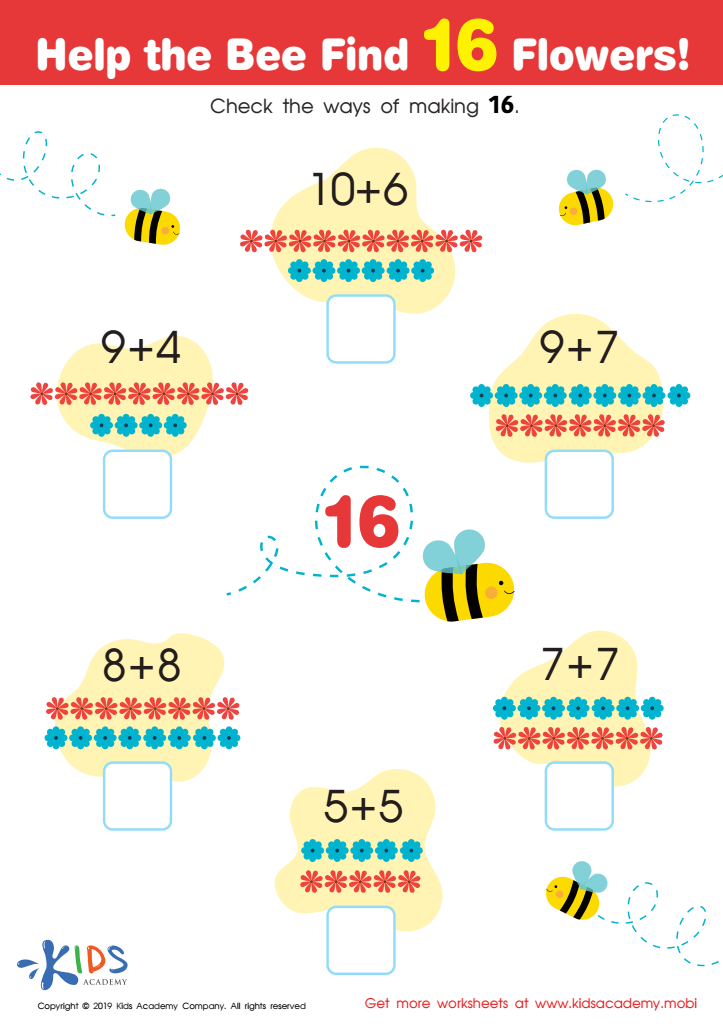
Help the Bee Find 16 Flowers Worksheet








Parents and teachers should recognize the importance of logical reasoning in the development of early mathematical skills, particularly for children ages 5-6. Logical reasoning lays the foundational cognitive skills that help children understand addition and subtraction beyond mere memorization of facts. It fosters critical thinking, enabling children to analyze relationships, identify patterns, and solve problems effectively.
At this age, children can grasp abstract concepts but need to engage with them through concrete experiences. Encouraging logical reasoning enhances their ability to see how numbers work—understanding that subtraction is essentially taking away from a whole, while addition involves combining sets.
Moreover, cultivating these skills at this developmental stage encourages a positive attitude toward mathematics, reducing math anxiety later in life. As they strengthen their logical reasoning skills, children become more confident and competent in solving mathematical problems, which is crucial for their academic journey.
Additionally, engaging students in mathematical reasoning promotes collaborative learning, enhancing social skills as they share ideas and approaches with peers. In conclusion, emphasizing logical reasoning alongside normal addition and subtraction equips young learners with crucial skills that will support their educational growth and confidence in mathematics.








