Our "Mathematical Reasoning: Normal Addition & Subtraction Worksheets for Ages 5-6" are designed to develop critical thinking and problem-solving skills in young learners. Tailored for kids aged 5-6, these worksheets offer fun and engaging activities that strengthen foundational math skills. With colorful diagrams and relatable scenarios, children can easily grasp basic addition and subtraction concepts, laying the groundwork for future math success. The worksheets aim to enhance mathematical reasoning by presenting a variety of challenges that encourage logical thinking and strategic problem-solving. Help your child build confidence and proficiency in math with our expertly crafted resources!

Check out this FREE Trial Lesson on Addition & Subtraction for age 5-6!

More Word Problems

Favorites
With answer key
Interactive
  • 5-6
  • Mathematical reasoning
  • Addition & Subtraction
  • Normal
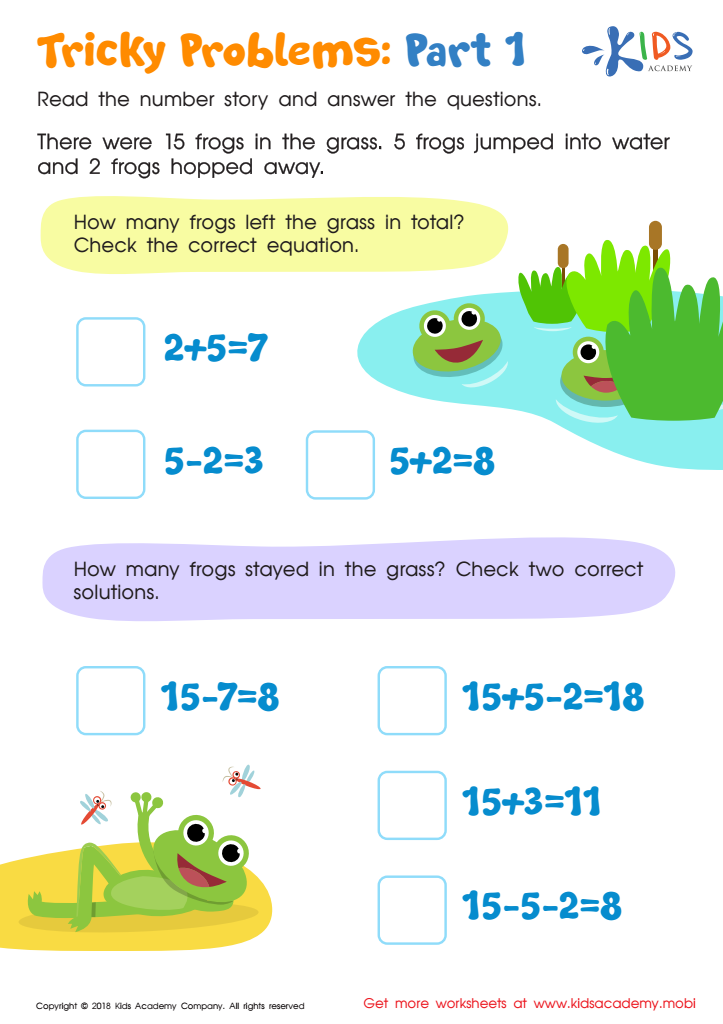
Tricky Problems Worksheet: Part 1

Tricky Problems Worksheet: Part 1

Visualizing word problems can help students solve them. This fun PDF worksheet encourages students to create mental images using math facts, then check boxes to match the equations for basic addition problems. It's a great way to build confidence in solving math.
Tricky Problems Worksheet: Part 1
Worksheet
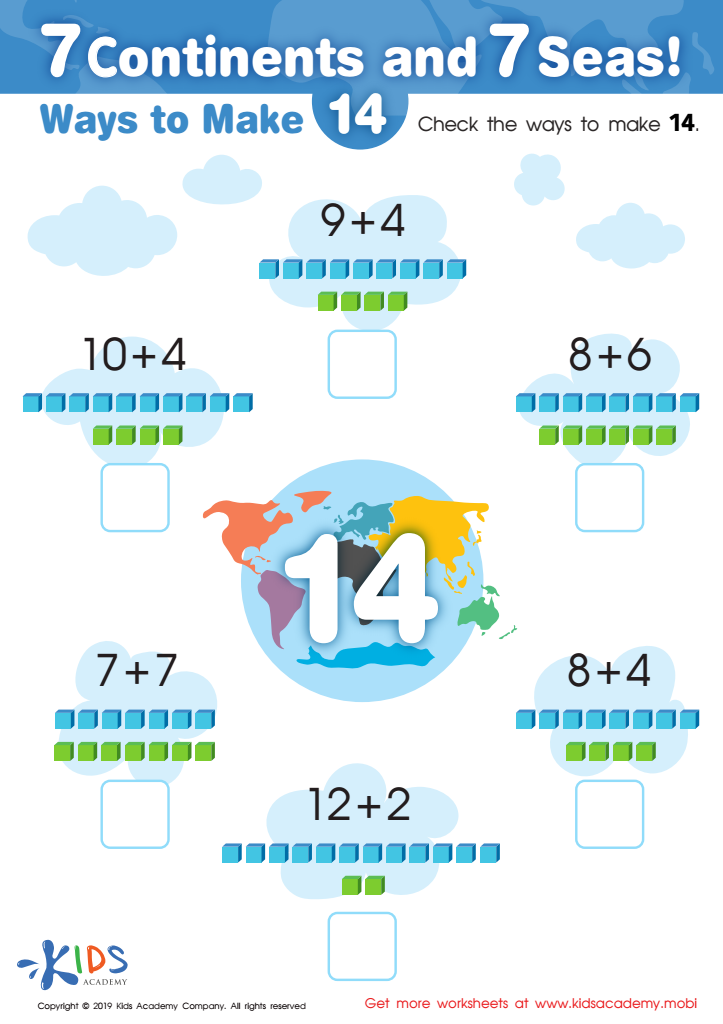
7 Continents and 7 Seas Worksheet

7 Continents and 7 Seas Worksheet

Remind kids of the continents and show them how different numbers can add up to the same figure. Give examples, like 2+2 =4, and 3+1 =4. Ask if they can provide other examples, then work through the simple additions in this worksheet with them. Ask them to circle all equations that make 14.
7 Continents and 7 Seas Worksheet
Worksheet
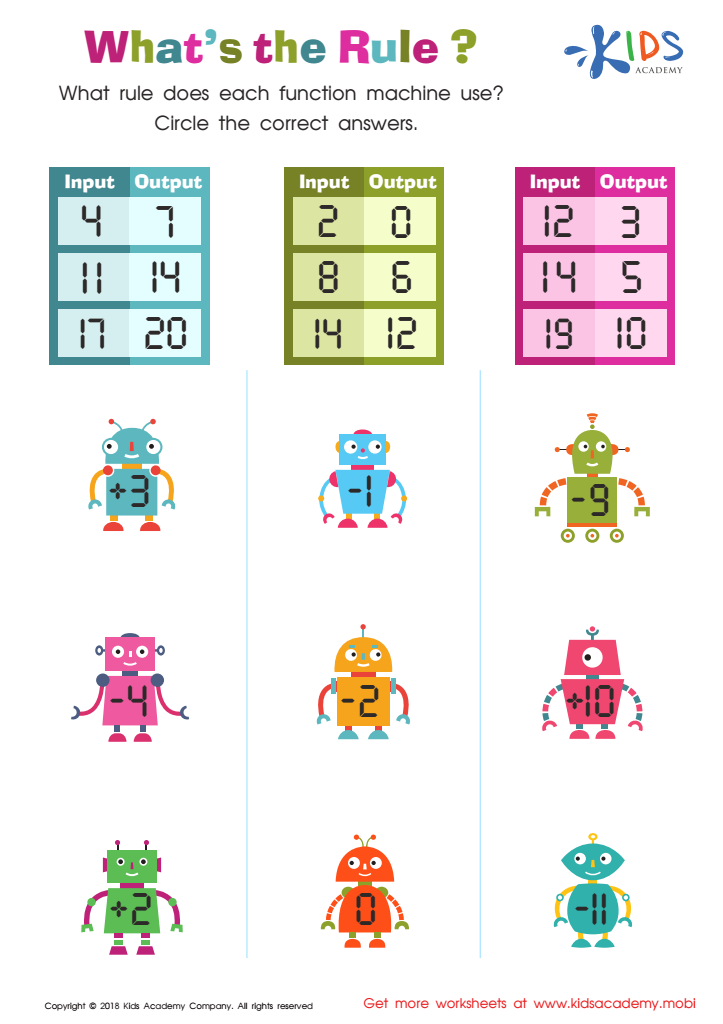
What's the Rule Worksheet

What's the Rule Worksheet

Robots are here to help your child find the relationship between each set of numbers! Adorably illustrated worksheets use vivid pictures that each contain a rule. Look at each function machine and find the pattern or relationship between the input and output. Then, complete the sheet by circling the correct answer!
What's the Rule Worksheet
Worksheet
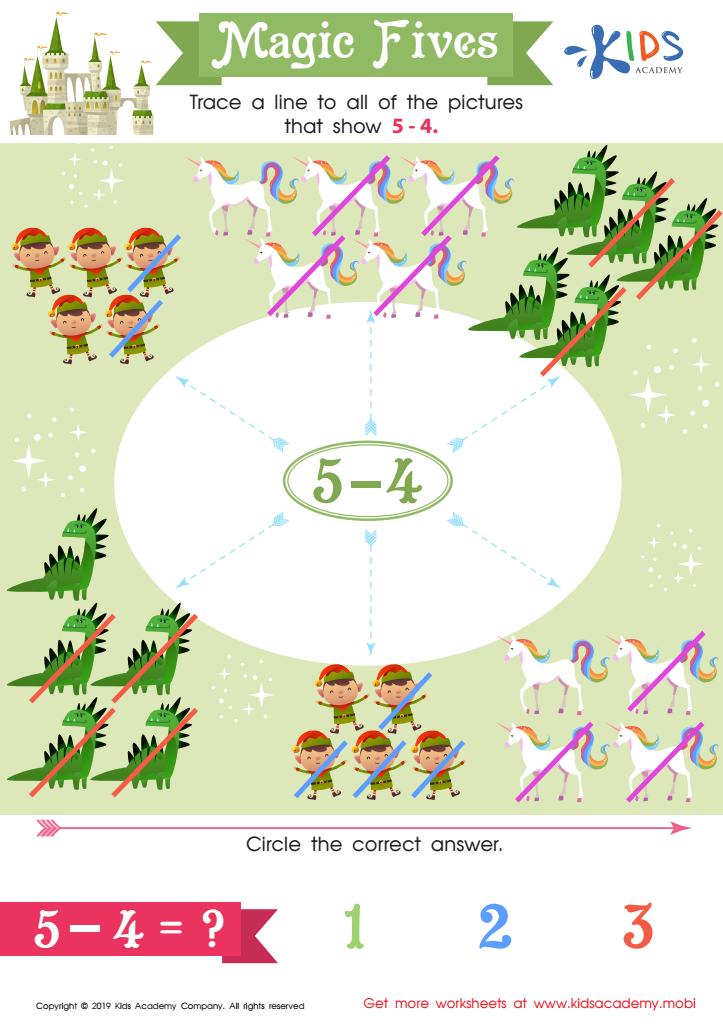
Magic Fives Worksheet

Magic Fives Worksheet

Help your students identify the objects & people in the worksheet. Point to the equation 5 -4 in the center, then get them to count the items and trace a line connecting those that add up to 5 - 4.
Magic Fives Worksheet
Worksheet
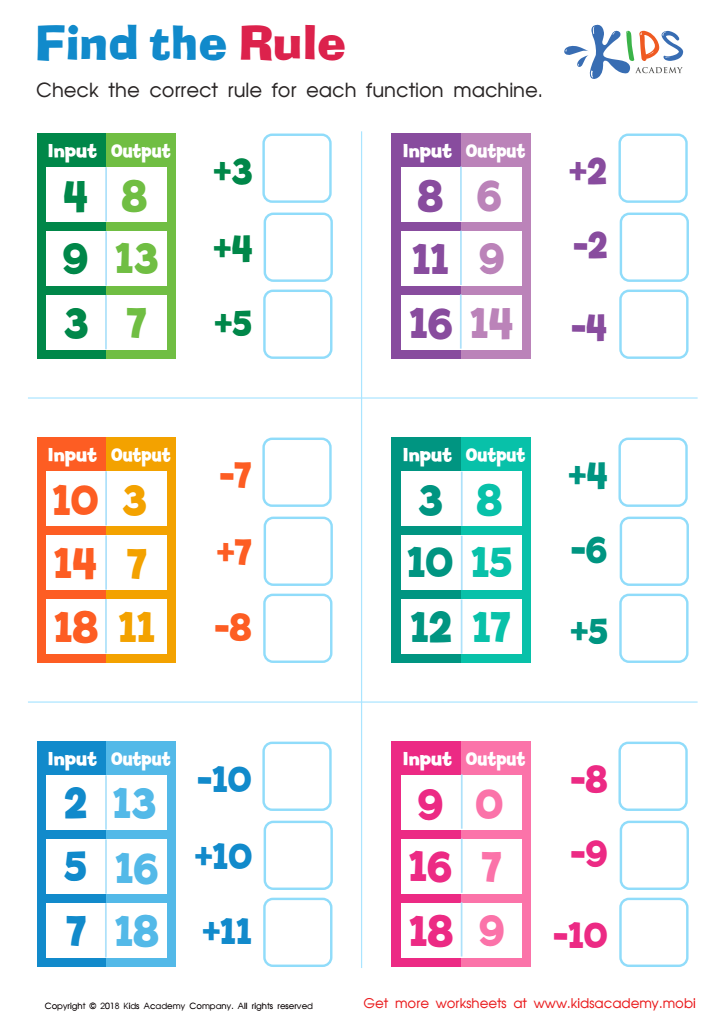
Find the Rule Worksheet

Find the Rule Worksheet

A function machine is an elementary math tool used to find an output by applying a rule, like addition or subtraction, to an input. Children use the diagram to understand the relationship between each input and output, with this worksheet helping them to analyze the machine and find the rule being used.
Find the Rule Worksheet
Worksheet
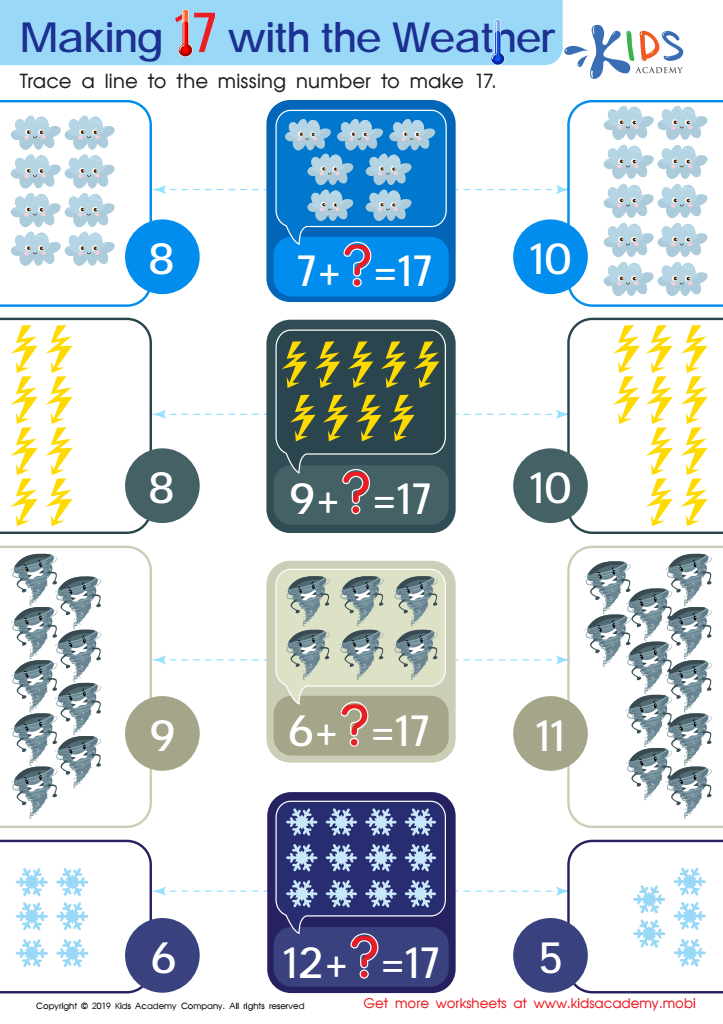
Making 17 with the Weather Worksheet

Making 17 with the Weather Worksheet

Show your kids the pictures in the worksheet and identify the weather. This exercise is to help them add simple numbers. There are 4 equations in the printout. Help them figure out the numbers to make 17, then trace a line to the missing number to complete the equation.
Making 17 with the Weather Worksheet
Worksheet
Count Back to Subtract

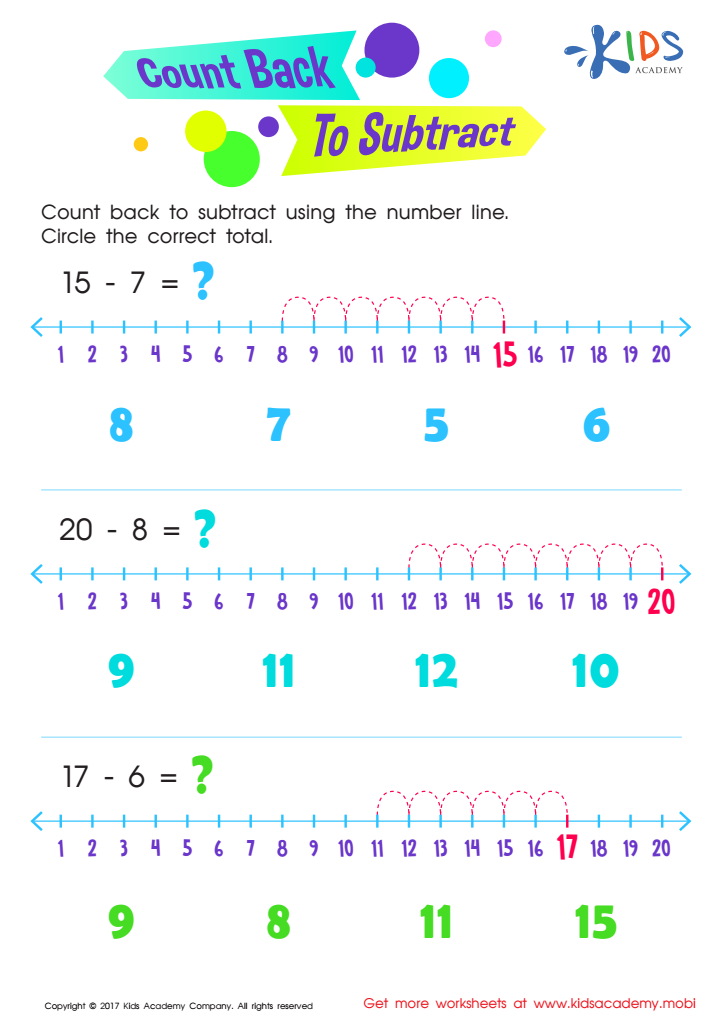
Count Back to Subtract Substraction Worksheet
With this worksheet, your child can visually see and count each number they’re subtracting. This worksheet provides a number line to help your child master subtraction visually. Counting back on the line will give them a deeper understanding of the concept. It's a great way to teach subtraction and help children gain confidence with the subject.
Count Back to Subtract Substraction Worksheet
Worksheet
What Makes 13 Worksheet

What Makes 13 Worksheet

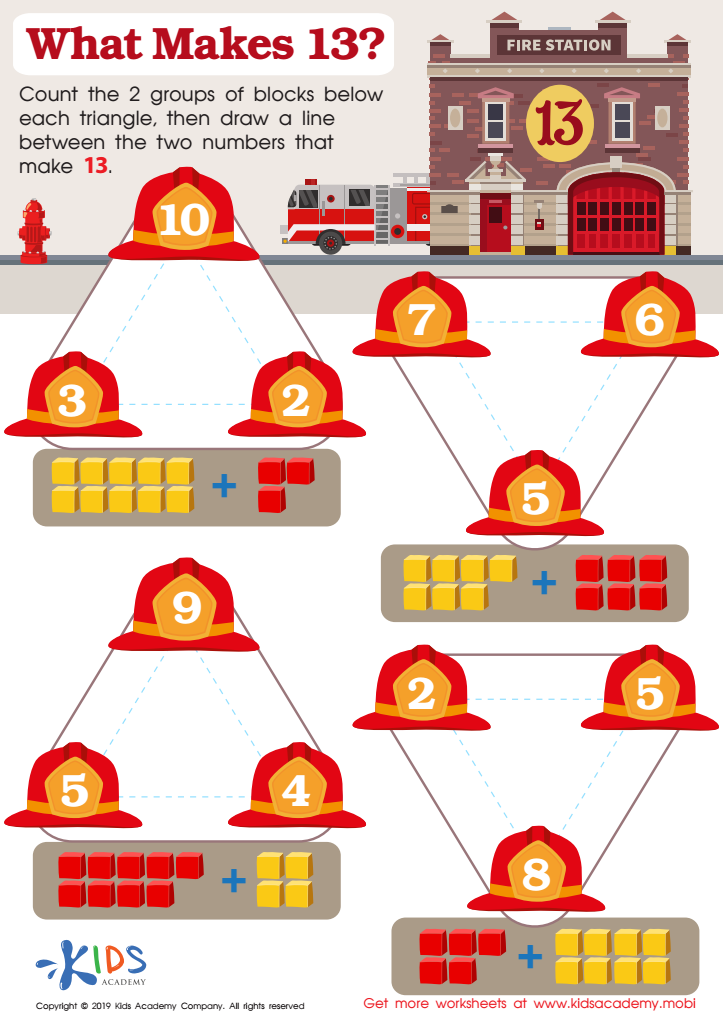
Help your kids practice maths with this worksheet! With colourful images and simple equations, your kids will be more engaged in learning. Go through the four equations and help them add up the numbers. Then, draw a line between the numbers that make 13. Doing this will aid their learning and understanding.
What Makes 13 Worksheet
Worksheet
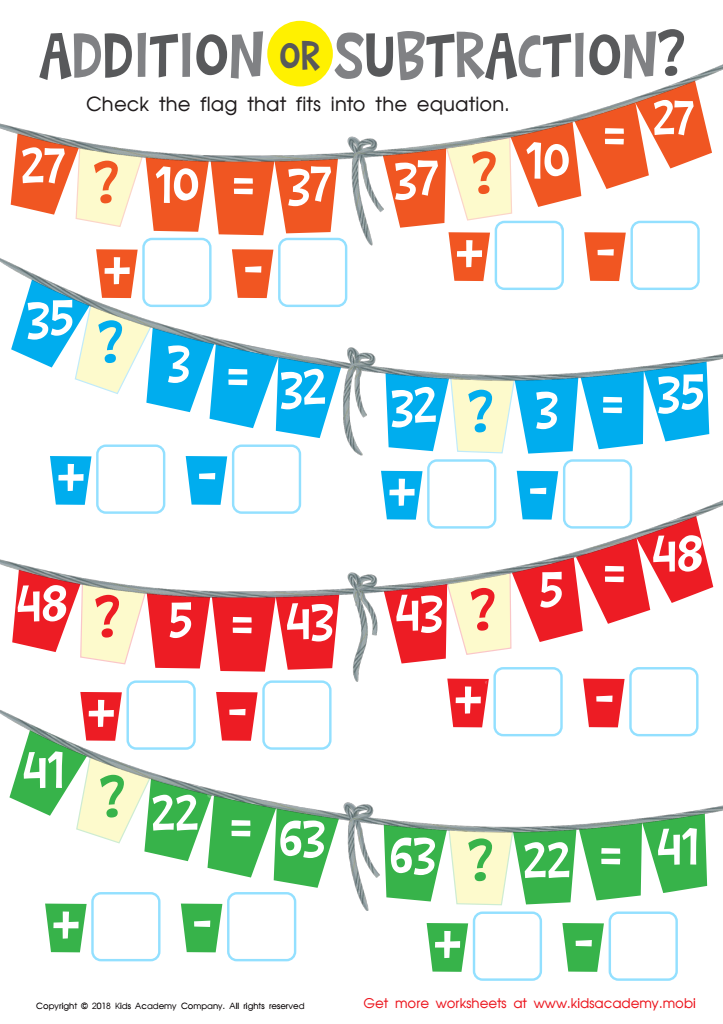
Addition or Subtraction? Worksheet


Addition or Subtraction? Worksheet

Help your math whiz's number skills advance with these colorful flag equations! With the free PDF, they'll learn to solve addition and subtraction facts by following the correct orders of operation. And the best part? They'll develop a deeper understanding of how the different operations work together within equations. Give it a try and watch their skills soar!
Addition or Subtraction? Worksheet

Worksheet


Mathematical reasoning involving normal addition and subtraction is crucial for 5-6-year-olds as it lays the foundational skills for their future academic success and problem-solving abilities. At this age, children's brains are highly receptive to new information, making it an ideal time to introduce basic arithmetic concepts. Understanding addition and subtraction helps children develop critical thinking and analytical skills, allowing them to solve problems systematically, which is beneficial not just in mathematics, but across all areas of learning.

Parents and teachers play a key role in fostering a positive and supportive learning environment that encourages curiosity and experimentation with numbers. Engaging children in hands-on and interactive activities can make arithmetic fun and comprehensible, reducing any math-related anxiety. By embedding these concepts in everyday situations, such as counting toys or sharing snacks, adults can help children see the practical applications of mathematics in daily life.

Moreover, early mastery of basic arithmetic can build children's confidence, leading to a more positive attitude toward learning and academic challenges in general. It prepares them for more complex mathematical concepts in later grades, ensuring a smoother transition and continued academic development. Therefore, prioritizing mathematical reasoning through normal addition and subtraction for young learners is essential for their overall cognitive growth and long-term educational journey.