Number Recognition Normal Addition & Subtraction Worksheets for Ages 5-6 - Page 2

Filters

31 filtered results

Clear all filters
Favorites
With answer key
Interactive

31 filtered results

Difficulty Level

Grade


Check out this FREE Trial Lesson on Addition & Subtraction for age 5-6!

What’s the Rule - Part 1

Favorites
With answer key
Interactive
  • 5-6
  • Number Recognition
  • Addition & Subtraction
  • Normal
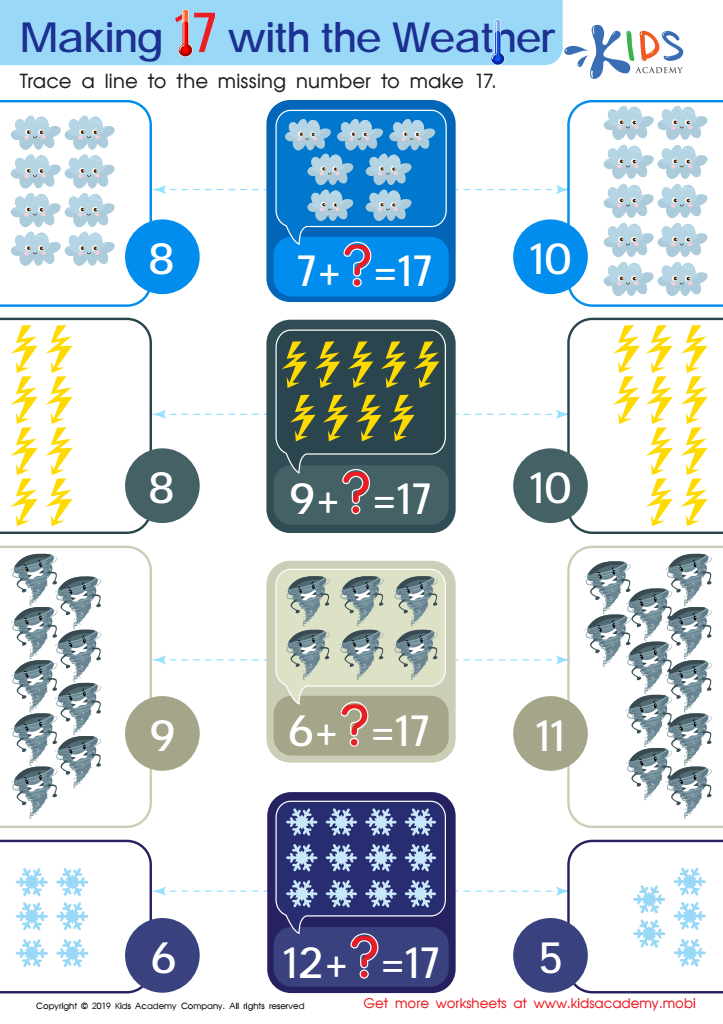
Making 17 with the Weather Worksheet

Making 17 with the Weather Worksheet

Show your kids the pictures in the worksheet and identify the weather. This exercise is to help them add simple numbers. There are 4 equations in the printout. Help them figure out the numbers to make 17, then trace a line to the missing number to complete the equation.
Making 17 with the Weather Worksheet
Worksheet
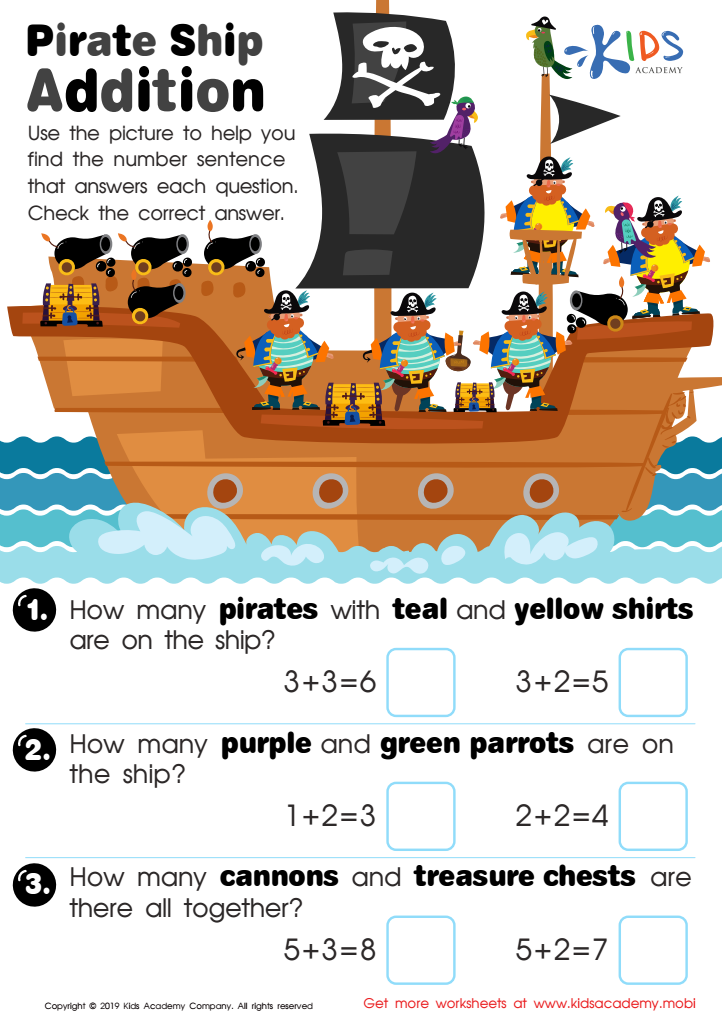
Pirate Ship Addition Worksheet

Pirate Ship Addition Worksheet

Does your family love pirate stories? Get your kids excited about this easy activity! Ask them to explain what makes pirate tales special, then look at the picture in the printout. Answer the three number questions at the bottom - use the picture to find the right number sentence. Help your kids check the correct answer. Max 80 words.
Pirate Ship Addition Worksheet
Worksheet
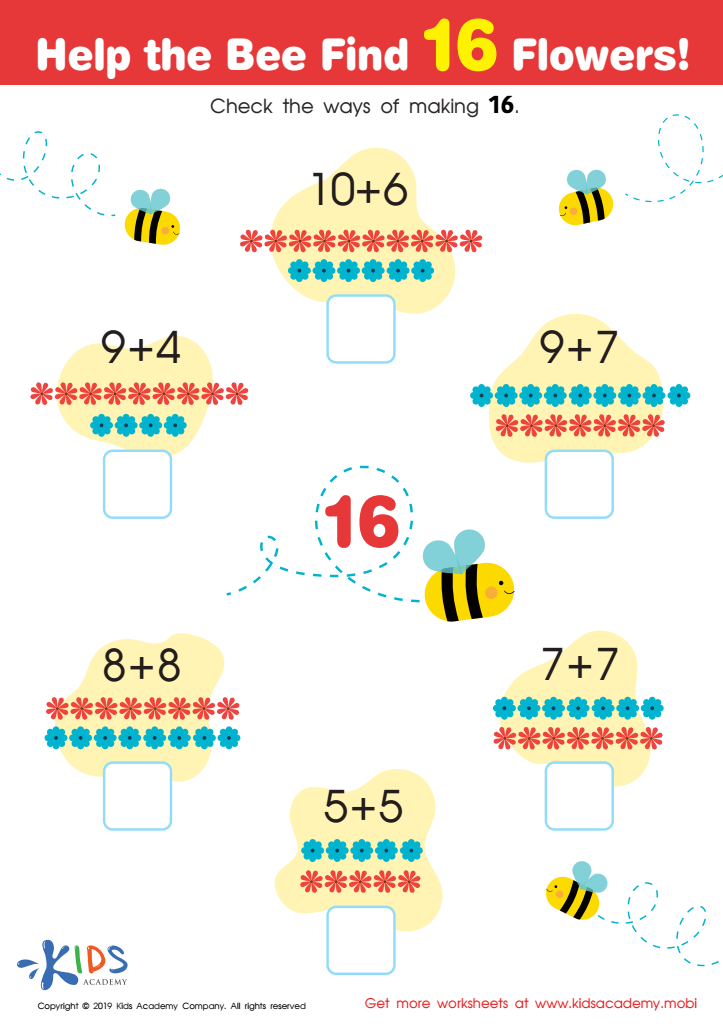
Help the Bee Find 16 Flowers Worksheet

Help the Bee Find 16 Flowers Worksheet

Ask your students to count as high as they can. Show them that different numbers can equal the same figure with examples like 2+2=4 and 3+1=4. Ask for more examples, then help the bees find 16 flowers by checking the ways of making 16.
Help the Bee Find 16 Flowers Worksheet
Worksheet
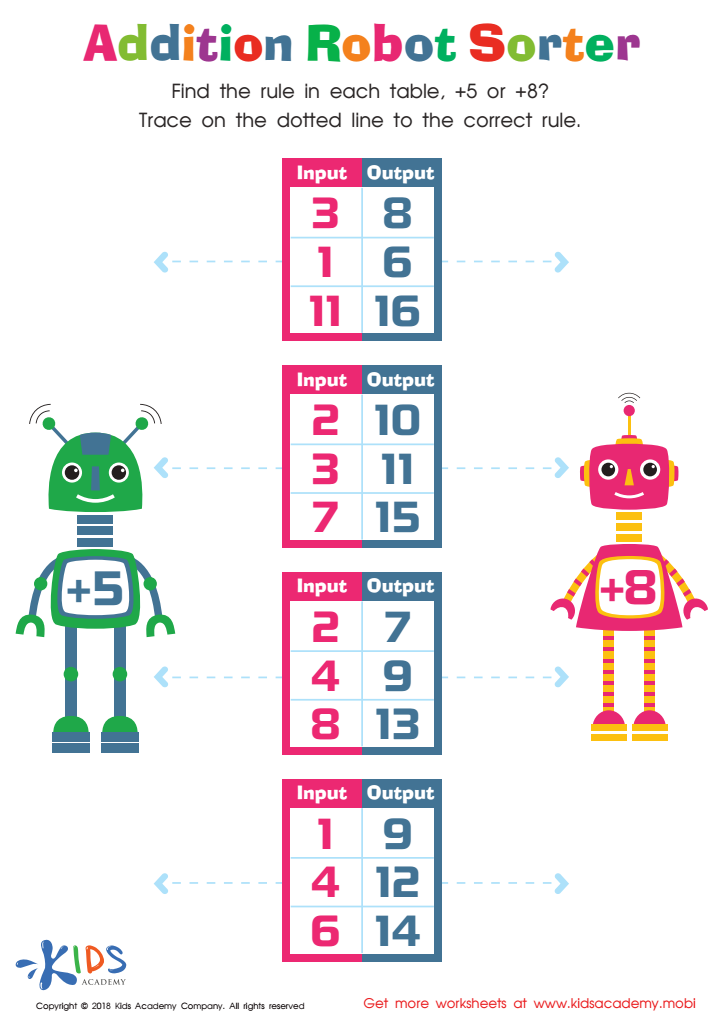
Addition Robot Sorter Worksheet

Addition Robot Sorter Worksheet

This worksheet helps your child understand addition. Have them trace the dotted lines to the correct equations: +8 and +5. It's a great way to aid their mathematical comprehension and get them comfortable with adding equations.
Addition Robot Sorter Worksheet
Worksheet
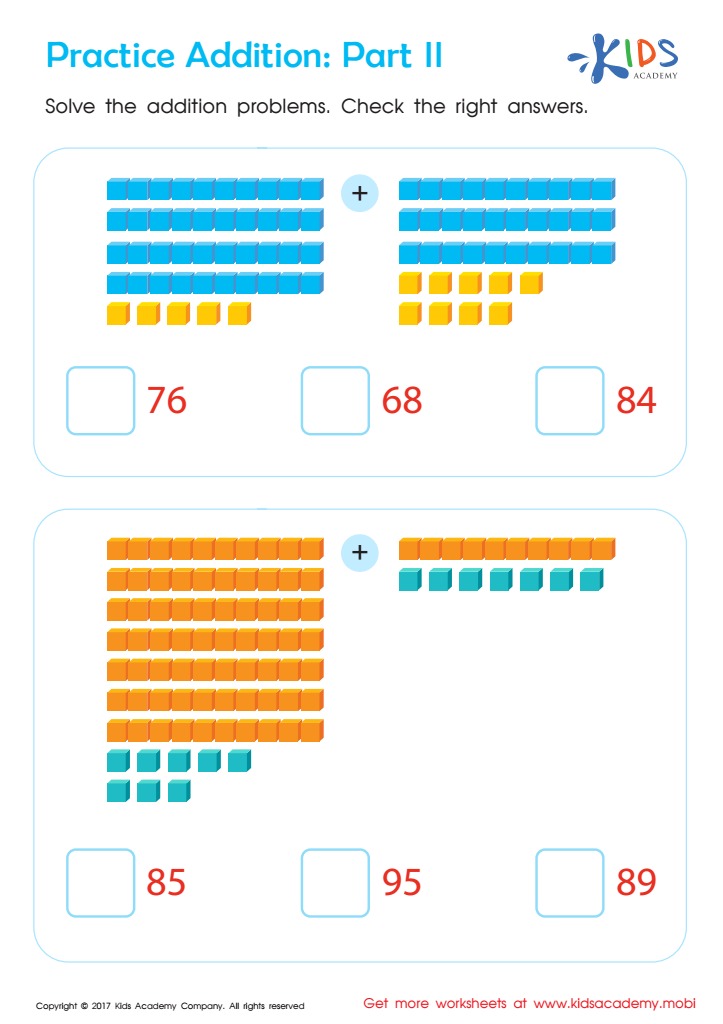
Practice Addition: Part 2 Worksheet

Practice Addition: Part 2 Worksheet

Try this printable worksheet to practice addition! It contains longer, tougher addition equations for 1st graders. Colorful blocks give kids the opportunity to visualize how big numbers are combined. Multiple choice answers help kids gain confidence in problem solving.
Practice Addition: Part 2 Worksheet
Worksheet
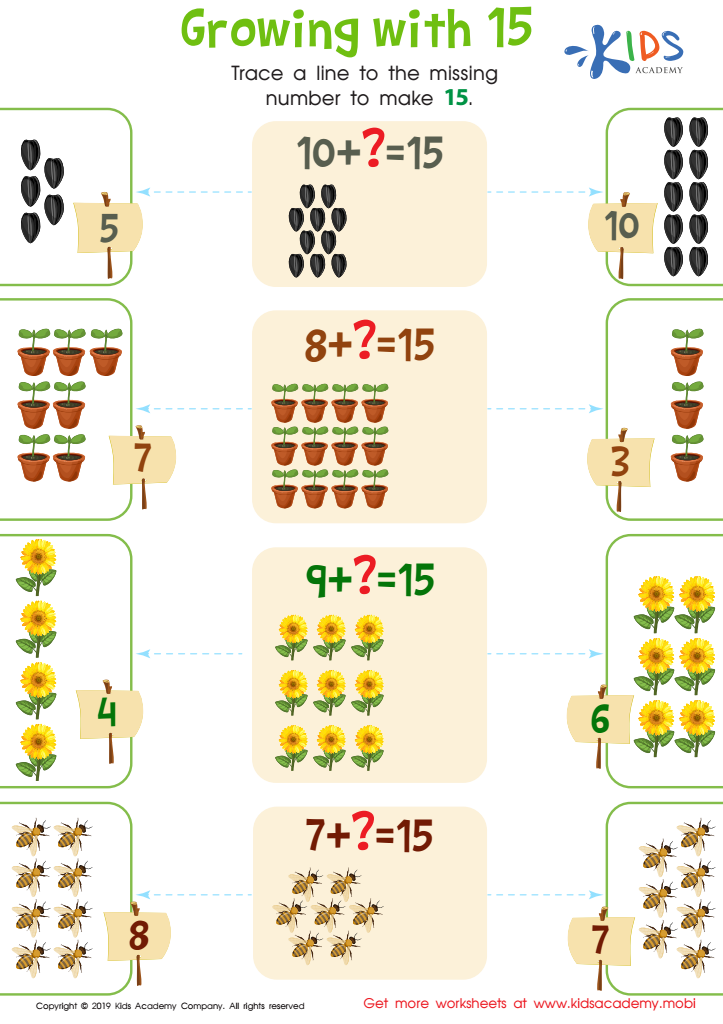
Growing with 15 Worksheet

Growing with 15 Worksheet

Remind your kids that adding different sets of numbers can give the same total (e.g. 2+3=5, 4+1=5). Test their understanding by asking them for more examples. Move onto the worksheet: count objects, then trace the line to the number making a total of 15.
Growing with 15 Worksheet
Worksheet
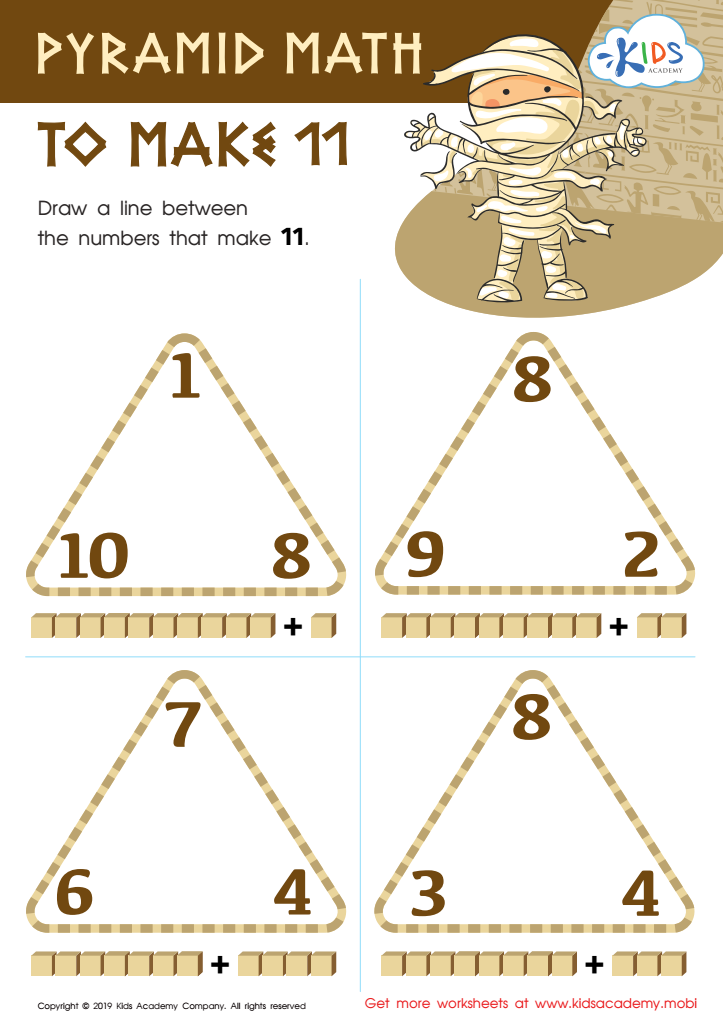
Pyramid Math to Make 11 Worksheet


Pyramid Math to Make 11 Worksheet

Have your kids look at the picture of the Egyptian pyramids and tell you what they see. Then, help them do simple math by adding up the numbers in the pyramids and connecting those that make 11. This worksheet is perfect for teaching your kids about history, mathematics, and problem-solving.
Pyramid Math to Make 11 Worksheet

Worksheet


Number recognition and basic addition and subtraction skills are foundational for young learners aged 5-6. These early math skills are critical for a variety of reasons.

First, number recognition is a fundamental stepping stone in the path to mathematical literacy. By recognizing and understanding numbers, children develop the ability to identify numerical symbols and understand their value. This helps them to read and comprehend numbers in different contexts, aiding not just in math, but in all daily activities that involve numbers.

Second, once children recognize numbers, addition and subtraction come into play as the primary operations that introduce them to the idea of manipulating these numbers. Learning how to add and subtract enhances a child’s cognitive development, fostering critical thinking and problem-solving skills. These operations form the basis of more advanced math topics they will encounter in later years.

Additionally, engaging with these basic math concepts at an early age builds confidence and promotes a positive attitude toward math. It helps children grasp abstract concepts and apply them to real-world situations, like counting toys or sharing snacks, thereby making learning more practical and relatable.

For parents and teachers, fostering these skills builds a strong educational foundation, setting the stage for future learning and academic success. Investing time and effort in teaching these basic math skills helps ensure children can progress smoothly as their educational journey advances.