Problem Solving Normal Addition & Subtraction Worksheets for Ages 5-6
7 filtered results
-
From - To
Improve your child's math skills with our Problem Solving Normal Addition & Subtraction Worksheets tailored for ages 5-6. These engaging worksheets are designed to enhance critical thinking and problem-solving abilities while helping young learners master basic addition and subtraction concepts. Each activity encourages festive and nurturing learning by incorporating colorful illustrations and relatable scenarios. Your child will solve common problems using addition and subtraction, laying a strong foundation for future math success. Perfect for home or classroom use, these worksheets provide parents and educators with the tools necessary to foster a love for math in early learners. Start exploring today!

 Assign to My Students

Addition Quest Worksheet: Part 2
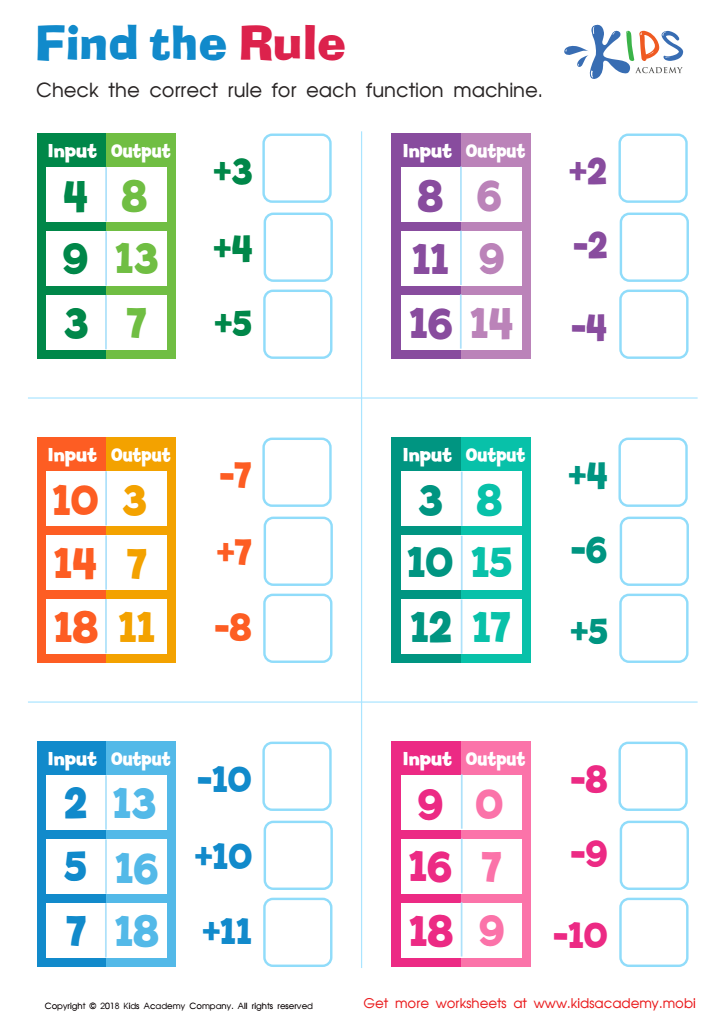
Find the Rule Worksheet
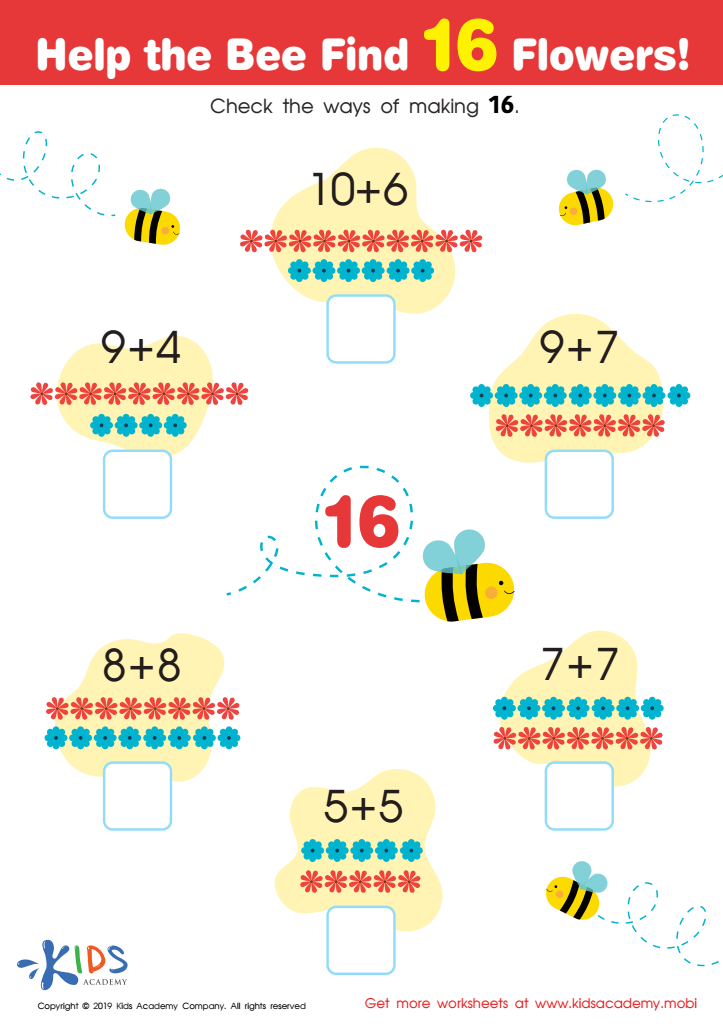
Help the Bee Find 16 Flowers Worksheet
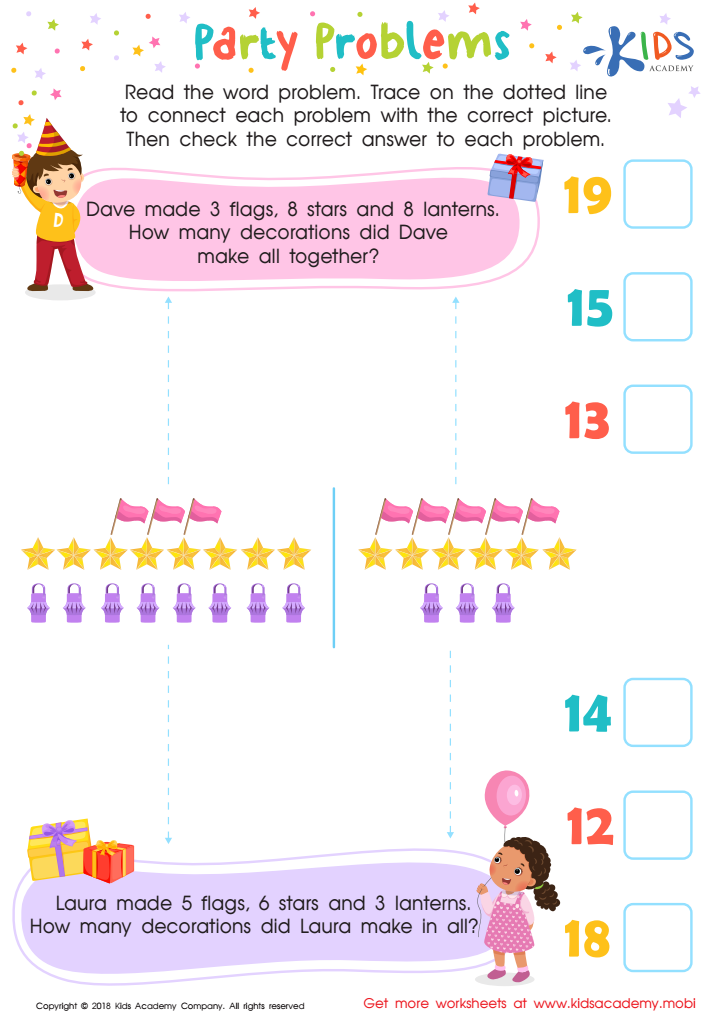
Party Problems Worksheet
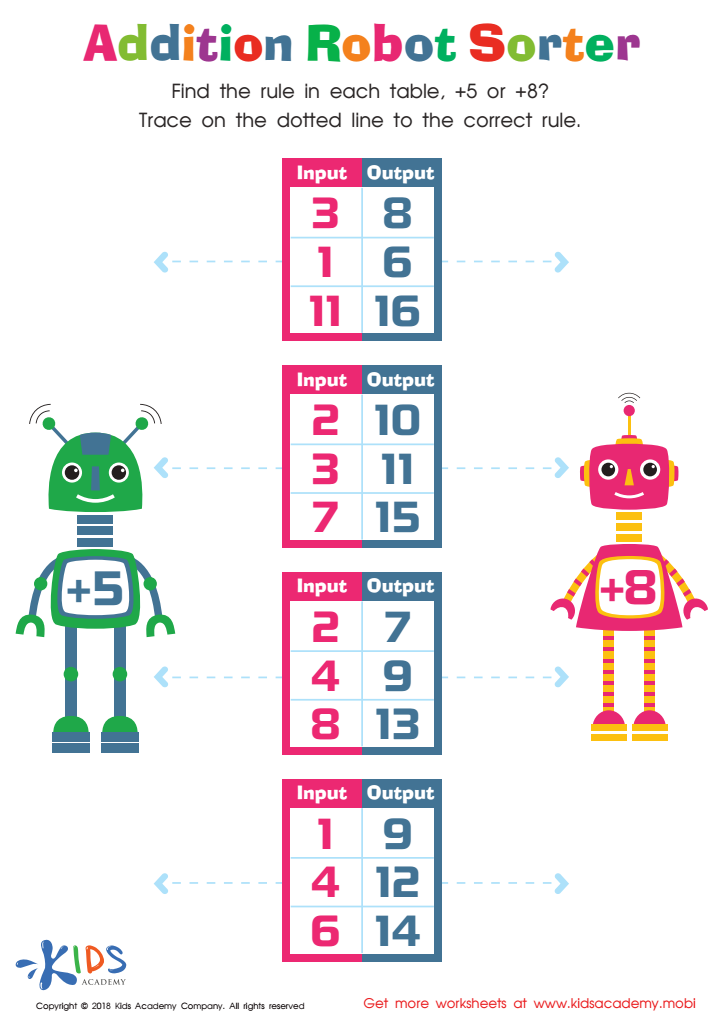
Addition Robot Sorter Worksheet
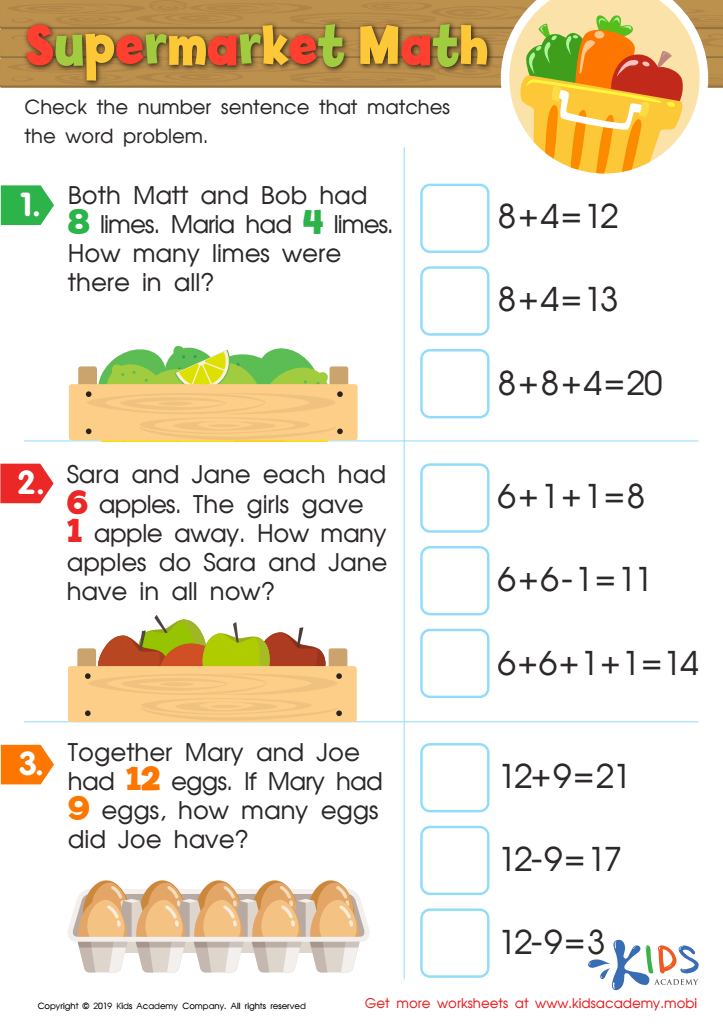
Supermarket Math Worksheet








Problem Solving in Normal Addition and Subtraction is crucial for 5 to 6-year-olds as it builds foundational math skills essential for later learning. At this age, children are naturally curious and eager to understand their world, and introducing them to problem-solving with addition and subtraction helps foster mathematical thinking.
First, problem-solving develops critical thinking skills. Children learn to analyze a situation, strategize, and evaluate their solutions, which are vital skills not only in math but across subjects and real-life scenarios. Engaging in problem-solving encourages persistence, helping young learners face challenges without frustration.
Additionally, normal addition and subtraction offer concrete applications. By resolving problems with relatable contexts, like sharing snacks or counting toys, they see the relevance of math in everyday situations. This practical understanding reinforces their learning and nurtures a positive attitude toward mathematics.
Moreover, helping children cultivate these skills enhances their confidence. As they grasp key concepts, children become empowered learners willing to take on new challenges. For parents and teachers alike, fostering an environment that emphasizes problem-solving not only supports academic success but also instills a lifelong love of learning and inquiry in children.








