Understanding patterns Normal Addition & Subtraction Worksheets for Ages 5-6
4 filtered results
-
From - To
Unlock young minds' potential with our "Understanding Patterns: Normal Addition & Subtraction Worksheets for Ages 5-6." Designed to enhance early math skills, these engaging worksheets help children recognize and predict patterns using basic addition and subtraction. Vibrant illustrations and fun exercises keep kids motivated while they practice logical thinking and problem-solving. Perfectly crafted for ages 5-6, these printable resources support foundational learning, preparing children for more advanced concepts. Visit Kids Academy to provide your child with the tools they need to excel in math through enjoyable, hands-on activities designed to foster a love for learning.
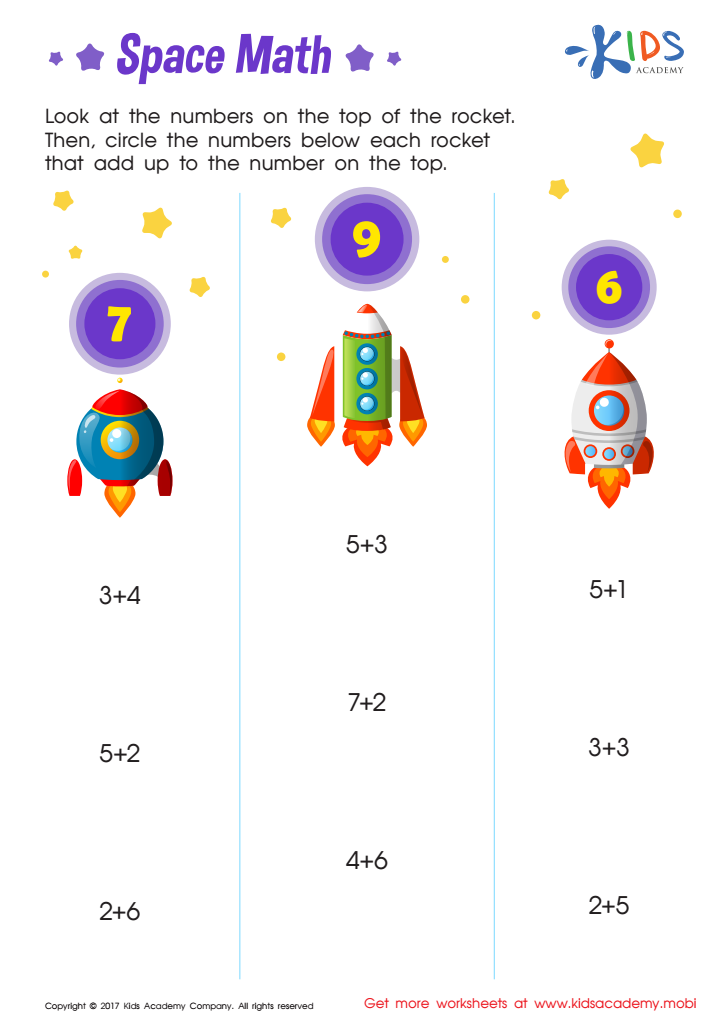
Addition: Space Math Worksheet
 Assign to My Students
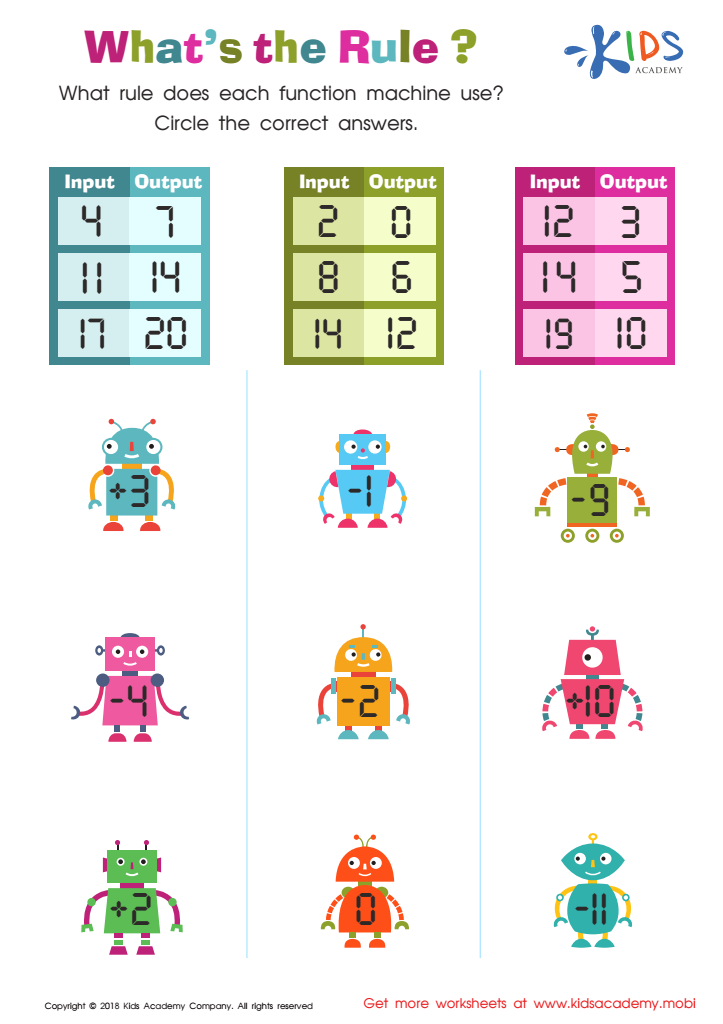
What's the Rule Worksheet
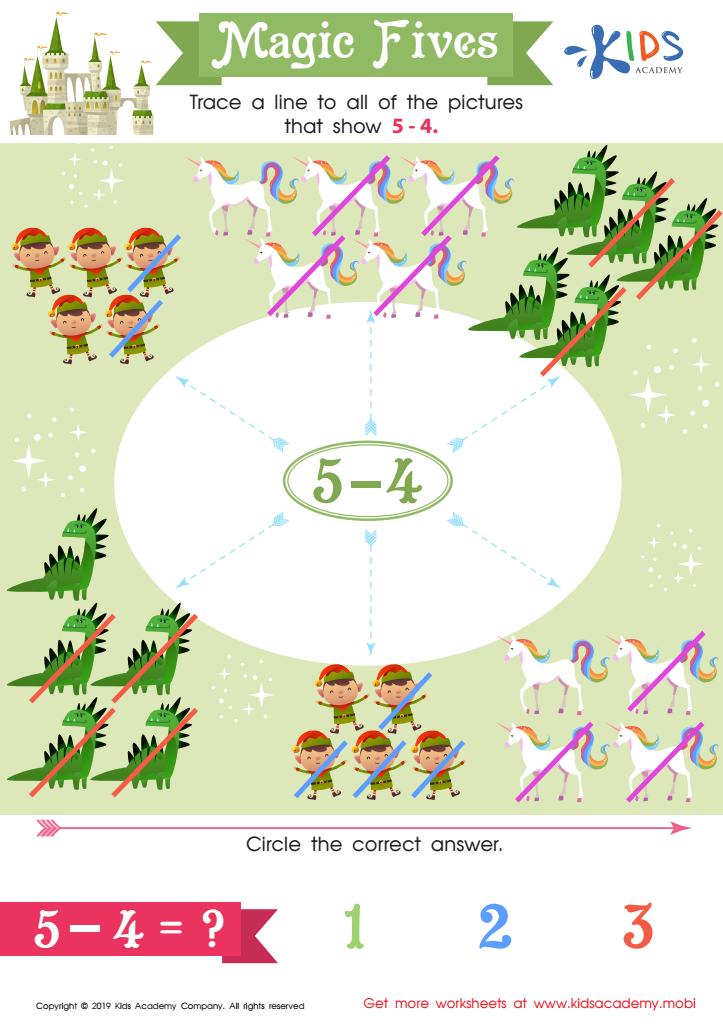
Magic Fives Worksheet
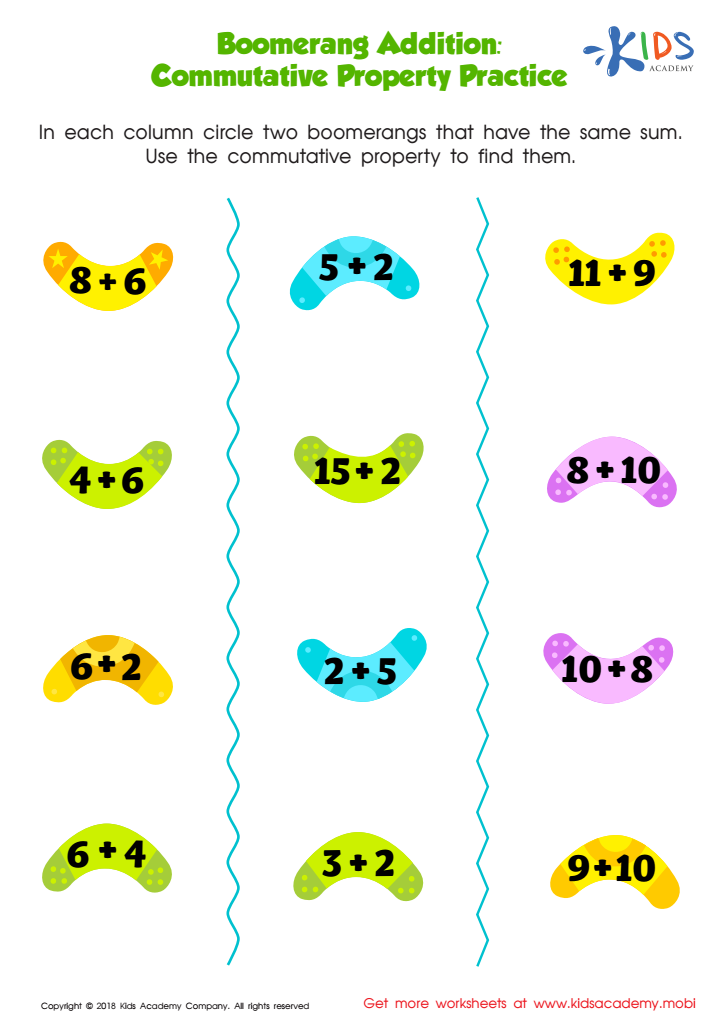
Boomerang Addition Worksheet








Understanding patterns, normal addition, and subtraction at ages 5-6 is crucial for several reasons that benefit children's cognitive and academic development. At this stage, young children's brains are particularly receptive to new information and concepts, which makes it an ideal time to introduce foundational math skills.
Firstly, recognizing and understanding patterns help children develop critical thinking and problem-solving skills. It sets the stage for higher-order mathematics by enabling them to predict and make sense of numbers and relationships. This cognitive skill extends beyond math, aiding in literacy, science, and even daily life activities.
Secondly, mastering basic addition and subtraction provides children with essential tools for both present and future learning. These skills form the groundwork for more complex mathematical concepts that they will encounter in later years. Early competence in these areas ensures that children build a strong number sense, which is fundamental for success in school.
Parents and teachers play a critical role in facilitating this early learning. Engaging, age-appropriate activities such as counting games, hands-on manipulatives, and interactive stories can make learning math fun and meaningful. Early encouragement and support create a positive attitude towards learning and academic confidence.
Essentially, equipping children with the ability to understand patterns and basic arithmetic ensures they are well-prepared for future educational challenges and everyday problem-solving.








