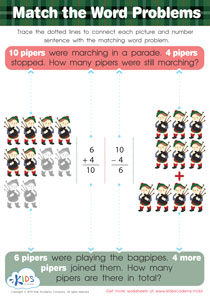
Addition skills Normal Addition Worksheets for Ages 5-6
5 filtered results
-
From - To
Enhance your child’s addition skills with our engaging and easy-to-follow Normal Addition Worksheets designed for ages 5-6. These worksheets provide a solid foundation in basic math principles, ensuring children grasp the essential concept of addition through fun and interactive activities. Each worksheet is thoughtfully crafted to build confidence, improve accuracy, and develop problem-solving abilities in young learners. Incorporating a blend of colorful images and practical problems, our worksheets make learning addition enjoyable and effective. Perfect for home or classroom use, these resources will help your child master addition skills at their own pace.
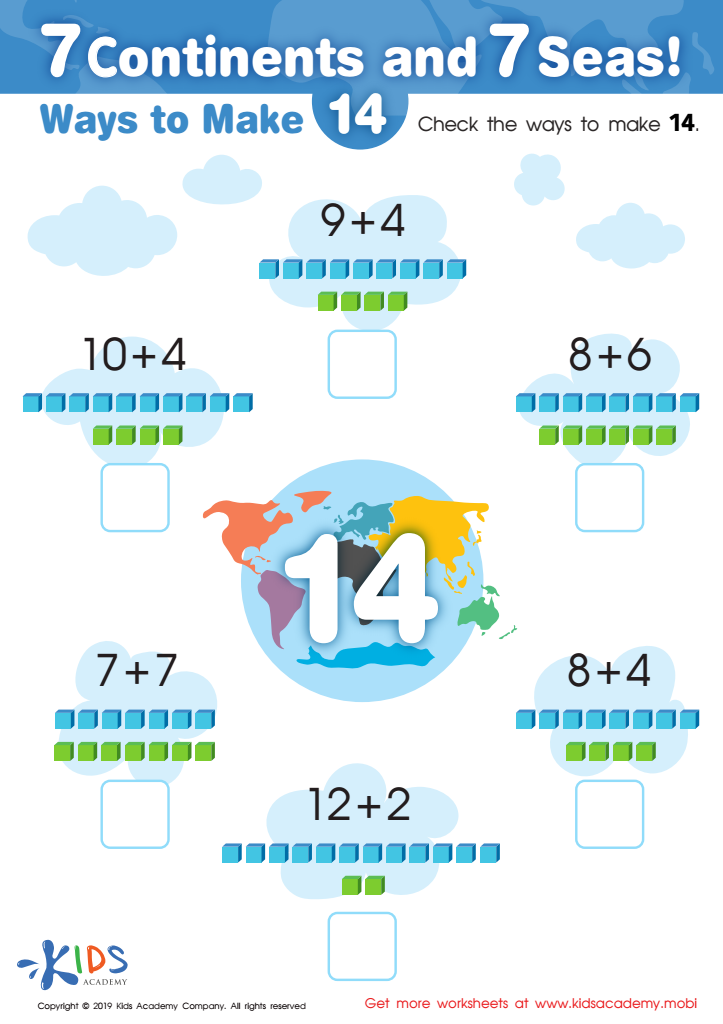
7 Continents and 7 Seas Worksheet
 Assign to My Students
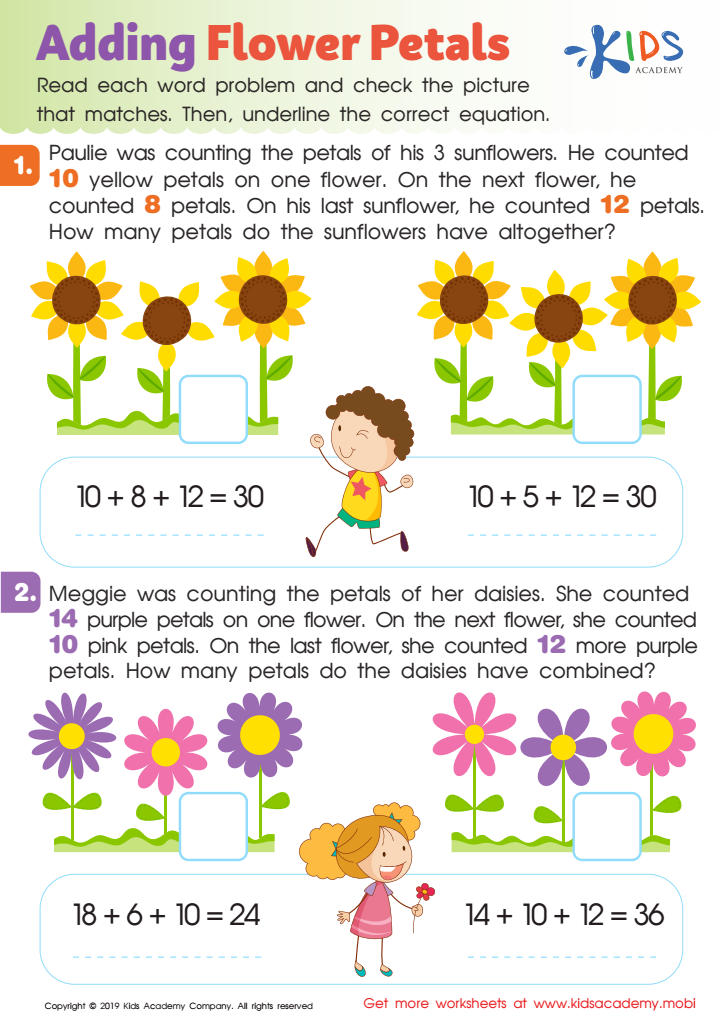
Adding Flower Petals Worksheet
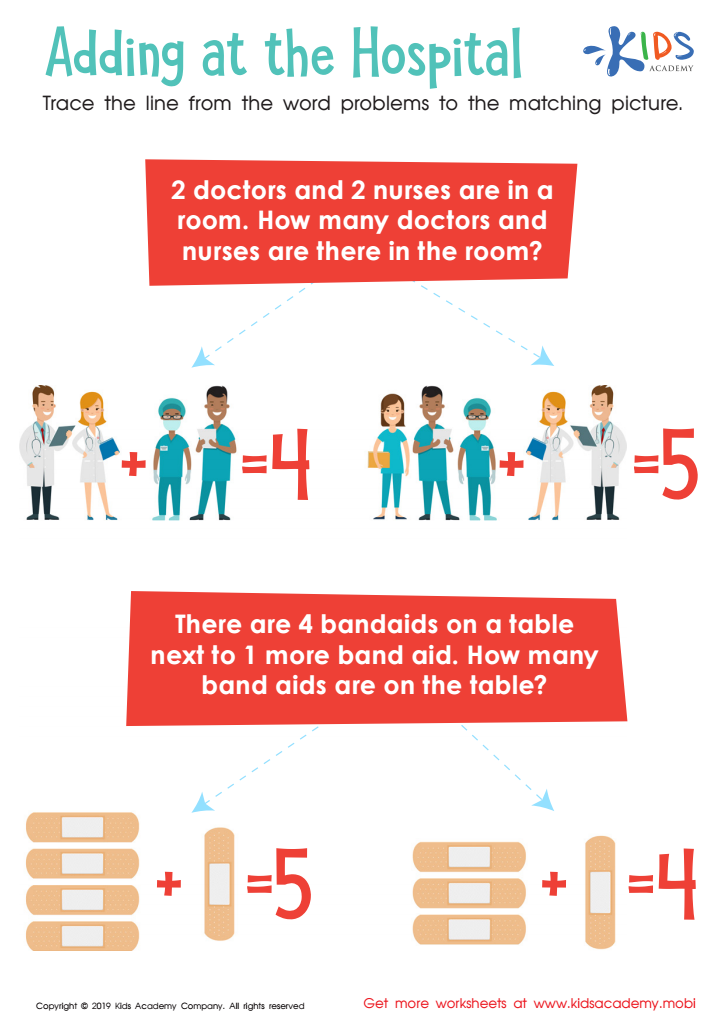
Adding at the Hospital Worksheet
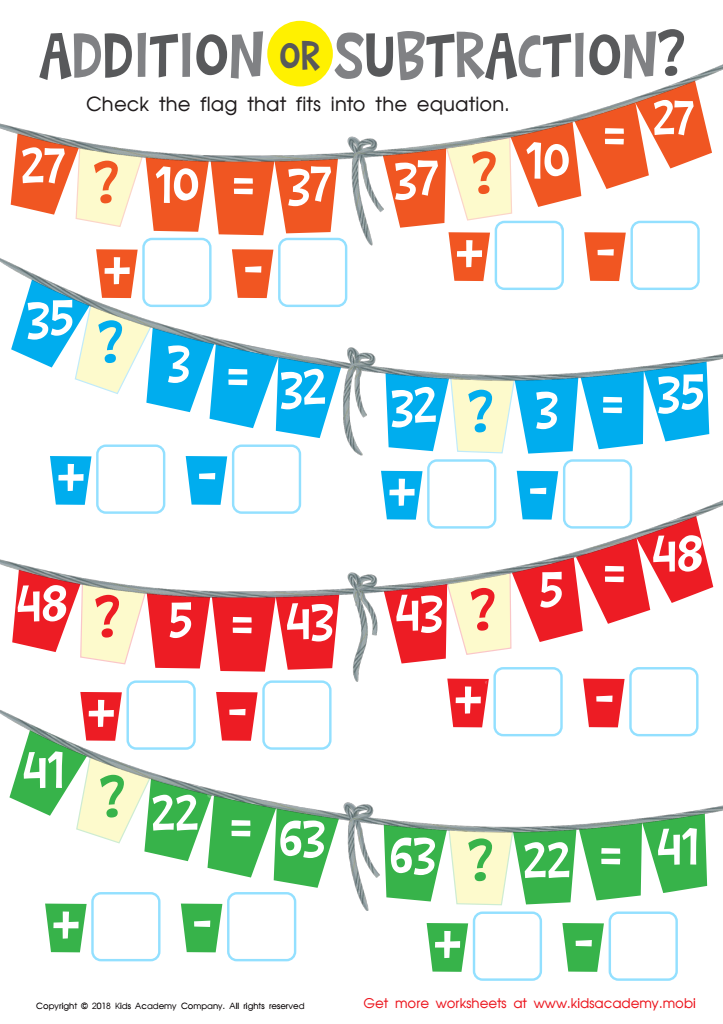
Addition or Subtraction? Worksheet
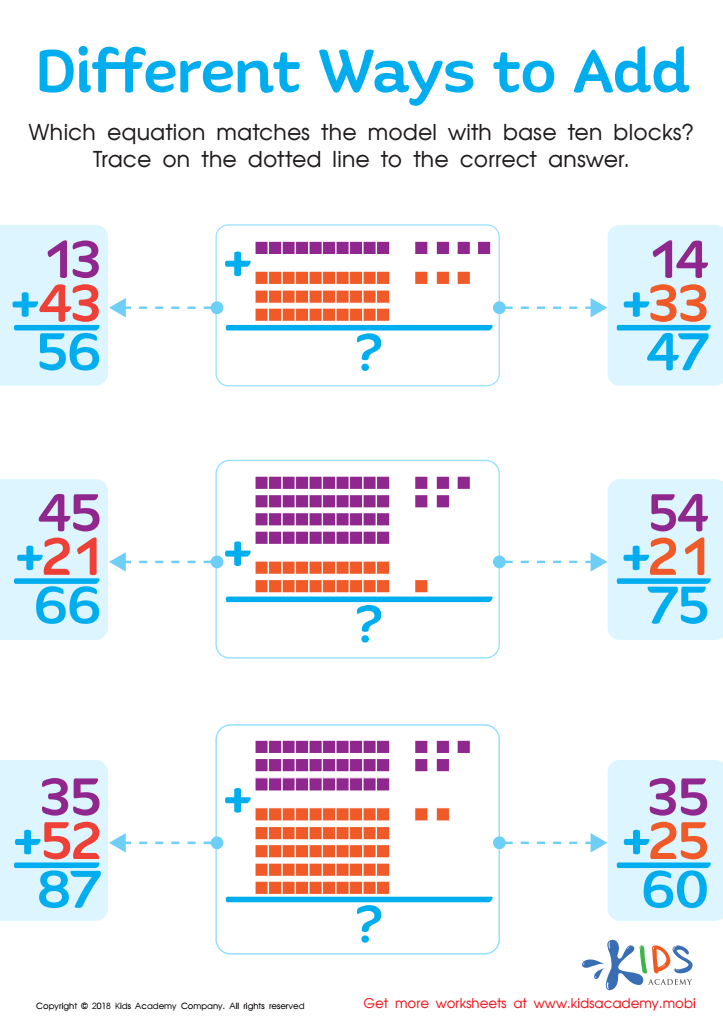
Different Ways to Add Worksheet




.jpg)



Addition skills at the ages of 5-6 are foundational elements that shape a child's early mathematical understanding and cognitive development. Parents and teachers should prioritize developing these skills for several key reasons.
First and foremost, addition is a fundamental math skill that is essential for everyday life. From counting toys to understanding time and money, addition lays the groundwork for practical tasks and problem-solving abilities. Young children who grasp basic addition concepts early are better prepared for more complex mathematics later on, including subtraction, multiplication, and division.
Moreover, mastering addition enhances a child's logical thinking and reasoning skills. By learning to add, children practice recognizing patterns, understanding relationships between numbers, and developing critical thinking skills that are applicable beyond mathematics.
Another critical aspect is the boost in confidence and self-esteem. When children successfully learn addition, they experience a sense of achievement that encourages a positive attitude toward learning. This positive experience can foster a lifelong love for math and learning in general.
Furthermore, early math skills are often predictive of future academic success. Research shows that children who enter school with strong math skills tend to perform better academically in other subjects as well.
Overall, fostering addition skills in young children equips them with essential tools for both academic and real-world success, making it a crucial area of focus for parents and teachers alike.