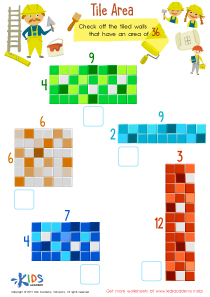
Matching skills Normal Numbers Worksheets for Ages 5-6
3 filtered results
Difficulty Level
Grade
Age
-
From - To
Subject
Activity
Standards
Enhance your child's learning experience with our Matching Skills Normal Numbers Worksheets designed for ages 5-6. These engaging and colorful worksheets offer fun activities that help young learners develop essential matching skills while recognizing and understanding normal numbers. Each worksheet is thoughtfully crafted to nurture critical thinking and hand-eye coordination, making math enjoyable and accessible. Ideal for both classroom and home use, these printable resources support early numeracy in a playful, interactive way. Spark your child's curiosity and confidence as they explore the fascinating world of numbers through our dynamic matching exercises. Start their learning adventure today!
Favorites
With answer key
Interactive
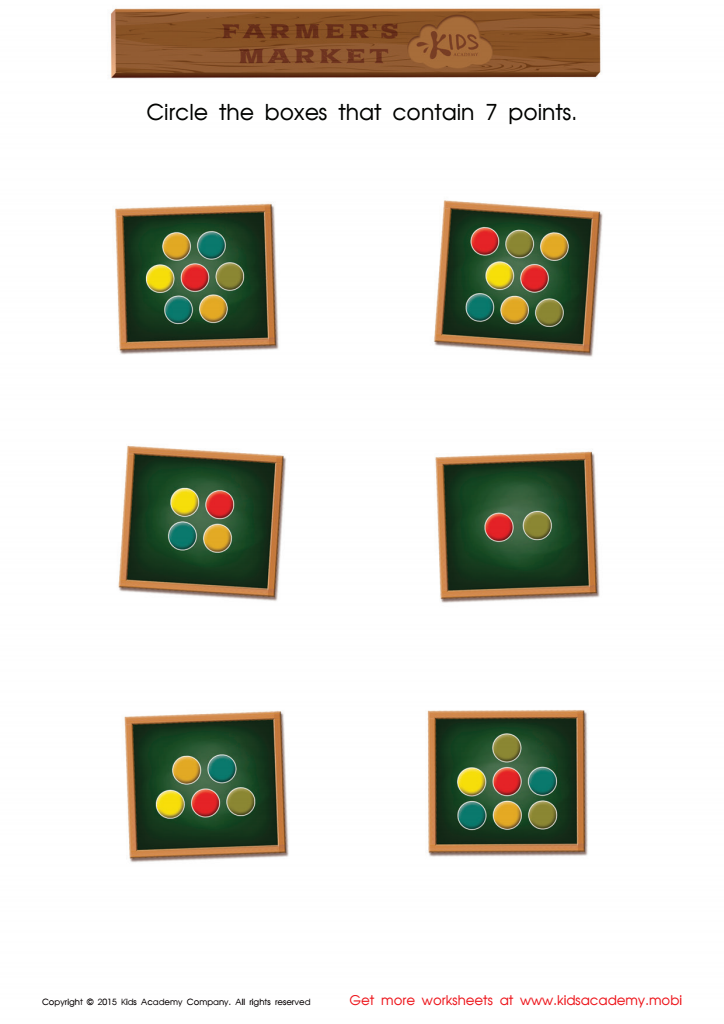
Count and Match Points 7 Math Worksheet
Help your child count and recognize similar numbers by using this fun, colorful worksheet. Guide them to count the dots in each box, then circle those with a total of 7. It's a great way for your child to see how different arrangements lead to the same number.
 Assign to My Students
Count and Match Points 7 Math Worksheet
Worksheet
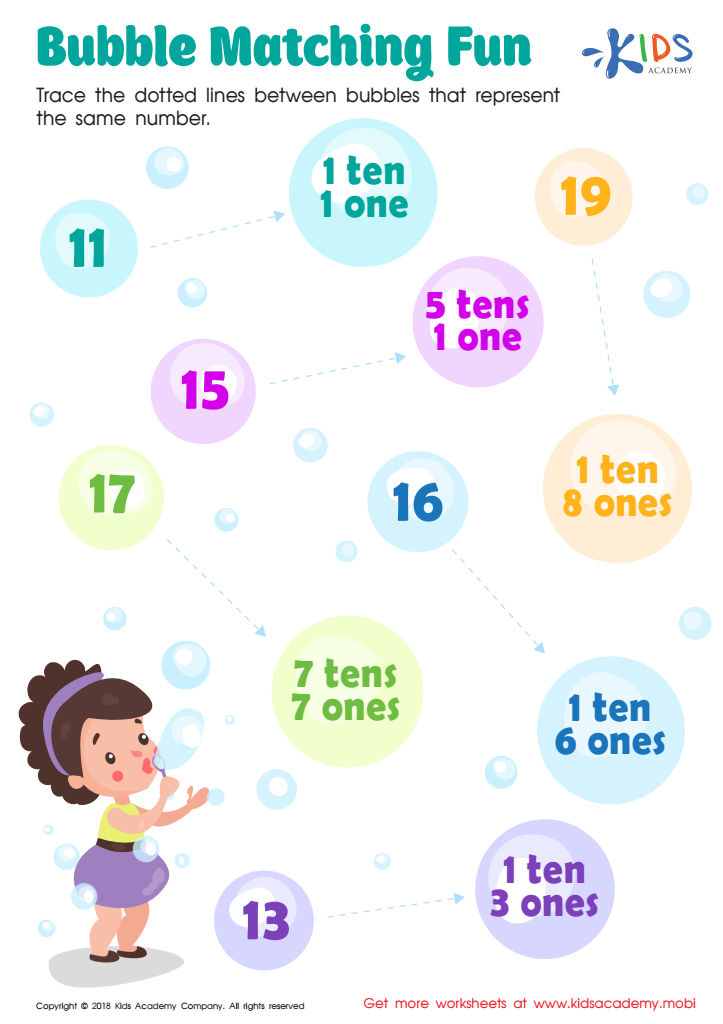
Bubble Matching Fun Worksheet
Try this fun worksheet to stimulate your young one's learning! Test their number matching skills by having them trace the dotted lines between bubbles representing the same numbers. Look through the exercise with your child and watch their understanding of how two numbers can add up to the same value grow!
Bubble Matching Fun Worksheet
Worksheet
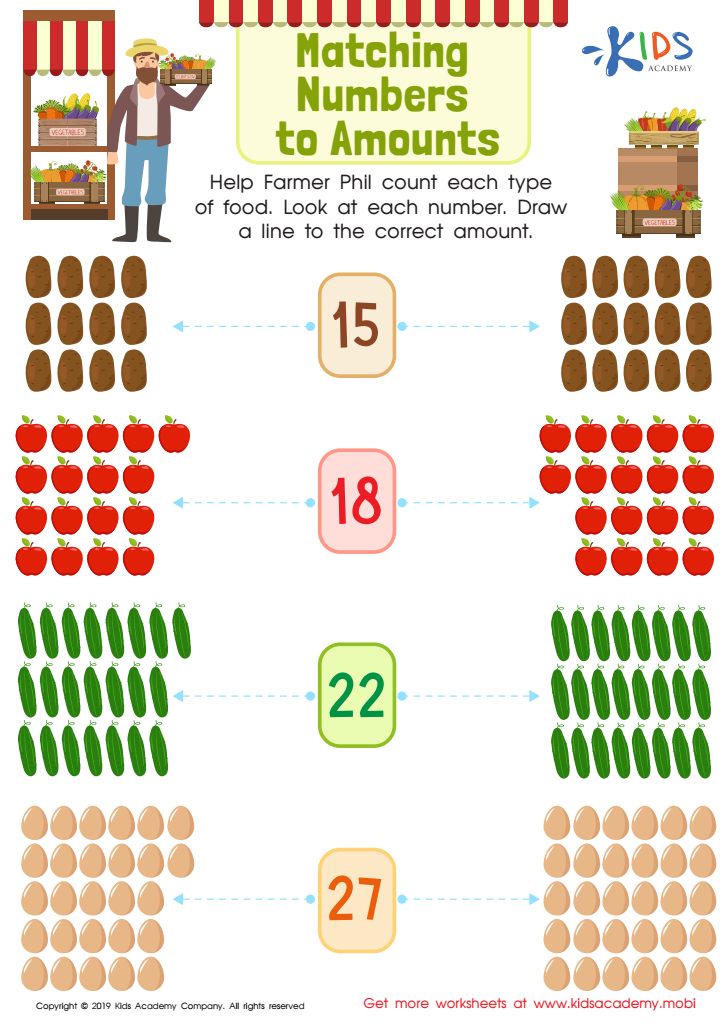
Matching Numbers to Amounts Worksheet
Farmer Phil needs your kid's help! Ensure they know the basics of math such as counting, adding and subtracting. Before beginning, help your child identify and count the different foods in the picture. Then, draw a line to the correct amount.
Matching Numbers to Amounts Worksheet
Worksheet
Join Kids Academy for Free
Who is primarily going to use this learning content?





.jpg)


Parents and teachers should prioritize developing matching skills and understanding normal numbers for children aged 5-6 because these foundational skills are crucial for early cognitive development and future academic success. At this age, children are naturally curious and eager to engage with the world around them. By encouraging matching activities, such as sorting shapes, colors, or numbers, we help children recognize patterns, build critical thinking abilities, and enhance their memory.
Understanding normal numbers, which includes counting, number recognition, and basic arithmetic, is essential to laying the groundwork for mathematical proficiency. Mastering these skills will support children's ability to tackle more complex mathematical concepts in later grades. Furthermore, these activities foster essential fine motor skills through hands-on learning experiences, promoting both cognitive and physical development.
Engaging in matching and number activities creates opportunities for parents and teachers to bond with children, making learning fun and interactive. Additionally, these activities can improve social skills as children learn to work together, take turns, and communicate effectively. Overall, developing matching skills and a solid grasp of normal numbers empowers young learners, giving them the confidence and tools required for lifelong learning.