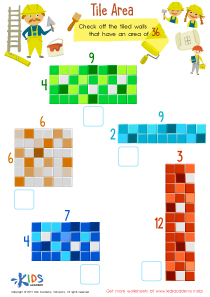
Understanding place value Normal Numbers Worksheets for Ages 5-6
5 filtered results
-
From - To
Unleash the power of numbers with our "Understanding Place Value Normal Numbers Worksheets for Ages 5-6." Tailored specifically for young learners, these engaging worksheets simplify the concept of place value, enabling kids to grasp ones, tens, and beyond effortlessly. Packed with fun activities and colorful illustrations, our worksheets transform learning into an enjoyable experience. By using our expertly designed materials, children will build a strong foundation in mathematics, boosting their confidence and skills. Perfect for both classroom and at-home practice, these worksheets ensure your child’s early math journey is both educational and delightful. Unlock their potential today!
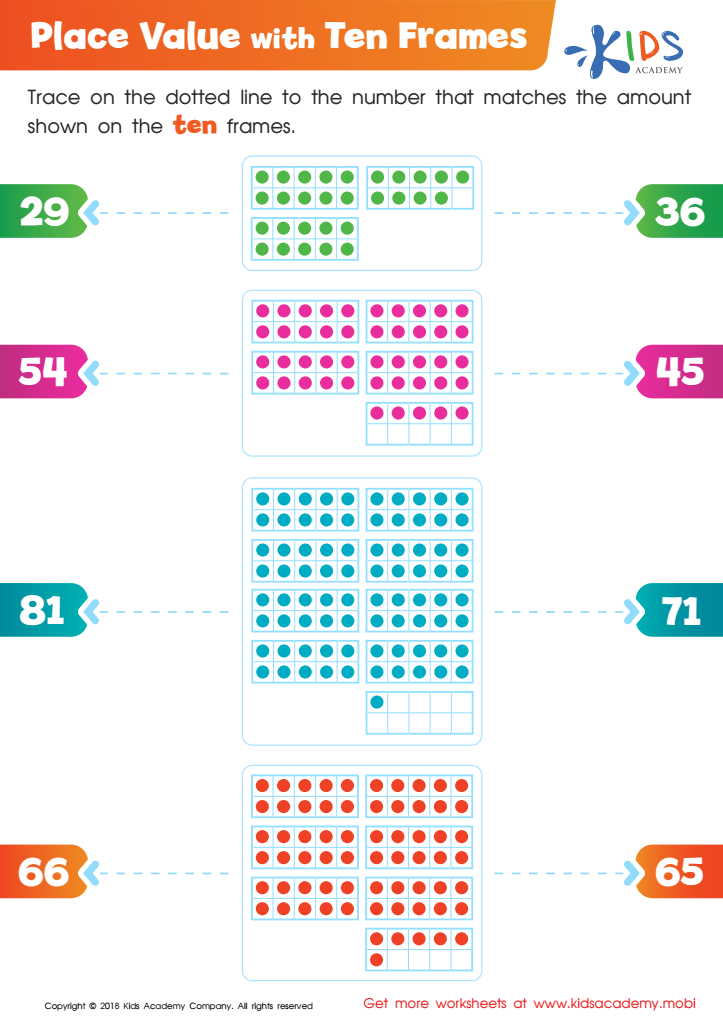
Place Values with Ten Frames Worksheet
 Assign to My Students
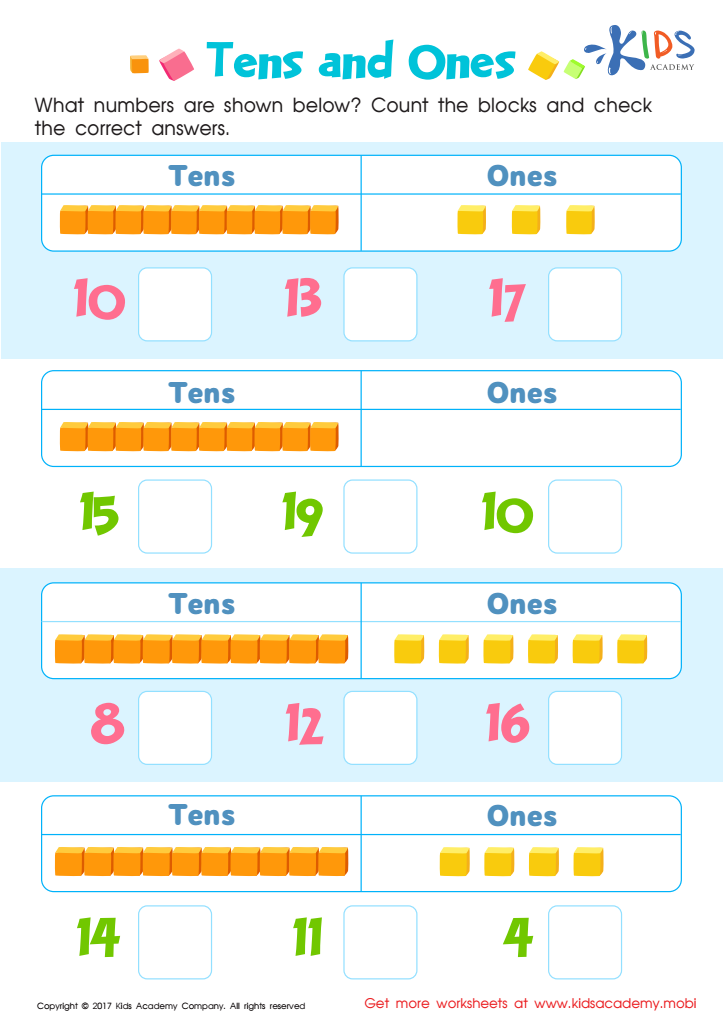
Tens and Ones Worksheet
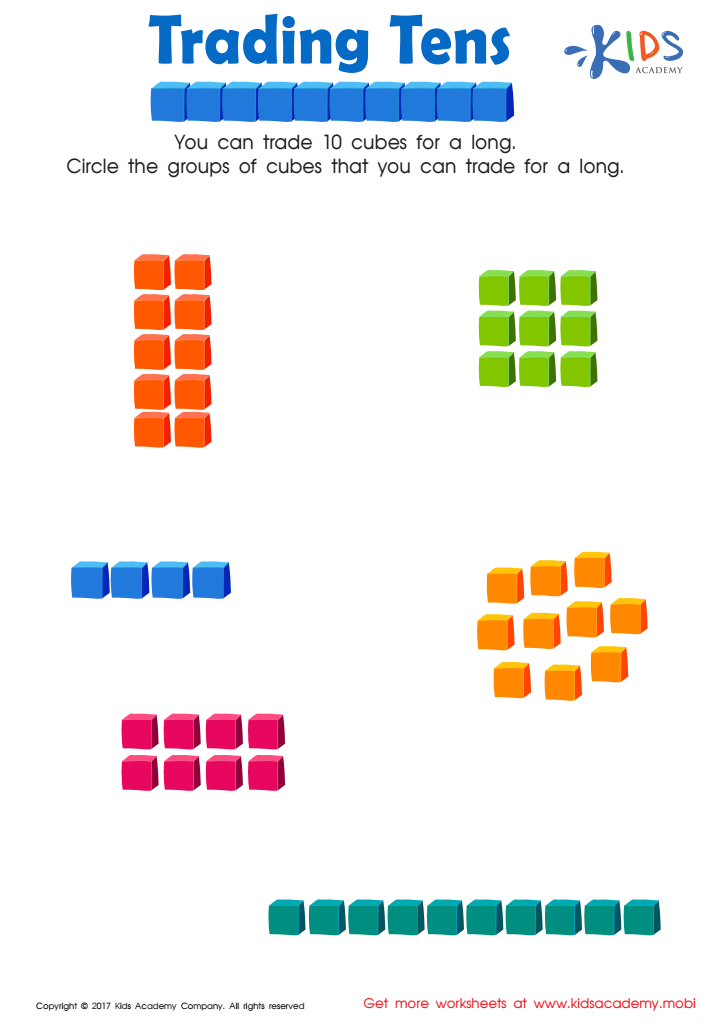
Trading Tens Worksheet
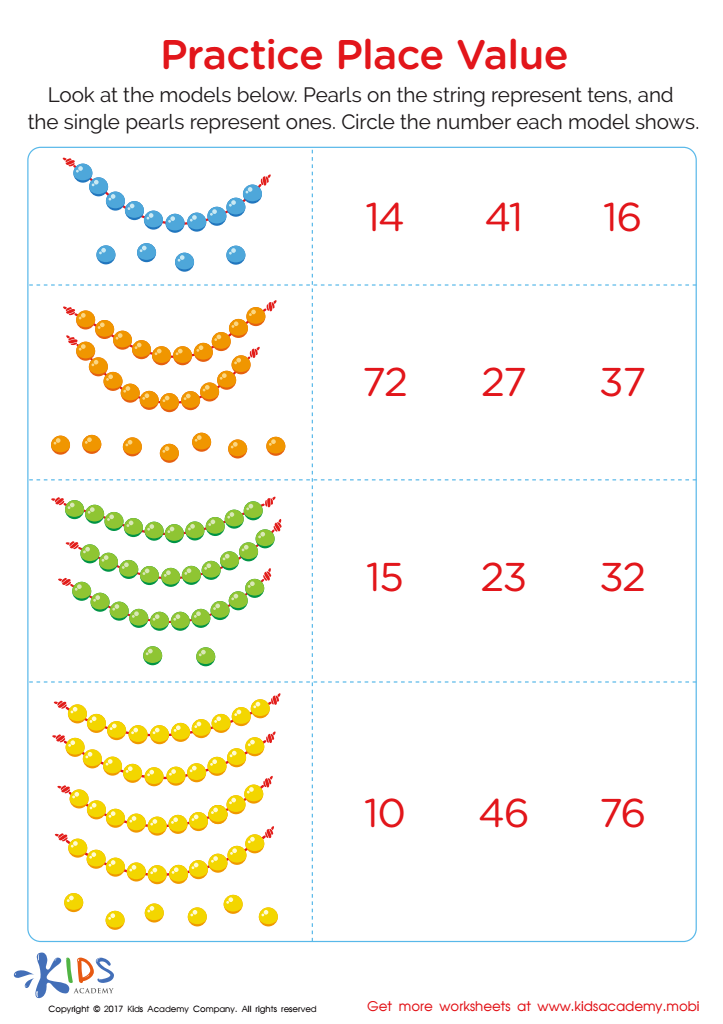
Practice Place Value Printable
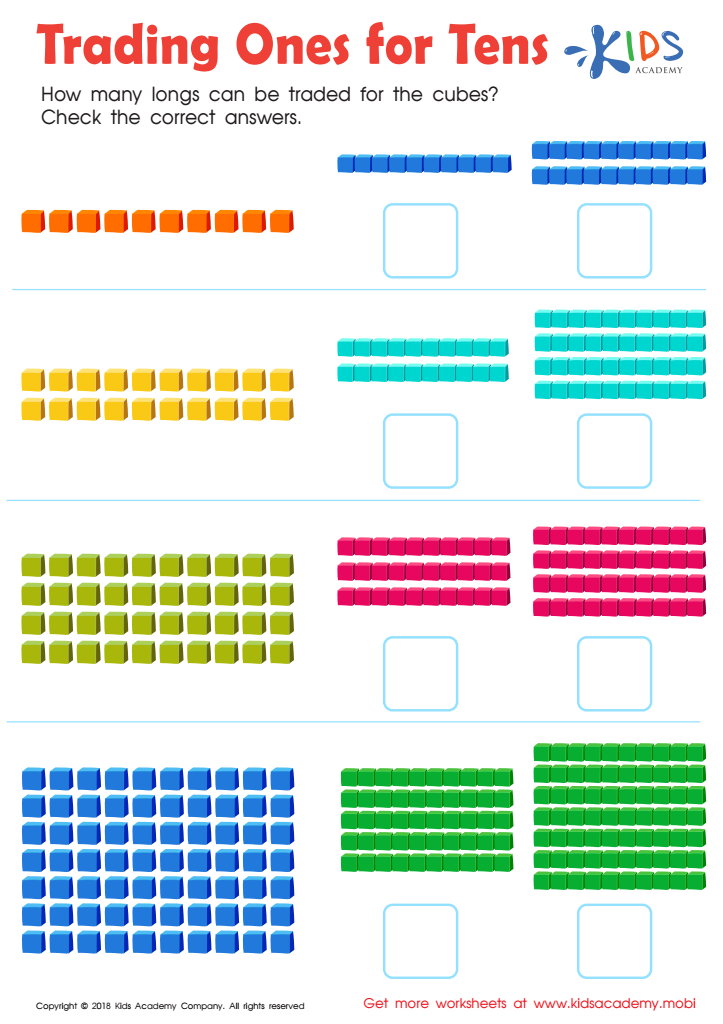
Trading Ones for Tens Worksheet: Part 2



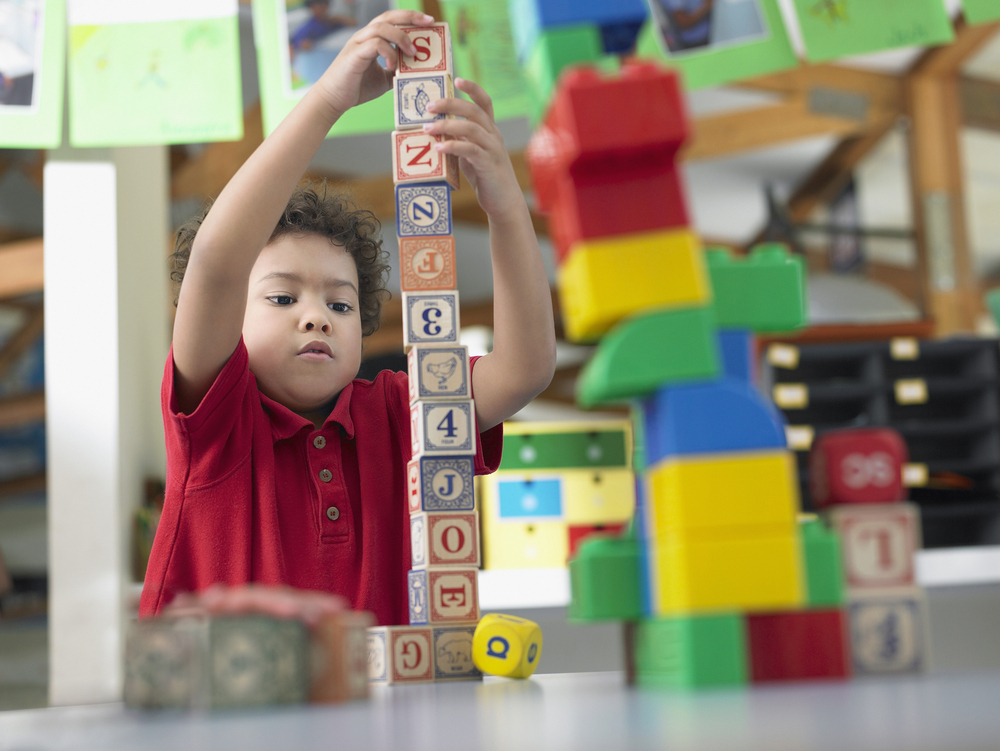




Understanding place value is crucial for young children ages 5-6 as it forms the foundation for all higher-level math concepts. At this early stage, grasping place value helps students understand that the position of a digit in a number determines its value. For instance, in the number 45, the '4' represents 40, not just 4. This fundamental understanding enables children to comprehend why certain numbers are larger or smaller and how numbers can be composed and decomposed.
For parents and teachers, fostering a strong grasp of place value in young children facilitates their ability to perform basic arithmetic operations like addition, subtraction, and eventually multiplication and division. It also helps them understand the base-ten system, which is essential for working with larger numbers and for understanding decimals and fractions in the future.
Moreover, a strong understanding of place value supports number sense and mental math skills, allowing children to perform calculations more efficiently and with greater confidence. Early mastery sets the stage for a positive attitude towards math, reducing math anxiety and building a strong belief in their own mathematical abilities. Encouraging curiosity and excitement about numbers at a young age through activities and practical applications makes learning math enjoyable and sets the path for future academic success.