Basic addition practice Normal Math Worksheets for Ages 5-6
3 filtered results
-
From - To
Introduce your young learner to the world of numbers with our Basic Addition Practice Worksheets, designed specifically for children ages 5-6. At Kids Academy, we focus on building foundational math skills in an engaging and interactive way. Our printable worksheets feature fun, age-appropriate exercises to help children understand and master basic addition concepts. Through colorful visuals and simple problems, these worksheets ensure that math becomes a fun and exciting part of their daily routine. Perfect for at-home practice or classroom use, our resources aim to boost your child's confidence and enthusiasm for math. Download and start now for free!
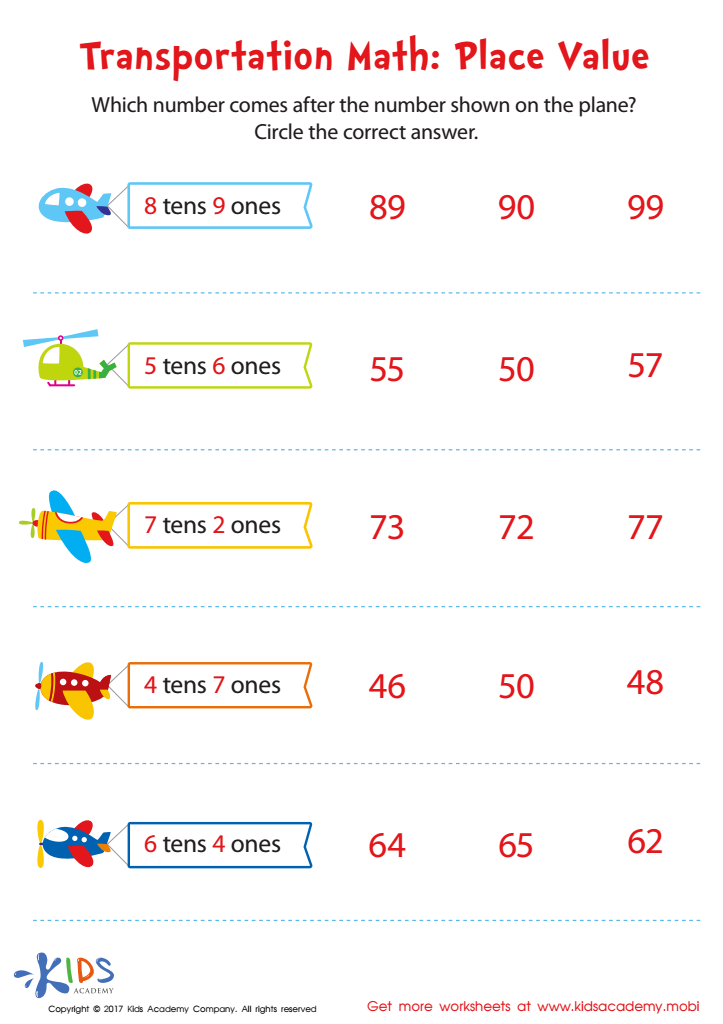
Transportation Math Printable
 Assign to My Students
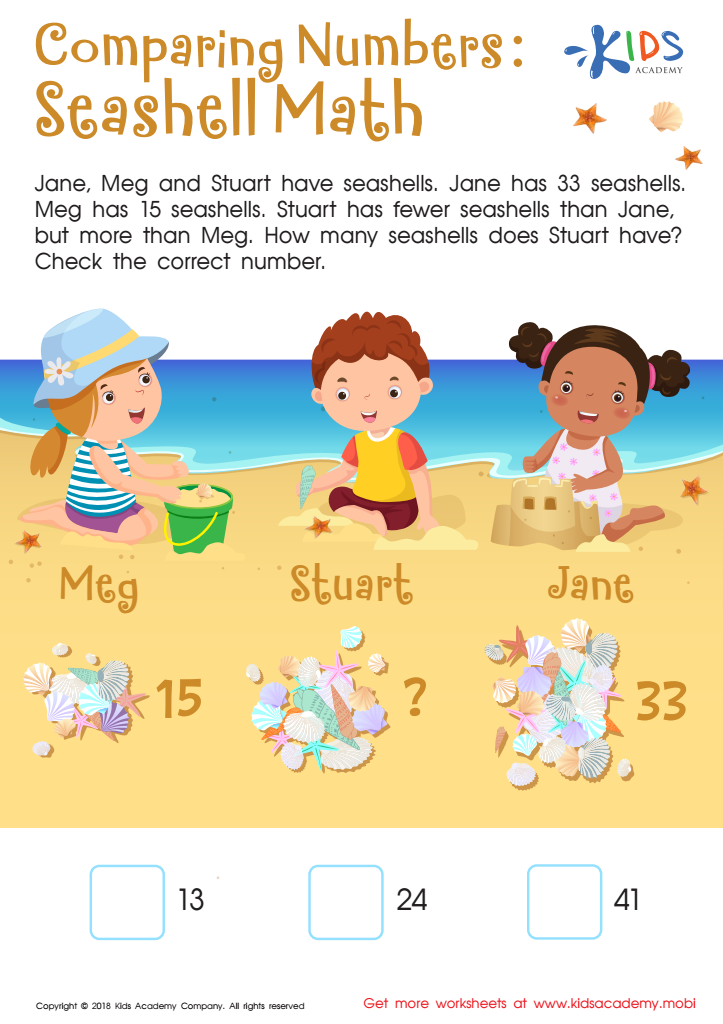
Seashell Collectors Worksheet
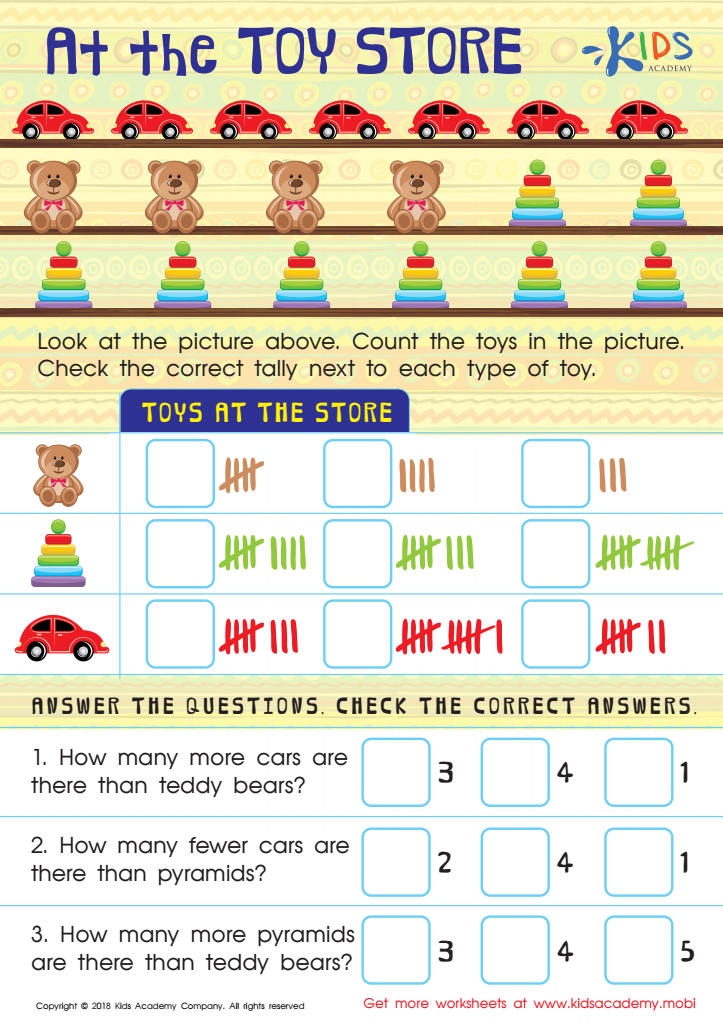
Tally Chart: At the Toy Store Worksheet







Teaching basic addition to children aged 5-6 forms a critical foundation for their overall mathematical understanding. At this developmental stage, kids are developing cognitive skills that will support more complex thinking later on. Learning addition helps enhance their problem-solving abilities and perception of numbers and patterns.
Introducing children to basic addition encourages cognitive development by stimulating their memory, attention, and logical thinking. It also fosters an early understanding of mathematical concepts, which prevents math anxiety and builds confidence. When kids solve addition problems, they improve their numerical literacy, gain a sense of achievement, and develop a positive attitude toward learning.
For parents and teachers, focusing on basic addition provides insight into a child’s strengths and areas needing support, allowing tailored instructional strategies. It also helps establish good study habits and resilience as children learn that practice leads to improvement.
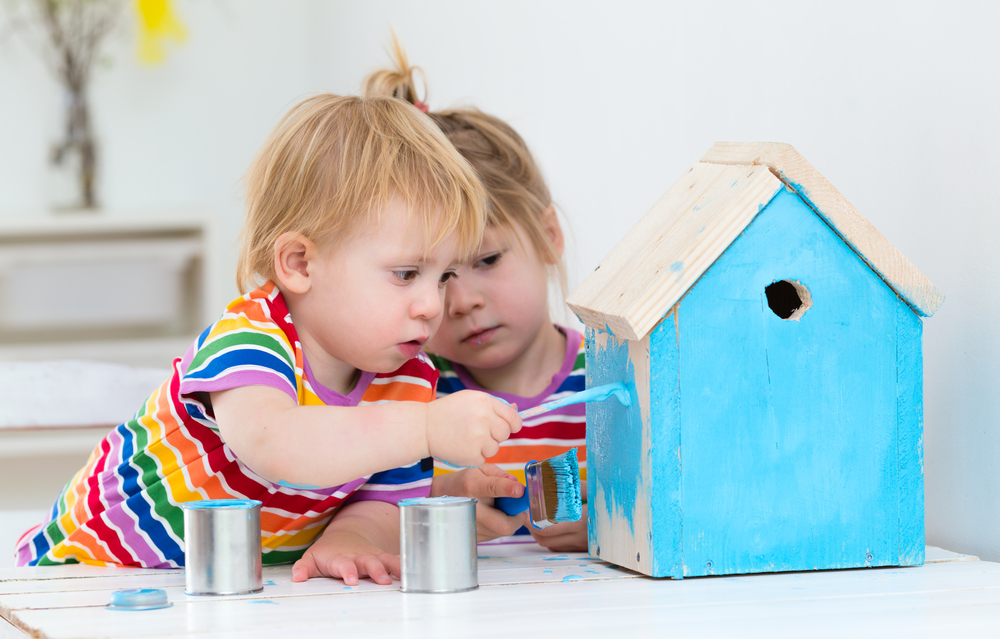
Engaging children in fun and playful ways of addition practice—such as using toys, games, or everyday objects—promotes an enjoyable learning experience. This not only supports their academic growth but also strengthens the parent-child or student-teacher bond through shared educational activities.
Thus, prioritizing basic addition forms a solid foundation for future learning, contributing to a child’s overall cognitive and emotional development.








