
Basic Addition Skills Normal Math Worksheets for Ages 5-6
6 filtered results
Difficulty Level
Grade
Age
-
From - To
Subject
Activity
Standards
Enhance your child's math journey with our "Basic Addition Skills Normal Math Worksheets" designed specifically for ages 5-6. These engaging and colorful worksheets introduce young learners to fundamental addition concepts through fun exercises and interactive challenges. Perfect for early learners, each worksheet promotes number recognition, counting skills, and simple addition while encouraging problem-solving and critical thinking. Parents and teachers will appreciate the ease of use and the variety of formats available. Foster a love of math in your child and build a solid foundation for future learning with our printable, age-appropriate worksheets! Get started today and watch their skills grow!
Favorites
With answer key
Interactive
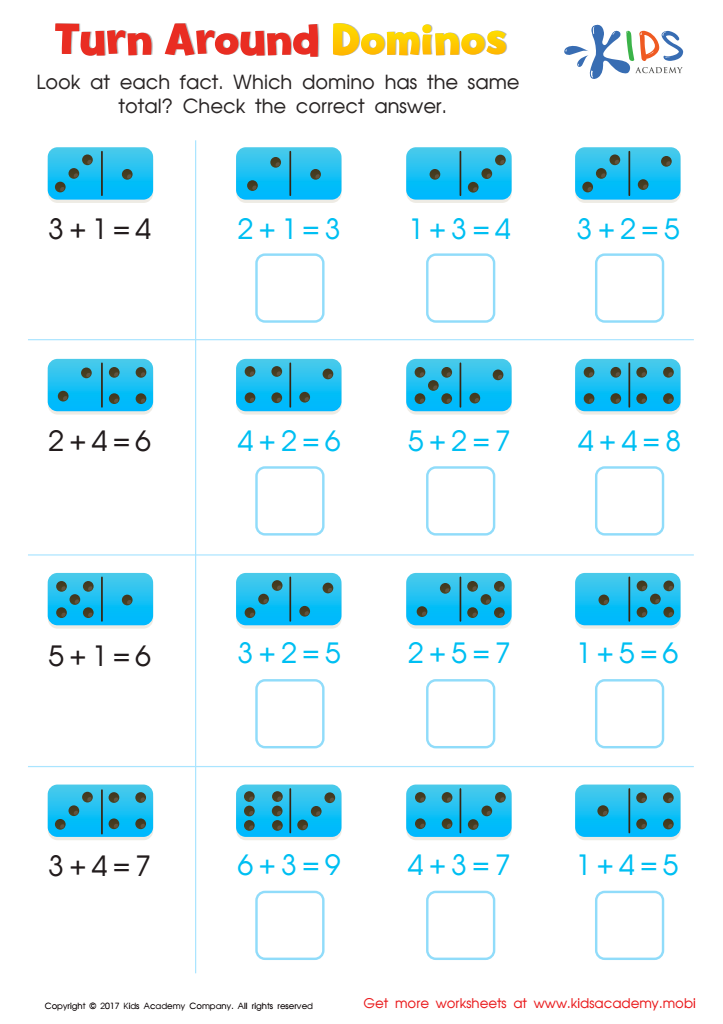
Turn Around Dominos Worksheet
Encourage your child to flex their mental muscles with this math worksheet. Look through the left side's dominos and their values and then check the three boxes on the right. Ask your child if any of the right box's dominos are similar. This requires focus and careful observation.
 Assign to My Students
Turn Around Dominos Worksheet
Worksheet
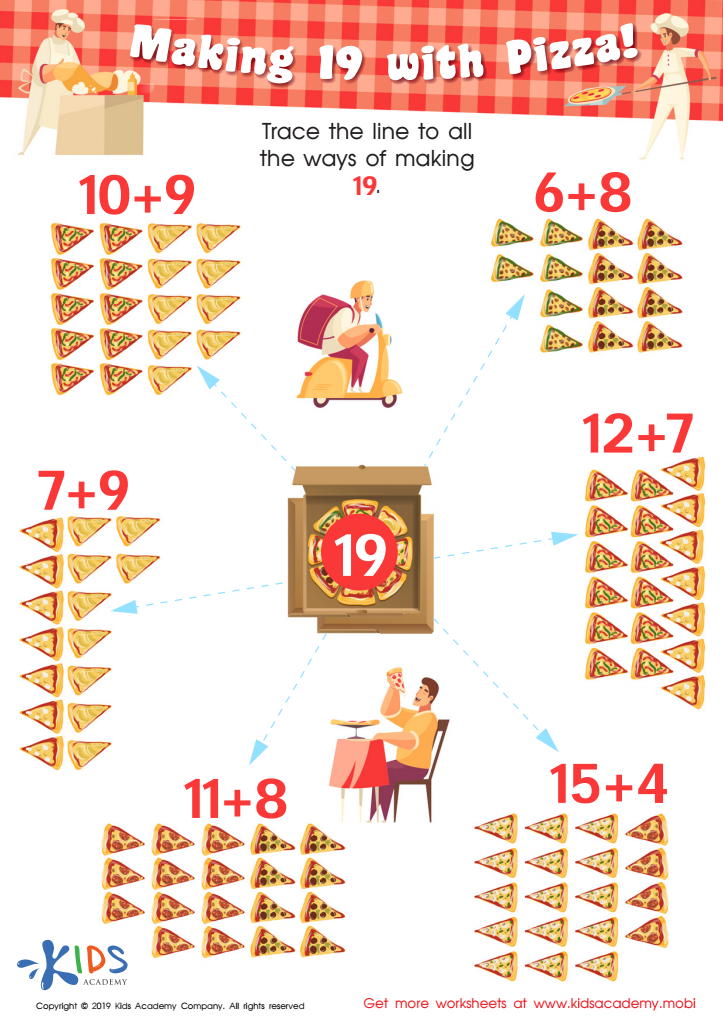
Making 19 with Pizza! Worksheet
Who loves pizza? Your kids do! Next time you need to teach them math, make it fun by combining it with something they enjoy. This worksheet uses a pizza-themed problem to help them practice solving equations. Have them trace the line to figure out how to make 19. It's a great way to make learning math fun!
Making 19 with Pizza! Worksheet
Worksheet
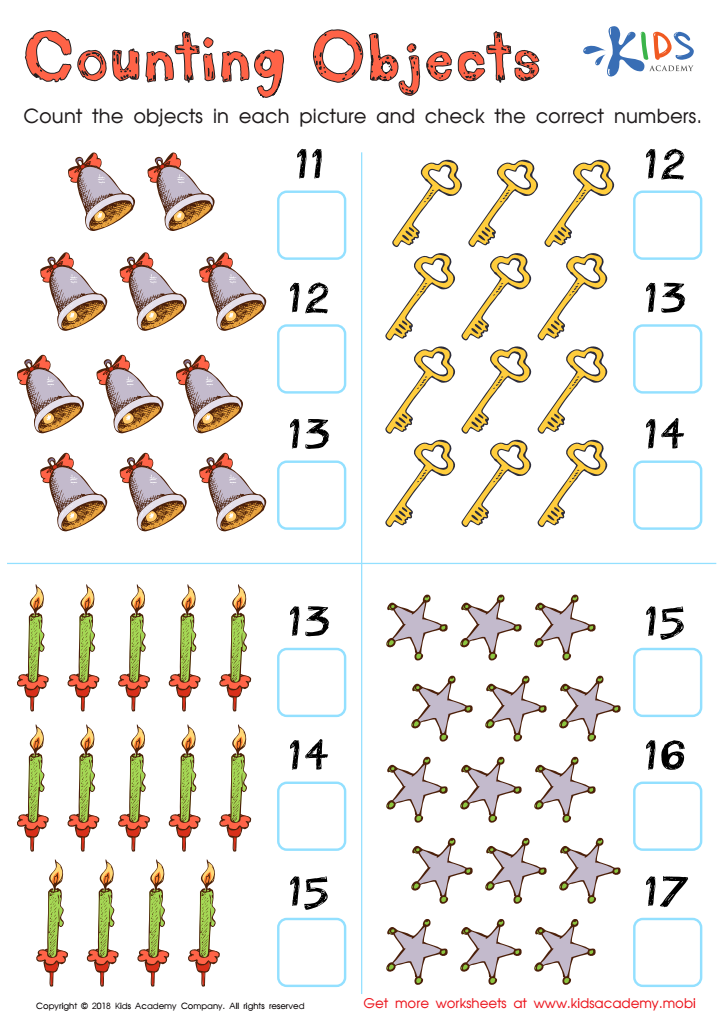
Counting Numbers Worksheet For Kindergarten
This worksheet is a great way to get your child practicing foundational math skills. With bright pictures to count, counting numbers just got a lot more fun! Get them ready for future math success and help them hone their early math skills.
Counting Numbers Worksheet For Kindergarten
Worksheet
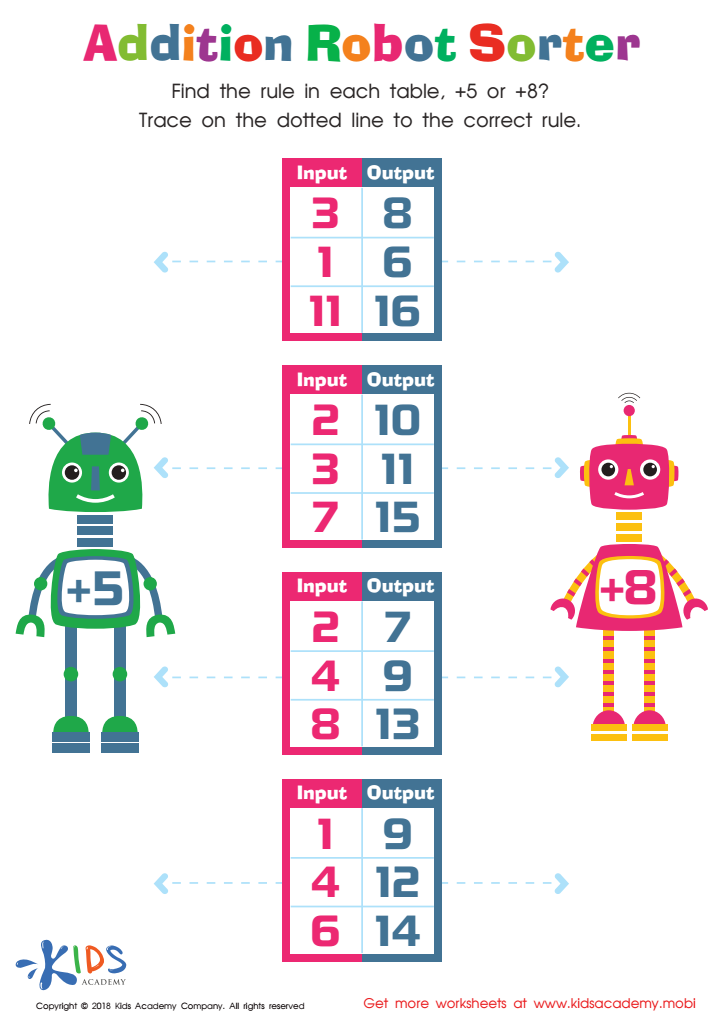
Addition Robot Sorter Worksheet
This worksheet helps your child understand addition. Have them trace the dotted lines to the correct equations: +8 and +5. It's a great way to aid their mathematical comprehension and get them comfortable with adding equations.
Addition Robot Sorter Worksheet
Worksheet
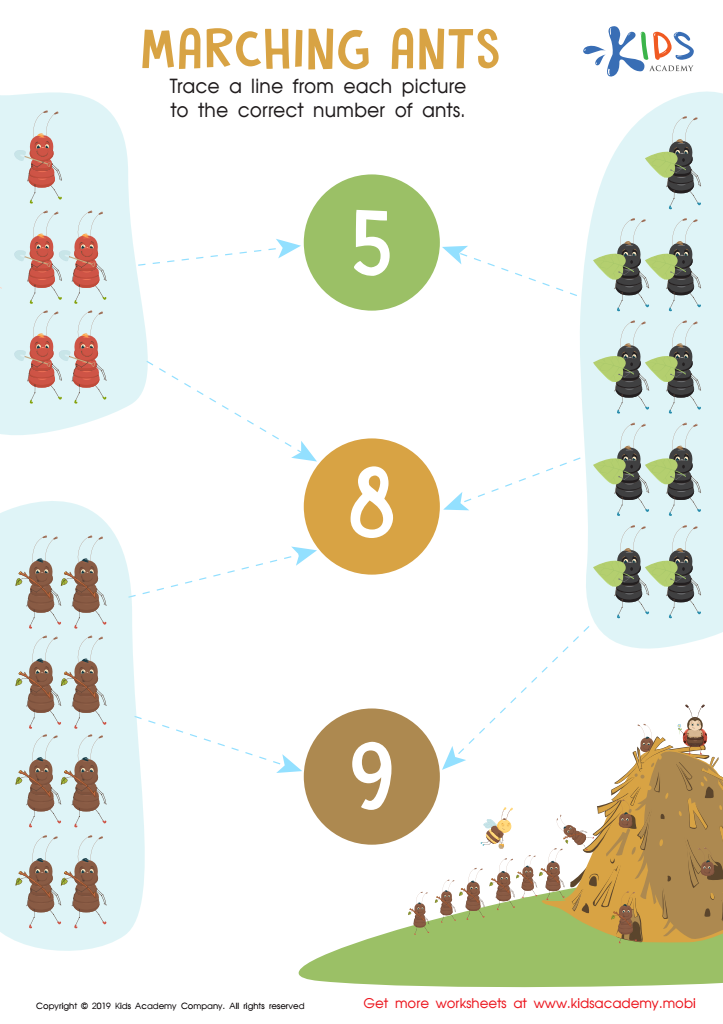
Marching Ants Worksheet
Assess and help your kids practice counting with this worksheet. Ask them to identify the four groups of ants in the picture. Guide them as they count each group and trace the lines to the corresponding number.
Marching Ants Worksheet
Worksheet
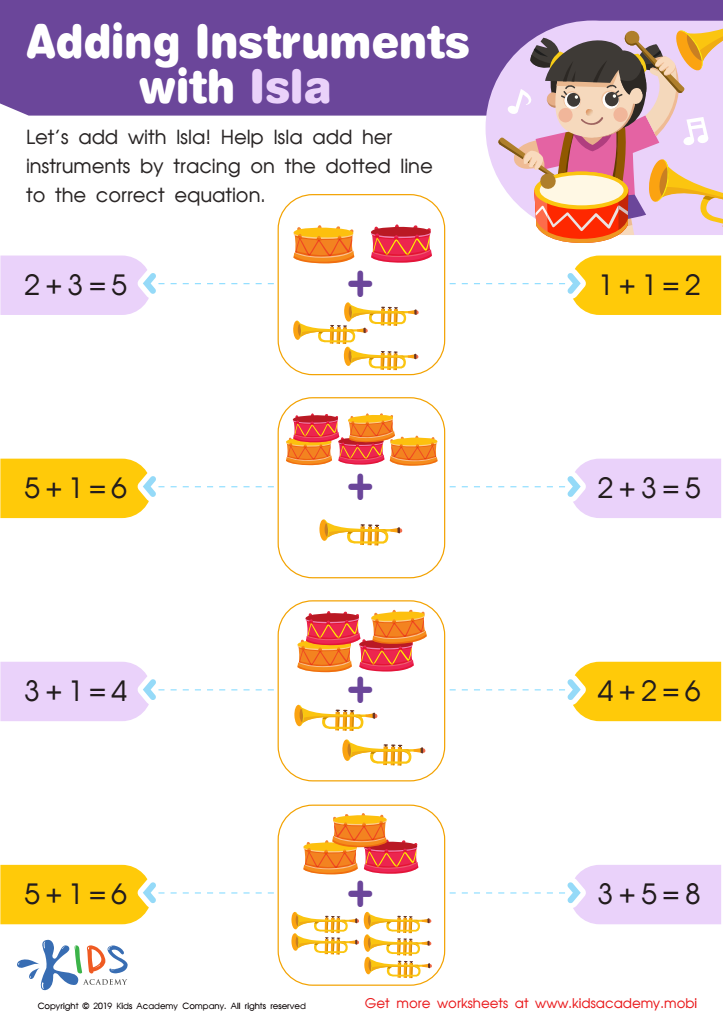
Adding Instruments with Isla Worksheet
Your kids can have fun helping Isla add her musical instruments. With colorful pics and one-to-one representation, they can pick the correct addition sentence. They can connect each pic with traceable lines and get to the right sum up to 10.
Adding Instruments with Isla Worksheet
Worksheet
Join Kids Academy for Free
Who is primarily going to use this learning content?








Basic addition skills are foundational to early math education for children ages 5-6, making them crucial for parents and teachers to prioritize. Mastering basic addition fosters critical cognitive abilities, enhances problem-solving skills, and builds numerical fluency essential for future academic success.
At this age, children are naturally curious and eager to learn, making it an ideal time to introduce mathematical concepts through engaging activities. Understanding addition helps lay the groundwork for more complex operations and mathematical reasoning later on. When children grasp these skills early, they gain confidence, which translates into a greater willingness to tackle challenging concepts down the line.
Additionally, basic addition skills play a significant role in everyday life. Children begin to encounter numbers and quantities in real-world situations, such as counting objects, understanding time, or handling money. By developing strong foundational skills, they will navigate these challenges with ease and enthusiasm.
Moreover, when parents and teachers collaborate in reinforcing these concepts, they create a supportive learning environment. This collaboration can help children see math as a fun and integral part of their daily lives, rather than something to fear. Overall, nurturing basic addition skills is essential for a child's academic progression and personal development.








