Mathematical reasoning Normal Math Worksheets for Ages 5-6
13 filtered results
-
From - To
Introduce your child to the exciting world of math with our "Mathematical Reasoning Normal Math Worksheets for Ages 5-6". Carefully designed for young learners, these engaging worksheets help develop essential skills like counting, addition, subtraction, pattern recognition, and problem-solving. Each activity aims to build a strong foundation in mathematical reasoning, fostering a love for learning through fun and interactive exercises. Ideal for kindergarten and early grade students, our worksheets make math enjoyable and accessible, paving the way for academic success. Discover the perfect blend of education and entertainment with our printable resources today!
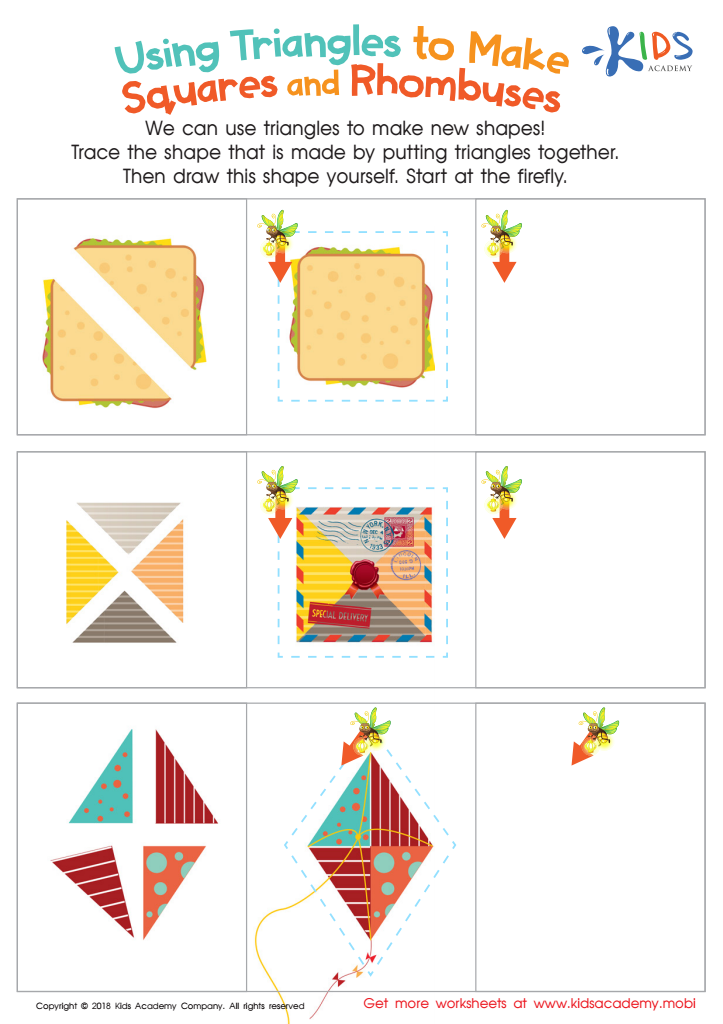
Using Triangles to Make Squares and Rhombuses Worksheet
 Assign to My Students
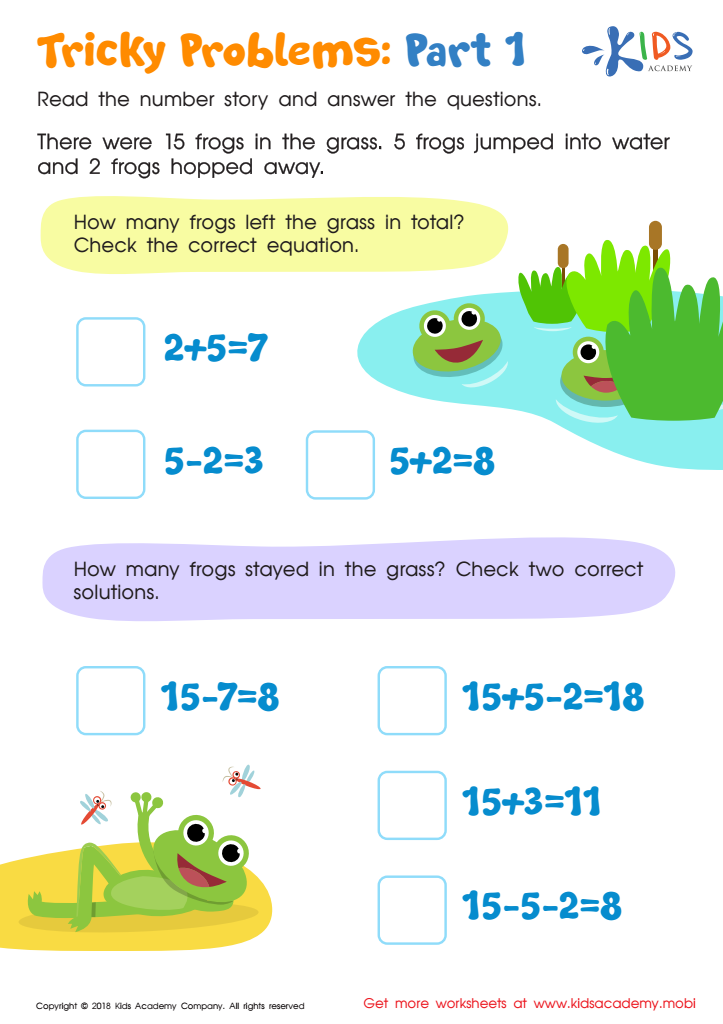
Tricky Problems Worksheet: Part 1
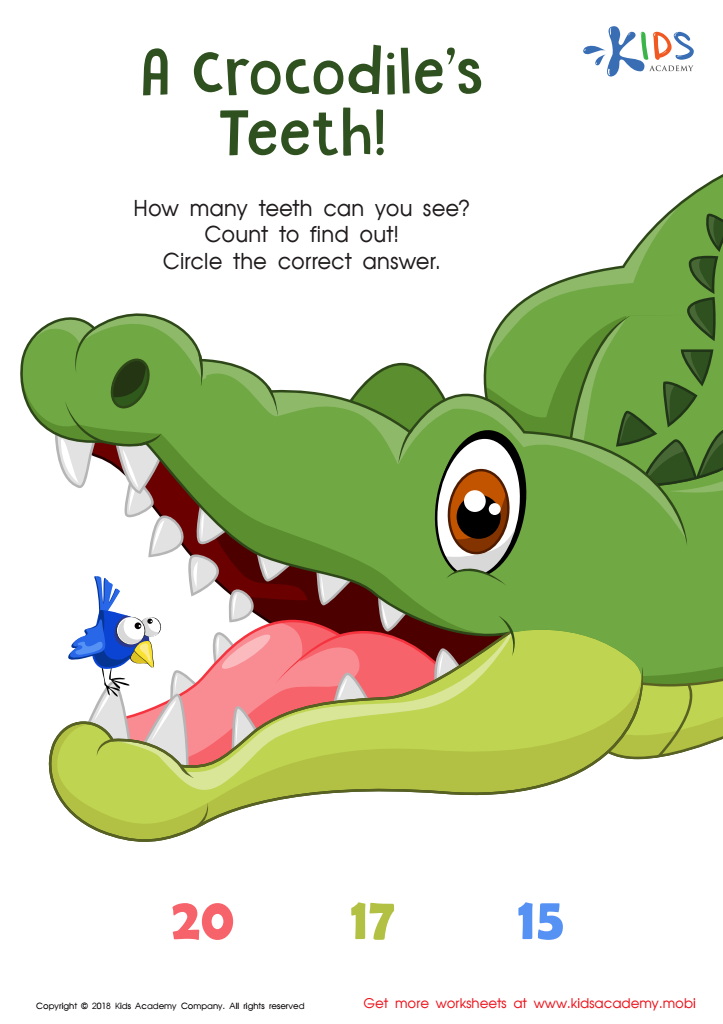
A Crocodile's Teeth Worksheet
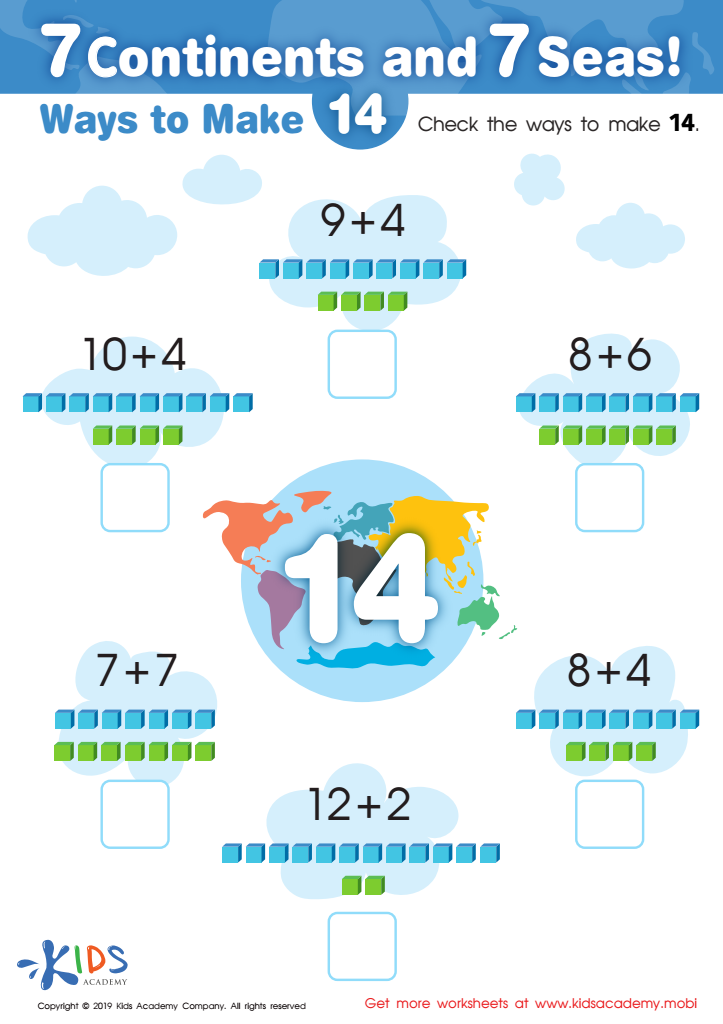
7 Continents and 7 Seas Worksheet
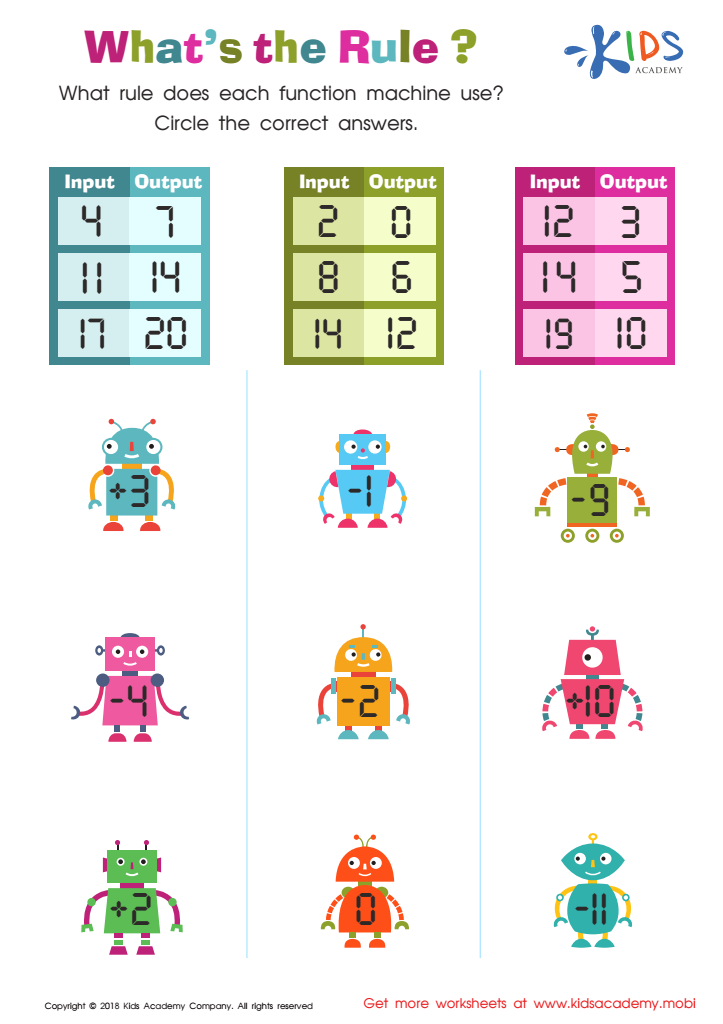
What's the Rule Worksheet
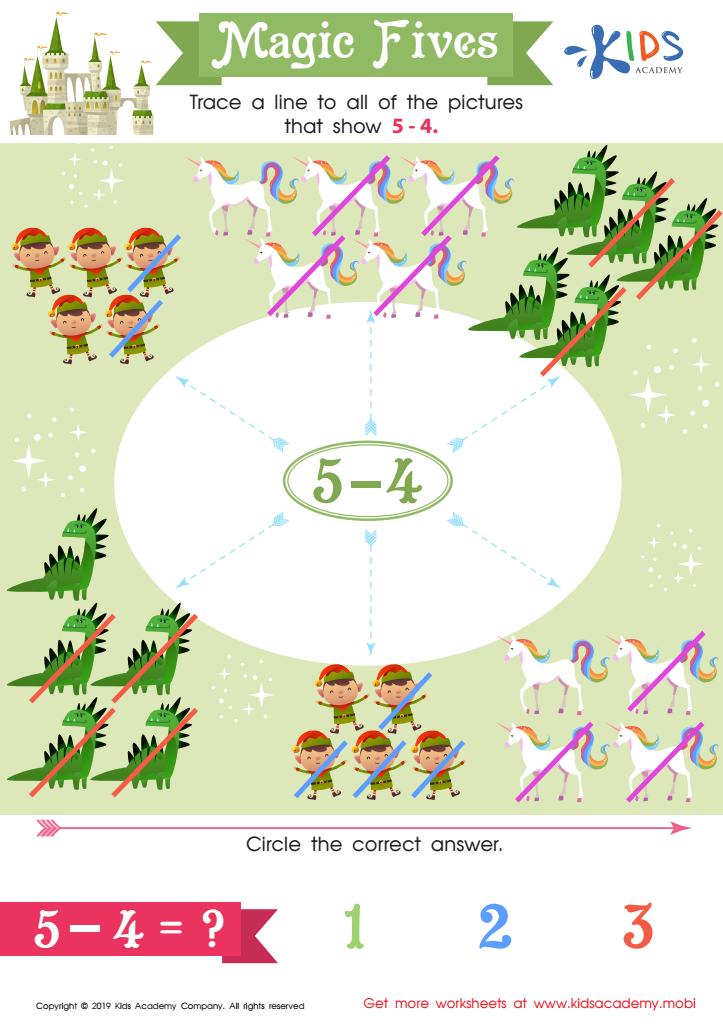
Magic Fives Worksheet
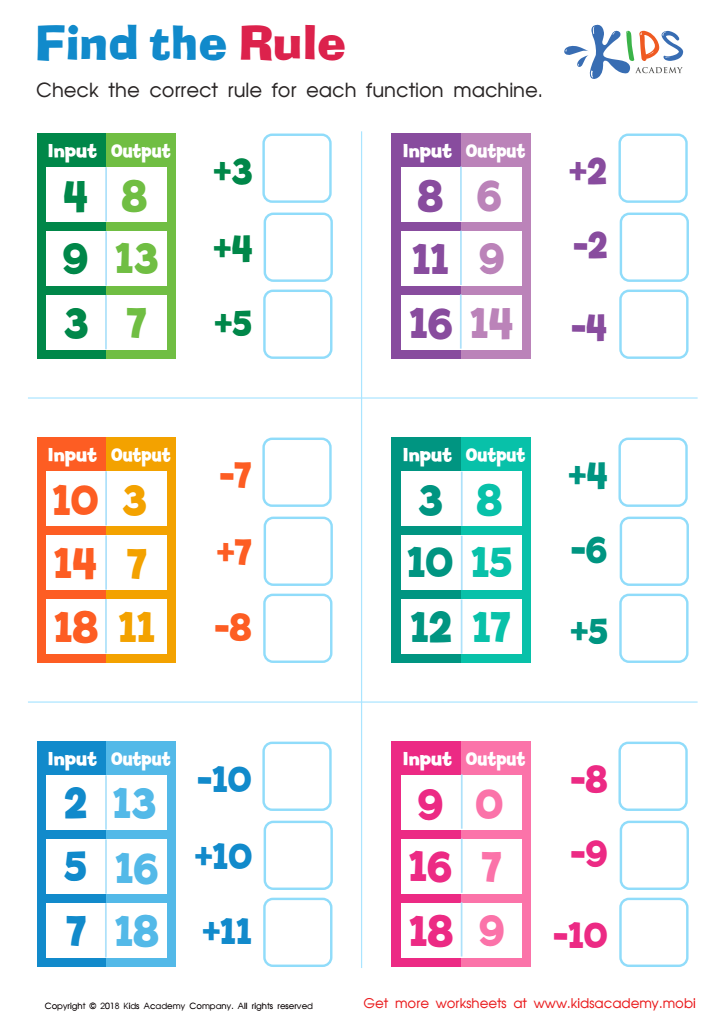
Find the Rule Worksheet
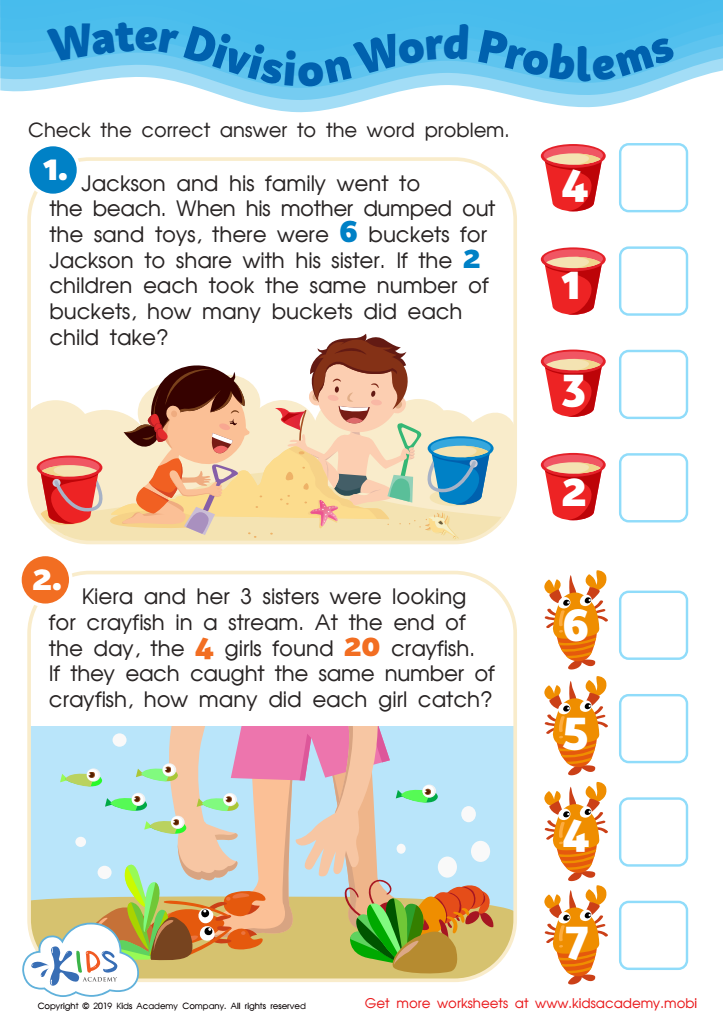
Water Division Word Problems Worksheet
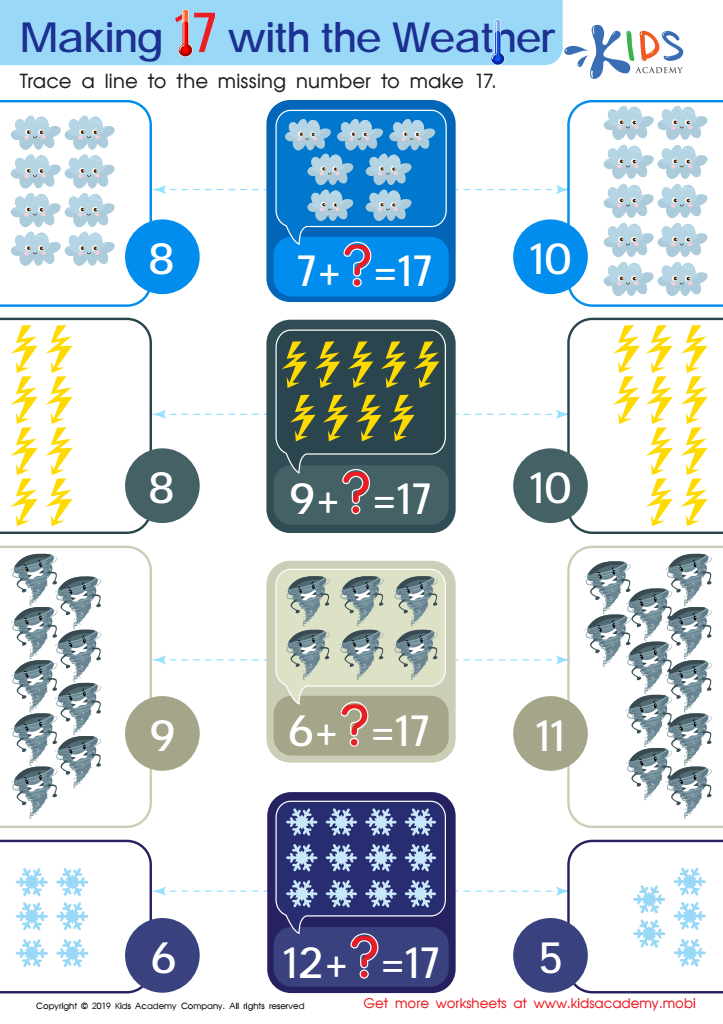
Making 17 with the Weather Worksheet
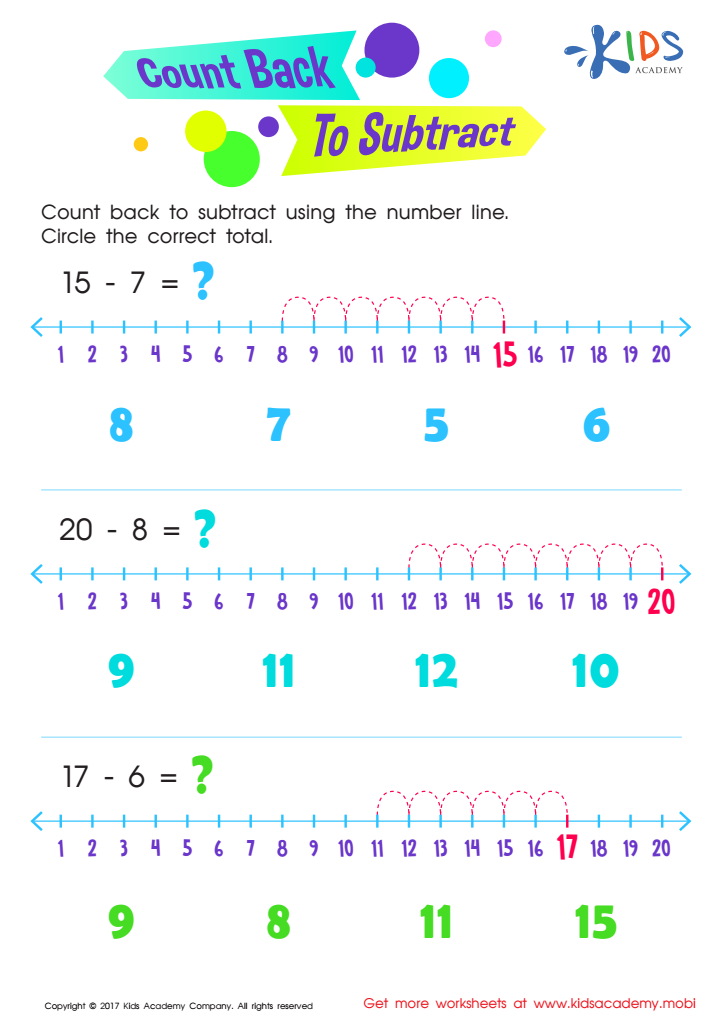
Count Back to Subtract Substraction Worksheet
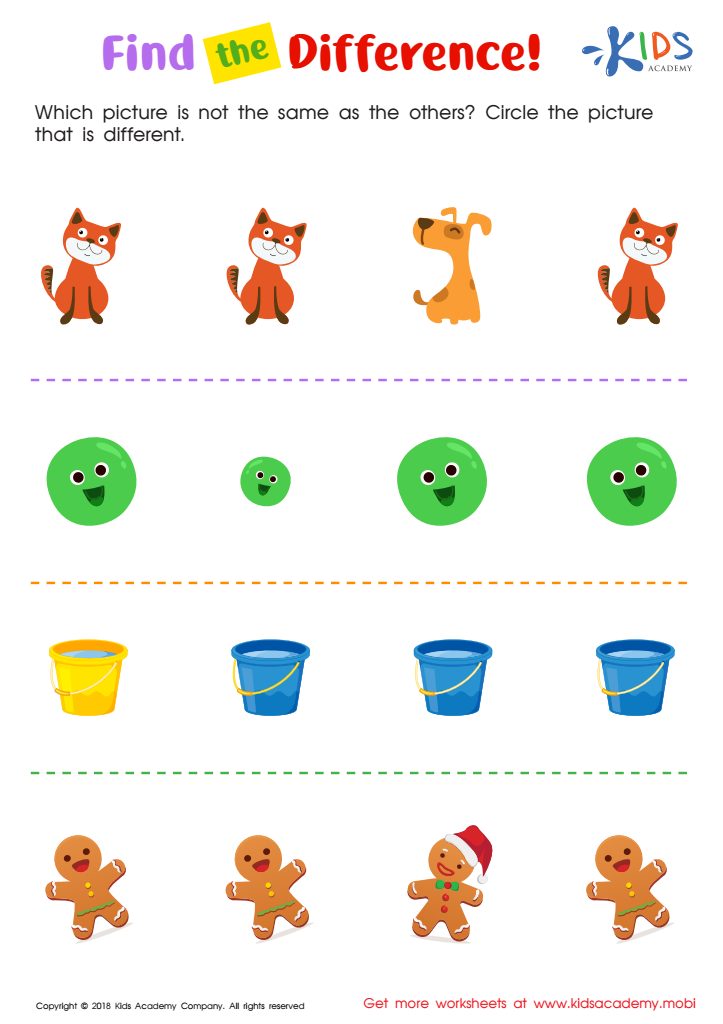
Find the Difference Worksheet
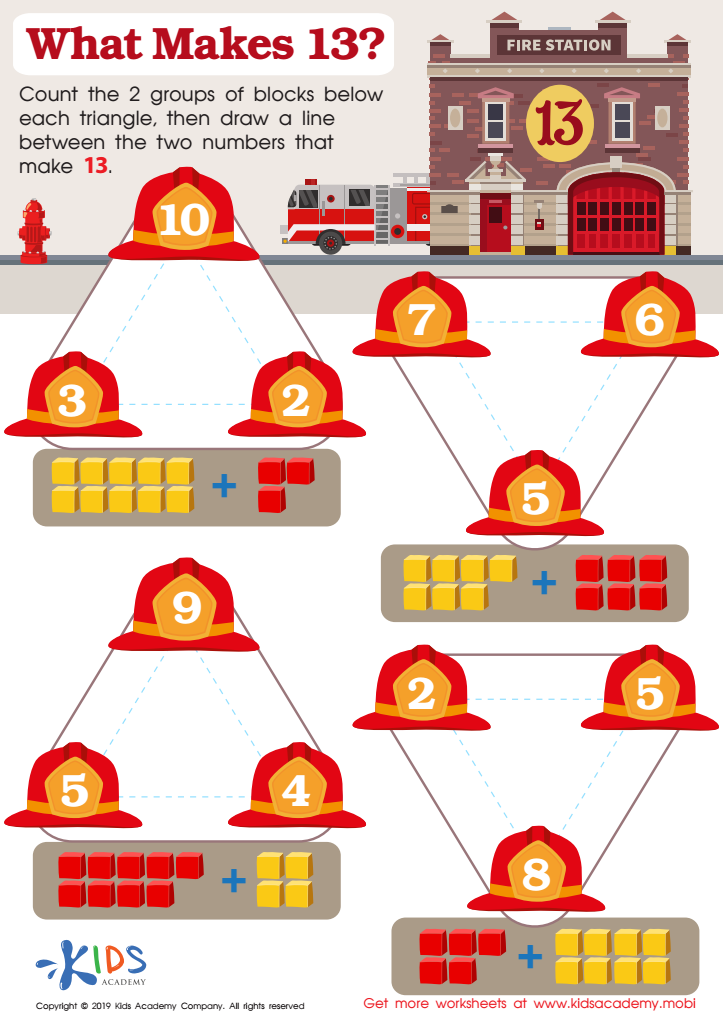
What Makes 13 Worksheet
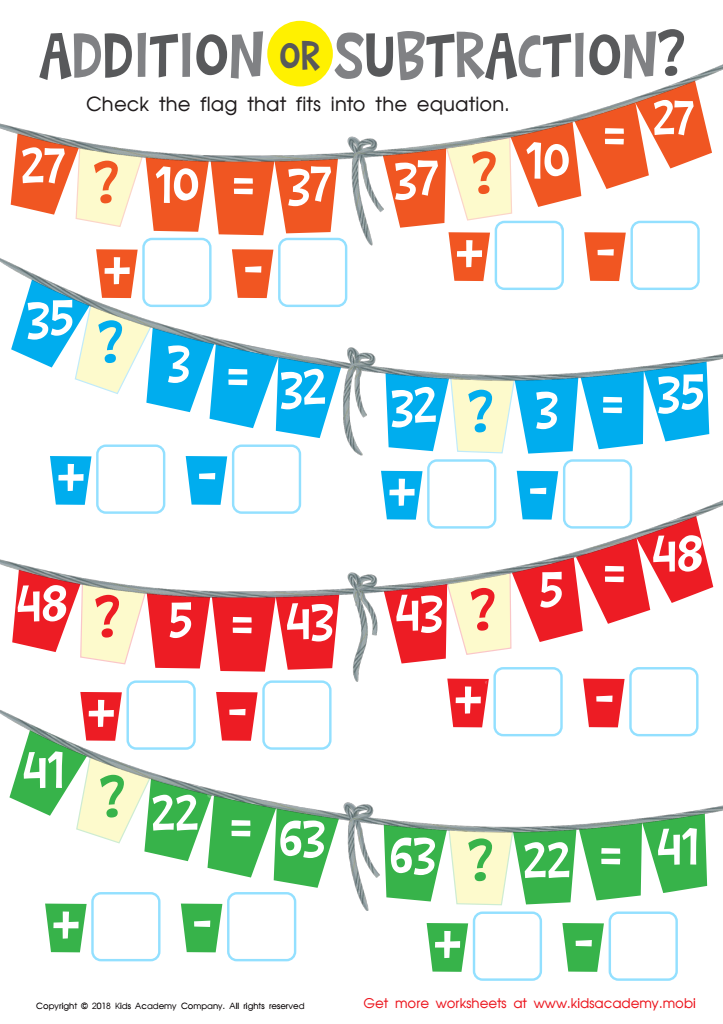
Addition or Subtraction? Worksheet








Mathematical reasoning for ages 5-6 is crucial because it lays the foundation for a robust understanding of math concepts that children will encounter later in their academic journey. At this age, children are in a critical developmental stage where their cognitive abilities are prime for understanding basic math principles. Providing engaging and age-appropriate math activities fosters critical thinking and problem-solving skills.
When parents or teachers focus on mathematical reasoning, they help children recognize patterns, sequences, and relationships. These skills go beyond mere number counting and memorization; they involve understanding the "why" and "how" behind math problems. This deeper comprehension aids children in developing logical thinking, enabling them to tackle more complex problems with confidence.
Moreover, nurturing mathematical reasoning early on boosts children's confidence in their abilities, contributing to a positive attitude towards math. This can eliminate the "math fear" or anxiety that many students develop in later years. A strong early foundation also correlates with better performance in other subjects since math skills are often transferable to science, technology, and even literacy.
Therefore, both parents and teachers should make mathematical reasoning a priority. Structured play-based activities that stimulate curiosity and application, such as puzzles, building blocks, and interactive games, can effectively build these essential skills in young learners.








