Shape Recognition Normal Math Worksheets for Ages 5-6 - Page 2
28 filtered results
-
From - To
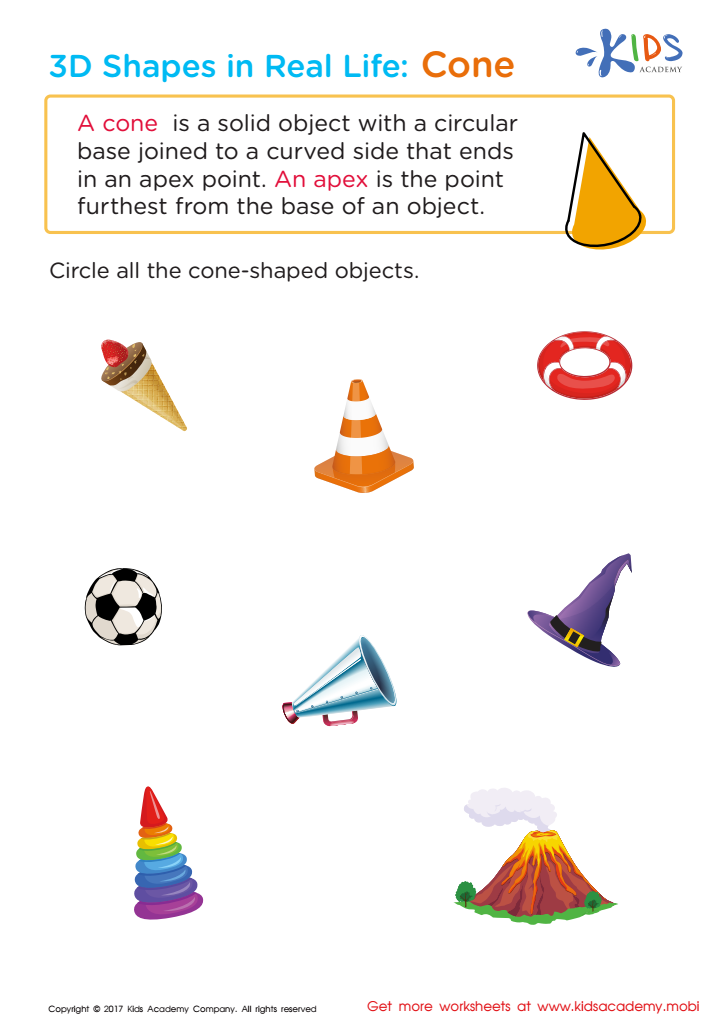
Shapes in Real Life: Cone Worksheet
 Assign to My Students
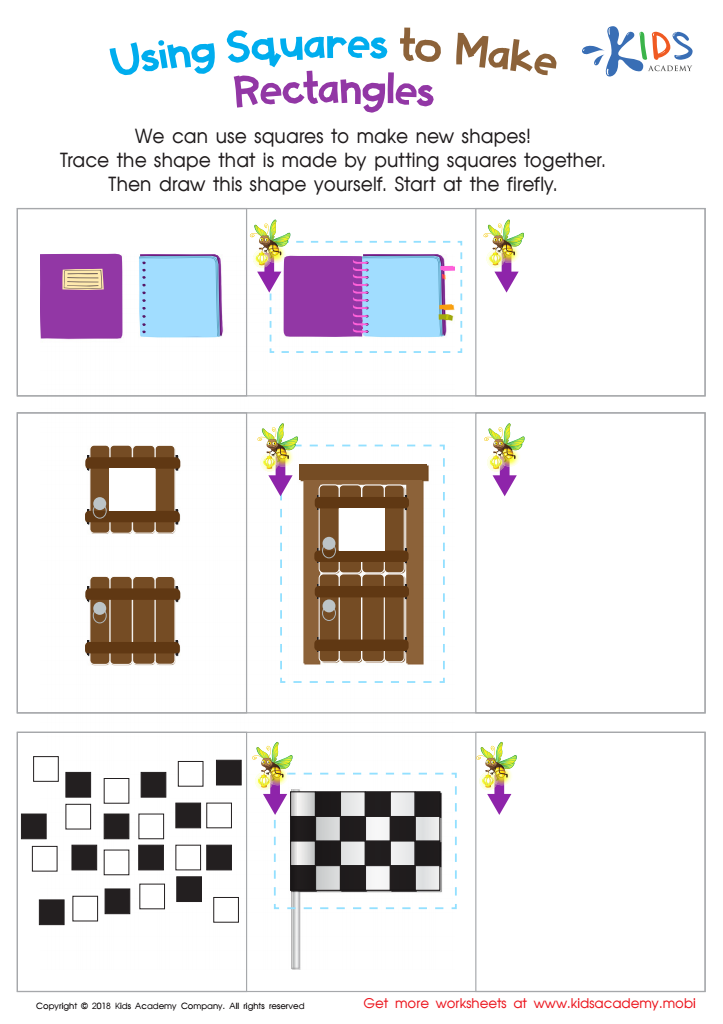
Using Squares to Make Rectangles Worksheet
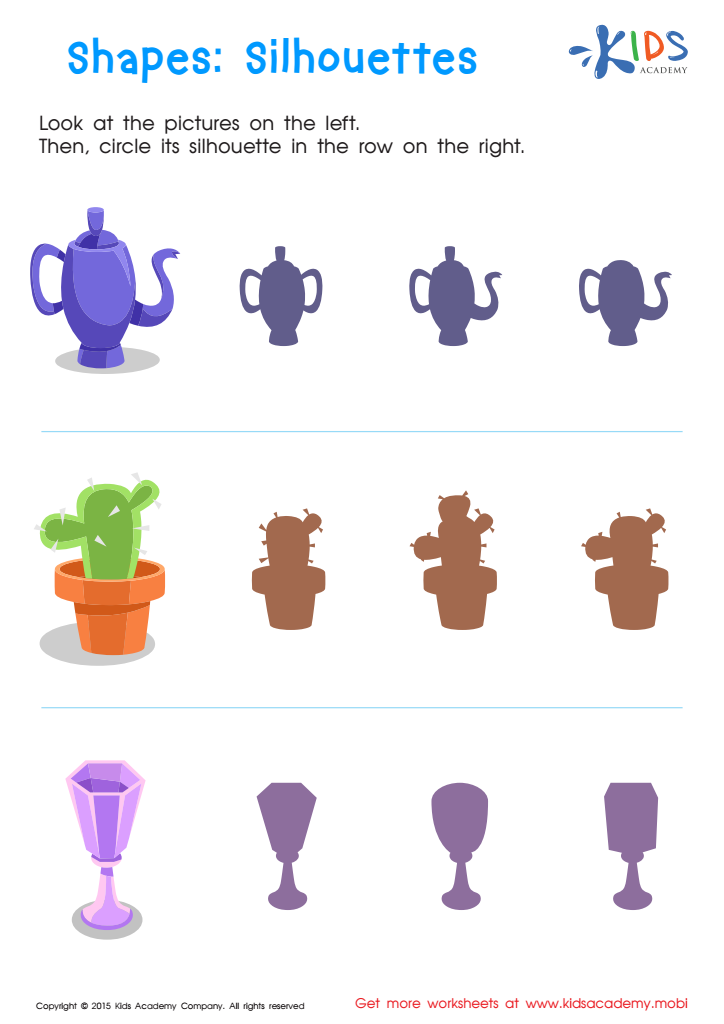
Silhouettes – Shapes Worksheet
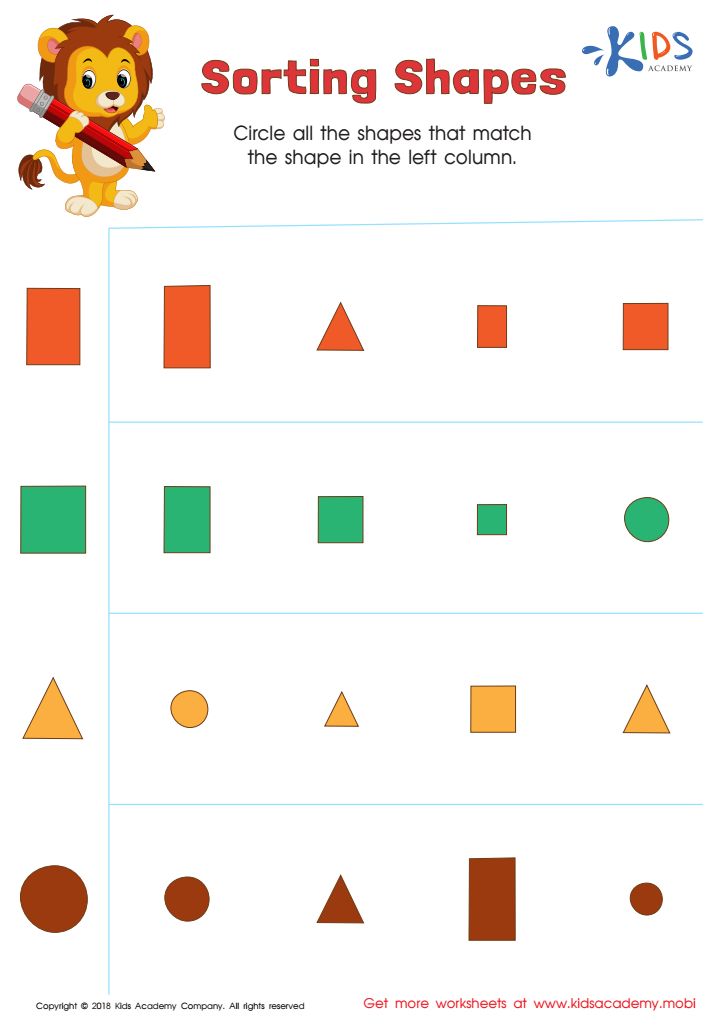
Sorting Shapes - Part 2 Worksheet








Shape recognition is a fundamental skill in early mathematics for children aged 5-6, making it essential for parents and teachers to prioritize its development. Understanding shapes lays the groundwork for crucial cognitive skills that support further learning in math, science, and art. As children identify and classify shapes—like circles, triangles, and squares—they enhance their visual-spatial awareness, which is critical for problem-solving.
Moreover, shape recognition fosters early geometry skills, enabling children to grasp concepts such as symmetry, congruence, and the properties of objects in the environment. These concepts not only apply to math but also enhance their ability to understand and describe their surroundings.
Additionally, engaging in activities that promote shape recognition encourages critical thinking and boosts children's confidence in early math skills, laying a path for future academic success. Activities like sorting, matching, and creating shape-based art help cultivate social skills as children collaborate with peers or family.
In summary, by emphasizing shape recognition, parents and teachers provide a vital building block for children's overall cognitive development, boost mathematical thinking, orient them toward analytical skills, and encourage a positive attitude towards learning in general. This combination of benefits makes it an invaluable area of focus during these formative years.








