Understanding patterns Normal Math Worksheets for Ages 5-6
5 filtered results
-
From - To
Help your child develop essential math skills with our "Understanding Patterns" Normal Math Worksheets for ages 5-6. These expertly designed worksheets foster logical thinking and enhance problem-solving abilities through engaging activities focused on identifying, creating, and completing patterns. Ideal for young learners, these resources make learning fun by incorporating colorful shapes, objects, and sequences that captivate children's interest. Perfect for classroom use or at-home practice, these worksheets support foundational math understanding, setting the stage for future success. Encourage your little one's mathematical journey today with Kids Academy's fun and educational pattern worksheets tailored for young minds.
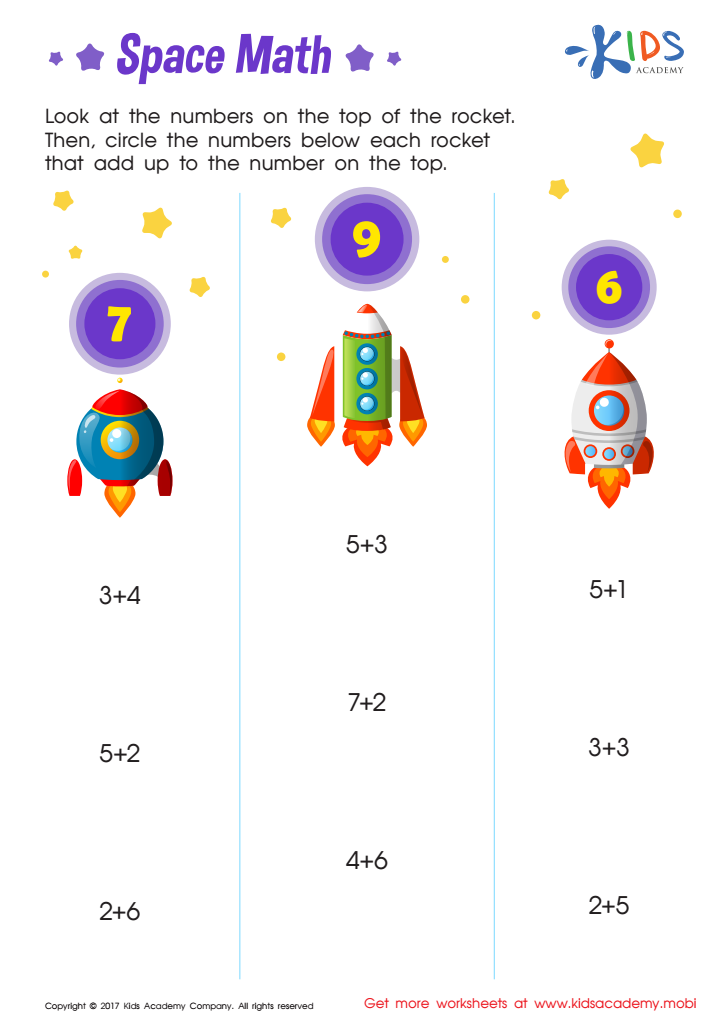
Addition: Space Math Worksheet
 Assign to My Students
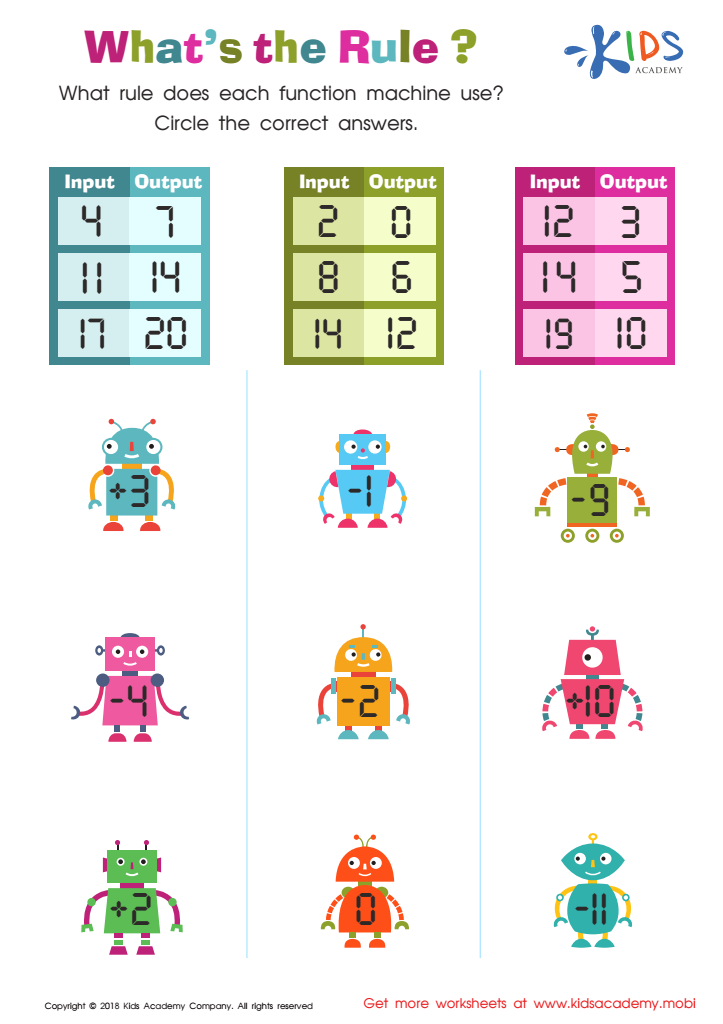
What's the Rule Worksheet
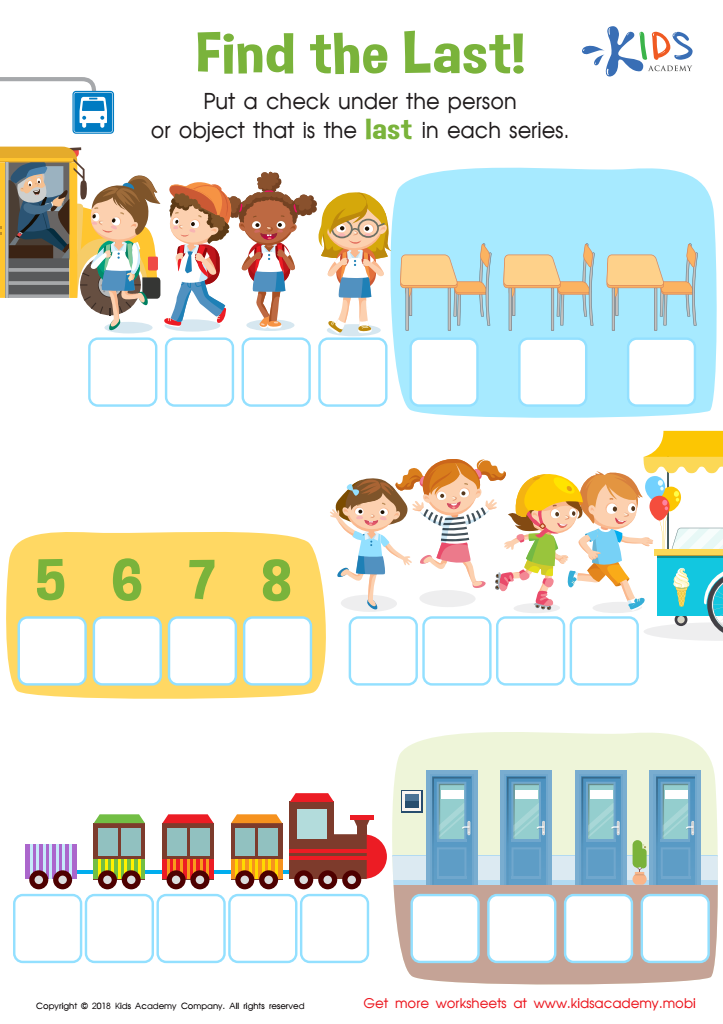
Find the Last! Worksheet
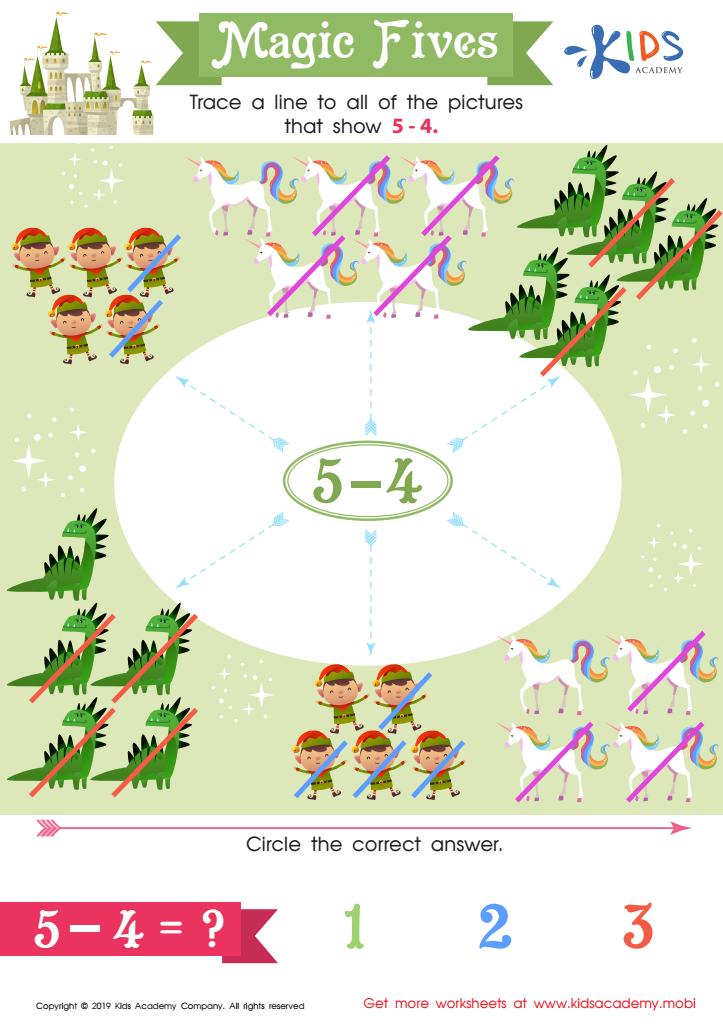
Magic Fives Worksheet
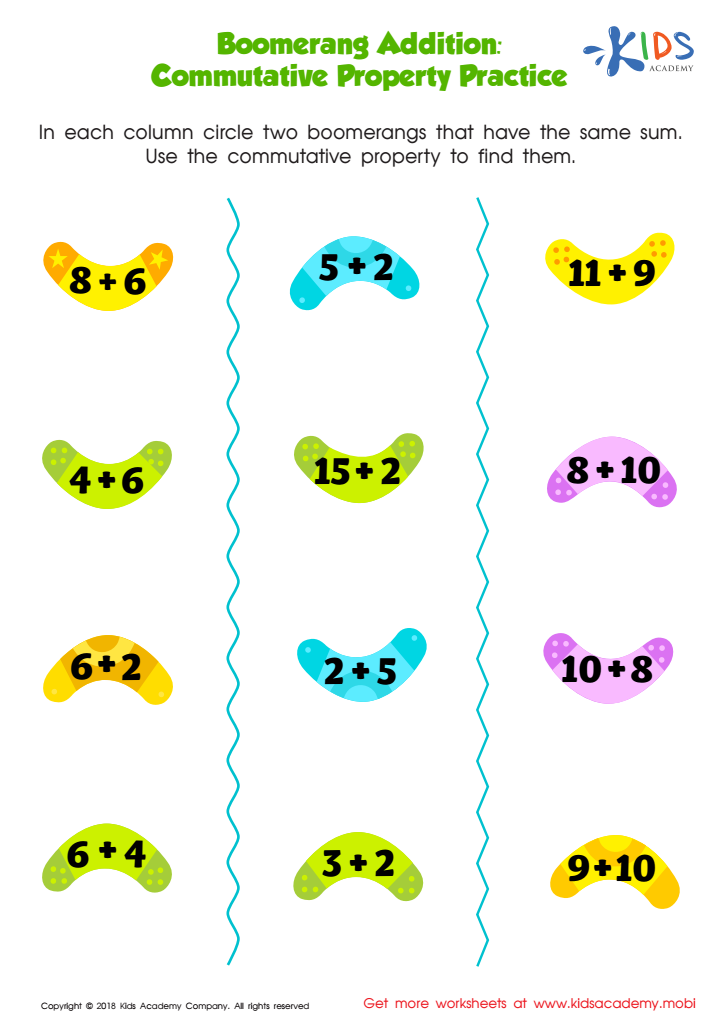
Boomerang Addition Worksheet






%20(1).jpg)

Understanding patterns in early math education is foundational for cognitive development and critical thinking in children aged 5-6. Patterns help young learners identify order and predictability in the world around them, laying the groundwork for more complex mathematical concepts. When children recognize and create patterns, they enhance their problem-solving skills and learn to follow routines, which is crucial for later success in subjects like arithmetic, algebra, and even computer science.
For parents and teachers, recognizing the importance of patterns means giving children the tools to develop strong analytical and logical reasoning skills early on. This early exposure not only benefits mathematical understanding but also bolsters language skills since recognizing patterns in language can aid reading and writing. For instance, rhyming patterns in songs and chants support phonemic awareness, a critical reading skill.
Moreover, pattern recognition builds a child's confidence in their abilities to understand and interact with their environment. It encourages curiosity, exploration, and a growth mindset, essential traits for lifelong learning. Actively engaging children in pattern-related activities fosters a love for math and reduces anxiety related to the subject as they grow older.
Ultimately, integrating pattern recognition into early math education promotes a well-rounded cognitive development that extends beyond math, influencing a child's overall academic and life success.








