Number Sequencing Normal Numbers up to 100 Worksheets for Ages 5-6
3 filtered results
-
From - To
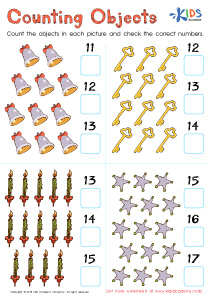
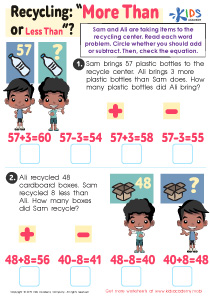
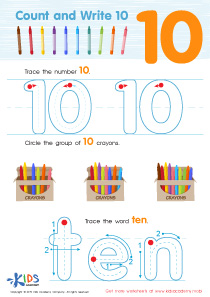
Enhance your child's number sequencing skills with our engaging worksheets designed for ages 5-6! Our "Number Sequencing Normal Numbers up to 100" worksheets provide a fun and interactive way to reinforce counting and number recognition. Tailored for early learners, these exercises introduce children to patterns, ordering, and sequencing while building their confidence in mathematics. With colorful illustrations and varied activities, kids will stay motivated as they practice progressing through series of numbers. Perfect for supplementary learning at home or in the classroom, these worksheets lay a strong foundation for future math success. Download now and make learning numbers exciting!
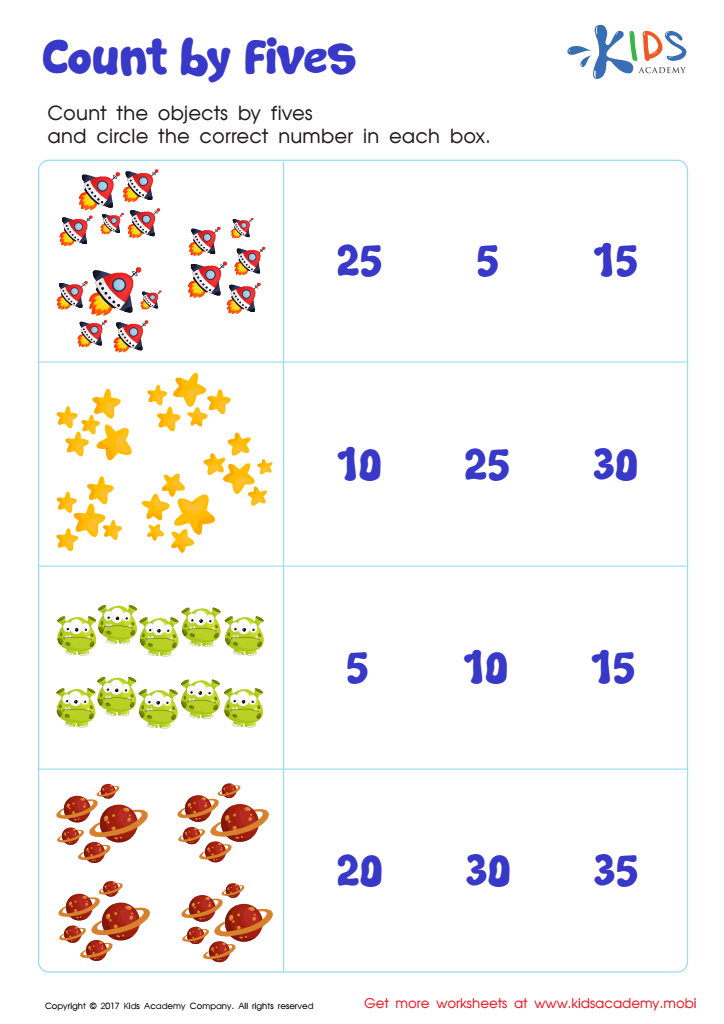
Skip Counting by 5s: Space Math Printable
 Assign to My Students
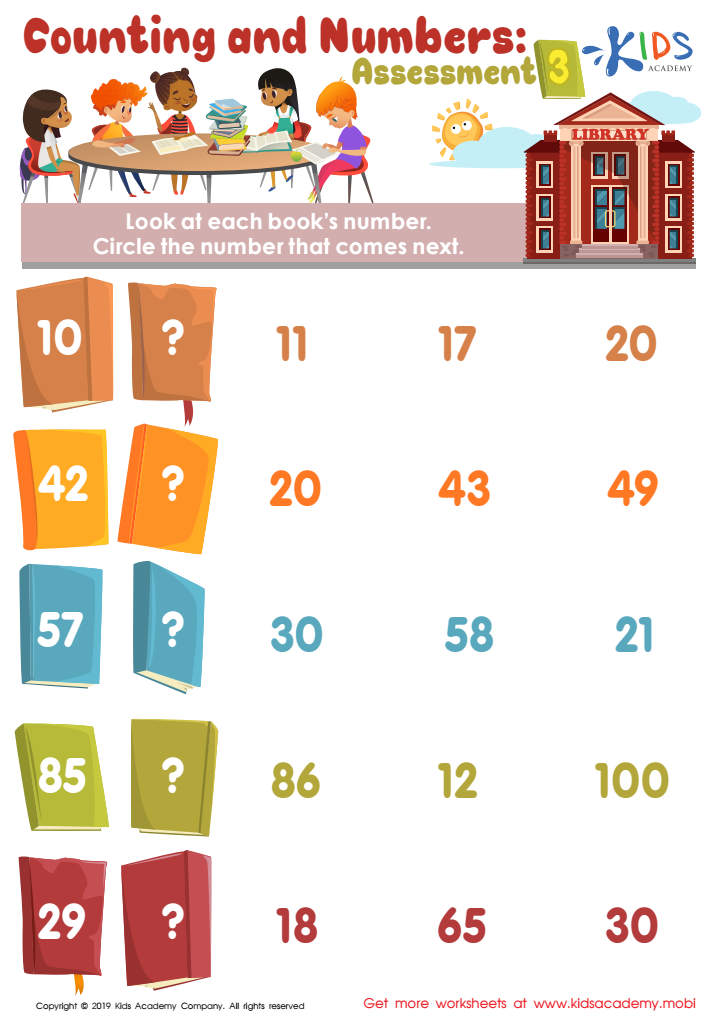
Counting and Numbers: Assessment Worksheet
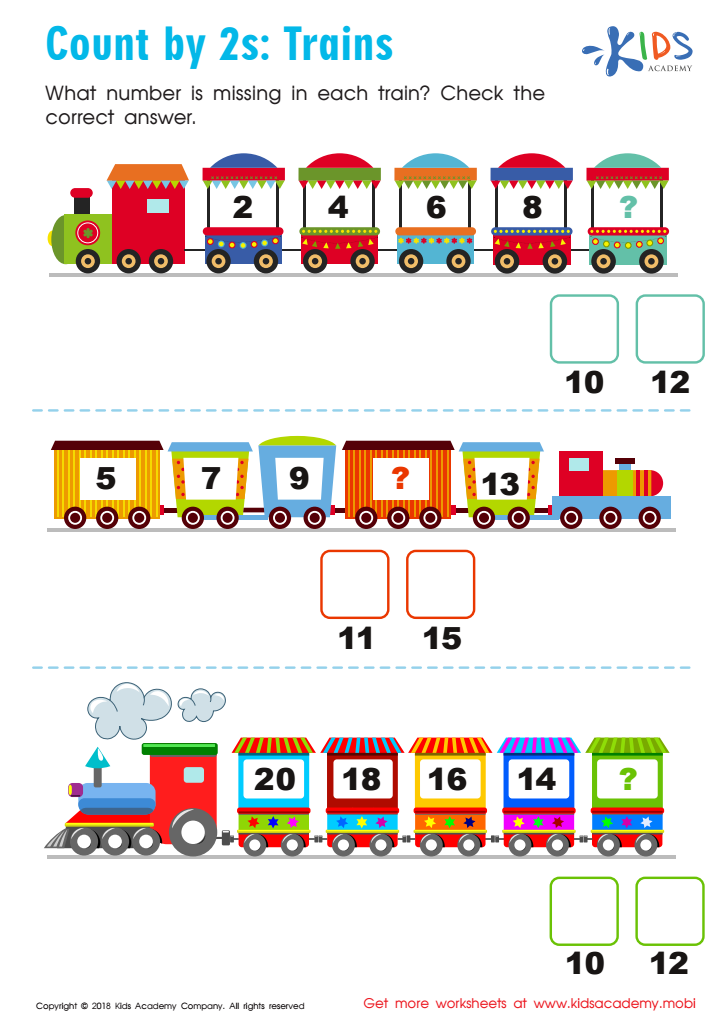
Count by 2's: Trains Worksheet








Number sequencing is a fundamental skill for young learners, serving as a building block for mathematics and critical thinking. For children aged 5-6, mastering normal numbers up to 100 enhances their ability to recognize patterns, understand order, and develop foundational arithmetic skills. When parents and teachers prioritize number sequencing, they help children make connections between numbers, visualize relationships, and build a strong numerical literacy base.
Understanding number sequences fosters problem-solving abilities and enhances cognitive development. Children learn to identify the continuity of numbers, which is crucial for addition, subtraction, and later mathematical concepts. Additionally, math proficiency directly correlates with academic success across subjects.
Moreover, number sequencing activities promote engagement and collaboration. They can be conducted through fun games, interactive activities, and daily routines, making learning enjoyable and relatable. By integrating sequencing into educational practices and household activities, parents and teachers help children develop confidence in their numerical abilities.
Ultimately, caring about number sequencing normal numbers up to 100 allows children to succeed not just in mathematics but in broader academic and life scenarios. It lays the groundwork for future learning and helps children navigate everyday situations, from counting objects to understanding time and money.