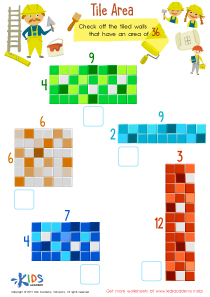
Categorization skills Normal Sorting Worksheets for Ages 5-6
5 filtered results
-
From - To
Help your child master essential categorization skills with our engaging Normal Sorting Worksheets for Ages 5-6. These expertly designed activities enhance cognitive development by teaching kids to identify, organize, and group objects based on common characteristics. Perfect for young learners, each worksheet is crafted to make learning fun and interactive, fostering critical thinking and problem-solving abilities. Ideal for both classroom and at-home practice, our categorization worksheets set the foundation for success in math and beyond. Equip your child with the tools they need to excel and enjoy productive learning experiences today!
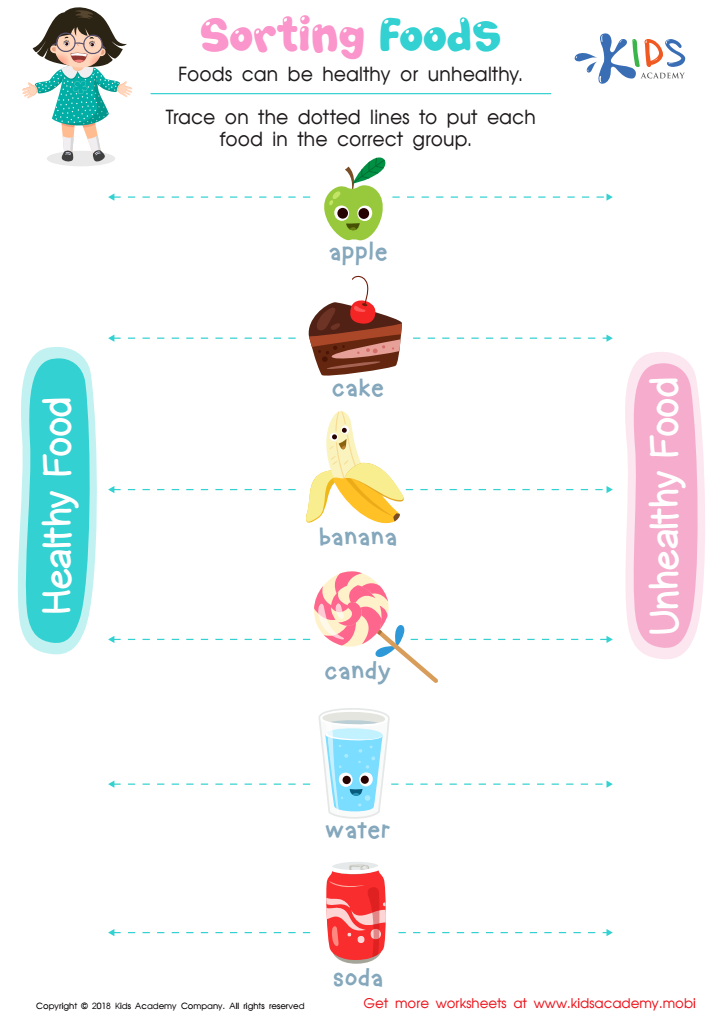
Sorting Food Worksheet
 Assign to My Students
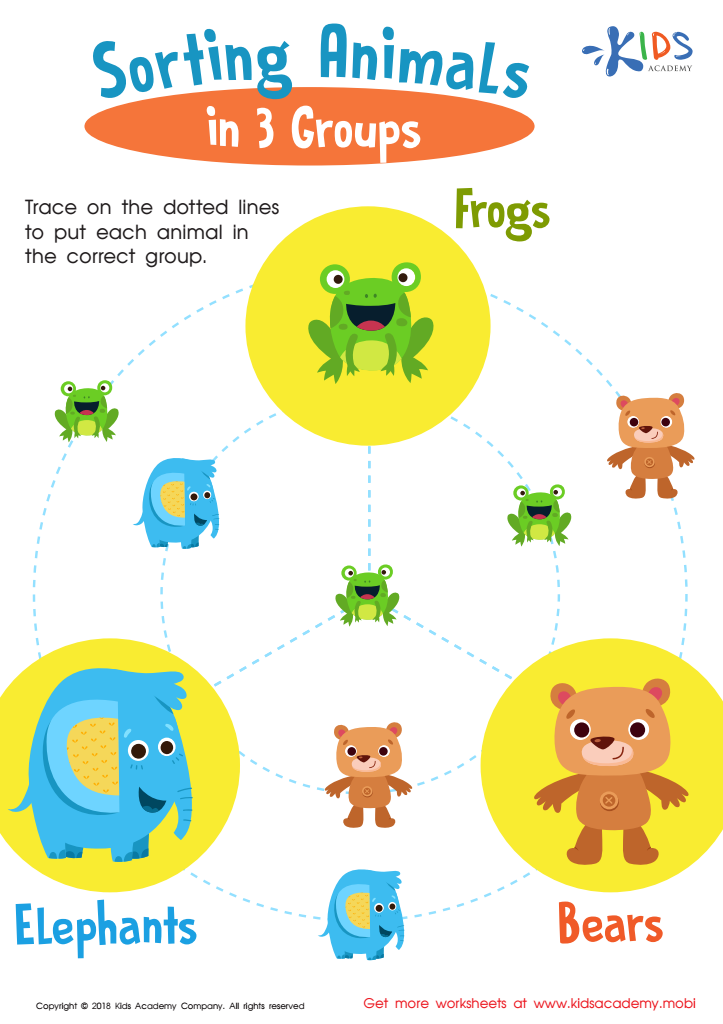
Sorting Animals in 3 Groups Worksheet
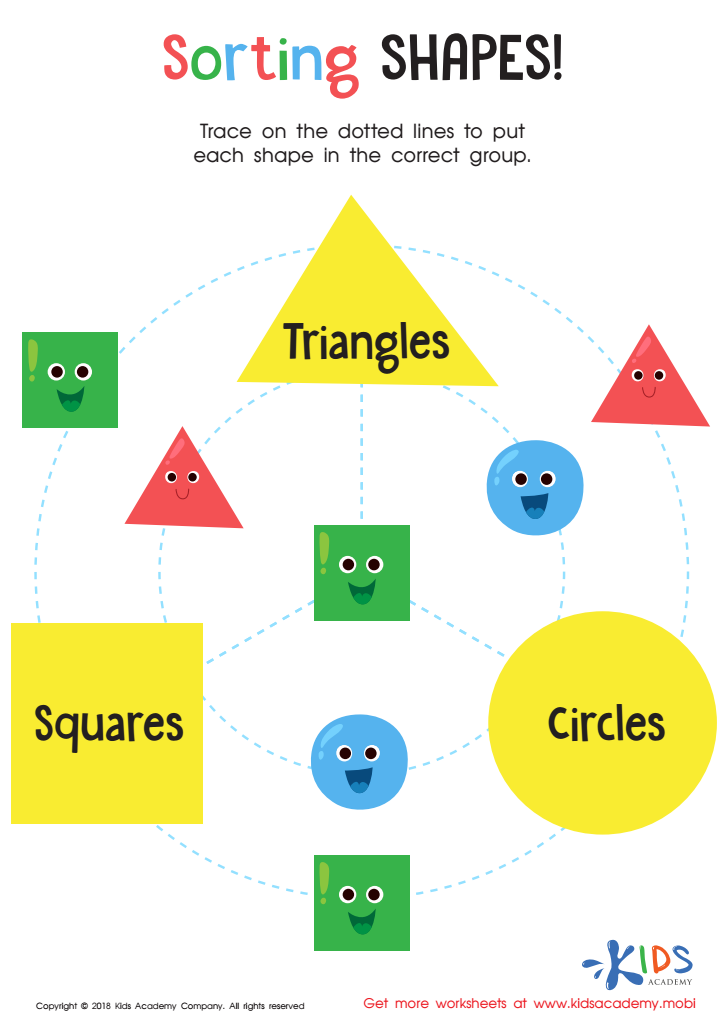
Sorting Shapes - Part 3 Worksheet
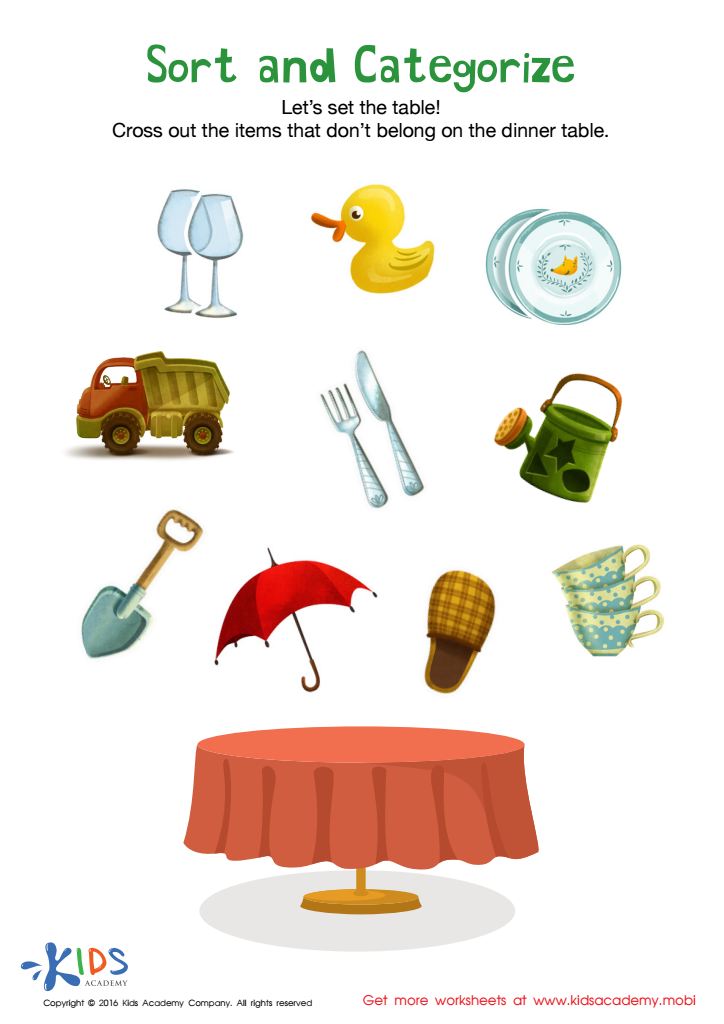
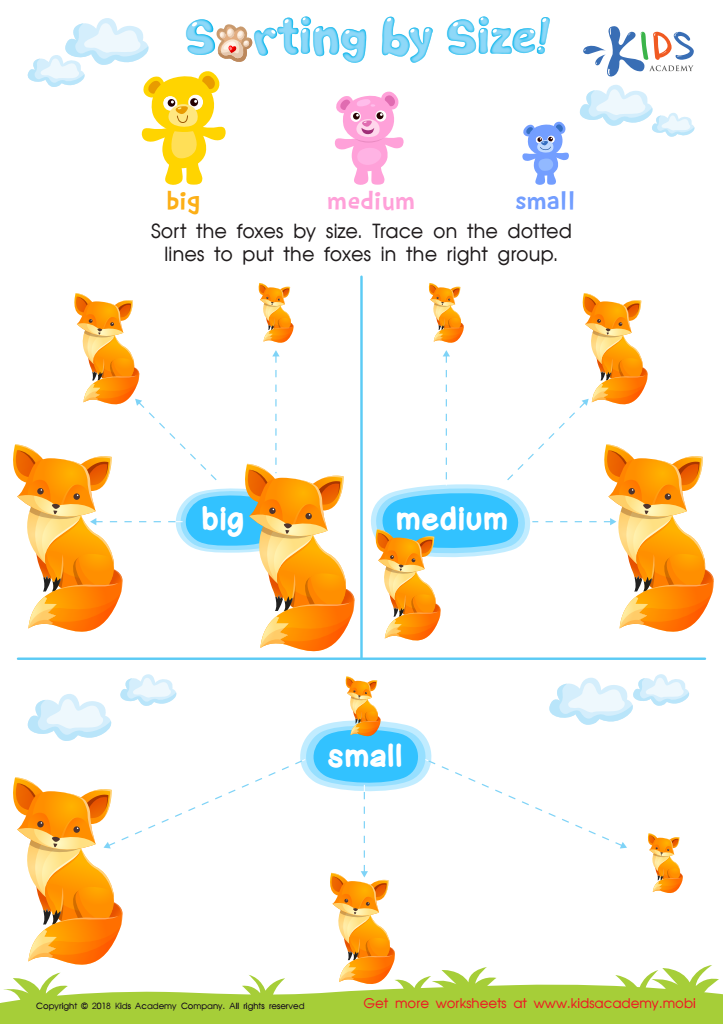
Sorting by Size Worksheet








Categorization skills and normal sorting are fundamental for children aged 5-6, playing a vital role in their cognitive development and educational foundation. At this stage, kids are transitioning from simple recognition to more complex thinking processes. Categorization helps them make sense of the world by organizing information into understandable groups.
By sorting objects by attributes like color, shape, size, or type, children enhance their observational skills, attention to detail, and critical thinking. These skills are precursors to logical reasoning and problem-solving, necessary for future academic success in subjects like mathematics and science. For instance, recognizing patterns is a key math skill that begins with categorization.
Moreover, categorization aids in language development. As they sort and categorize, children expand their vocabulary and comprehension skills by learning new words to describe objects and their characteristics. This activity also works on their descriptive language and communication, as kids explain their reasoning for grouping items the way they did.
From a social perspective, categorization encourages cooperative play and discussion, fostering essential social skills. It promotes sharing, turn-taking, and collaborative problem-solving.
Thus, parents and teachers should prioritize developing categorization skills in young children, as it lays the groundwork for more advanced cognitive, linguistic, and social-emotional development.