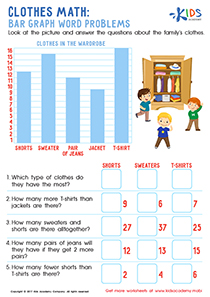
Problem-Solving Skills Normal Two-step Word Problems Worksheets for Ages 5-6
9 filtered results
-
From - To
Develop your child's analytical abilities with our "Problem-Solving Skills Normal Two-step Word Problems Worksheets" geared for ages 5-6. These engaging resources provide essential practice in solving two-step word problems, reinforcing core math concepts. Each worksheet encourages youngsters to think critically and apply learned strategies to real-world scenarios. Designed for early learners, these printables enhance arithmetic fluency and boost confidence in mathematical reasoning. Parents and educators will appreciate the thoughtfully crafted exercises, featuring a variety of relatable contexts. Unlock your child's potential and make learning fun with our practicable problem-solving worksheets, a staple for developing successful students.
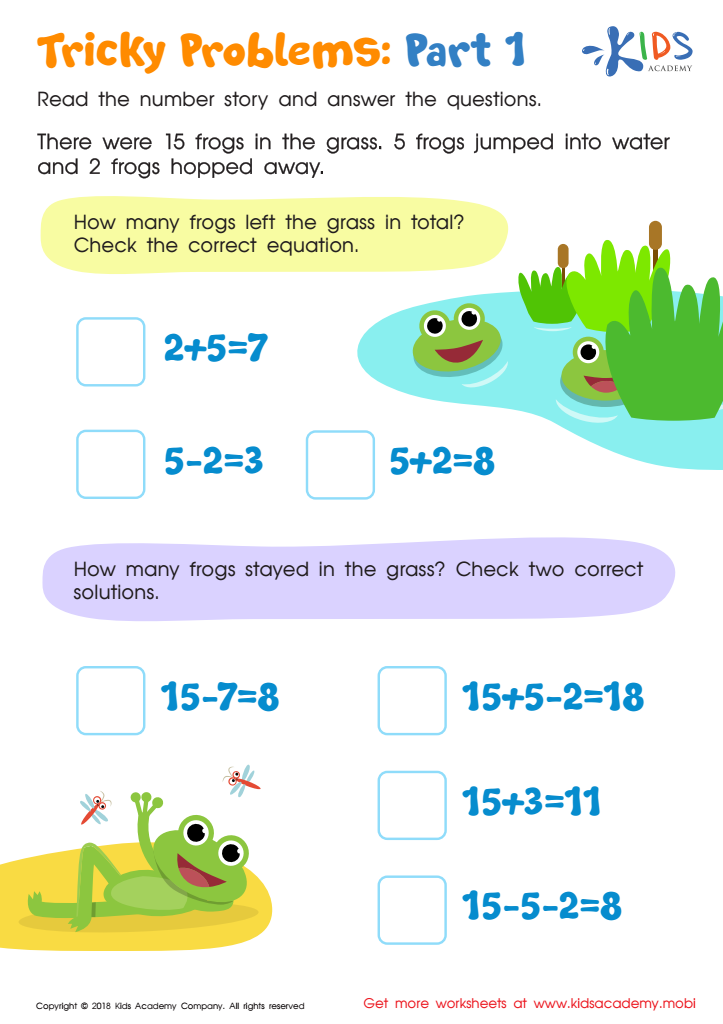
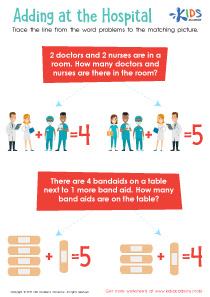
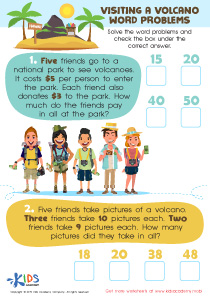
Tricky Problems Worksheet: Part 1
 Assign to My Students
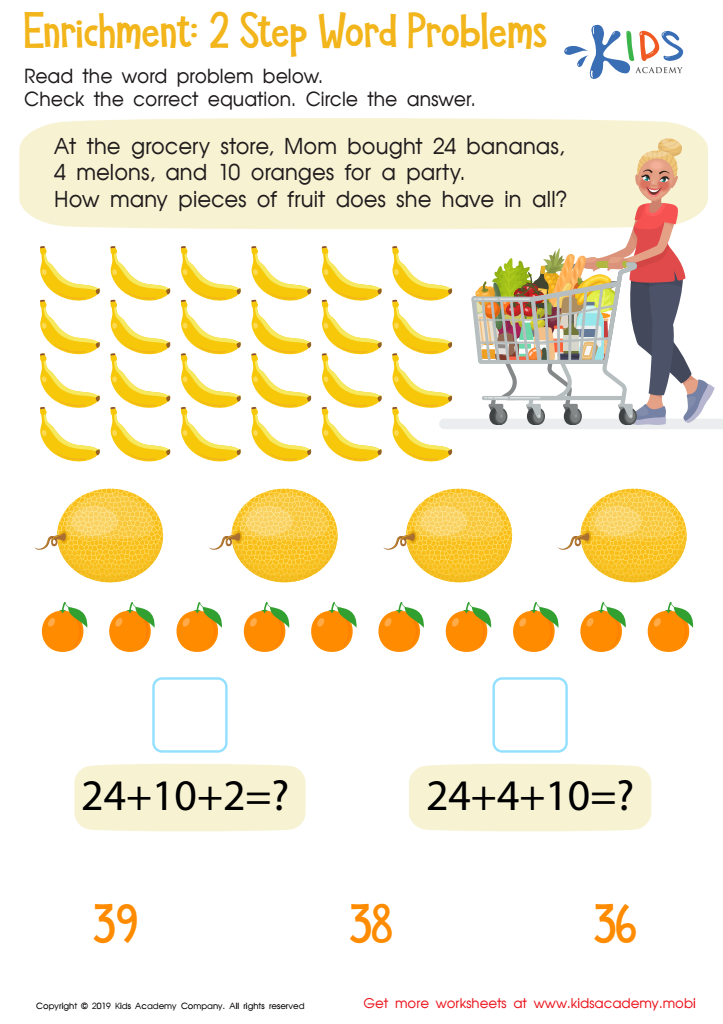
Enrichment -2 Step Word Problems Worksheet
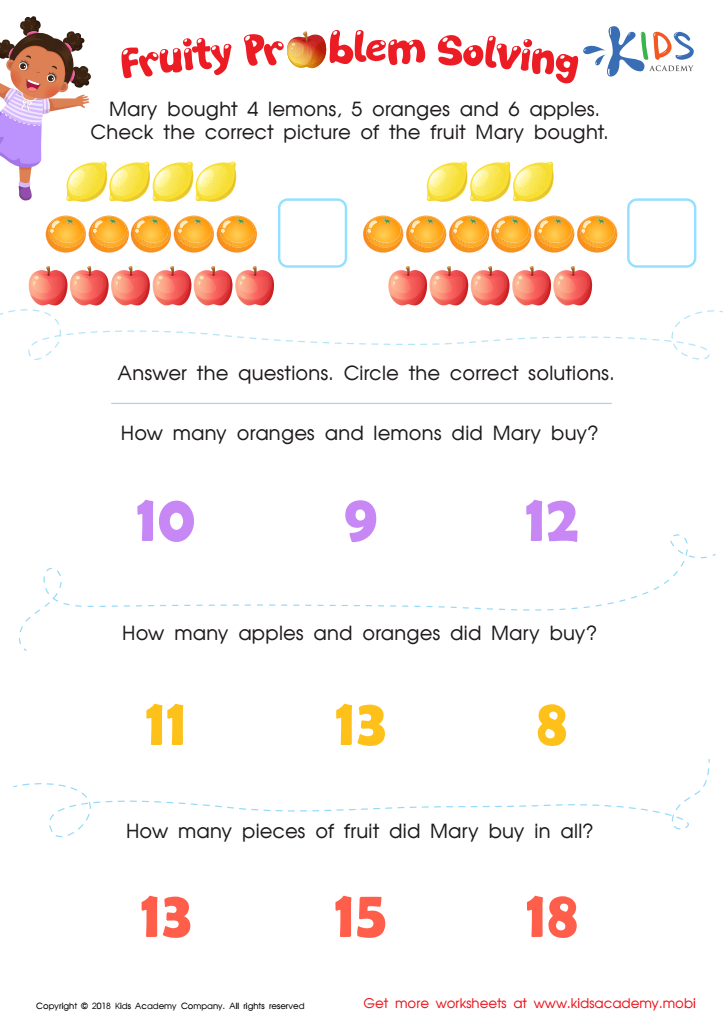
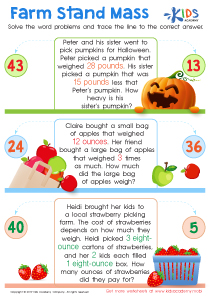
Fruity Problem Solving Worksheet
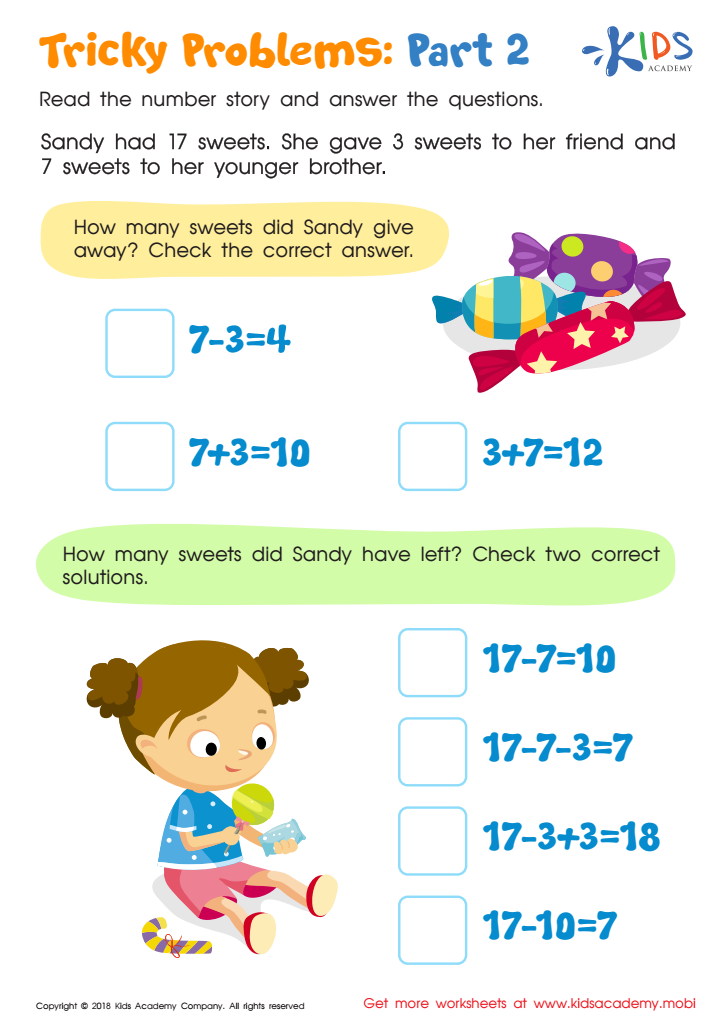
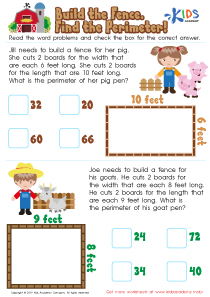
Tricky Problems Worksheet: Part 2
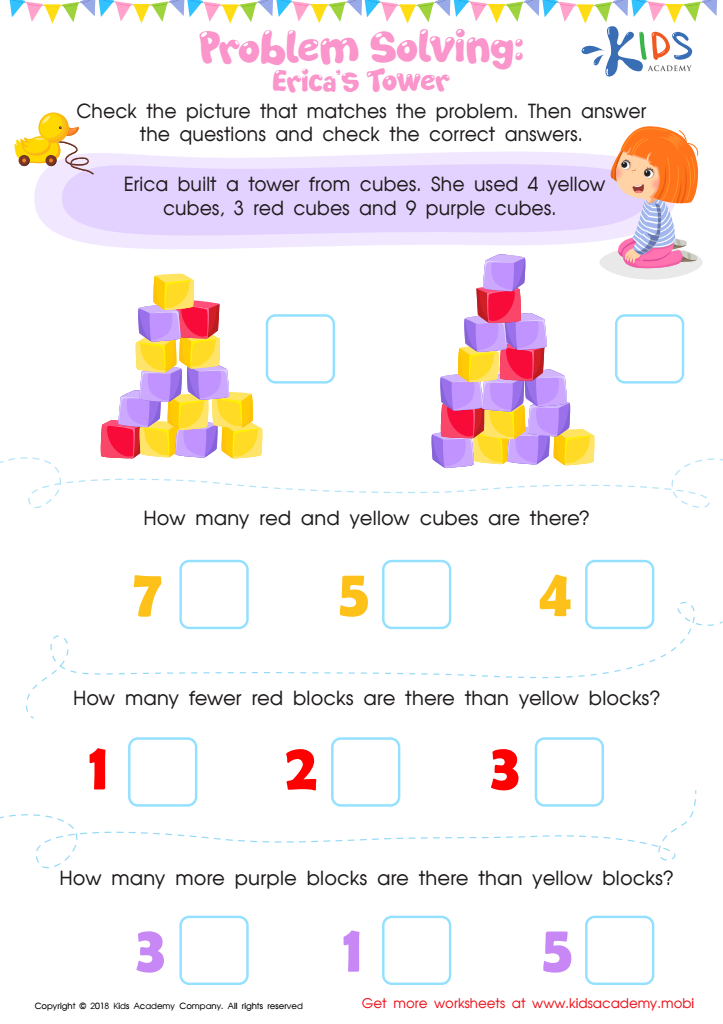
Problem Solving: Erica's Tower Worksheet
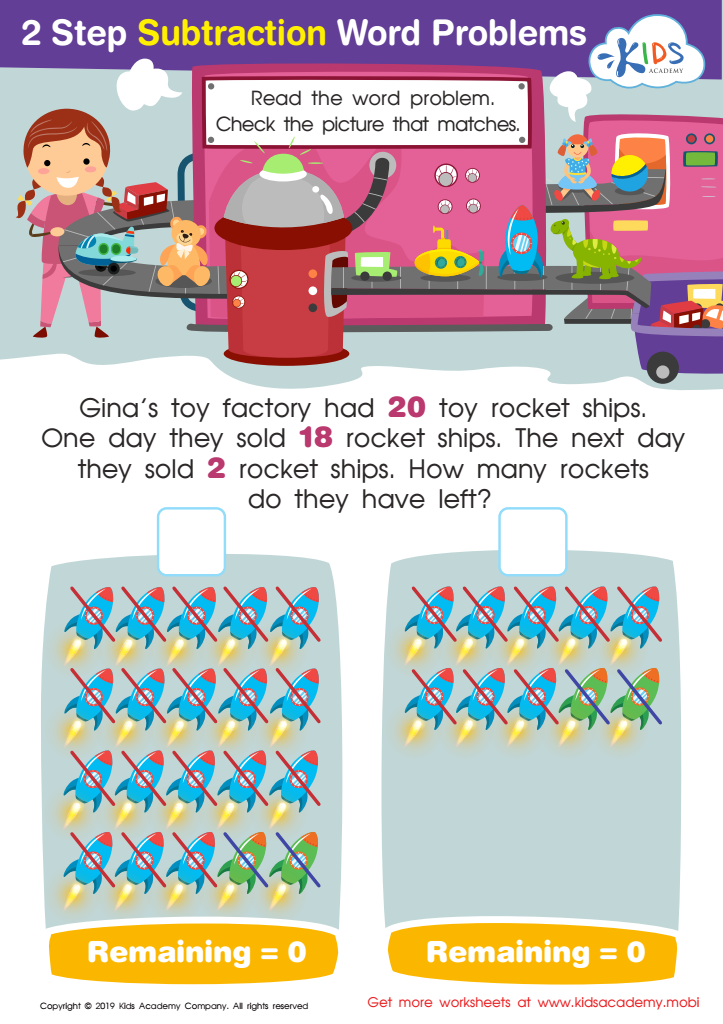
Step Subtraction Word Problems Worksheet
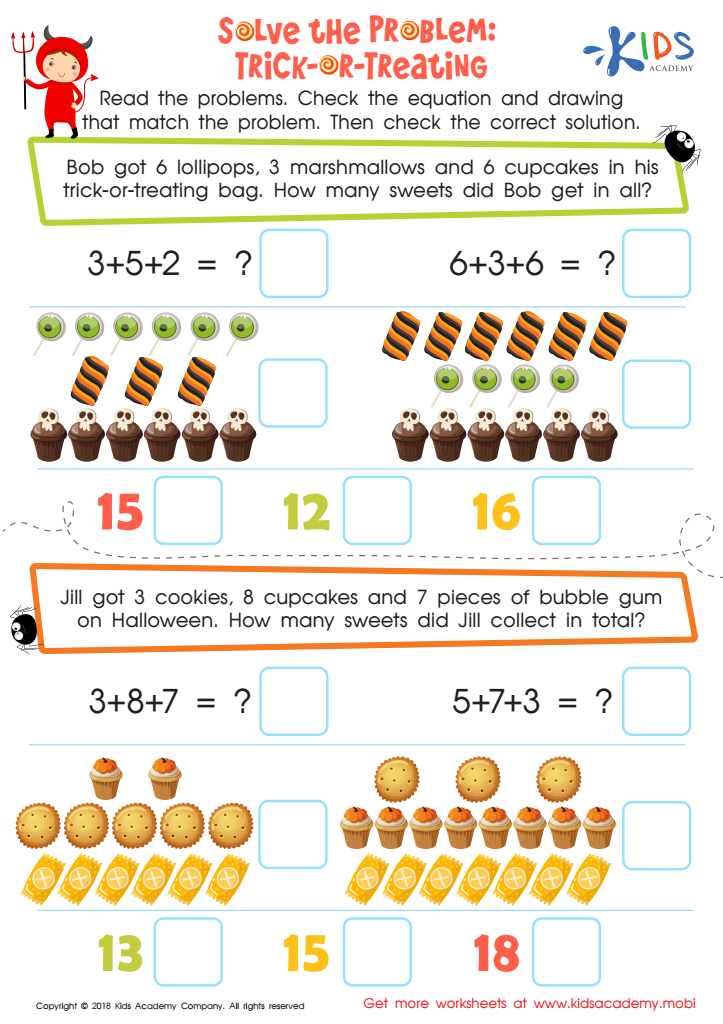
Solve the Problem: Trick–or–treating Worksheet
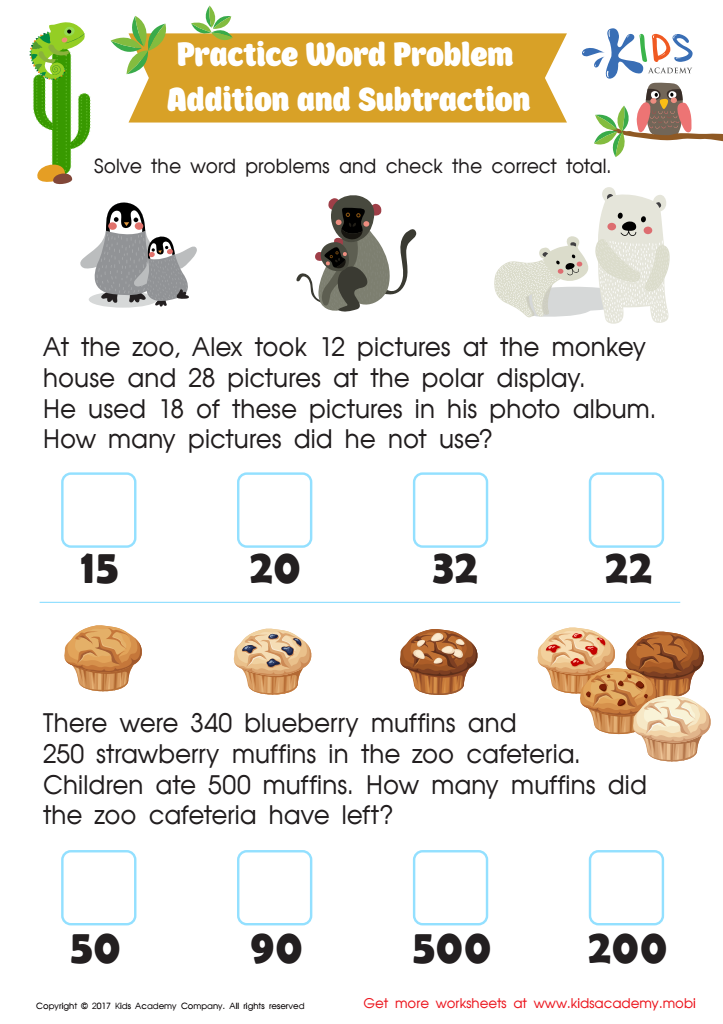
Addition and Subtraction: Word Problems Worksheet
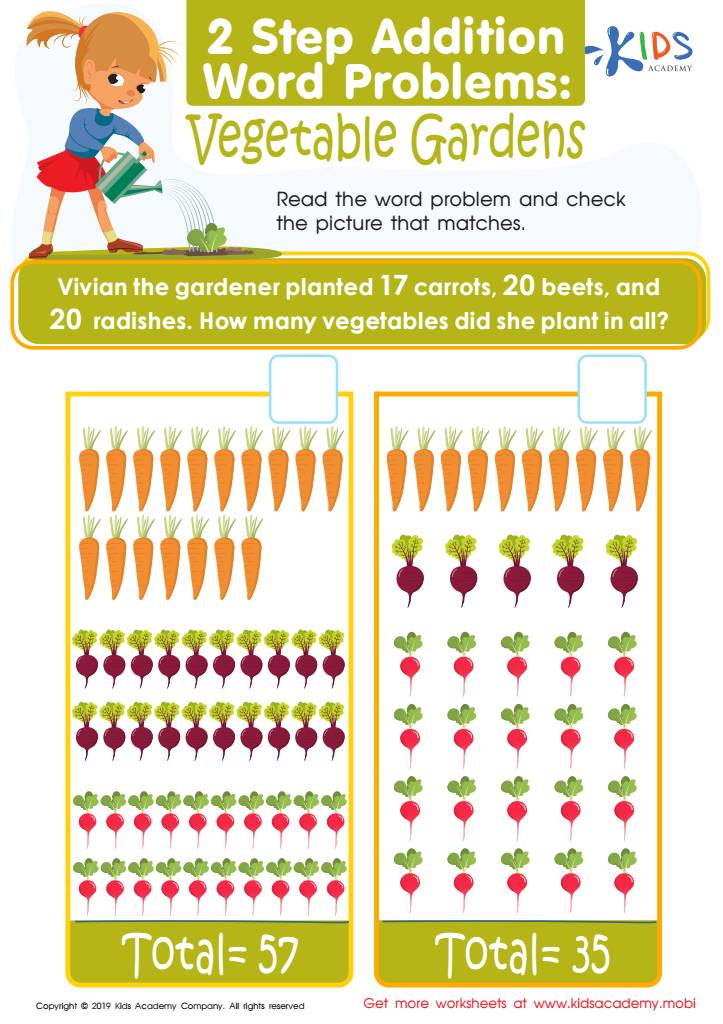
Vegetable Gardens Worksheet



Problem-solving skills are crucial for young children, even at the tender ages of 5-6. Building this foundation early sets the stage for academic success and personal development. Two-step word problems, in particular, offer a valuable exercise in cognitive growth and reasoning.
Firstly, tackling two-step word problems enhances critical thinking. Young learners are challenged to understand and break down problems, teaching them to approach challenges logically and step-by-step. This sequential thinking ability benefits all areas of learning and everyday life.
Secondly, these problems foster mathematical proficiency. Children learn the fundamentals of addition, subtraction, and other basic operations within real-life contexts, making abstract concepts more concrete and meaningful. This contextual learning boosts engagement and retention.
Additionally, problem-solving activities help develop perseverance and resilience. Students learn to navigate mistakes, developing grit and a growth mindset. When children start solving problems early, they become more confident in their abilities, encouraging positive attitudes towards learning.
Finally, these skills have a social dimension. Problem-solving often involves collaboration and communication. When children discuss their problem-solving strategies, they learn to articulate their thoughts clearly and listen to others, fostering teamwork and empathy.
In sum, caring about and integrating problem-solving activities, such as normal two-step word problems, in early education provides a well-rounded boost to a child’s intellectual and emotional development, ensuring they thrive both academically and personally.