Critical Thinking Normal Word Problems Worksheets for Ages 5-6
3 filtered results
-
From - To
Unlock the power of critical thinking with our engaging Normal Word Problems Worksheets designed specifically for ages 5-6! These worksheets provide young learners with an opportunity to enhance their problem-solving skills through fun and relatable scenarios. Children will enjoy tackling various math challenges that require them to analyze, reason, and apply their knowledge in real-life contexts. Each worksheet is thoughtfully crafted to stimulate curiosity and encourage persistence, making math an enjoyable learning experience. Ideal for both classroom use and at-home practice, these critical thinking worksheets lay a strong foundation for future academic success while fostering a love for learning. Start your child’s journey today!
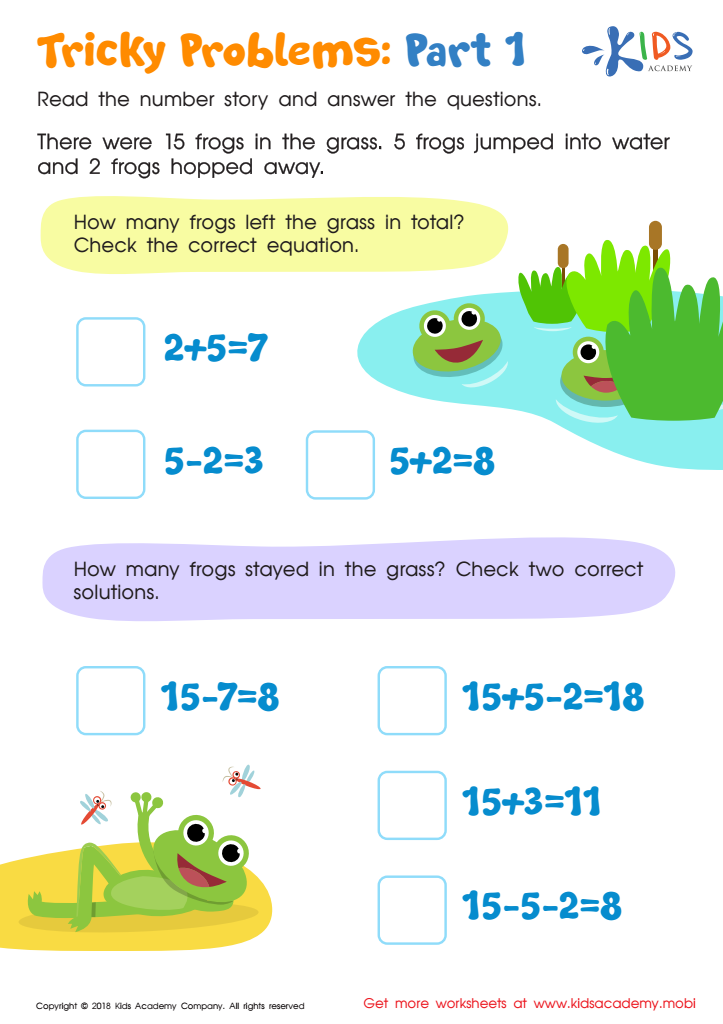
Tricky Problems Worksheet: Part 1
 Assign to My Students
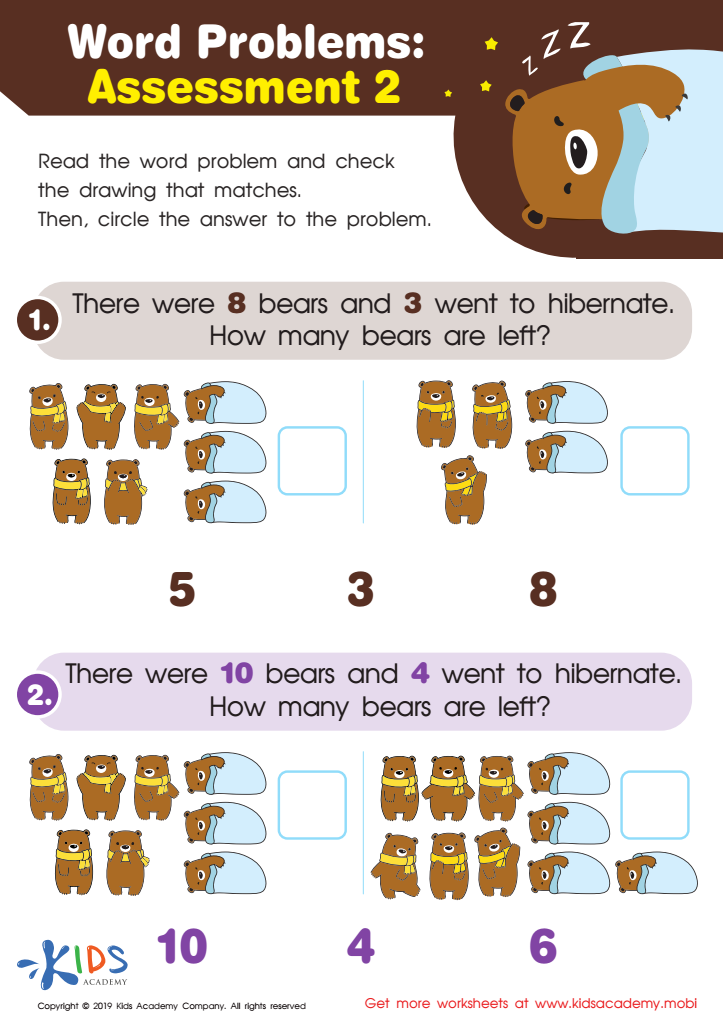
Word Problems: Assessment 2 Worksheet
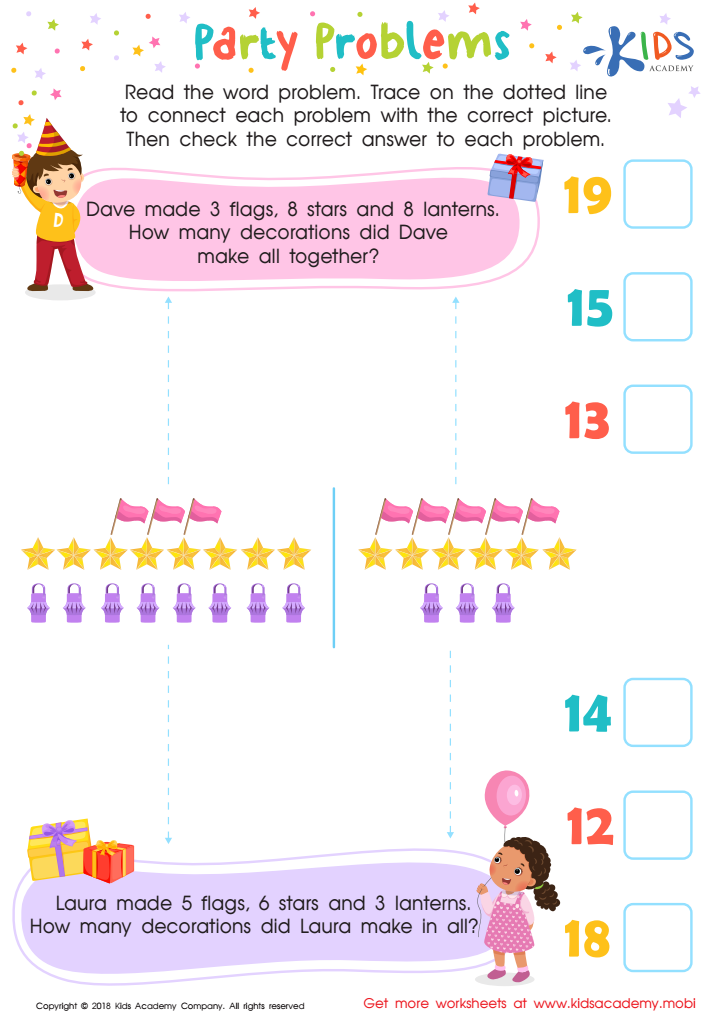
Party Problems Worksheet








Critical thinking is a fundamental skill that develops the ability to analyze, reason, and make informed decisions. For children ages 5-6, engaging in Critical Thinking Normal Word Problems is crucial for several reasons. First, this age group is at a developmental stage where they begin to understand relationships and connections in their learning. Word problems encourage them to think beyond mere numbers and apply mathematical concepts in real-world contexts, fostering a deeper understanding of mathematics.
Moreover, solving word problems enhances language and comprehension skills. Children learn to decode language, identify key information, and translate problems into mathematical expressions. This iterative process promotes cognitive flexibility and resilience, as they may need to try various approaches to find solutions.
Teachers and parents should also recognize that these problems cultivate curiosity and a love for learning. As children navigate challenges, they practice persistence and enjoy the satisfaction of overcoming obstacles. Further, by incorporating critical thinking into early education, we equip children with skills essential for lifelong learning, enabling them to face more complex problems in the future. Ultimately, nurturing critical thinking in young learners promotes better academic performance, equips them for higher-order thinking, and prepares them for an increasingly complex world.








