Sequencing Skills Normal Reading Worksheets for Ages 5-6
4 filtered results
-
From - To
Boost your child's reading abilities with our "Sequencing Skills Normal Reading Worksheets for Ages 5-6." Designed to enhance comprehension, these worksheets help young learners grasp the important concept of event sequence in stories. With engaging exercises, children practice arranging sentences, recognizing patterns, and understanding narrative flow. Perfect for home or classroom use, these resources nurture critical thinking and improve overall literacy. Make reading both fun and educational by incorporating our expertly crafted sequencing worksheets into your child's daily routine. Enhance early reading skills today with our specially designed materials for young readers.
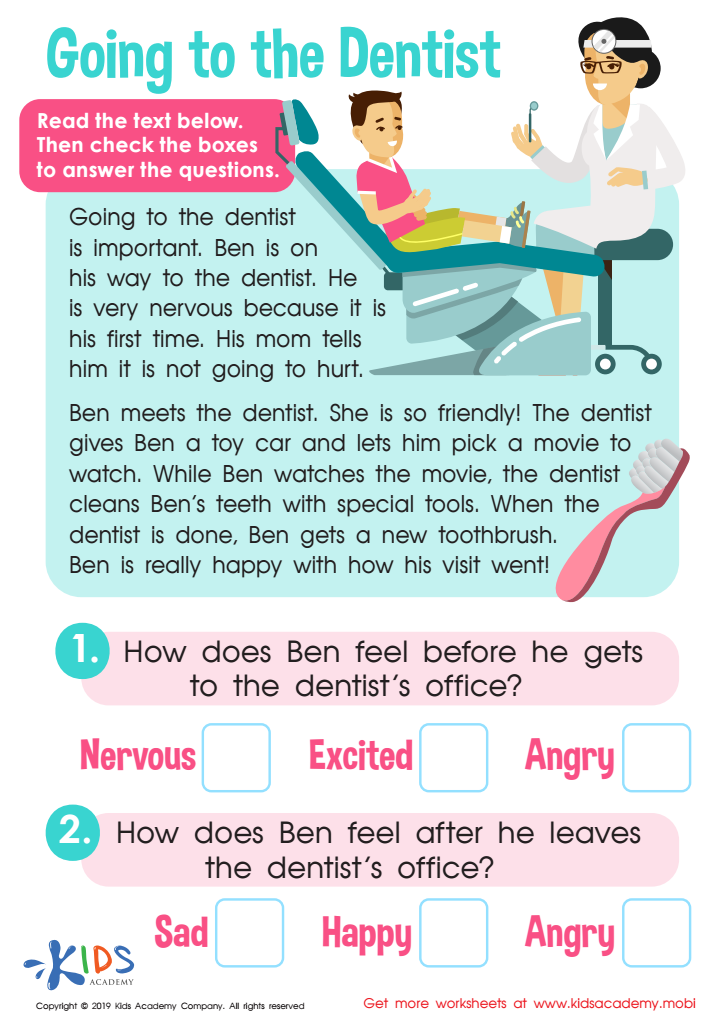
Going to the Dentist Worksheet
 Assign to My Students
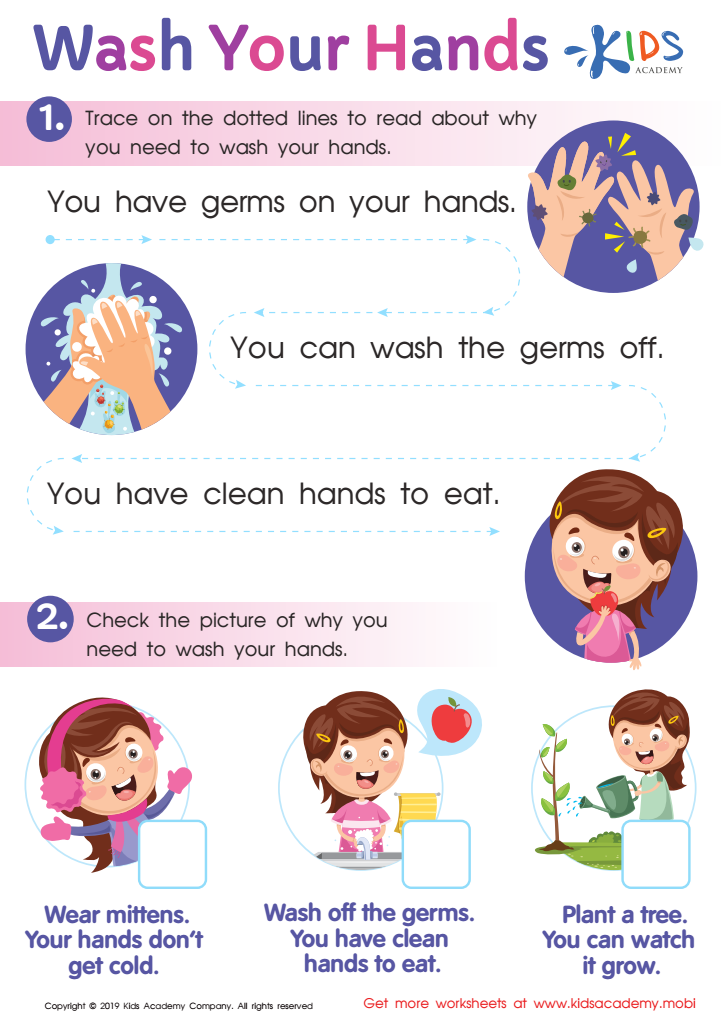
Wash Your Hands Worksheet
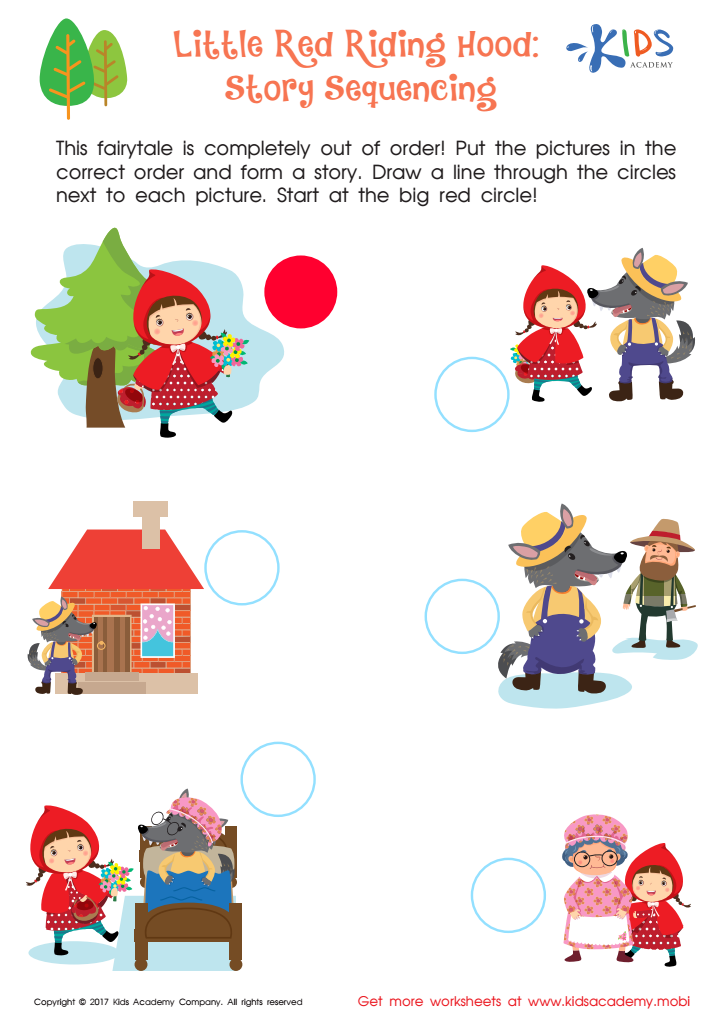
Story Sequencing Printable
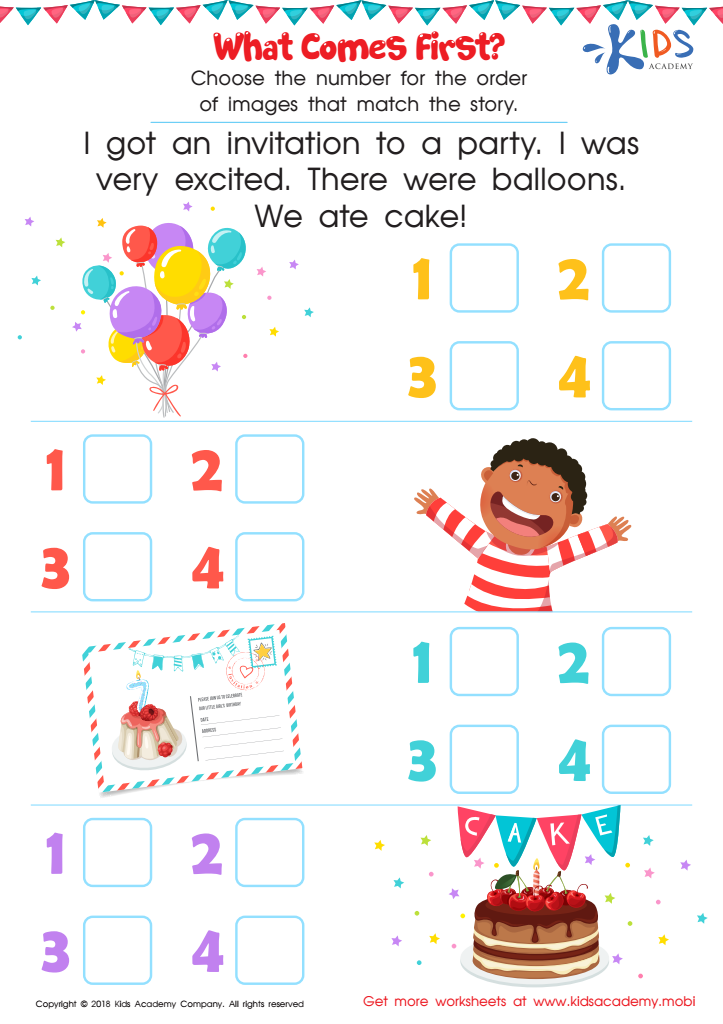
What Comes First Worksheet








Sequencing skills are crucial for children aged 5-6 as they enter the foundational stage of reading. These skills involve understanding the order of events or steps in a story, which is essential for comprehending and organizing information logically. Parents and teachers should prioritize these skills for several reasons.
Firstly, sequencing aids in comprehension. When children can identify the beginning, middle, and end of a story, they better understand the story's structure and meaning. This ability to arrange events in order fosters clearer communication and narrating skills, both of which are critical for effective reading and writing.
Secondly, sequencing contributes to cognitive development. It encourages logical thinking and problem-solving, as children learn to predict outcomes based on previous events. This mental exercise enhances their analytical abilities, benefiting other academic areas, such as math and science.
Furthermore, strong sequencing skills facilitate everyday functioning. From following a series of instructions to understanding routines, the ability to sequence is pivotal. It offers children a sense of order and predictability, which can positively influence their confidence levels and independence.
Finally, nurturing sequencing skills builds a strong foundation for future learning. As reading grows more complex with age, the ability to grasp sequence becomes even more critical for understanding and recalling information.
In essence, focusing on sequencing skills for young readers sets the stage for academic success and effective communication, making it a vital aspect of early childhood education.








