Logical Reasoning Normal Reading Fiction Worksheets for Ages 5-6
3 filtered results
-
From - To
Introducing our engaging "Logical Reasoning Normal Reading Fiction Worksheets" tailored for children ages 5-6! These worksheets are designed to enhance young learners' critical thinking and comprehension skills through fun, age-appropriate fiction stories. Each activity encourages children to connect ideas, make deductions, and answer questions that promote logical reasoning. Parents and teachers will appreciate the structured yet playful approach, fostering a love for reading while developing essential cognitive skills. Ideal for at-home practice or classroom use, these worksheets bring the joy of learning to life. Start your child's journey in logical reasoning and literacy today with our exciting resources!
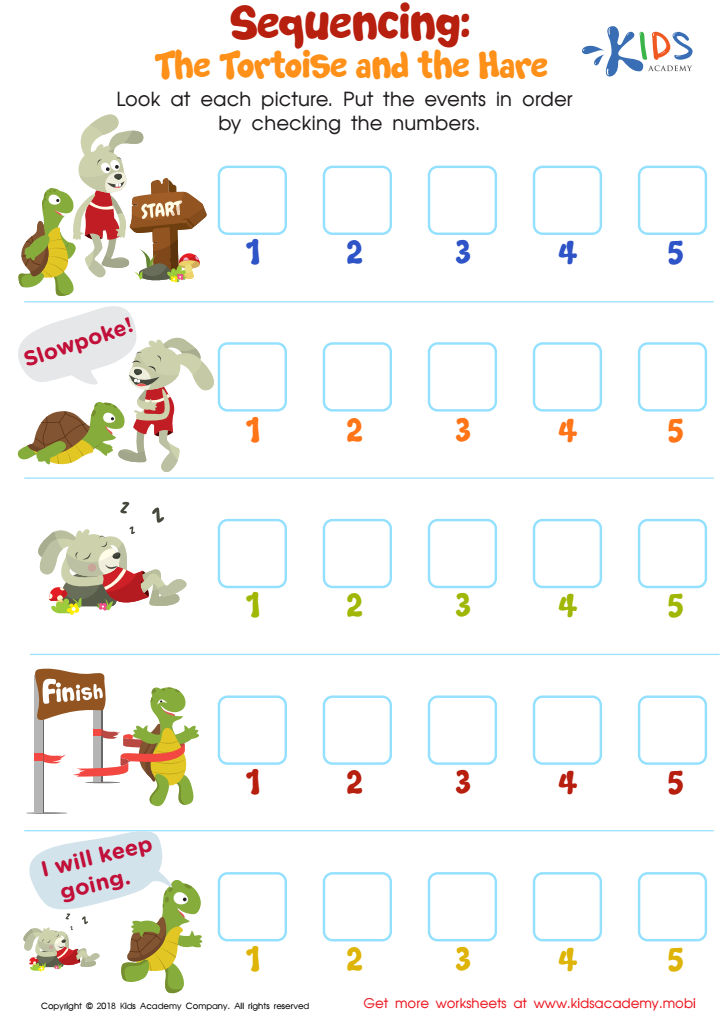
Sequencing: The Tortoise and the Hare Worksheet
 Assign to My Students
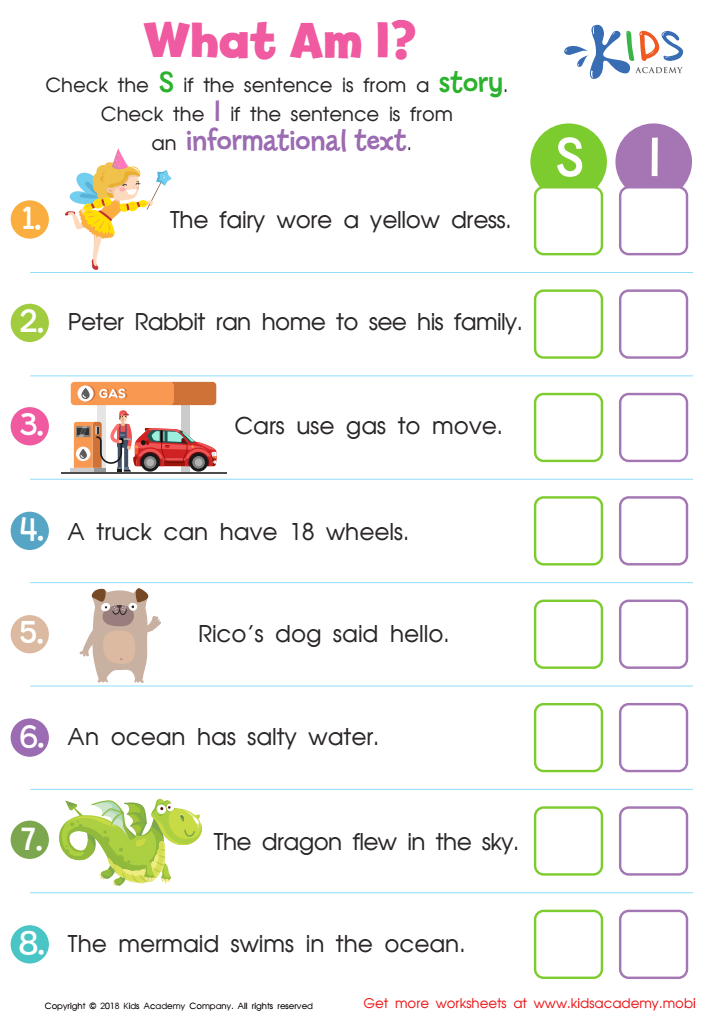
What Am I? Worksheet
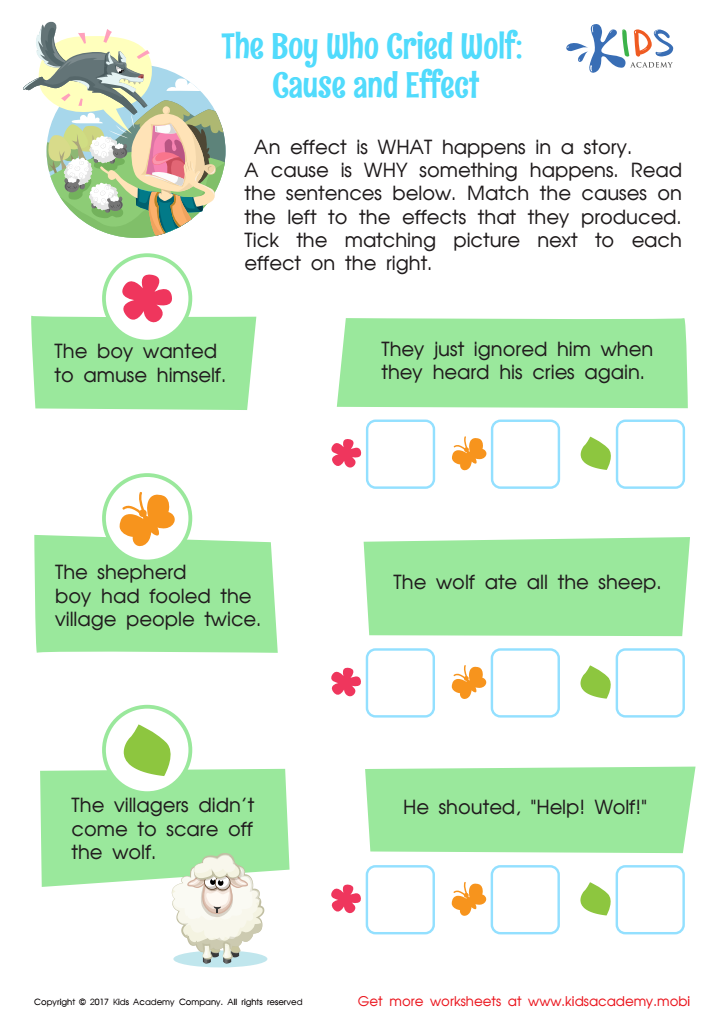
The Boy Who Cried Wolf: Cause and Effect Worksheet


.jpg)




Logical reasoning skills are foundational for young learners, helping them develop critical thinking, problem-solving abilities, and creativity. For ages 5-6, Normal Reading Fiction serves a unique role in cultivating these skills. Engaging with stories encourages children to make predictions, form connections, and understand cause-and-effect relationships, all key components of logical reasoning. When children read fiction, they often encounter diverse characters and scenarios, fostering empathy and social understanding, which enrich their cognitive development.
Moreover, fiction can present conflicts and resolutions, prompting discussions about choices and consequences. This not only enhances comprehension but also encourages children to think critically about situations and how to navigate them. By integrating logical reasoning with imaginative narratives, children learn to assess information, make judgments, and articulate their thoughts.
Parents and teachers should prioritize Logical Reasoning Normal Reading Fiction because early experiences with these texts lay the groundwork for lifelong learning. Engaging in story discussions and encouraging children to ask questions can further strengthen these skills. Ultimately, fostering logical reasoning through fiction not only supports academic achievement but also equips young learners with the tools necessary for real-world challenges and future success.







