Rhyming skills development Normal Rhyming Words Worksheets for Ages 5-6
3 filtered results
-
From - To
Encourage early literacy with our "Rhyming Skills Development Normal Rhyming Words Worksheets", designed for children ages 5-6. These engaging, printable worksheets help young learners recognize and generate rhymes by presenting fun and interactive activities. By exploring patterns in sounds and words, kids enhance their phonological awareness, an essential skill for reading readiness. Perfect for home or classroom use, our rhyming worksheets support development through playful learning, boosting confidence and creativity in early readers. Download now to provide a solid foundation in reading, set the stage for future academic success, and make learning to rhyme enjoyable and effective!
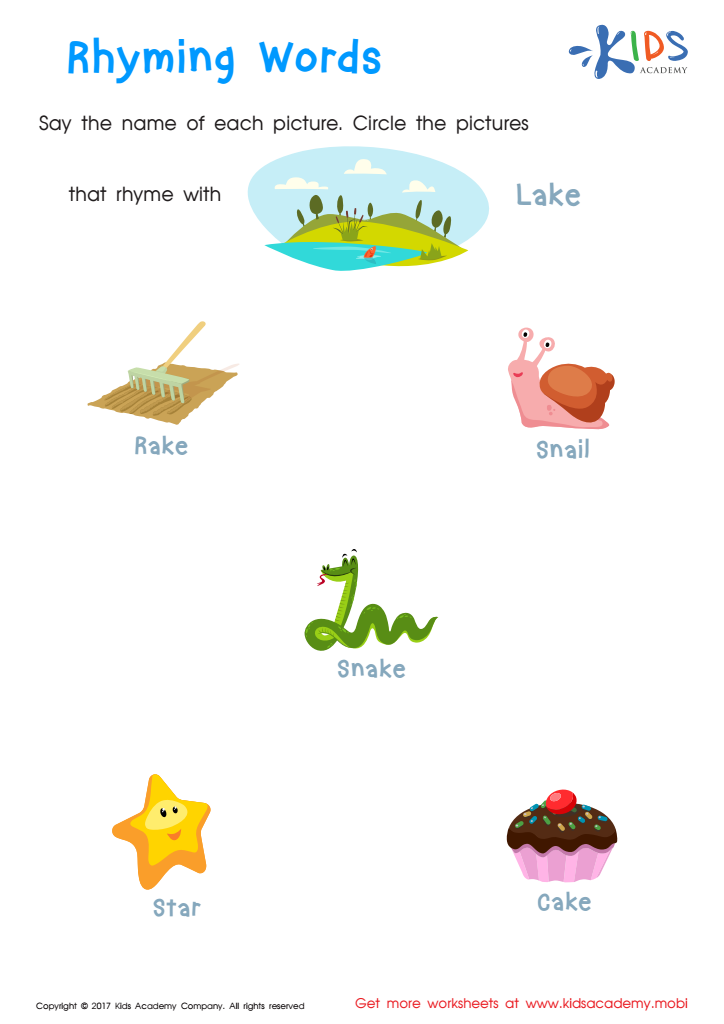
Rhyming Words Rhyming Worksheet
 Assign to My Students
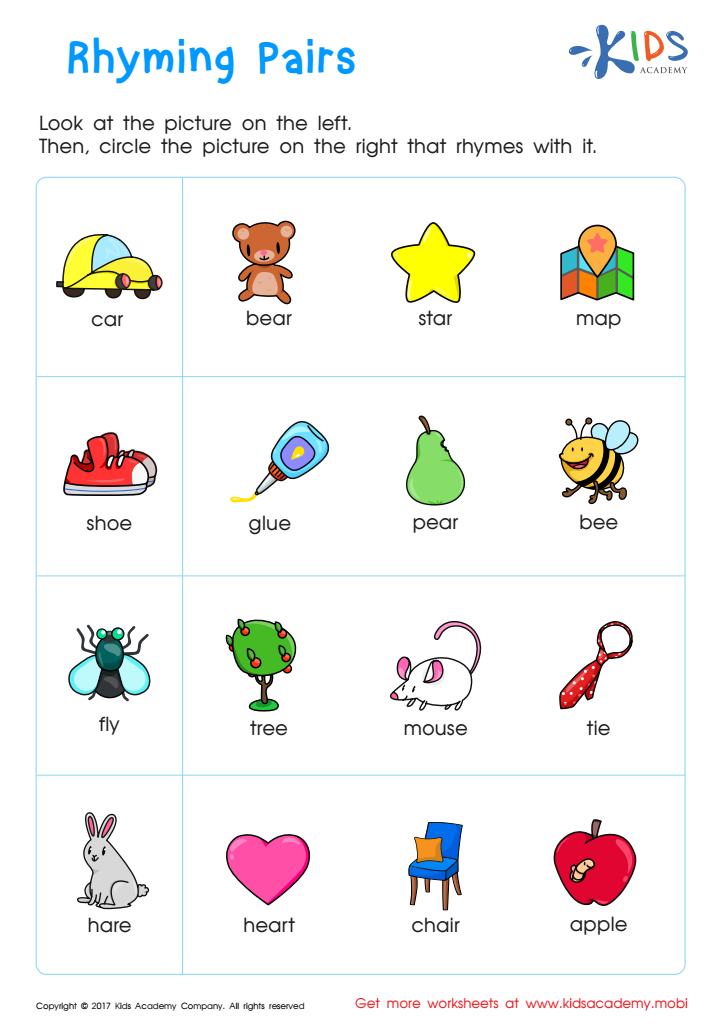
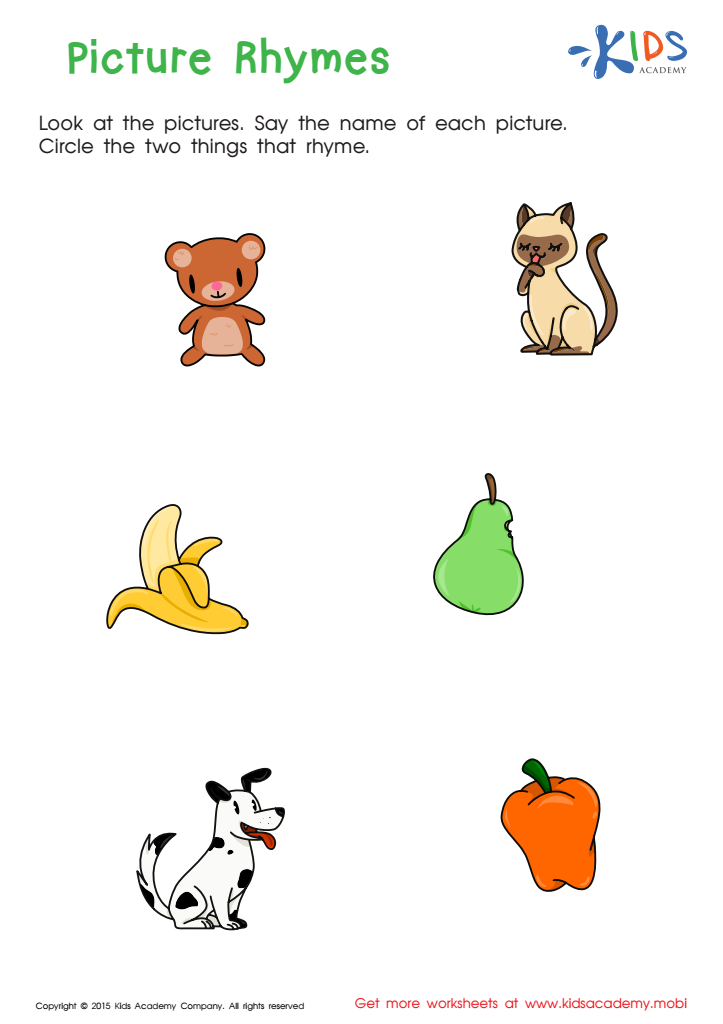
First Words: Picture Rhymes Worksheet







Rhyming skills are a cornerstone of early literacy development for children aged 5-6. Parents and teachers should prioritize this aspect of learning because it directly impacts a child's phonemic awareness, the ability to hear, identify, and manipulate individual sounds in words. This foundational skill is crucial for learning to read and write effectively. By engaging with rhymes, children start recognizing patterns in word sounds and structures, which aids in decoding new words and boosting their vocabulary.
Furthermore, rhyming activities are not just educational; they are also immensely enjoyable for young children. This enjoyment can foster a positive attitude towards reading and learning in general. Activities like singing nursery rhymes, reading rhyming books, and playing rhyming games can make literacy instruction feel like playtime, thus seamlessly integrating learning into daily routines.
Additionally, rhyming helps develop memory, concentration, and auditory discrimination skills. As children listen and repeat rhymes, they practice precise listening and recall, which are valuable skills in broader educational contexts. In essence, prioritizing rhyming skills enriches a child’s educational journey, making it more dynamic, joyful, and fundamentally robust, setting a solid groundwork for all future learning endeavors.








