
Categorization skills Normal Animals Worksheets for Ages 5-6
3 filtered results
Difficulty Level
Grade
Age
-
From - To
Subject
Activity
Standards
Enhance your child's understanding of the animal kingdom with our Categorization Skills Normal Animals Worksheets, specially crafted for ages 5-6. These engaging and educational printables help young learners classify various animals based on shared characteristics, boosting their cognitive development, critical thinking, and observational skills. Perfect for both classroom and at-home learning, our worksheets feature vibrant illustrations and simple explanations, making it easy for children to grasp and enjoy. Visit Kids Academy to give your little explorers a fun and interactive way to advance their early science education today!
Favorites
With answer key
Interactive
 Assign to My Students
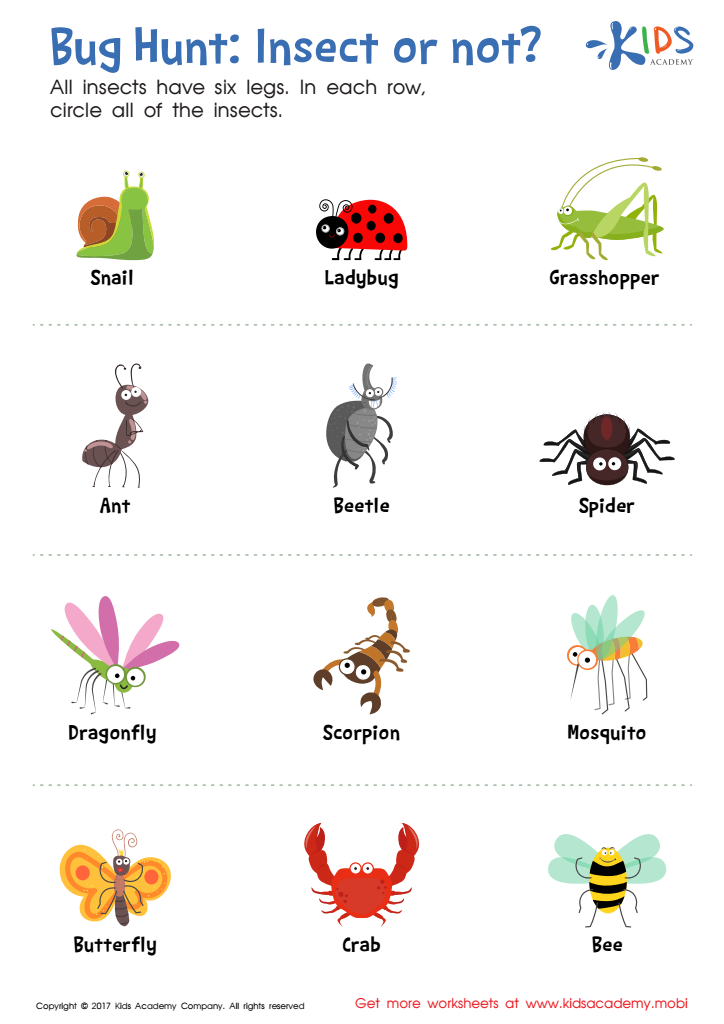
Insect or Not? Worksheet
Worksheet

Identifying Living or Non–living Worksheet
Help your child learn to sort and categorize in a new way! Teach them to classify things as living or non-living using this worksheet. It's the perfect way to build their scientific understanding, and to have some learning fun! Print this worksheet and watch them discover the world of science!
Identifying Living or Non–living Worksheet
Worksheet
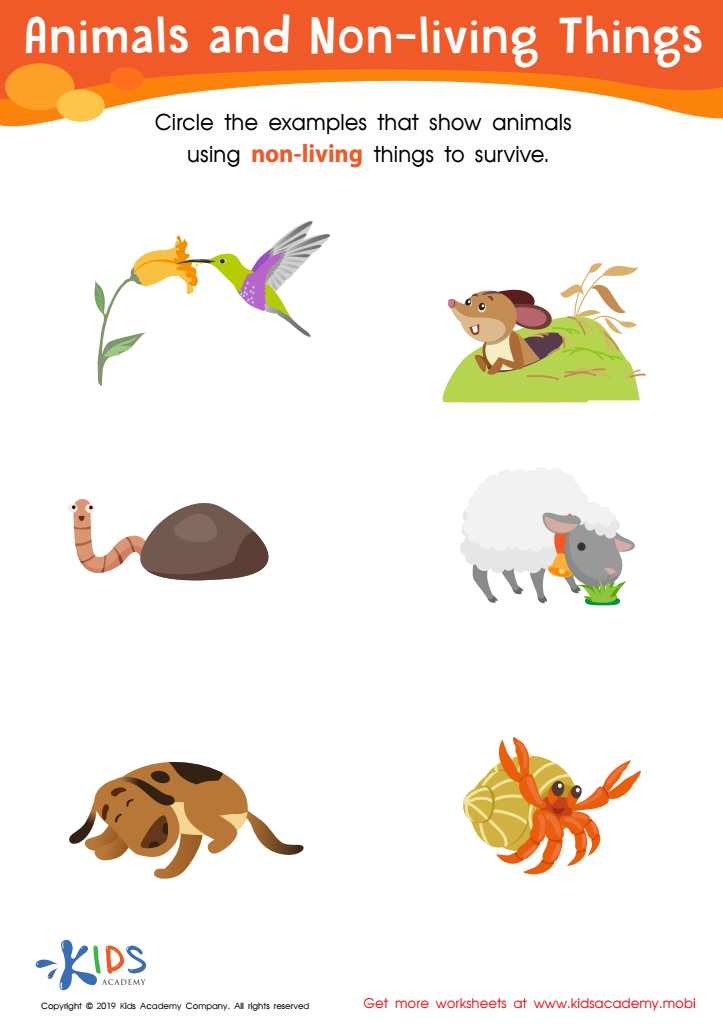
Animals and Non-Living Things Worksheet
People and animals both require more than food to survive. We need shelter, clothing and water, while animals use non-living things like rocks and trees. Ask your kids what else is necessary to survive - then have them identify the objects in the worksheet and circle the examples of animals using non-living things.
Animals and Non-Living Things Worksheet
Worksheet
Join Kids Academy for Free
Who is primarily going to use this learning content?








Categorization skills are vital for children aged 5-6, and a specific focus on normal animals can serve as an ideal learning tool. Firstly, categorizing animals helps young children understand and organize the world around them, which boosts cognitive development. Recognizing differences and similarities among animals, such as by habitat, diet, or size, strengthens logical thinking and problem-solving skills.
Moreover, categorization nurtures vocabulary and language development. As children identify and name various animals, they learn new words and concepts, which enhances their communication abilities. Discussions about these animals with parents and teachers also build conversational skills and confidence.
Social and emotional development is another crucial aspect. Learning about animals invokes a sense of empathy and care for living beings. Group activities centered around categorization can foster teamwork and cooperative play, further promoting social skills.
Engaging with animals in a structured way captivates children's interests, making learning enjoyable. Activities like sorting pictures of animals or taking nature walks can transform abstract concepts into concrete knowledge, aiding long-term retention. Thus, focusing on categorization skills through normal animals not only builds a strong educational foundation but also promotes well-rounded development in young children.








