
Enhancing vocabulary Normal Science Worksheets for Ages 5-6
4 filtered results
Difficulty Level
Grade
Age
-
From - To
Subject
Activity
Standards
Unlock the wonders of science for young learners aged 5-6 with our "Enhancing Vocabulary Normal Science Worksheets." Designed to enrich vocabulary while sparking curiosity, these interactive worksheets provide engaging activities that blend education with fun. Children will explore key scientific concepts through tailored exercises, helping them to connect words with their meanings in a meaningful way. Each worksheet promotes critical thinking and contextual understanding, making science language accessible and enjoyable. Perfect for classroom or home use, these resources ensure that early learners build a robust vocabulary foundation essential for their academic journey. Discover the joy of science vocabulary today!
Favorites
With answer key
Interactive
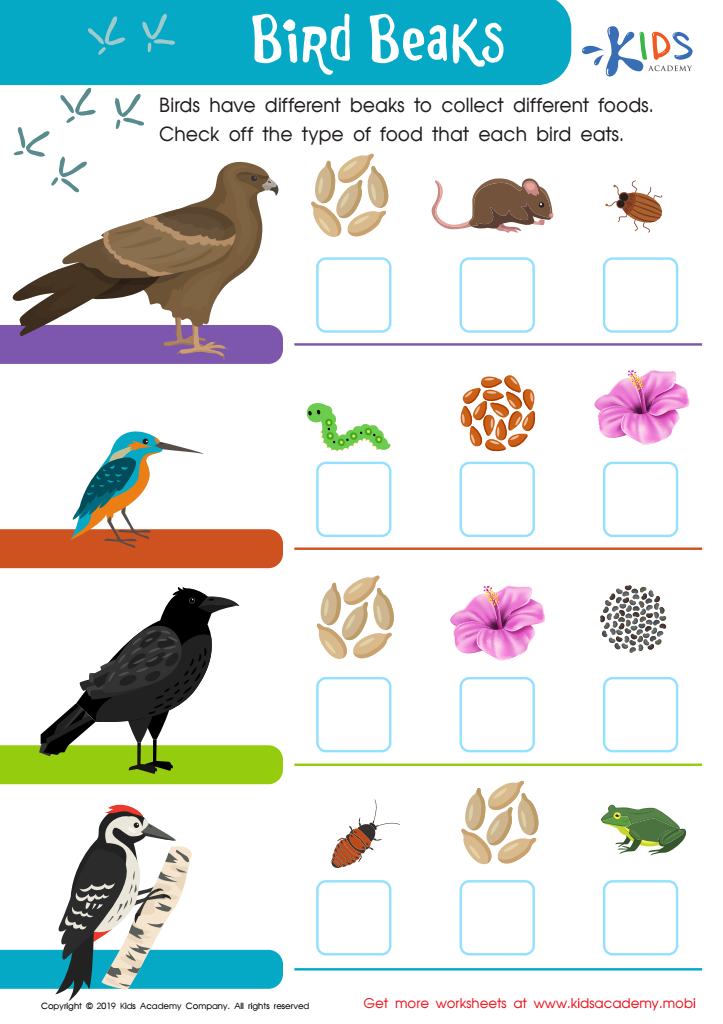
Bird Beaks Worksheet
Birds have beaks to eat different types of food. Let your little nature lover explore why with this free worksheet! They'll learn about different beak shapes and match them to the food that's best for them. Be an adorable bird watcher together!
 Assign to My Students
Bird Beaks Worksheet
Worksheet
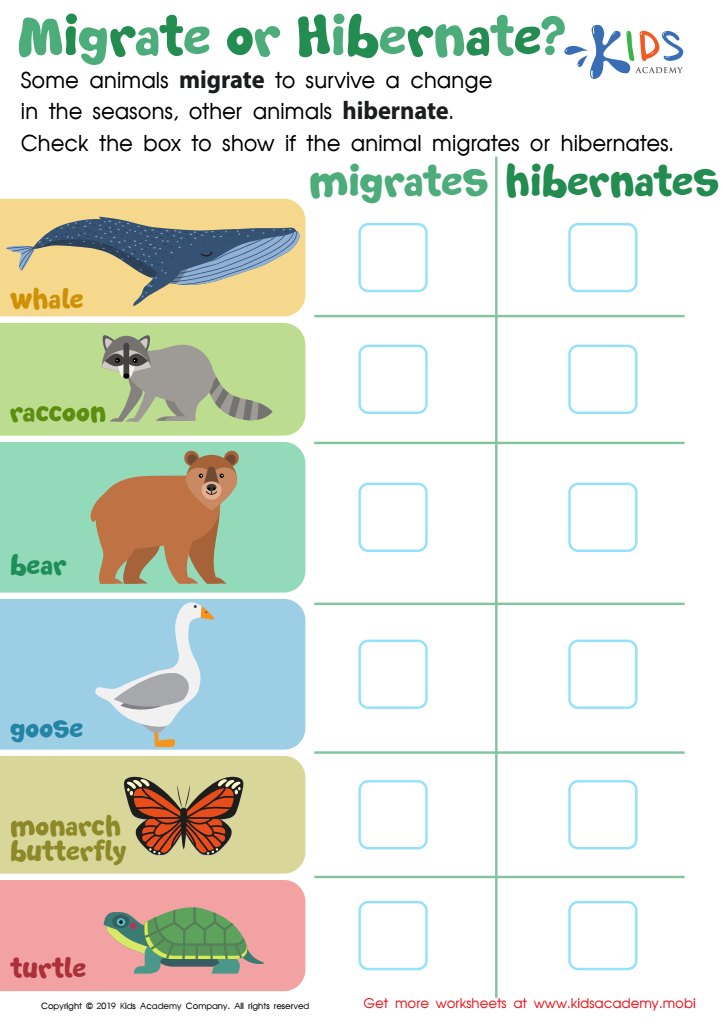
Migrate or Hibernate? Worksheet
Many animals survive by either migrating or hibernating when the weather changes. Migration involves traveling in flocks or herds to a more temperate climate, while hibernation is when animals stay in their homes and eat and sleep for a long period of time. Show your kids this worksheet and help them decide which strategy animals use to cope with the changing weather.
Migrate or Hibernate? Worksheet
Worksheet
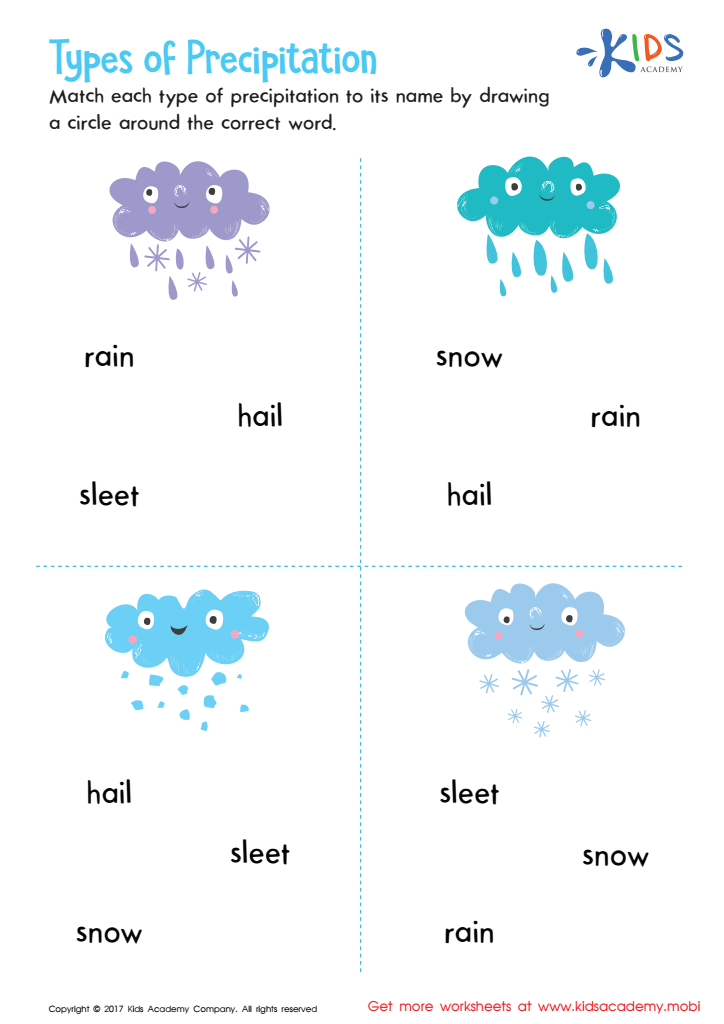
Types of Precipitation Printable
Science has a big impact on our world, and teaching kids about weather helps them understand how their learning applies to their lives. Our worksheet reviews different types of weather, so kids can look out the window and know what's happening. It covers familiar types of precipitation and more challenging ones like sleet or hail. Kids can use this to build a mental library of scientific knowledge for the future, even from places that don't get much snow.
Types of Precipitation Printable
Worksheet
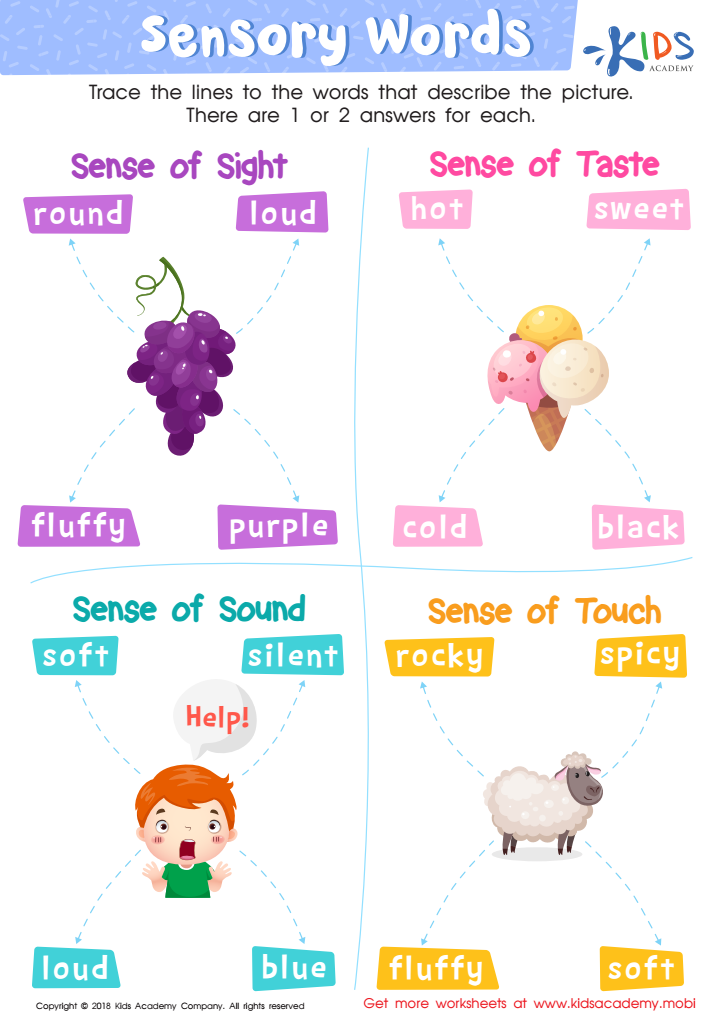
Sensory Words Worksheet
This worksheet helps students explore sensory words by looking at pictures and selecting one or two words to describe how it looks, feels, tastes, smells or sounds. Adding sensory words to texts makes them more interesting and helps students comprehend stories and articles better.
Sensory Words Worksheet
Worksheet
Join Kids Academy for Free
Who is primarily going to use this learning content?





.jpg)
Enhancing vocabulary in normal science for children aged 5-6 is crucial for several reasons. At this developmental stage, children are naturally curious about the world around them, and a strong science vocabulary helps them articulate their observations, questions, and discoveries. By expanding their vocabulary, we facilitate their ability to grasp scientific concepts and engage in meaningful discussions, fostering a deeper understanding of fundamental principles like gravity, weather, and living organisms.
Additionally, a robust vocabulary aids in reading comprehension and literacy development. Science terminology introduces children to new words that enhance their language skills, supporting their overall academic success. The integration of science vocabulary makes learning interactive and exciting, encouraging children to investigate their surroundings actively.
Moreover, parents and teachers play a pivotal role by modeling language use through discussions, hands-on activities, and storytelling that incorporate science vocabulary. This active engagement not only builds a child's word bank but also strengthens their critical thinking and problem-solving skills. Ultimately, by prioritizing vocabulary enrichment in normal science, parents and teachers help cultivate a generation of informed, inquisitive learners prepared to tackle more complex scientific ideas in the future. Investing in this foundational phase can lead to lifelong learning and a greater appreciation for the STEM fields.







