Plant identification Normal Science Worksheets for Ages 5-6
4 filtered results
-
From - To
Discover our engaging "Plant Identification Worksheets" tailored for children aged 5-6. Designed to ignite curiosity about nature, these worksheets introduce young learners to various plants and their characteristics through fun activities. With vibrant illustrations and interactive tasks, students will match plants to their names, learn essential plant parts, and explore the natural world around them. Ideal for classroom or at-home use, these science worksheets support critical thinking and observational skills while fostering a love for the environment. Jumpstart your child's scientific journey today and help them uncover the fascinating world of plants in a playful and educational way!
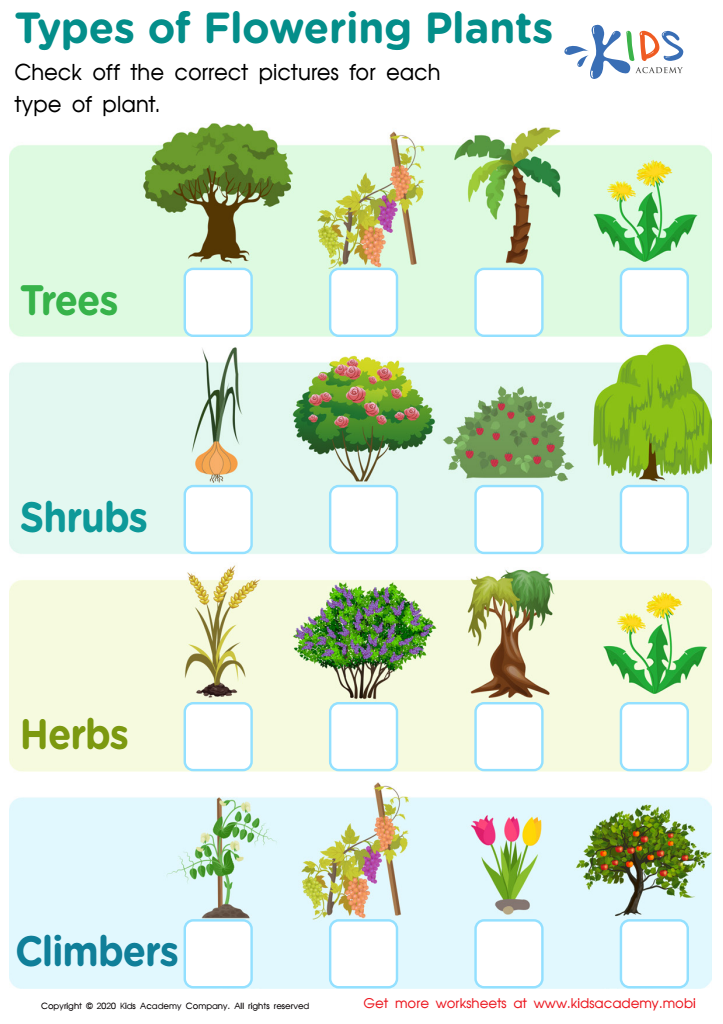
Types of Flowering Plants Worksheet
 Assign to My Students
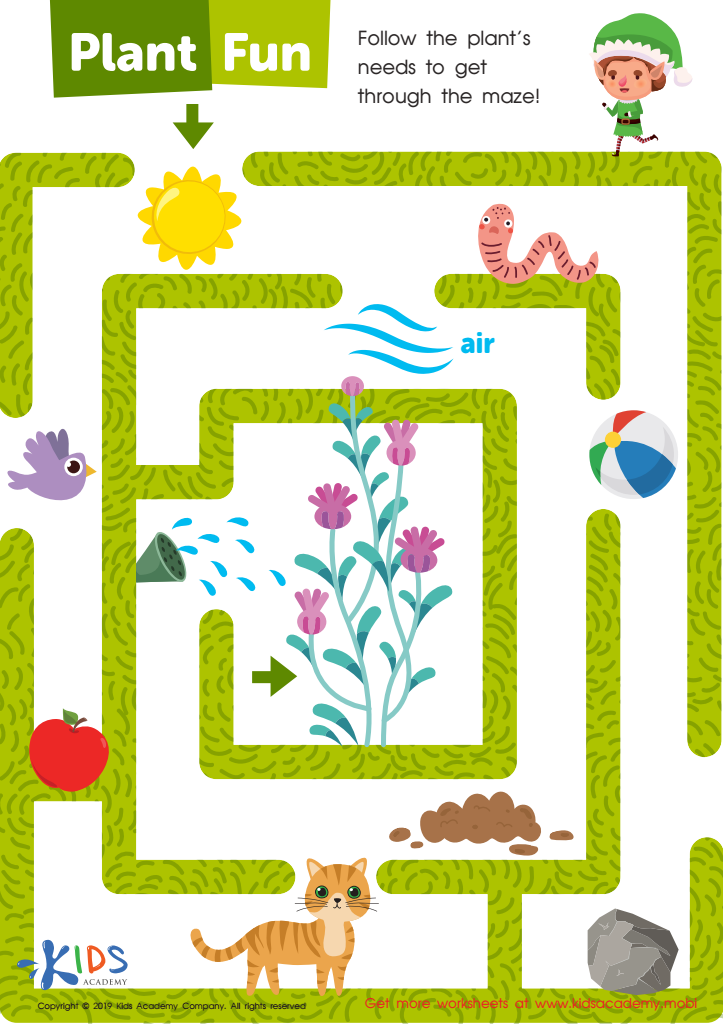
Plant Fun Worksheet
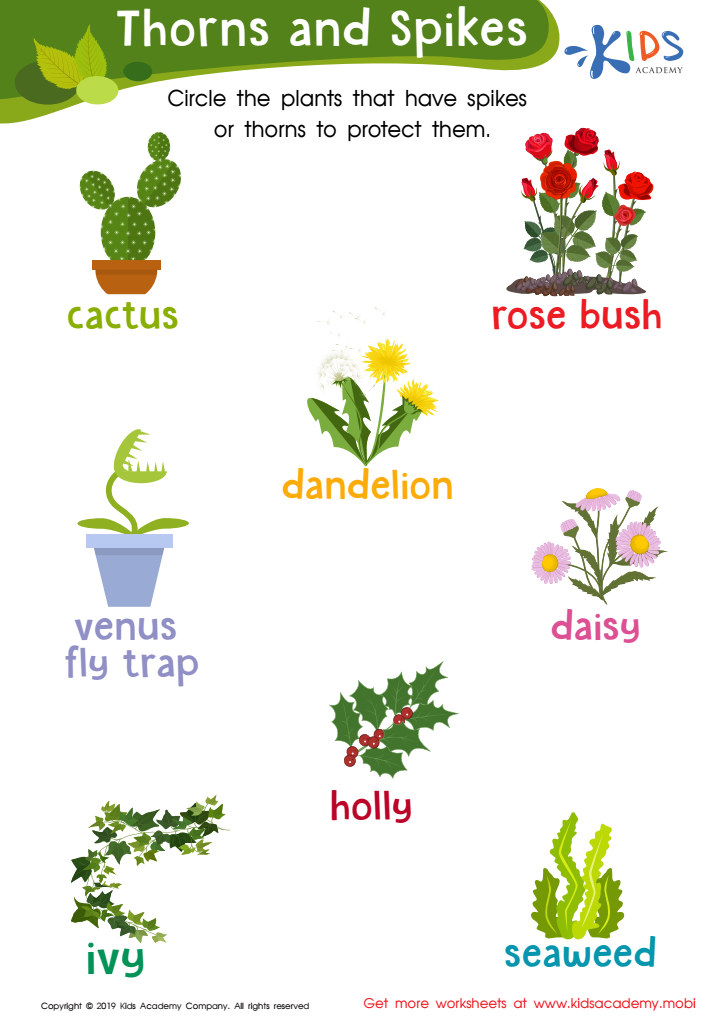
Thorns and Spikes Worksheet
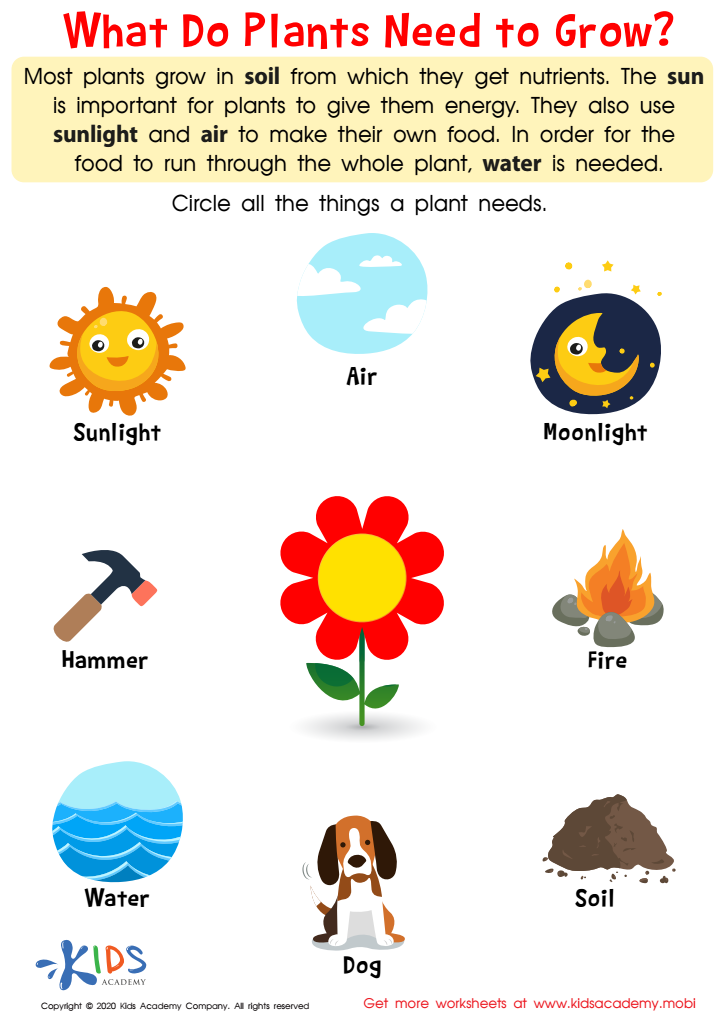
What Do Plants Need to Grow Worksheet



.jpg)




Plant identification is a crucial component of early childhood education that fosters curiosity and appreciation for the natural world among children aged 5-6. Parents and teachers should care about this because it encourages observational skills, critical thinking, and a sense of responsibility for the environment. Learning to identify local plants helps children understand their ecosystems, becoming more aware of biodiversity and the importance of native species.
By engaging in plant identification, children can connect with nature firsthand, promoting outdoor exploration and sensory experiences, such as smelling flowers or feeling different textures of leaves. This tactile learning strengthens their cognitive development and improves vocabulary as they learn new terms related to botany and ecology.
Additionally, introducing young learners to plant identification can nurture an early love for science. It opens up discussion about life cycles, growth, and nutrition, sowing the seeds of environmental stewardship and sustainability. For parents and teachers, fostering this knowledge cultivates a generation of mindful, informed individuals who appreciate and impact their surroundings positively. Encouraging children to be inquisitive about plants can set the foundation for lifelong learning and a genuine connection with the Earth's ecosystems.







