Recognizing Patterns Normal Science Worksheets for Ages 5-6
3 filtered results
-
From - To
Introduce young learners to the fascinating world of patterns with our “Recognizing Patterns Normal Science Worksheets”. Designed especially for ages 5-6, these engaging and educational worksheets help children develop critical thinking and early math skills through fun activities. By identifying and continuing patterns, kids enhance their observation and analytical abilities, all while having fun. Each worksheet is filled with creative tasks that spur curiosity and foster a strong foundation in recognizing patterns. Perfect for classroom use or at-home learning, these printables encourage kids to explore and understand the world around them in an interactive and meaningful way.
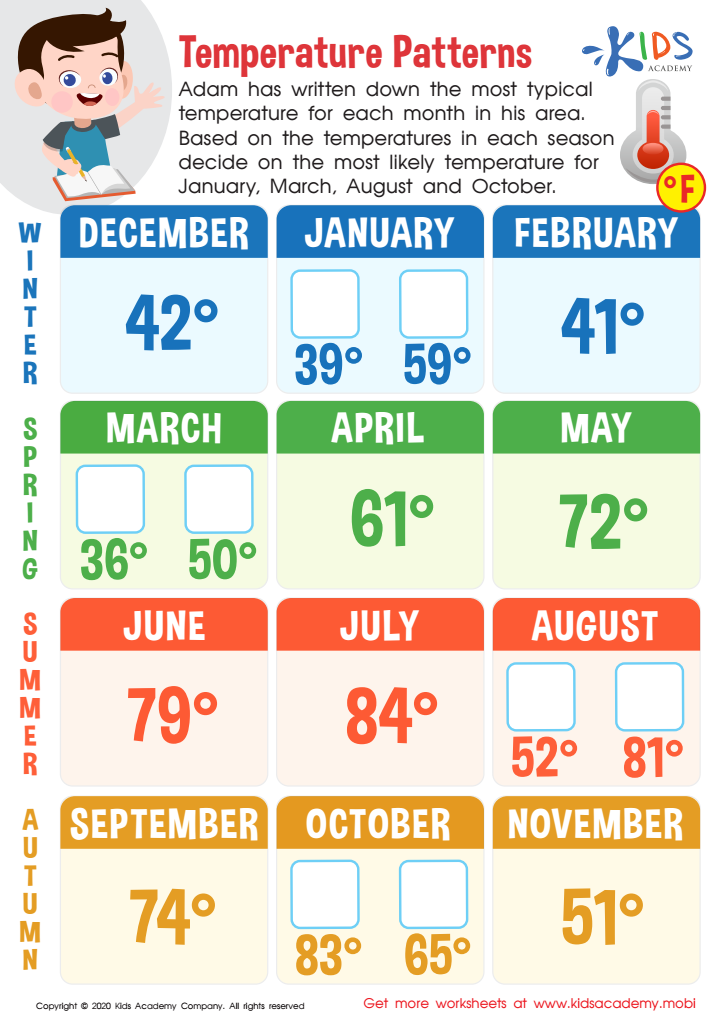
Temperature Patterns Worksheet
 Assign to My Students
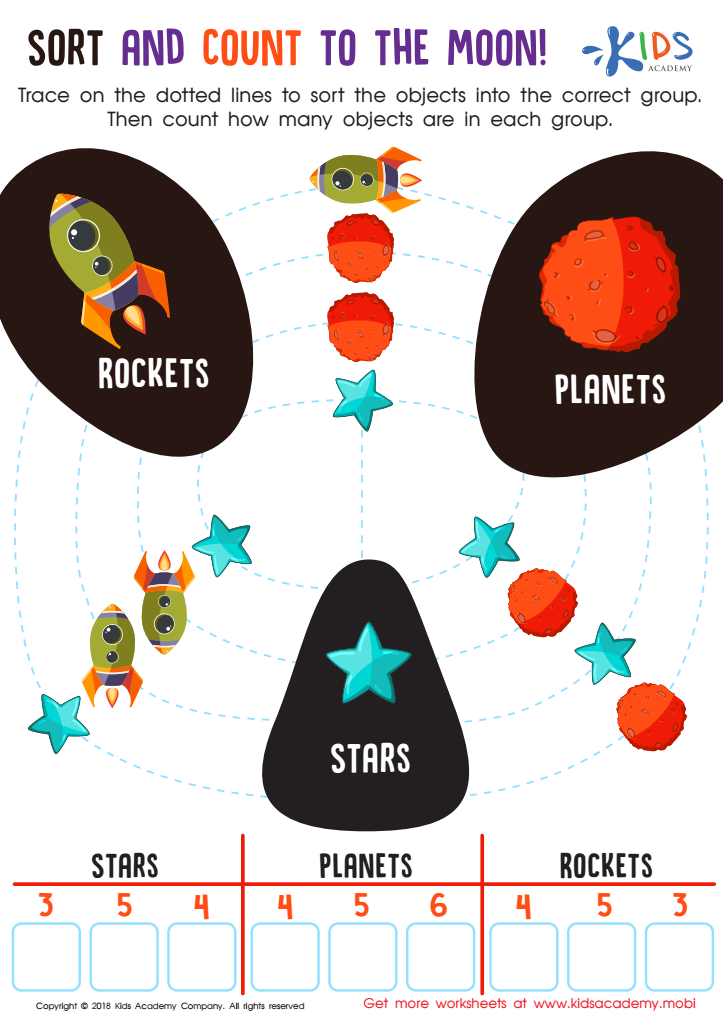
Sort and Count to the Moon Worksheet
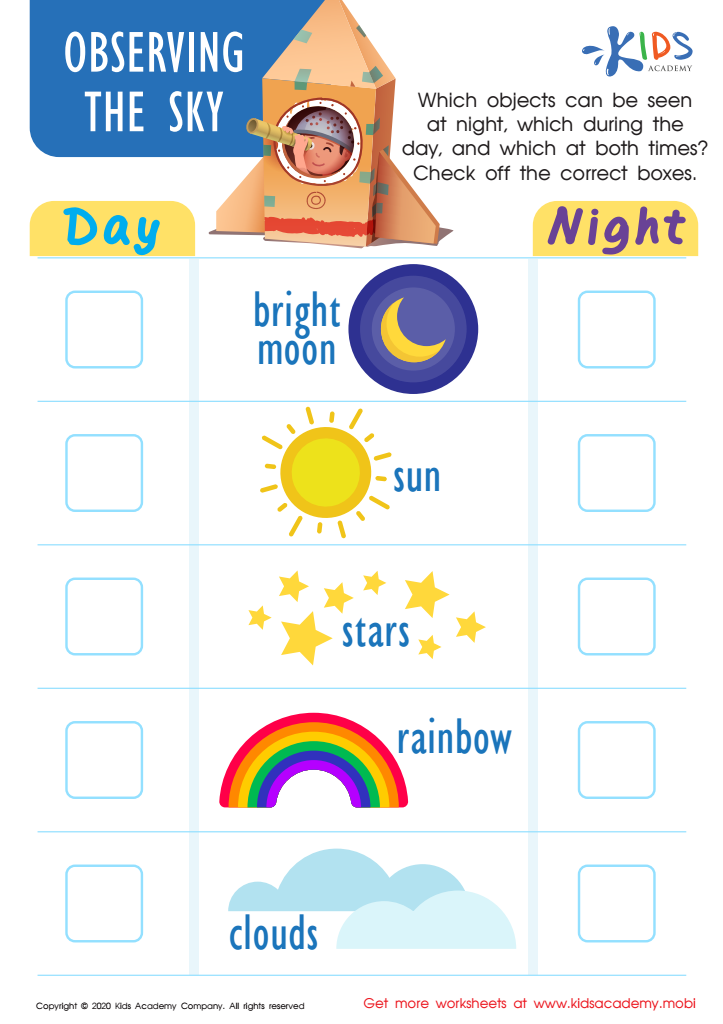
Observing the Sky Worksheet







Recognizing patterns is a pivotal aspect of cognitive development for children aged 5-6, providing them with a foundational skill set that informs various aspects of their learning and daily life. Patterns engage children's thinking and help them to make sense of the world through predictable sequences, fostering early critical thinking and problem-solving abilities. When children recognize patterns, they improve their abilities in a wide range of subjects, including mathematics, literacy, and science. For instance, understanding numerical patterns lays the groundwork for arithmetic skills, while recognizing patterns in literature, such as rhyme and narrative structure, enhances reading proficiency.
Moreover, early exposure to pattern recognition bolsters children's cognitive abilities by nurturing their memory, attention to detail, and classification skills. It promotes a sense of order and discipline as children learn to predict what comes next, fostering a sense of stability and confidence.
Engaging children in activities emphasizing pattern recognition, whether through play-based learning, storytelling, or interactive games, ensures that they develop an analytical mindset. This developmental milestone is crucial for building their skills progressively, enabling them to tackle more complex concepts as they advance in their educational journey. By caring about and nurturing pattern recognition in young children, parents and teachers contribute to a strong academic and cognitive foundation, setting the stage for lifelong learning and success.







